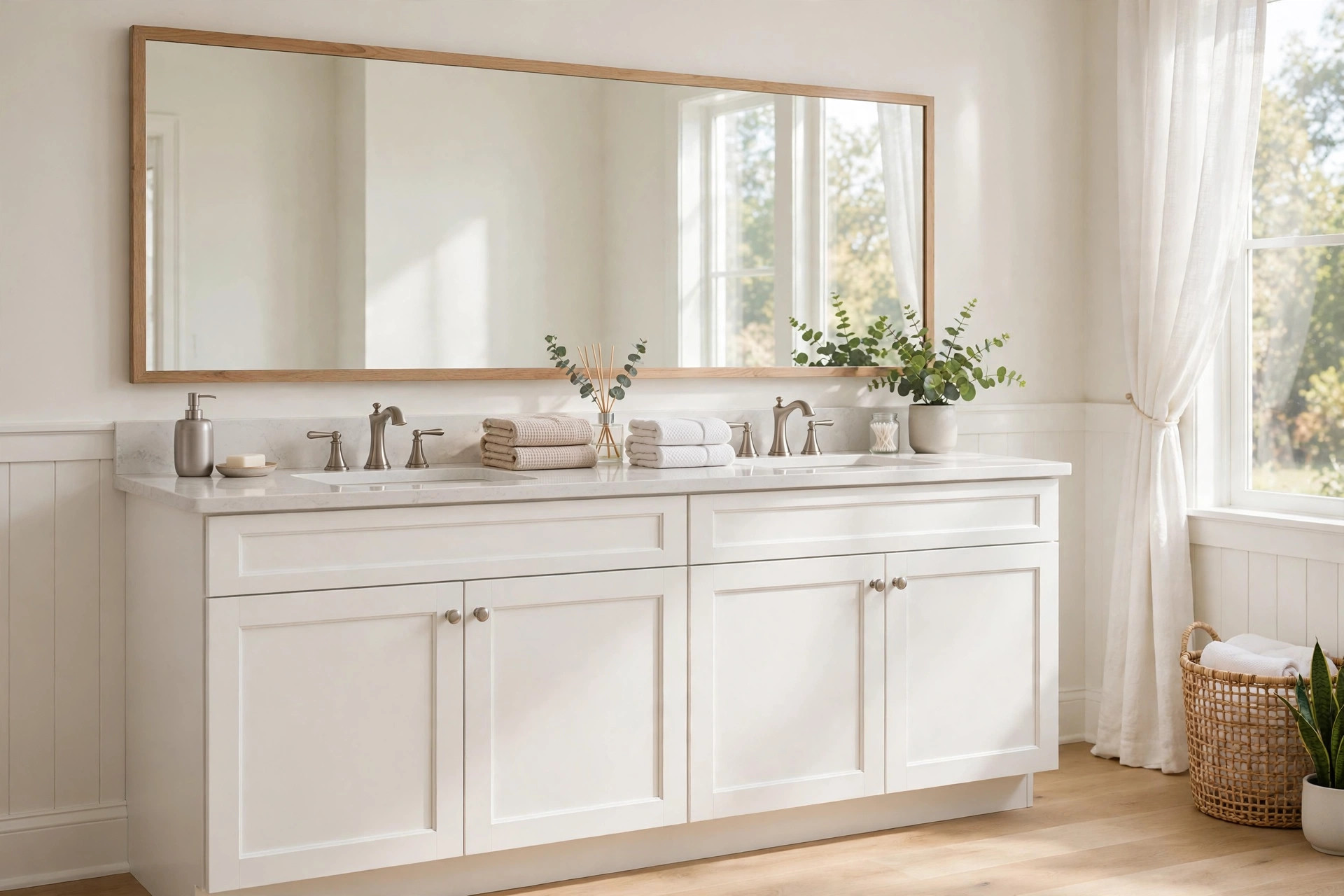

Two people who share a bath need room to move. One sink is seldom enough when two adults get ready at the same hour. A double sink vanity gives each person his or her own basin, faucet, and counter space. This double sink vanities reviews buying guide USA will show you how to read reviews, what traits to weigh, and what price to expect. You will learn which widths fit common baths, which cabinet materials hold up best in steam, and which sink styles serve a busy home.
Why a Double Sink Vanity Matters
A bath is the first room many of us use in the morning. When two people share it, one brushes his teeth while the other waits, water splashes, and towels pile up. A double sink vanity ends most of these small fights, since each user gets a side.
A double vanity also adds value to a home. Buyers in the United States often rank a two-sink bath high on their wish list. Even if you do not plan to sell soon, the added comfort pays you back each day.
Space is the one real limit. A double vanity needs a wide wall. Most models run from 48 to 72 inches wide. A bath under five feet wide may not take one well. Measure first. A cramped fit spoils the gain. For narrow baths, a single wide vanity with good storage may serve better. Our bathroom sink vanities buying guide usa covers those choices in full.
How to Read Reviews the Right Way: Double Sink Vanities Reviews Buying Guide Usa
Reviews are the heart of this double sink vanities reviews buying guide USA. But not all reviews help. Some praise a cheap unit that fails in a year. Some scold a fine unit for a shipping dent. Learn to read with a clear eye.
Look for Long-Term Reports
A review written on the day of arrival tells you about the box, not the vanity. Seek out reviews written three months to a year later. These writers know if the drawers still glide. They know if the finish still shines after daily steam. They know if the top stained under a hair dye bottle. Long-term notes are gold.
Watch for Repeated Complaints
One angry review may be bad luck. Ten reviews that cite the same cracked corner are a warning. Scan for patterns. Common trouble signs include thin backing boards, soft-close hinges that loosen, and tops that scratch at once. If three or more buyers cite the same fault, take it as fact.
Check What Is Included
Many buyers learn too late that the top was sold apart. Some listings show a full vanity with sinks, faucets, and mirror, yet the box holds only the cabinet. Read the “what is in the box” list with care, and note whether the top, sinks, faucets, drains, and hardware come with the unit.
Note the Finish and Build
Reviewers often praise solid wood frames and plywood boxes. They warn against particle board in wet rooms, since it swells when steam seeps in, while plywood holds its shape.
What to Look For When You Choose
Size and Fit
Measure your wall from end to end. Leave at least four inches of free space on each side for trim and cleaning. The most common widths are 60 and 72 inches. A 60 inch double sink vanity suits most master baths. A 72 inch unit suits a large bath and gives each user a full 36 inches of counter.
Depth matters too. Standard depth runs 18 to 22 inches. A shallow unit saves floor space in a tight bath. A deep unit gives more counter room. Height is often 32 to 36 inches with the top. Taller users may like a 36 inch height, which eases back strain. Check the door swing. Drawers and doors need clear room to open.
Also check the plumbing. Two sinks mean two drains, and your wall may have only one drain line. A plumber can add a second line, but the work adds cost, so ask one to look at your rough-in before you buy. Sites such as This Old House offer plain guides on bath plumbing layouts.
Cabinet Material
The cabinet frame takes the steam, the splashes, and the daily knocks. Solid hardwood frames rank at the top. Oak, maple, and birch all serve well. Plywood boxes rank next and cost less. They resist warp in damp air. Medium density fiberboard, known as MDF, works in a dry powder room but swells in a steamy master bath. Avoid plain particle board in any full bath.
Finish counts as much as wood. A good finish seals the grain against water. Look for multi-coat paint or stain with a clear top coat. White and gray painted vanities suit modern baths. Stained wood suits warm, classic baths. Dark finishes show dust and water spots more than light ones.
Countertop Material
The top takes the hardest use. Hot tools, wet cups, and harsh cleaners all land on it. Engineered quartz tops stand up best. They resist stains, need no sealing, and come in many looks. Natural granite is strong and each slab is unique, but it needs a sealer once a year. Cultured marble costs less and suits tight budgets, but it can scratch and dull. Solid surface tops give a smooth one-piece look with the sinks molded in. Laminate tops cost least, yet they swell at the seams if water gets in.
Sink Style
Undermount sinks mount below the top. They give a clean look and let you wipe crumbs straight into the basin. They cost more to fit. Drop-in sinks, also called top-mount sinks, rest on the top with a small rim. They cost less and suit a do-it-yourself swap. Vessel sinks sit on top like bowls. They look bold but raise the rim height and can splash. Integrated sinks mold into a solid surface top with no seam at all, which makes cleaning simple.
Rectangular basins give more usable room than round ones of the same width. In a double bathroom vanity with two sinks, a spread of 30 inches or more between basin centers keeps two users from bumping elbows.
Faucets and Hardware
Many vanities ship without faucets. Check the hole count in the top: a single-hole top takes a one-piece faucet, a three-hole top with four-inch spread takes a centerset, and an eight-inch spread takes a widespread. Match the faucet to the holes or buy a top with no holes and drill to suit.
Brass faucets with ceramic disc valves last longest. Chrome finish costs least and cleans with ease. Brushed nickel hides water spots. Matte black makes a strong style mark but shows dust. Makers such as Moen and Delta Faucet publish full specs and care guides for their lines.
Drawer pulls and knobs may come in the box or ship apart. Soft-close hinges and drawer glides are worth the small extra cost. They stop slams and spare the frame. Full-extension drawers let you reach the back with ease.
Storage
Two users bring twice the clutter. Look for deep drawers that hold tall bottles. A double sink vanity with storage in the center stack keeps shared items close to both sides. U-shaped drawers fit around the drain pipes. Tilt-out trays under the sinks hold small tools.
Types and Options
Freestanding Vanities
Freestanding units stand on legs or a plinth base. They suit most homes and most budgets. Install takes a few hours. You can set one against any sound wall. Most reviews cover this type.
Floating Vanities
Floating units mount to the wall and leave the floor open, which makes a small bath look larger. They need strong wall blocking to hold the weight of two water-filled sinks, so have a carpenter confirm the wall can bear it.
Furniture-Style Vanities
These units look like fine dressers or sideboards, with turned legs and rich stains to suit classic and farmhouse baths. Check that the maker sealed them for bath use, since true fine furniture can fail in steam.
Ready to Assemble
Ready to assemble units ship flat and cost least. Quality runs from fair to good, so read reviews for notes on cam locks and dowels. A well-built flat-pack unit can serve for years in a guest bath.
If your project runs wider than the vanity, you may also plan the shower or tub at the same time. Our walk in shower kits buying guide usa and freestanding soaking tubs buying guide usa can help you match styles across the room.
Cost and Price
Prices in the United States span a wide range. A clear view of the bands will help you set a budget.
Budget, 300 to 800 dollars. In this band you find ready to assemble units and simple freestanding cabinets, often with cultured marble tops. They serve a guest bath or a rental well. Expect MDF or light plywood boxes.
Mid-range, 800 to 1,800 dollars. This is the sweet spot for most homes: plywood or solid wood frames, soft-close hardware, and quartz or granite tops. Big stores such as The Home Depot and Lowe’s stock deep lines in this range.
High-end, 1,800 to 4,000 dollars and more. Here you find furniture-grade woodwork and thick stone tops. Names like Kohler offer full bath suites at this level for a master bath you plan to keep for decades.
Do not forget the extra costs. A plumber may charge 200 to 600 dollars to set two drains and two faucet hookups, and a new mirror, lights, and paint can add several hundred more. Add 15 percent to your budget for these extras so no bill shocks you.
Care and Upkeep
A double vanity lives in steam and splash. A little care keeps it sound for years.
Wipe the top dry after heavy use. Standing water finds seams and edges. Use a soft cloth and mild soap. Skip harsh powders and bleach on stone. Marble and granite need a stone-safe cleaner; quartz needs only soap and water.
Re-seal natural stone once a year. A drop of water should bead on the surface; if it soaks in dark, the sealer has worn thin.
Tighten hinge screws once a year, since steam and daily pulls loosen them a touch. Keep a small gap at the wall so air moves behind the unit and fights mold. Fix small chips at once: a dab of touch-up paint stops water from reaching raw wood.
Safety
Baths are wet rooms, so safety deserves a firm place in this double sink vanities reviews buying guide USA.
Anchor tall or narrow units to the wall, since a child who climbs an open drawer can tip a loose cabinet. Use the anti-tip strap in the box. Keep medicines and cleaners in a high locked spot, not in a low drawer a child can reach.
Set your water heater to 120 degrees Fahrenheit. Hotter water can scald in seconds, and twin sinks tempt users to run both taps at once. If you like hotter water for the dishwasher, fit anti-scald valves at the taps.
Check the floor load for stone tops. A 72 inch granite top with two full sinks is heavy, and old floors with soft spots may need a carpenter to firm the joists. Make sure a ground fault outlet sits by each sink, as most states require it. When in doubt, call a licensed pro; guides at Bob Vila explain common bath safety codes in plain terms.
FAQ
What is the best width for a double sink vanity? Sixty inches suits most master baths, giving each user about 30 inches of counter. Seventy-two inches suits large baths. Forty-eight inches can work in a tight bath, but elbow room runs short.
Can I put a double vanity in a small bathroom? Only if the wall allows it. You need at least 60 inches of clear wall for a true double. In a smaller bath, the best double vanity for small bathroom plans is often a wide single vanity with two faucets on one long trough sink. This gives two washing spots in less width.
Do double vanities need two drains? Yes, in most cases. Each basin needs its own drain and trap, though both traps can join one wall drain line with a proper fitting. A plumber should check your local code before you buy.
What countertop is best for a double vanity? Engineered quartz wins for most homes. It resists stains, needs no sealer, and cleans with soap and water. Granite is a close second if you seal it each year.
How long does a good double vanity last? A well-built plywood or solid wood unit lasts 15 to 25 years with fair care. Budget MDF units may last 7 to 12 years in a steamy bath.
Should the faucets match the vanity hardware? They should match in tone, not always in brand. Brushed nickel taps with brushed nickel pulls look planned. Mixed metals can work, but keep it to two tones at most. Design guides at The Spruce show many sound pairings alongside the ones at HGTV.
A Short Final Word
A double sink vanity is one of the kindest gifts you can give a shared bath. Mornings grow calm and counters stay clear. Take your tape measure, read the long-term reviews, and pick a plywood or solid wood frame with a quartz or granite top. Keep up the small care tasks. Your vanity will then serve you well for twenty years or more, and this double sink vanities reviews buying guide USA will have done its job.
References
Bob Vila. (n.d.). Home improvement advice. https://www.bobvila.com Delta Faucet. (n.d.). Kitchen and bathroom faucets. https://www.deltafaucet.com HGTV. (n.d.). Home and garden ideas. https://www.hgtv.com Kohler. (n.d.). Bathroom and kitchen fixtures. https://www.kohler.com Lowe’s. (n.d.). Home improvement products. https://www.lowes.com Moen. (n.d.). Faucets and plumbing fixtures. https://www.moen.com The Home Depot. (n.d.). Home improvement products. https://www.homedepot.com The Spruce. (n.d.). Home and garden advice. https://www.thespruce.com This Old House. (n.d.). Home renovation guidance. https://www.thisoldhouse.com
Was this guide helpful?

About Lisa Anderson
The My Garden US editorial team writes practical, in-depth home and garden guides for American homeowners — tested advice, no fluff.
You May Also Like
Brushed Nickel Faucets USA Online Deals: A Buyer’s Guide
May 8, 2026 0 views
Heated Floor Kits USA Online Deals: A Practical Buying Guide
February 9, 2026 0 views
Heated Floor Kits Buying Guide USA
September 8, 2026 0 views