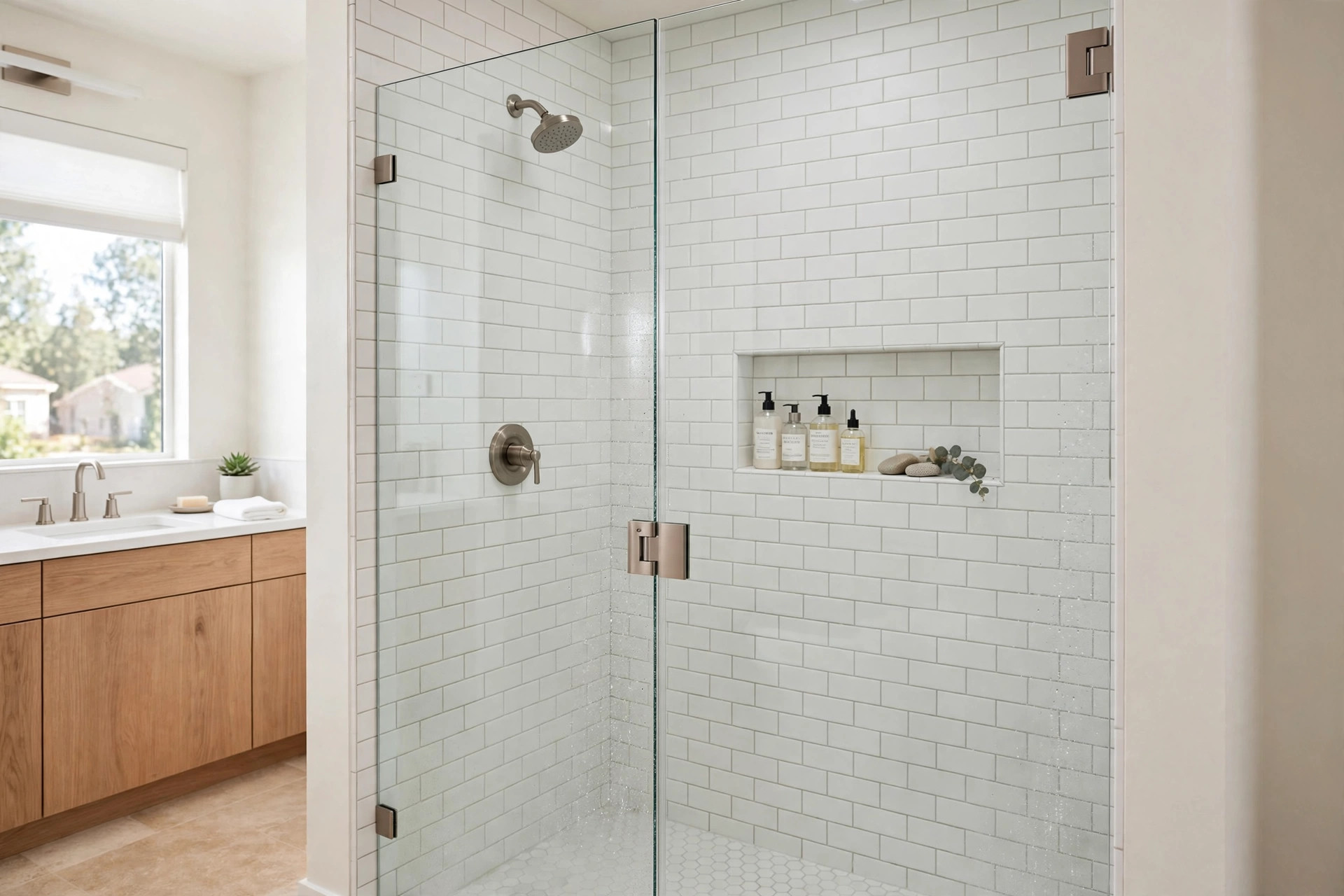

Many shoppers search for frameless shower doors for sale usa when they remodel a bathroom. These doors look clean and open. They have no metal frame around the glass. The result is a bright shower that shows off tile work. Prices vary a lot. Sizes vary too. This guide explains what to know before you spend money. It covers types, costs, glass choices, care, and safety. It also answers common questions. Read it before you buy.
Why Frameless Shower Doors Matter
A framed shower door has metal borders around each glass panel. Those borders collect soap scum and water spots. They can rust or pit over time. A frameless door removes most of that metal. The glass is thicker. Hinges and clamps hold it in place. Cleaning takes less work. The bathroom looks larger because the eye moves straight through the clear glass.
Real estate agents note that updated bathrooms help sell homes. A frameless glass shower enclosure reads as a modern upgrade. It suits many styles, from plain to high end. It also lets in more light. A dark shower stall feels cramped. Clear glass opens it up. For these reasons, frameless doors are a popular pick in bathroom remodels across the country.
If you are planning a full bathroom update, it helps to read a walk-in shower kit buying guide first. The kit sets the base and drain. The door comes next.
What to Look for When You Buy: Frameless Shower Doors for Sale Usa
Start with the size of the opening. Measure the width at the top, middle, and bottom. Walls are seldom perfectly straight. Use the smallest number. Measure the height from the curb or floor to where the door should end. Write down each figure. Bring them to the store or keep them by the phone when you order online.
Next, note which way the door should swing. Some doors open outward only. Others swing both in and out. Check the room layout. Make sure the open door will not hit a toilet, a vanity, or a towel bar. In a tight bath, a sliding frameless door can be a better choice. It needs no swing space at all.
Glass thickness matters more than most buyers expect. Frameless doors use glass from 5/16 inch to 1/2 inch thick. The common sizes are 3/8 inch and 1/2 inch. Thicker glass feels solid and swings with a smooth weight. It also costs more. Avoid glass thinner than 5/16 inch for a frameless design. It can flex and it looks cheap.
Look at the hardware finish too. Hinges, handles, and clamps come in chrome, brushed nickel, matte black, oil-rubbed bronze, and more. Match the finish to your faucets if you can. Bath fixture makers sell lines in many of these finishes, which makes matching easier.
Types and Options
Frameless shower doors come in a few basic styles. The right one depends on your shower shape.
A single swinging door is the simplest type. One glass panel acts as the door. It mounts to the wall or to a fixed glass panel with hinges. This style works for shower openings between 22 and 36 inches wide.
A door and panel setup adds one or more fixed glass panels beside the door. This suits wider openings. The fixed panels close the gap while the door swings free. Many corner showers use this layout.
A sliding frameless door uses rollers on a slim rail. The panels glide past each other. This is a smart pick where a swinging door would strike something. The rail is thin, so the look stays clean.
A neo-angle door fits a corner shower with an angled front. The door sits in the middle of the angle. Two fixed panels form the sides. This design saves floor space and looks sharp.
An inline door spans a straight opening with the door in the middle and fixed panels on both sides. Large walk-in showers often use this form.
Some buyers order custom sizes. Custom doors fit odd openings and cost more. Stock sizes cost less and ship faster. Measure twice before you choose. A wrong size is costly to return because glass is heavy and fragile in transit.
When you pair a new door with new fixtures, check how faucet and bath hardware brands describe finish names. Names like “brushed nickel” can differ from one brand to another.
Cost and Price
Price is often the first question. For frameless shower doors for sale usa, expect a wide range. A stock door from a large store often runs from 300 to 900 dollars. Mid-range models with thicker glass and nicer hardware run from 800 to 1,500 dollars. Custom doors with 1/2 inch glass and special finishes can run from 1,500 to 3,000 dollars or more. Labor adds 300 to 800 dollars in most areas.
Several things move the price. Glass thickness is the main one. Thicker glass costs more to make and to ship. Size matters too. A tall, wide enclosure needs more glass. Hardware adds cost. Solid brass hinges cost more than plated steel. Special glass treatments, such as coatings that repel water spots, add to the price as well.
Get more than one quote if you hire an installer. Ask what the quote covers. Some quotes include the door, delivery, and labor. Others list them apart. Ask about the warranty on both the glass and the work. Keep the paperwork in a safe place.
You can compare prices at major home improvement retailers and large home centers. Prices change with sales, so check more than once before you decide.
Glass Choices
The glass itself deserves a close look. Almost all frameless shower doors use tempered glass. Tempered glass is heated and cooled in a special way. It is much stronger than plain glass. If it breaks, it crumbles into small dull pieces rather than sharp shards. This is a key safety point. Never accept a frameless door made of non-tempered glass.
Clear glass is the most common choice. It shows off tile and keeps the bath bright. Low-iron glass is a step up. It has less of the green tint seen at the edges of standard glass. It looks nearly colorless. It costs more.
Frosted or textured glass gives privacy. It blurs shapes but lets light pass. It suits shared bathrooms. It does show water spots less than clear glass. Rain glass has a pattern that hides spots well too.
Many doors offer a factory coating that helps water bead off the glass. This cuts cleaning time. The coating wears down over years and may need reapplication. Ask the seller how long the coating lasts and what upkeep it needs.
Edge work should be smooth and polished. Run your eye along the edges in the store. Rough edges suggest poor work. Good doors have clean, even polish on every cut edge.
Care and Upkeep
Frameless doors are easy to keep, but they are not carefree. Hard water leaves spots on glass. A daily squeegee habit takes less than a minute and stops most buildup. Keep a small squeegee on a hook inside the shower. Wipe the glass after each use.
For weekly cleaning, use a mild bathroom cleaner or a mix of white vinegar and water. Spray it on, wait a few minutes, and wipe with a soft cloth. Do not use scouring pads or harsh powders. They can scratch the glass and dull the hardware finish.
Check the hinges and seals once or twice a year. Tighten any loose screws with care. Do not over-tighten. Glass can crack under too much force. Look at the clear seals along the edges. They keep water in the shower. Replace them when they turn yellow or crack. Spare seals are cheap and easy to fit.
Keep the tracks of sliding doors free of soap and hair. A soft brush and warm water do the job. Dry the hardware after cleaning to avoid water marks on dark finishes.
Home care writers at home guides and renovation advice sites often note that steady light care beats rare deep scrubbing. A little work each day keeps the glass clear for years.
Safety Points
Glass doors demand respect. Tempered glass is strong, but it can break if struck hard on an edge or a corner. Never slam a frameless door. Teach children to open and close it with care. Do not hang heavy items on the door or the handle. The hinges are sized for the glass alone.
Make sure the installer anchors hinges into studs or solid backing, not just into tile or drywall. Ask how they plan to mount the hardware. A door that pulls loose from the wall is a real hazard. If you hire help, choose an installer with shower door experience and check references.
Keep the bathroom floor dry outside the shower. Water on tile is a slip risk. A good door with proper seals keeps most water inside. A bath mat adds grip where you step out.
Some buyers add grab bars inside the shower for extra safety. Never use a glass door or a towel bar as a grab bar. They are not built for body weight. Real grab bars anchor into studs and meet safety standards. You can read more about bath safety from home renovation experts and design resources.
Frequently Asked Questions
How long does a frameless shower door last?
A well-made frameless door can last 20 years or more. The glass itself does not wear out. Hinges, seals, and coatings may need service over time. Steady cleaning and gentle use extend the life of every part.
Can I install a frameless shower door myself?
A handy homeowner can install a stock door, but the work is tricky. The glass panels are heavy. One slip can chip an edge or crack a panel. You also need the right drill bits for tile and a level eye. Many buyers save trouble by hiring a pro. If you do it yourself, get a helper and follow the manual step by step.
Do frameless doors leak?
A good install keeps leaks small. Frameless doors have no full frame to catch water, so a little spray near the seals is normal. Proper seals, a slight slope of the curb toward the drain, and a door that closes true keep water where it belongs. If you see steady leaking, check the seals and the door alignment first.
What is the best glass thickness?
For most homes, 3/8 inch glass is the sweet spot. It feels solid, looks clean, and costs less than 1/2 inch glass. Choose 1/2 inch for very large panels or for a high-end look and feel. Avoid thinner glass in frameless designs.
How do I keep the glass clear with hard water?
Use a squeegee after every shower. This one habit matters most. Clean weekly with vinegar and water or a mild cleaner. Consider a water softener if your water is very hard. A factory water-repellent coating also helps.
Where can I see frameless shower doors for sale usa in person?
Large home stores often show working models on the floor. Bath showrooms display more styles and finishes. Seeing the door swing and feeling the weight of the glass helps you choose. Bring your measurements and a photo of your shower when you visit.
A Final Word
Buying frameless shower doors for sale usa is a big but simple project. Measure with care. Choose tempered glass of good thickness. Pick hardware that matches your bath. Plan for pro install if the job feels heavy. With light daily care, the door will stay clear and bright for many years.
A new door often joins other upgrades. A fresh rain shower head pairs well with clear glass, since both show off water and light. Some buyers add a freestanding soaking tub in a larger bath to complete the new look. Take your time, compare a few sellers, and choose the door that fits your space and your budget. For brand background, plumbing fixture companies and bath brands publish useful product details on their sites.
References
American Standard. (n.d.). Bathroom and kitchen products. https://www.americanstandard.com Bob Vila. (n.d.). Home improvement advice. https://www.bobvila.com Delta Faucet. (n.d.). Kitchen and bathroom faucets. https://www.deltafaucet.com HGTV. (n.d.). Home and garden ideas. https://www.hgtv.com Kohler. (n.d.). Bathroom and kitchen fixtures. https://www.kohler.com Lowe’s. (n.d.). Home improvement products. https://www.lowes.com Moen. (n.d.). Faucets and plumbing fixtures. https://www.moen.com The Home Depot. (n.d.). Home improvement products. https://www.homedepot.com The Spruce. (n.d.). Home and garden advice. https://www.thespruce.com This Old House. (n.d.). Home renovation guidance. https://www.thisoldhouse.com
Was this guide helpful?

About Lisa Anderson
The My Garden US editorial team writes practical, in-depth home and garden guides for American homeowners — tested advice, no fluff.
You May Also Like
Walk In Shower Kits Buying Guide USA: A Plain Guide for Homeowners
January 9, 2026 0 views
Freestanding Soaking Tubs Deals Near Me: How to Find a Good Price Without Buying a Bad Tub
August 13, 2026 0 views
Brushed Nickel Faucets: A Reviews and Buying Guide for American Homes
March 21, 2026 0 views