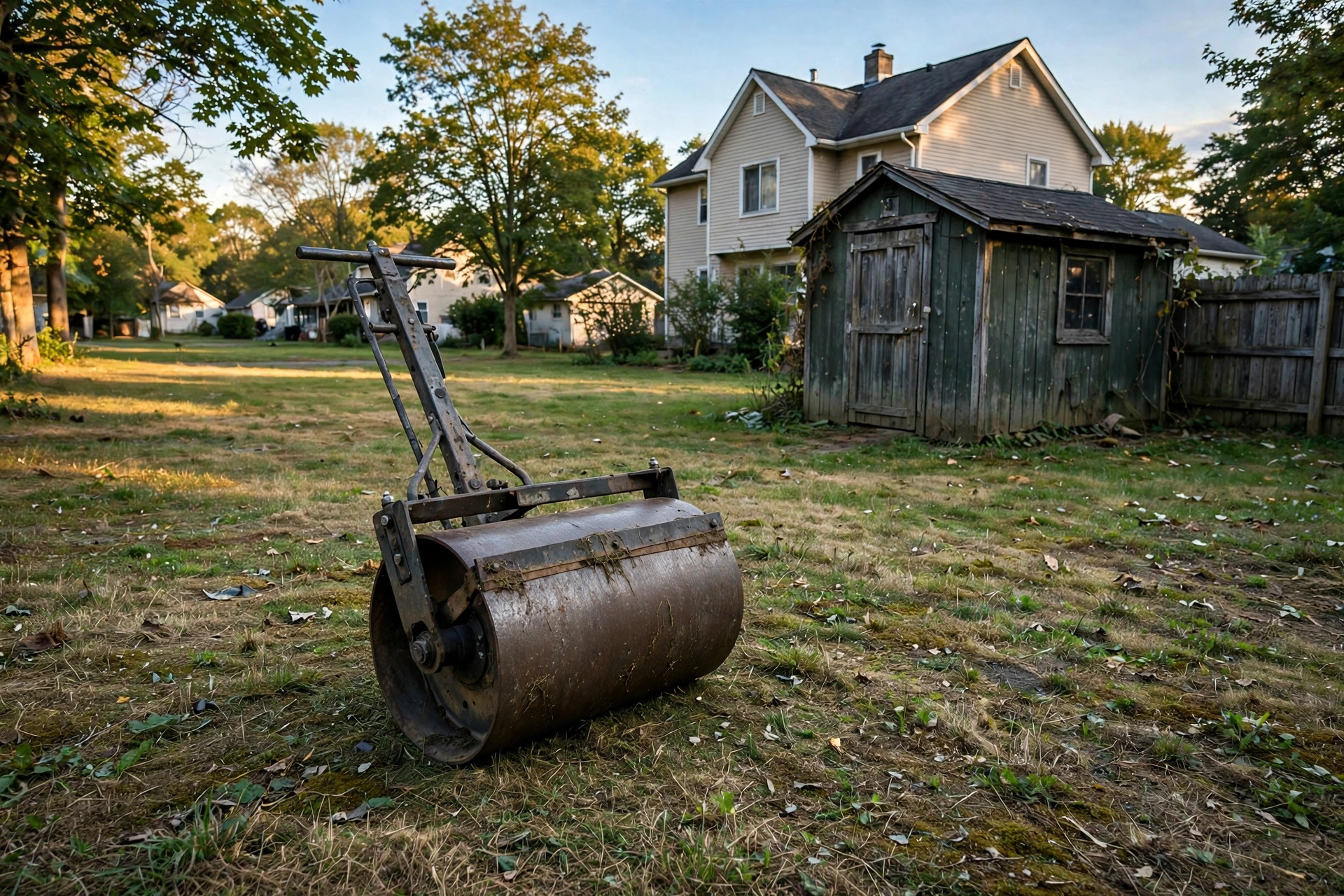

A bumpy yard can make a pleasant lawn feel like hard work. The mower bounces. The grass cuts unevenly. Children trip on hidden dips. Many homeowners search for the best lawn roller for leveling uneven ground to solve this problem. A lawn roller is a heavy drum that you fill with water or sand and pull across the grass. Its weight presses down bumps and smooths the surface. This article explains how rollers work, what to look for when you buy one, the main types on the market, the costs you can expect, and how to use one safely.
Why Leveling Matters
An uneven lawn is more than an eyesore. Low spots collect water after rain. Standing water can drown grass roots and invite fungus. High spots scalp under the mower blade, leaving brown patches that never quite recover. When the surface is smooth, water drains evenly and the mower cuts at one height across the whole yard. The grass grows thicker, and the lawn needs less repair each spring.
Rolling is also one of the oldest lawn care methods. Estate gardeners used stone rollers long before powered tools existed. The idea has not changed. A heavy, smooth drum pressed over turf irons out small ridges and settles loose soil around roots. For mild unevenness, rolling is faster and cheaper than re-grading with soil or hiring a landscaper.
Rolling does not fix every problem. Deep ruts, large dips, and heavy clay soil may need other work first. A roller can level bumps that are an inch or two high. It cannot move mountains of dirt. Used at the right time, with the right weight, it is an honest tool that earns its place in the shed.
How to Choose the Best Lawn Roller for Leveling Uneven Ground
Match the Size to Your Yard
Lawn rollers come in drum widths from about 24 inches to 48 inches. A wider drum covers ground faster but weighs more and is harder to turn in tight spaces. For a small city lot, a 24-inch or 36-inch drum is plenty. For an acre or more, a 48-inch drum pulled behind a riding mower saves time.
Drum diameter matters too. Larger drums roll over bumps more easily and pack the soil more evenly. Most home models have diameters between 18 and 24 inches.
Pick the Fill Material
Most lawn rollers are hollow drums you fill yourself. Water is the common fill because it is easy to add and drain. Sand is heavier and gives more pressure per pass, but it is hard to empty and can rust a steel drum from the inside if left wet. Some owners fill the drum partway with water and add sand for extra weight. Check the maker’s fill limit before you do this. Overfilling can crack the drum or break the axle.
A filled 36-inch steel roller often weighs between 400 and 600 pounds. That is enough pressure for most home leveling work. Anything much heavier risks soil compaction.
Steel or Plastic Drums
Steel drums are the old standard. They are heavy, strong, and roll true. They can rust if stored wet, so they need drying after use. Plastic drums are lighter and will not rust. They cost less but can dent on sharp stones. For leveling work on rough ground, steel is usually the better choice. For light rolling of new sod, plastic is fine.
Tow-Behind or Push Models
Push rollers have a handle and work for small areas. Tow-behind rollers hitch to a riding mower or garden tractor for larger yards. If you already own a rider, a tow-behind model does the work faster. If you walk your lawn, a push model keeps things simple. Match the roller to the equipment you already have.
Types and Options
Steel Tow-Behind Rollers
This is the classic choice for leveling uneven ground. A steel tow-behind roller is a drum about 36 to 48 inches wide with a drawbar that pins to a mower hitch. Filled with water, it weighs several hundred pounds. One pass flattens frost heaves and worm bumps. Two passes, made at right angles, smooth the surface well.
When comparing brands, look at drum thickness. Thicker steel resists dents from rocks. Look at the axle and bearings too. A roller that weighs 500 pounds puts real stress on its frame. Greaseable bearings last longer than sealed bushings on many models.
Poly Push Rollers
A poly push roller is a plastic drum with a long handle. It holds less water, so it weighs less, often under 300 pounds when full. It suits small lawns and touch-up work. It will not fix deep bumps, but it presses new seed into soil and smooths fresh sod. Many gardeners keep one for spring and fall touch-ups.
Heavy-Duty Commercial Rollers
Commercial rollers are built for parks and sports fields. They are wider and heavier, often filled with water plus sand. They are overkill for most home lawns. They also cost far more. A home model from a major outdoor equipment maker or a large garden machinery brand handles residential work at a fair price.
Renting Instead of Buying
If you only need to level your lawn once, renting may make sense. Rental shops carry tow-behind steel rollers at fair daily rates. You avoid storage and upkeep. If your lawn needs yearly rolling, or if you plan to help neighbors, buying pays for itself in two seasons. Many homeowners also read our lawn dethatcher rental prices near me guide before deciding between renting and buying lawn tools.
Cost and Price
Prices vary with size and build. A small poly push roller may cost under one hundred dollars. A mid-size steel tow-behind roller often costs between 150 and 350 dollars. Heavy-duty commercial models can pass 500 dollars. Renting typically costs 30 to 60 dollars per day, depending on your area.
Factor in the hidden costs. A steel roller needs dry storage or it will rust. A tow-behind roller needs a mower or tractor to pull it. If your mower is small, a full roller may strain it. Buy the roller your mower can safely tow. The price of the tool is only part of the picture. The time you save each spring is the real return.
Watch for sales at large home improvement retailers. Spring clearance and fall sales often cut prices on lawn tools. An independent review group can also help you compare build quality before you buy.
When and How to Roll Your Lawn
The Right Time
Roll in early spring when the soil is moist but not soggy. The ground should be soft enough to yield but firm enough to walk on without sinking. If your footprints stay visible and the soil squishes, wait. Rolling wet soil causes compaction that hurts roots.
Avoid rolling in summer heat or during drought. Dry soil will not level, and the weight can stress grass that is already suffering. Fall is a second good window, after aeration and overseeding, when the soil is still soft.
Step by Step
1. Mow the lawn short first. Short grass lets the drum touch the soil. 2. Mark sprinkler heads, shallow pipes, and septic covers with flags. A heavy roller can crush them. 3. Fill the drum. Start with water. Add sand only if the maker allows it. 4. Roll in straight, overlapping lines across the lawn. 5. Make a second pass at a right angle to the first. 6. Water the lawn lightly after rolling to settle the soil.
Combining Rolling with Other Lawn Work
Rolling works best as part of a routine. Aerate first to loosen compacted soil, then roll to smooth the surface. Overseed thin spots after rolling and press the seed in with a light pass. A lawn care product maker offers starter fertilizers that pair well with seeding after a leveling job. If your shady areas grow thin, see our tall fescue seed for shade reviews for seed that handles low light.
For weed control after leveling, timing matters. Our pre-emergent weed killer application timing guide explains when to apply so new grass is not harmed. A lawn care service guide can also show you what a full season of care looks like.
Care and Upkeep
A lawn roller needs little care, but what it needs matters. Drain the drum after every use. Water left inside a steel drum will rust it from within. Store the roller under cover, out of the rain. Grease the axle bearings once a year. Check the fill plug and drain plug for cracks before each season. A cracked plug can burst under pressure and soak your garage floor.
Poly drums need less care but check for dents and stress cracks. Sunlight can weaken plastic over years, so store poly rollers in the shade. Keep the handle bolts tight. A loose handle on a heavy roller is a safety risk.
A cordless outdoor tool brand and a battery-powered tool maker sell yard tools that pair well with a manual roller for a full low-effort routine. The home and garden guide site also keeps solid maintenance checklists for seasonal tool care.
Safety
A filled lawn roller is very heavy. Never let children ride on it or play near it. Keep hands and feet clear of the drum while it moves. On slopes, pull the roller across the hill, never straight up and down, so it cannot roll back on you. An outdoor power equipment brand reminds owners in its safety pages that heavy towed tools need respect on grades.
Check your mower’s tow rating before hitching a tow-behind roller. A full drum can weigh more than the mower itself. On soft ground, the mower may lose traction. Go slow. Stop if the mower strains. Wear boots with grip, and keep the work area clear of people and pets.
Frequently Asked Questions
Does a lawn roller really level uneven ground?
Yes, for mild unevenness. A roller flattens bumps up to about two inches high and presses down frost heaves and worm casts. It will not fix deep ruts, large dips, or poor drainage. For serious grading problems, add topsoil and re-seed instead.
Is a steel or plastic lawn roller better for leveling?
Steel is better for leveling because it is heavier and holds its shape. Plastic rollers are lighter, rust-proof, and cheaper, but they work best for pressing seed and sod rather than true leveling. Choose steel for bumpy ground.
Can I damage my lawn with a roller?
Yes, if you roll at the wrong time or with too much weight. Rolling wet soil compacts it and harms roots. Rolling dry soil does little good. Use a moderate weight, roll when the soil is moist, and never roll the same area more than twice in one session.
How heavy should my lawn roller be?
For most home lawns, a filled weight of 300 to 600 pounds is right. Start light and add weight only if the bumps remain. Sandy soils need less weight. Clay soils need more care because they compact easily.
How often should I roll my lawn?
Once a year in spring is enough for most lawns. Lawns on clay soil or in frost-heave zones may benefit from a light fall pass too. More than that risks compaction, which is harder to fix than bumps.
Should I aerate before or after rolling?
Aerate before rolling. Aeration loosens compacted soil and pulls plugs that break down into the surface. Rolling after aeration smooths the surface and presses the soil back around the roots. The two jobs work well as a pair.
A Final Word
The best lawn roller for leveling uneven ground is the one that fits your yard, your mower, and your budget. A mid-size steel tow-behind roller filled with water handles most home leveling jobs. Roll in spring when the soil is moist, mark your hazards, and make two passes. Pair rolling with aeration and overseeding, and your lawn will reward you with a smooth, even surface that mows like a dream.
References
Toro. (n.d.). Lawn care equipment and parts. https://www.toro.com Deere. (n.d.). Lawn and garden equipment. https://www.deere.com Ryobi. (n.d.). Outdoor power tools. https://www.ryobitools.com Scotts. (n.d.). Lawn care products. https://www.scotts.com LawnStarter. (n.d.). Lawn care services and guides. https://www.lawnstarter.com The Spruce. (n.d.). Home and garden guides. https://www.thespruce.com The Home Depot. (n.d.). Lawn and garden supplies. https://www.homedepot.com Consumer Reports. (n.d.). Product reviews and ratings. https://www.consumerreports.org Greenworks Tools. (n.d.). Battery-powered outdoor tools. https://www.greenworkstools.com ECHO. (n.d.). Outdoor power equipment. https://www.echo-usa.com
Was this guide helpful?

About David Wilson
The My Garden US editorial team writes practical, in-depth home and garden guides for American homeowners — tested advice, no fluff.
You May Also Like

How to Pick the Best Garden Hose for Lawn Watering
January 15, 2026 0 views
Riding Lawn Mower Financing Options USA: What Every Buyer Should Know
April 23, 2026 0 views
Gravel vs Mulch for Landscaping Beds: Which One Should You Choose?
January 18, 2026 0 views