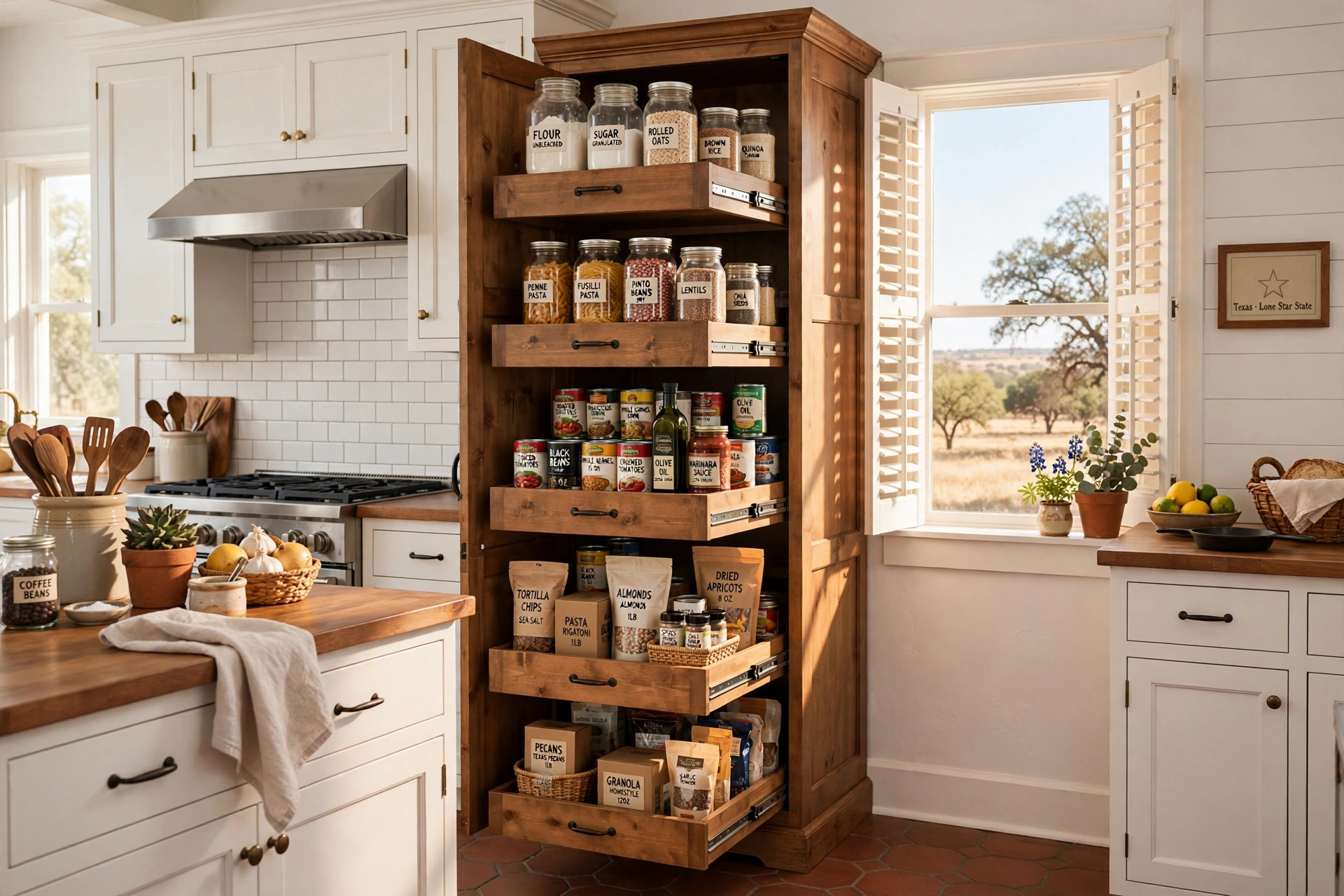

A pantry is the heart of daily food storage. In Texas homes, the kitchen pantry cabinets you choose shape how you shop, cook, and clean. This guide to kitchen pantry cabinets texas homes usa walks you through the choices in plain terms. It covers why pantries matter, what to look for, the main types, real costs, simple care, and basic safety. Whether you live in a ranch house outside Dallas or a city home in Houston, the right pantry can make your kitchen work better every single day.
Why It Matters
Texas kitchens are often the busiest room in the house. Families cook big meals. Friends drop by. Holidays bring full tables. A good pantry keeps food in order so the rest of the kitchen stays calm.
A pantry cabinet gives food its own home. Cans, dry goods, spices, and snacks each get a clear spot. When items are easy to see, you waste less. You do not buy a third jar of peanut butter when you already have two. You do not let flour sit so long that it goes stale.
Space also matters. Many Texas homes have open floor plans. The pantry may sit right in view of the living room. A tidy pantry cabinet keeps the whole space looking clean. A messy one shows clutter to every guest.
Heat is another factor. Texas summers are long and hot. Food stored in a garage or a hot corner can spoil faster. A well-placed indoor pantry keeps food cooler and safer. That protects your budget and your health.
Finally, a good pantry adds value to the home. Buyers notice storage. A kitchen with a smart, well-built pantry often stands out. If you ever sell, this one upgrade can pay back in interest.
What to Look For: Kitchen Pantry Cabinets Texas Homes Usa
Choosing a pantry cabinet is like choosing any piece of furniture. You want it strong, the right size, and easy to use. Here are the main points to check.
Size and fit. Measure your space before you shop. Note the width, height, and depth of the spot where the cabinet will stand. Allow room for doors to swing open. A tall cabinet that crowds a walkway will annoy you daily. Many guides on kitchen cabinet sizes can help you plan the layout.
Shelving that adjusts. Adjustable shelves are worth every penny. Cereal boxes are tall. Spice jars are short. Shelves that move let you set the right height for each row. Fixed shelves force you to waste space.
Pull-out shelves. Pull-out shelves slide toward you like drawers. They let you reach items at the back without moving everything in front. They are one of the best upgrades for a deep pantry. See how pull-out storage ideas compare across brands.
Door style. Doors should close fully and stay shut. Check the hinges. Soft-close hinges stop doors from slamming. Magnetic catches keep doors closed in warm rooms where wood may shift.
Material and build. Solid wood costs more but lasts for decades. Plywood is strong and costs less. Particle board is the cheapest but can swell if it gets wet. In a kitchen, spills happen, so water resistance matters. Finish quality matters too. A smooth, sealed finish wipes clean with ease.
Ventilation. Pantries store food. Food needs fresh air. A cabinet with small gaps or a vented back panel keeps air moving. This matters in humid parts of Texas, where moisture can lead to stale food or mold.
If you are planning a full kitchen update, you may also want to read about shaker cabinet doors buying guide usa to match your pantry style with the rest of the kitchen.
Types and Options
Pantry cabinets come in several common forms. Each suits a different kitchen.
Tall single-door pantry. This is the classic tall cabinet, often 84 to 96 inches high. It has one long door or two stacked doors. Shelves run the full height. It fits well in a corner or at the end of a counter run.
Double-door pantry. Two doors open to reveal wide shelves. This style gives easy access to everything at once. It works well in larger kitchens with room for both doors to swing.
Pull-out tall pantry. Instead of shelves, this unit has a tall frame that pulls straight out on tracks. Everything is visible from both sides. It is ideal for narrow gaps between other cabinets, such as a 12-inch space next to the fridge.
Butler’s pantry cabinets. A butler’s pantry is a small side room or wide hallway near the kitchen. It holds serving dishes, small appliances, and extra food. Cabinets here are often shallower. For ideas on matching counters, see butcher block countertops buying guide usa.
Corner pantry. A corner pantry uses an angled door to open into the corner of the kitchen. It gives a lot of storage for the space it takes. The trade-off is that deep corners can be hard to reach, so add a lazy Susan or pull-outs.
Freestanding pantry. A freestanding cabinet stands on its own, like a piece of furniture. You can move it later. This is a good pick for renters or for homes where built-in work is not in the budget. Check freestanding storage options for sizes that fit standard doorways.
When it comes to layout, pantry cabinets pair well with other kitchen upgrades. Homeowners who redo counters often read quartz countertop installation buying guide usa at the same time, so the pantry and the counters age together.
Cost and Price
Prices vary widely. The final cost depends on size, material, and whether you hire a pro to install it.
Stock pantry cabinets. Stock units come in standard sizes from big home stores. A basic tall pantry can cost from 200 to 600 dollars. These are the lowest-cost option. Quality is fair. You may need to do the assembly and install yourself. Compare stock cabinet prices before you buy.
Semi-custom cabinets. Semi-custom cabinets let you pick the size, finish, and door style. They cost more, often 800 to 2,500 dollars per tall unit. The build quality is better. The wait time is longer, often four to eight weeks.
Custom cabinets. A local cabinet shop builds these to your exact space. Costs start around 2,000 dollars per tall unit and can go much higher. The fit is perfect. The finish matches the rest of your kitchen. This is the best choice for odd corners or historic homes.
Installation. If you hire a carpenter, expect to pay 200 to 800 dollars per cabinet for install. Complex jobs with plumbing or wiring nearby cost more. Some stores sell install plans. See kitchen installation services for typical service ranges.
Extras. Pull-out shelves, soft-close hinges, and LED lights add cost. Each pull-out can add 50 to 150 dollars. Under-cabinet or in-cabinet lights add 30 to 100 dollars per strip. These extras pay off in daily use.
Texas buyers should also budget for delivery. Large cabinets may need a truck or a store delivery plan. Always ask about the full price before you sign.
Care and Upkeep
A pantry cabinet lasts long if you treat it well. Care is simple and takes little time.
Wipe spills fast. Flour, oil, and syrup can stain wood or swell cheap boards. Wipe any spill the same day with a damp cloth. Dry the spot after. For stubborn marks, use a mild soap. Avoid harsh cleaners that strip the finish. More cabinet cleaning tips can guide you on safe products.
Check for pests. Dry goods attract pantry moths and weevils. Look inside once a month. Check flour, rice, and cereal boxes. Store dry goods in sealed glass or plastic jars. If you spot moths, throw out the infested food and clean the shelves with soap and water.
Tighten hinges. Doors that sag are a sign of loose hinges. Tighten the screws twice a year. If a screw hole is stripped, fill it with wood glue and a toothpick, then re-set the screw. This small fix keeps doors aligned.
Watch humidity. Texas air can be damp, especially near the Gulf. High humidity can warp wood doors. Run the range hood or a dehumidifier when cooking. Keep the pantry away from steam sources. A ventilation guide explains how moisture moves through a home.
Refresh the finish. Every few years, check the finish. If the surface looks dull or worn, a fresh coat of sealant or paint brings it back. Sand lightly, clean the dust, and apply thin coats. This is a weekend job, not a full remodel.
Organize yearly. Once a year, pull everything out. Toss expired food. Donate extras you will not use. Group like items together. Label shelves if it helps. A fresh start keeps the pantry working well. For small space ideas, see pantry organization ideas.
Safety
Safety in the pantry is simple but worth a moment of thought.
Anchor tall cabinets. A tall pantry can tip if a child climbs it. Use the anti-tip brackets that come with the cabinet. Screw the unit into a wall stud. This takes ten minutes and prevents a real danger. The CPSC safety page has clear guidance on anchoring furniture.
Store chemicals apart. Keep cleaning products in a separate cabinet, never above food. Spills and fumes can contaminate food below. If you have small children, add a child lock to the chemical cabinet. More home safety basics cover lock placement.
Mind the weight. Do not overload shelves. Heavy cans and jars belong on lower shelves. Light items go up high. Check the weight limit in the cabinet manual. Overloaded shelves can sag or break.
Keep food safe. Store raw meat and eggs in the fridge, not the pantry. Keep the pantry cool and dry. Throw out cans that are dented, bulging, or leaking. When in doubt, throw it out. Food safety rules from trusted guides apply to every kitchen.
Mind the lights. If you add lights inside the pantry, use low-heat LED strips. Keep them away from paper and food boxes. Turn lights off when the door is closed, or use a door switch that does it for you.
Frequently Asked Questions
How tall should a pantry cabinet be? Most tall pantry cabinets stand 84 to 96 inches high. Match the height to your ceiling and the rest of your cabinets. In kitchens with 8-foot ceilings, an 84-inch unit with a small gap on top is common. Taller units use space better but need a step stool for the top shelf.
Can I put a pantry cabinet in a small kitchen? Yes. Use a narrow pull-out pantry or a tall unit only 12 to 15 inches wide. These fit in gaps that would otherwise go to waste. Keep doors swing-clear in mind. Sliding or pull-out designs work best in tight rooms.
Wood or plywood for a pantry cabinet? Both work well. Solid wood looks rich and lasts very long. Plywood is strong, stable, and costs less. Avoid bare particle board in a kitchen, since one bad spill can ruin it. If you choose particle board, make sure it has a sealed, water-resistant finish.
How much does a pantry cabinet cost in Texas? A stock tall pantry costs 200 to 600 dollars before install. Semi-custom units run 800 to 2,500 dollars. Custom work starts near 2,000 dollars per unit. Install adds 200 to 800 dollars per cabinet. Prices in big cities like Austin and Dallas trend a bit higher than in rural areas.
How do I keep my pantry from getting too hot? Keep the pantry on an inside wall, away from the oven and from direct sun. Make sure air can move around the shelves. Use the range hood when you cook. In very hot homes, a small vent or a dehumidifier nearby helps. Cool, dry, and dark is the rule for stored food.
A Final Word
A pantry cabinet is a quiet worker. It does its job every day without praise. Pick one that fits your space, holds your food, and stands up to Texas heat. Build it strong, keep it clean, and it will serve your kitchen for many years. Good storage makes good cooking easier, and good cooking makes a house feel like home.
References
Bob Vila. (n.d.). Home improvement advice. https://www.bobvila.com Bosch. (n.d.). Home appliances. https://www.bosch-home.com Consumer Reports. (n.d.). Product reviews and ratings. https://www.consumerreports.org ENERGY STAR. (n.d.). Energy efficient products. https://www.energystar.gov GE Appliances. (n.d.). Kitchen and home appliances. https://www.geappliances.com Lowe’s. (n.d.). Home improvement products. https://www.lowes.com The Home Depot. (n.d.). Home improvement products. https://www.homedepot.com The Spruce. (n.d.). Home and garden advice. https://www.thespruce.com This Old House. (n.d.). Home renovation guidance. https://www.thisoldhouse.com U.S. Consumer Product Safety Commission. (n.d.). Product safety information. https://www.cpsc.gov Whirlpool. (n.d.). Home appliances. https://www.whirlpool.com
Was this guide helpful?

About Lisa Anderson
The My Garden US editorial team writes practical, in-depth home and garden guides for American homeowners — tested advice, no fluff.
You May Also Like
Garbage Disposal Installation: Where to Buy in the USA
July 6, 2026 0 views
Vinyl Plank Flooring for Sale USA: A Buyer’s Guide for Every Home
May 23, 2026 0 views
Butcher Block Countertops: Where to Buy in the USA
August 25, 2026 0 views