The Search Begins at Home
A cook who wants the fast heat of gas and the even bake of electric has one clear answer. It is the dual fuel range. Gas burners sit on top. An electric oven sits below. When you type dual fuel ranges deals near me into a search box, you are not just hunting for a low price. You are hunting for the right machine at a fair price, sold by a store that will stand behind it.
This guide walks you through the whole search. You will learn what makes these ranges worth the money, what features to weigh, where deals hide, and how to avoid common traps. By the end, you will know how to shop like a careful buyer, not a hurried one.
Why It Matters: Dual Fuel Ranges Deals near Me
A range is the hardest working appliance in the kitchen. It cooks breakfast, lunch, and dinner for years. A cheap unit may look fine in the store. It can fail in the fifth year, right when the warranty runs out. A good unit can serve for fifteen or twenty years.
Dual fuel ranges cost more than all-gas or all-electric models. That is the plain truth. The reason buyers pay the extra money is control. Gas burners respond fast. You can see the flame and judge the heat. Electric ovens hold a steady temperature. That steady heat gives you better bakes and roasts.
For a family that cooks daily, the difference shows up in the food. Bread rises and browns evenly. Casseroles cook through without hot spots. Steaks sear with real flame. This is why the search for dual fuel ranges deals near me is worth the effort. You pay once, and you enjoy the result every day.
How to Choose: What to Look For
Before you compare prices, know what you need. A deal is only a deal if the range fits your kitchen and your cooking habits.
The Cooktop
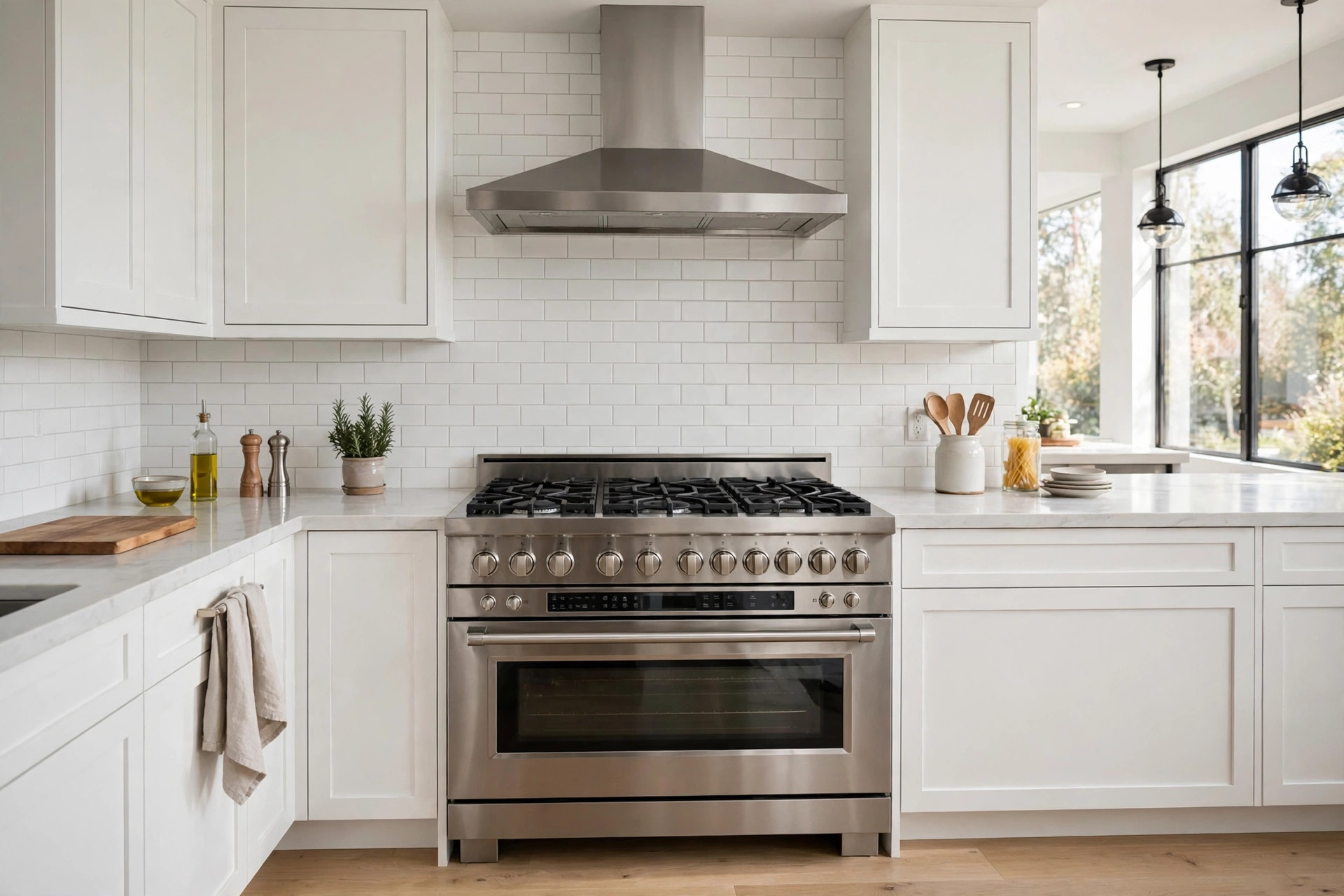
Look at the burners first. Most dual fuel ranges have four to six sealed burners. Sealed burners keep spills from dripping into the works. That makes cleaning easier. Check the heat range. The most powerful burner should reach at least 15,000 BTU. A low simmer burner should go down to about 500 BTU or less.
Grate design matters too. Continuous grates let you slide pots from burner to burner. They are heavy, and they cost more, but most cooks love them. Cast iron grates hold heat well and last a long time.
Some ranges add extras on the cooktop. A built-in griddle is common. A grill insert shows up on high-end models. Ask yourself if you will really use these extras. Extra features add cost and add parts that can break. If you want a deeper look at burner types, read our dual fuel ranges buying guide.
The Oven
The oven is where the electric side earns its keep. True convection is the key feature to look for. A fan and a third heating element move hot air around the food. This gives even browning and faster cooking. Self-cleaning is the next big feature. High-heat self-clean cycles burn food soil to ash. Some owners love them. Others clean by hand and skip the feature.
Check the oven size. A standard 30-inch range holds about five cubic feet. That fits most families. Larger 36-inch and 48-inch models offer more room, but they cost much more and need bigger kitchens. Look at the rack positions too. More rack spots give you more options for tall dishes.
Size and Fit
Measure your space before you shop. This is the most common mistake buyers make. Measure the width, the depth, and the height of the opening. Write the numbers down. Take them to the store. Slide-in ranges sit flush with your counters. Freestanding ranges have a back panel with controls. Make sure you know which type you need.
Also check your utilities. A dual fuel range needs a gas line and a 240-volt electric outlet. If your kitchen lacks one of these, adding it costs money. Get a quote from a licensed pro before you buy. Trusted home guides like Bob Vila can help you plan the project.
Types and Options
Dual fuel ranges come in several widths and styles. The 30-inch width is the most common in American homes. It fits standard cabinets and costs the least. A 36-inch range gives a wider cooktop and a bigger oven. It suits serious cooks and large families.
The 48-inch range is a statement piece. It often has two ovens and a long row of burners. These models belong in large kitchens and cost several thousand dollars. Smaller 24-inch models exist for apartments and tight spaces.
Finish is another choice. Stainless steel leads the market. It looks sharp and resists heat. It shows fingerprints, so some makers add smudge-proof coatings. Black stainless is a newer look. White and black enamel finishes cost less and suit classic kitchens. European makers like Bosch and range makers such as GE Appliances offer many styles across price points.
Fuel type deserves a note. Dual fuel means natural gas or propane on top with electric below. If your home uses propane, tell the dealer. The range must be set up for propane at install. A wrong setup is unsafe.
Cost and Price
Now the heart of the matter: what should you pay? Prices for dual fuel ranges run wide. Entry-level 30-inch models start near one thousand dollars on sale. Mid-range models with true convection and strong burners run from two thousand to four thousand dollars. Pro-style ranges from well-known brands can cost five thousand to ten thousand dollars or more.
Deals appear in cycles. Holiday weekends bring the deepest cuts. Memorial Day, July Fourth, Labor Day, and Black Friday are the big sale events. Retailers also clear floor models in January and February. Scratch-and-dent sections hold the best hidden deals. A small dent on the side panel can cut the price by a third, and the dent faces your cabinet where no one sees it.
Big home improvement stores run frequent promotions. The Home Depot and Lowe’s both sell major brands and often bundle free delivery. Major brands themselves run rebates. Check Whirlpool and other makers for current rebate offers before you buy.
Do not forget the full cost. Delivery, haul-away of the old range, gas line work, and a new outlet add up. Ask for the installed price in writing. A low sticker price means little if the install costs wipe out the savings.
If you are weighing fuel types, our gas kitchen ranges buying guide breaks down the trade-offs in plain terms.
Care and Upkeep
A dual fuel range rewards simple care. Wipe the cooktop after each use. Spills burn on fast over a gas flame. Use a soft cloth and mild soap on stainless surfaces. Avoid steel wool, which scratches the finish.
Clean the grates in the sink with hot soapy water. Let them soak if food is stuck. Dry them fully before you put them back. Wet grates can rust at the edges.
For the oven, follow the maker manual. If you use the self-clean cycle, remove the racks first. High heat can discolor racks. Run the cycle when you are home. The oven gets very hot, and you want to be near in case of smoke.
Check the gas burners now and then. Lift the caps and look for clogged ports. A straight pin can clear a blocked port. If a burner burns yellow instead of blue, call a pro. A yellow flame can mean poor combustion.
Every year or two, have a licensed tech check the gas connections and the oven calibration. Small drift in oven temperature is normal with age. A tech can recalibrate in minutes. Kitchen planning sites such as The Spruce offer step-by-step cleaning guides for every range type.
Safety
Gas and high heat demand respect. Keep a fire extinguisher in the kitchen. Know how to use it. Never leave the cooktop on while you leave the house. Turn pot handles inward so children cannot grab them.
Teach everyone in the home the smell of gas. Natural gas has an added odor like rotten eggs. If you smell it, do not flip switches or light anything. Leave the house and call the gas company from outside. The federal Energy Star program also offers safety and efficiency guidance for gas appliances.
Install a carbon monoxide detector near the kitchen. Gas appliances can produce this odorless gas if they burn poorly. A detector costs little and saves lives. If your range needs a gas conversion for propane, only a licensed pro should do the work.
Keep the oven vent clear. Do not store items in the oven. Many house fires start this way. Veteran renovation experts at This Old House remind owners that repairs on gas lines are never a do-it-yourself job.
FAQ
How much should I expect to pay for a good dual fuel range? A solid 30-inch model with true convection costs between two thousand and three thousand five hundred dollars at regular price. On sale, you can often find the same range for hundreds less. Set your budget, then wait for a holiday sale event.
Do I need both a gas line and a 240-volt outlet? Yes. The cooktop runs on gas, and the oven needs 240-volt power. If your kitchen has only one of the two, a licensed pro must add the other. Get that quote before you shop so you know the true cost.
Are dual fuel ranges better than all-gas ranges? They are different tools. Gas ovens heat fast but can bake unevenly. Electric ovens hold steady heat and bake more evenly. Cooks who bake a lot tend to prefer dual fuel. Cooks who mostly use the stovetop may not see the benefit. Independent test labs like Consumer Reports publish side-by-side test results that can guide you.
Where do the best deals hide? Watch holiday sales, floor-model clearances, and scratch-and-dent sections at local dealers. Big-box stores match prices during sale events. Independent dealers sometimes beat big-box prices if you ask. Always compare the installed price, not just the sticker.
What size should I buy? Measure your opening first. Most American kitchens fit a 30-inch range. Buyers with room and budget step up to 36 inches. Go larger only if you cook for crowds and have the cabinet space. A range that does not fit is no deal at any price.
Should I buy the extended warranty? Read the terms first. The maker warranty covers parts and labor for one year on most models. Extended plans add years but also add rules. If the plan covers the costly parts, like the control board and the convection fan, it may be worth it. Ask what is excluded before you sign.
A Final Word
The hunt for dual fuel ranges deals near me ends well when you shop with a plan. Know your size. Know your fuel setup. Compare installed prices, not stickers. Wait for a sale if you can. And pair your new range with proper ventilation. Our stainless range hoods buying guide shows what to look for in a matching hood.
A good dual fuel range is a long-term partner in your kitchen. Buy it once, buy it right, and it will serve your family for many years.
References
Bob Vila. (n.d.). Home improvement advice. https://www.bobvila.com Bosch. (n.d.). Home appliances. https://www.bosch-home.com Consumer Reports. (n.d.). Product reviews and ratings. https://www.consumerreports.org ENERGY STAR. (n.d.). Energy efficient products. https://www.energystar.gov GE Appliances. (n.d.). Kitchen and home appliances. https://www.geappliances.com Lowe’s. (n.d.). Home improvement products. https://www.lowes.com The Home Depot. (n.d.). Home improvement products. https://www.homedepot.com The Spruce. (n.d.). Home and garden advice. https://www.thespruce.com This Old House. (n.d.). Home renovation guidance. https://www.thisoldhouse.com Whirlpool. (n.d.). Home appliances. https://www.whirlpool.com
Was this guide helpful?

About Emily Rodriguez
The My Garden US editorial team writes practical, in-depth home and garden guides for American homeowners — tested advice, no fluff.