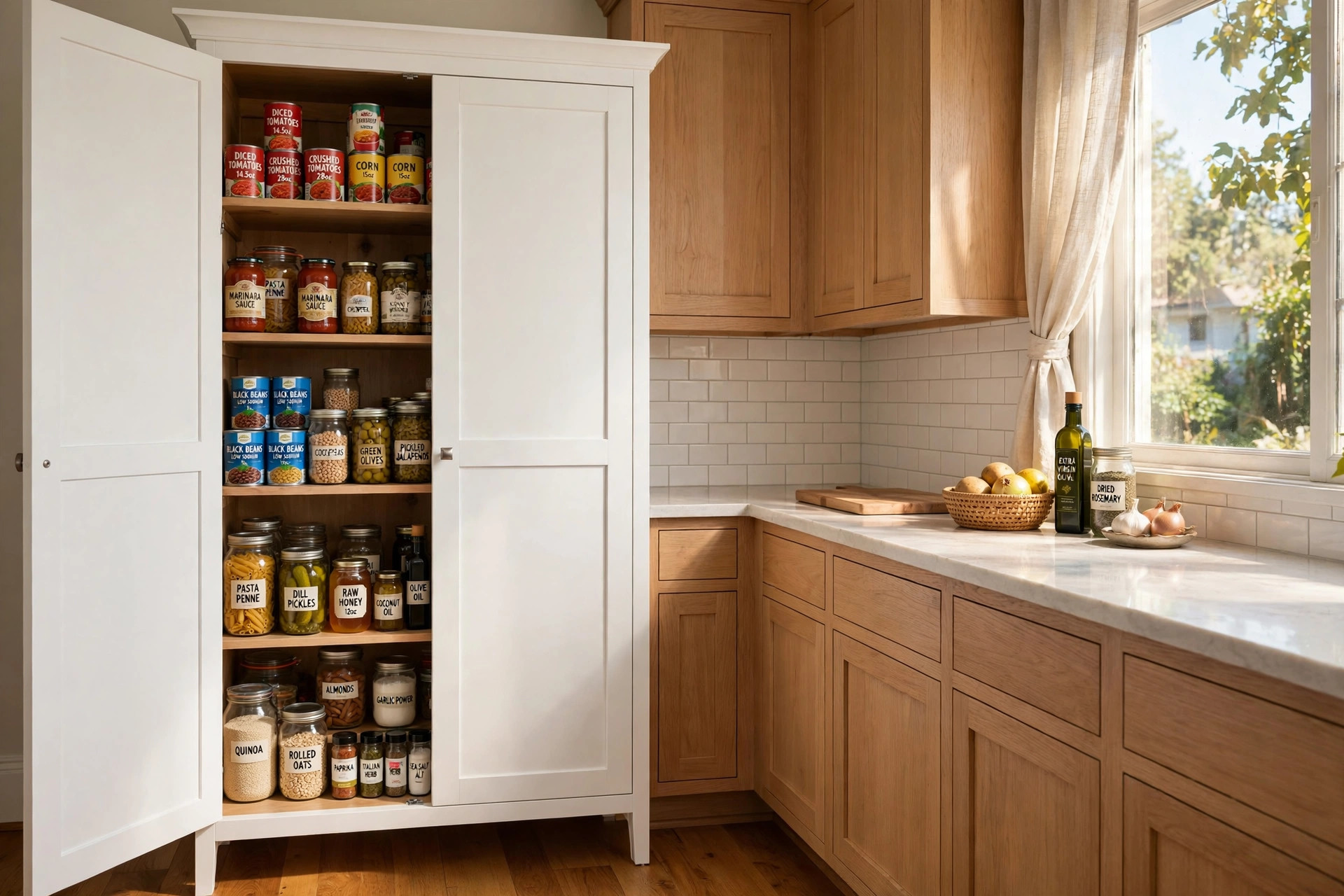

Shopping for kitchen pantry cabinets for sale USA wide can feel like a large job. There are many stores, many sizes, and many styles. The good news is that the search becomes simple once you know what to look for. A pantry cabinet is a tall cabinet that holds food, dishes, and small kitchen goods. It keeps a kitchen neat and gives every item a clear place. This guide will help you pick the right one.
Why a Pantry Cabinet Matters
A pantry cabinet adds storage where the kitchen lacks it. Many homes have only base cabinets and wall cabinets. That is not enough for a busy family. Canned goods, dry pasta, spices, and baking pans pile up on counters. A tall pantry cabinet takes all of that off the counter and puts it behind closed doors.
A pantry cabinet also saves time. You can see every shelf at a glance. You know what you have and what you need to buy. Meal planning becomes easier. Grocery trips become shorter. In a small kitchen, a pantry cabinet makes the room feel larger because the counter stays clear.
For resale value, good storage helps. Buyers look at kitchens first. A kitchen with strong pantry storage looks well planned. If you plan to sell your home in a few years, a good pantry cabinet is money well spent.
How to Choose the Right Pantry Cabinet: Kitchen Pantry Cabinets for Sale Usa
Measure Your Space First
Measure the height, width, and depth of the spot where the cabinet will go. Write down the numbers. Leave at least one inch of space above the cabinet so it can stand upright when you set it in place. Leave room for the door to swing open. Also check that the cabinet can pass through your home’s doors and halls during delivery.
Standard tall pantry cabinets are 84 to 96 inches high. Widths run from 12 to 36 inches. Depth is often 12 to 24 inches. A shallow cabinet works well in a narrow kitchen. A deep cabinet holds more but needs a larger room. Measure twice so the cabinet fits the first time.
Think About What You Will Store
List the items you want to store. Tall bottles need tall shelf space. Small cans work well on short, narrow shelves. Large pots need deep shelves. If you bake, you may want room for flour bins and mixing bowls. If you keep cleaning goods in the kitchen, plan a shelf for them too, away from food.
Adjustable shelves are a smart feature. You can move them up or down as your needs change. Roll-out shelves are another good feature. They pull out so you can reach items at the back without bending deep into the cabinet.
Match the Style of Your Kitchen
A pantry cabinet should look like it belongs. White shaker-style cabinets suit a farmhouse or classic kitchen. Flat-panel wood cabinets suit a modern kitchen. Check the finish of your current cabinets before you shop. Many makers sell pantry cabinets that match their kitchen lines, which makes the job easy. For more on door styles, see our guide to shaker cabinet doors buying guide usa.
Check the Build Quality
Open the door in the store or read the product details online. The door should close flat and smooth. Shelves should be thick and strong, not thin and springy. Back panels should be solid, not thin paper. Look at the hinges and slides. Soft-close hinges are a nice touch. They keep the door from slamming.
Solid wood is the strongest choice but costs the most. Plywood is strong and a good value. Particleboard is the least costly but may swell if it gets wet. Medium-density fiberboard sits in the middle. For a cabinet that will serve for years, plywood or solid wood is the better pick.
Types of Kitchen Pantry Cabinets for Sale
Freestanding Pantry Cabinets
Freestanding pantry cabinets stand alone. They do not attach to the wall or to other cabinets. This makes them easy to set up. You place them where you want, and you can move them later if you change the room. Many models come with doors, drawers, and open shelves all in one unit. They are a fine choice for renters or for kitchens that lack built-in storage. The Consumer Reports buying guides often note that freestanding storage is a low-cost way to add space without a full remodel.
Built-In Pantry Cabinets
Built-in pantry cabinets are made to fit with your kitchen cabinetry. They match in height, depth, and finish. They look like part of the original kitchen. You can buy a single tall cabinet to fill a gap, or you can plan a full wall of storage. Built-in units may need a skilled hand to set in place. But the result looks clean and adds real value to the home.
Corner and Pull-Out Pantry Cabinets
Corner spaces are hard to use. A corner pantry cabinet or a pull-out pantry unit solves that problem. Pull-out pantry cabinets are narrow and tall. They slide out of a small gap next to the range or fridge. They hold spices, oils, and canned goods within easy reach. They are a clever fix for small or odd-shaped kitchens.
Ready-to-Assemble Pantry Cabinets
Ready-to-assemble cabinets, often called RTA cabinets, ship flat in boxes. You put them together at home with simple tools. They cost less than fully built cabinets. The quality can be very good if you buy from a known maker. Assembly takes time, so set aside an afternoon. Follow the steps in order, and the cabinet will be strong and true.
Cost and Price Guide
Prices for kitchen pantry cabinets for sale in the USA vary with size, material, and brand. A small ready-to-assemble pantry cabinet may cost 150 to 400 dollars. A mid-range plywood cabinet often runs 400 to 900 dollars. A large solid-wood or custom built-in unit can cost 1,000 to 3,000 dollars or more.
Delivery adds to the cost. Some sellers offer free shipping. Others charge by size and weight. If you need help with setup, that is an extra charge as well. Ask for the full price before you order, so there is no surprise at checkout. Sale events in late fall and early spring often bring the best prices. Compare prices at Home Depot and Lowe’s before you buy, since both carry wide selections with regular promotions.
It also pays to think about long-term value. A cheap cabinet that sags in two years is no bargain. A well-made cabinet that lasts twenty years is worth the higher price. Balance your budget with the quality you need. For a rental home, a basic unit may be enough. For your own home, spend a bit more for strength.
Care and Upkeep
Pantry cabinets need little care, but a small routine keeps them in good shape. Wipe shelves with a damp cloth every few months. Dry them well after wiping. Do not let water stand on the wood or boards. Keep an eye on the hinges and screws. Tighten them once a year.
Line the shelves with shelf liner. Liner protects the wood from cans and spills. It also makes cleanup fast. Just lift the liner, wipe it, and put it back. Replace torn liner when you see it.
Keep food in sealed boxes and jars. Open bags can spill and draw pests. Check dates on canned goods once a year. Throw out anything past its date. A tidy pantry is a safe pantry. If you store heavy items on a shelf, keep the heaviest low. This protects the shelf and keeps the cabinet stable. Wipe the door fronts with a soft cloth and mild soap when they look dull. Harsh cleaners can strip the finish. Once a year, pull the cabinet a few inches from the wall and sweep behind it. Dust and crumbs gather there. A clean back panel lasts longer and looks better when you move the unit.
Safety Tips
Safety matters when you shop for kitchen pantry cabinets for sale USA wide. Tall cabinets can tip forward if they are not fixed to the wall. Use the anti-tip hardware that comes in the box. Fasten the cabinet to a wall stud. This is very important in homes with small children who may climb. The Consumer Reports guides on furniture tip-over safety — mirrored by guidance found on The Spruce’s storage safety pages — stress anchoring tall furniture to the wall.
Do not overload the top shelves. Heavy items belong low. Keep cleaning goods away from food. Store them on a low shelf or in a separate spot. If the cabinet has glass doors, keep sharp or heavy items off the top shelf where they could fall.
When the cabinet is delivered, clear a path from the door to the kitchen. Get help to lift it. Tall cabinets are heavy and awkward. Two people make the job safe. Check the unit for damage before the driver leaves. If a corner is crushed, note it on the delivery form.
Frequently Asked Questions
What is the standard size of a kitchen pantry cabinet?
Common tall pantry cabinets are 84 to 96 inches high and 18 to 36 inches wide. Depth ranges from 12 to 24 inches. The right size depends on your kitchen. Measure your space and your doorways before you order. Many makers also offer custom sizes at a higher price.
How much do kitchen pantry cabinets for sale in the USA cost?
A basic ready-to-assemble unit may start near 150 dollars. Mid-range cabinets run 400 to 900 dollars. High-end or custom units can pass 2,000 dollars. Material, size, and brand drive the price. Watch for seasonal sales at big retailers such as Home Depot and Lowe’s to save money.
Can I install a pantry cabinet myself?
Yes, most freestanding and ready-to-assemble cabinets are made for home setup. You need basic tools like a screwdriver and a level. Built-in units may need a skilled worker, mainly for a clean fit with other cabinets. Always anchor tall cabinets to the wall. The project guides on This Old House and Bob Vila walk through basic cabinet installation steps.
What is the best material for a pantry cabinet?
Plywood and solid wood are the strongest choices. They hold heavy shelves well and last for years. Medium-density fiberboard is a fair middle choice. Particleboard costs the least but does poorly with moisture. For a long-lasting cabinet, choose plywood or solid wood.
Where should I place a pantry cabinet in my kitchen?
Place it near the main work area but out of the path between the sink, stove, and fridge. A wall near the fridge is a good spot. Keep it where the door can open fully. In a small kitchen, a corner or the end of a cabinet run works well. For ideas on pairing storage with new counters, see our guide to quartz countertop installation buying guide usa.
Do pantry cabinets need to be anchored to the wall?
Yes. Any tall cabinet should be fixed to the wall with anti-tip hardware. This stops the cabinet from tipping forward when doors are open or when a child climbs. It takes only a few minutes and adds real safety.
A Short Final Word
Kitchen pantry cabinets for sale USA wide give you many good choices. Start with your measurements. Pick a style that fits your kitchen. Choose strong materials. Watch the full price with delivery. Anchor the cabinet to the wall, and keep the shelves tidy. Do these things, and your pantry cabinet will serve you well for many years. For a full step-by-step on kitchen pantry cabinets in general, read our kitchen pantry cabinets buying guide usa. Shoppers who care about efficient homes can also check ENERGY STAR’s kitchen guidance and the appliance coverage at GE Appliances, Bosch Home, and Whirlpool for ideas on pairing storage with the right equipment.
References
Bob Vila. (n.d.). Home improvement advice. https://www.bobvila.com Bosch. (n.d.). Home appliances. https://www.bosch-home.com Consumer Reports. (n.d.). Product reviews and ratings. https://www.consumerreports.org ENERGY STAR. (n.d.). Energy efficient products. https://www.energystar.gov GE Appliances. (n.d.). Kitchen and home appliances. https://www.geappliances.com Lowe’s. (n.d.). Home improvement products. https://www.lowes.com The Home Depot. (n.d.). Home improvement products. https://www.homedepot.com The Spruce. (n.d.). Home and garden advice. https://www.thespruce.com This Old House. (n.d.). Home renovation guidance. https://www.thisoldhouse.com Whirlpool. (n.d.). Home appliances. https://www.whirlpool.com
Was this guide helpful?

About Sarah Mitchell
The My Garden US editorial team writes practical, in-depth home and garden guides for American homeowners — tested advice, no fluff.
You May Also Like
A Practical Guide to Double Wall Ovens in American Homes
July 22, 2026 0 views
Gas Kitchen Ranges Deals Near Me: A Plain Guide to Buying
August 17, 2026 0 views
Stainless Range Hoods American Homes Guide
February 8, 2026 0 views