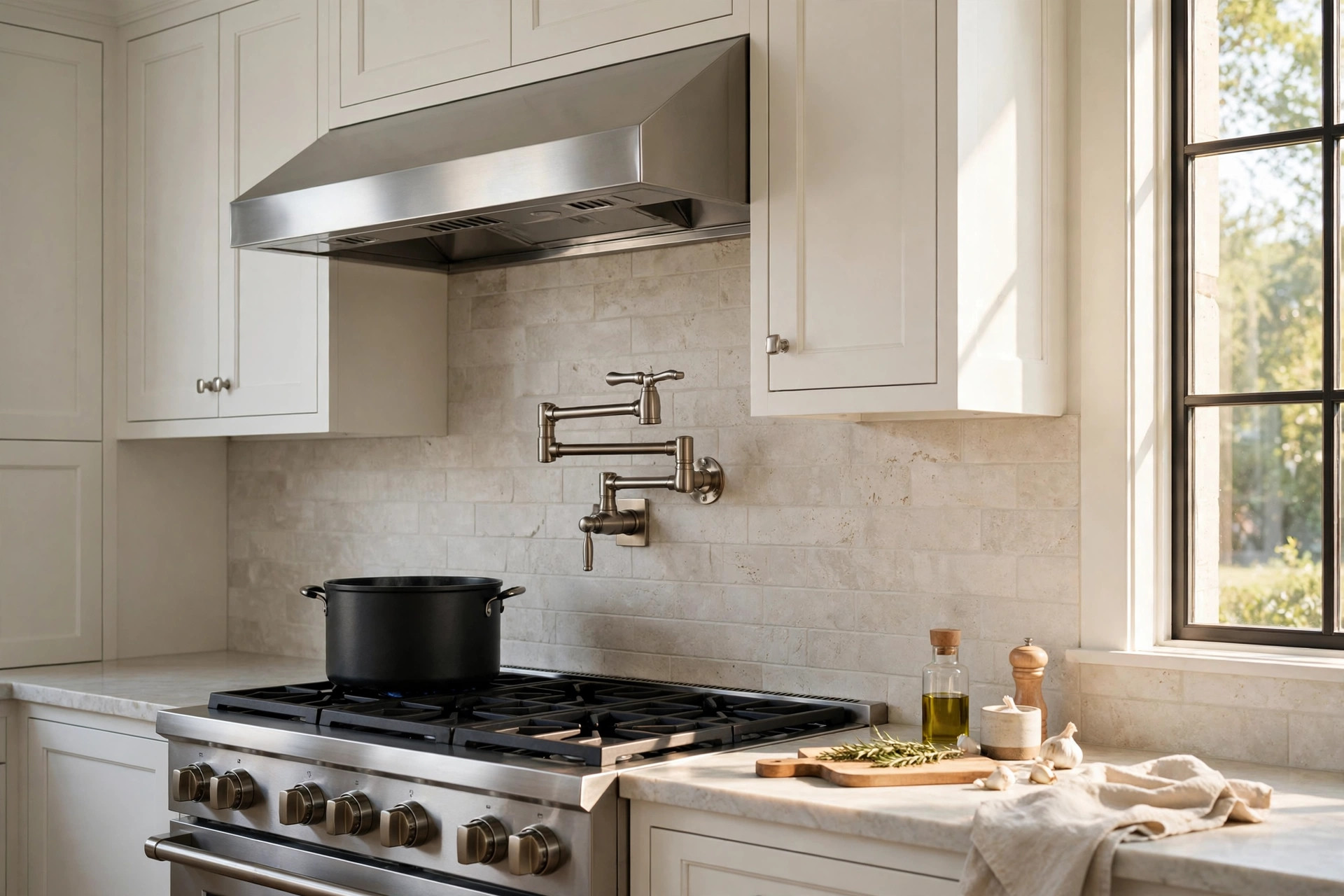

This pot filler faucets buying guide USA covers every step of the choice. A pot filler is a swing-arm faucet that mounts on the wall behind your stove. It folds flat when not in use. It swings out when you need water. You fill pots right at the burner instead of carrying heavy water across the kitchen. That one small change makes daily cooking faster and safer. This guide explains what to look for, how much a pot filler costs, and how to care for it. It also answers common questions and lists trusted sources so you can read more on your own.
Why Pot Fillers Matter in a Modern Kitchen
A pot filler saves trips to the sink. Think about a large stock pot. Filled with water, it can weigh twenty pounds or more. Carrying it from the sink to the stove is hard on the back. It is hard on the wrists. It is a slip risk when water sloshes. With a pot filler, the pot sits on the burner from the start. You add water there. When cooking is done, you drain it in the sink only once, when it is lighter or cool enough to handle.
Home cooks use pot fillers for pasta water, canning, and soup stock. Bakers use them to fill large mixing bowls. Families with many children fill pots for daily meals. The faucet becomes a fixed station at the range. Many remodel plans in the United States now include one as a standard item. Appliance makers such as Whirlpool publish kitchen planning guides that show pot fillers as part of a well-built cooking wall. When you choose the right gas range to mount it above, the two fixtures work as one unit.
A pot filler also adds value at resale. Real estate agents in many markets call it a small luxury feature. It photographs well. It tells a buyer the kitchen was built for serious cooking. The cost is modest next to a full remodel. For these reasons, more American homes now have one.
What to Look for When You Choose a Pot Filler: Pot Filler Faucets Buying Guide Usa
A good choice starts with the details. The range, the water line, and your own cooking habits all shape the pick.
Reach and Spout Design
Reach is the first number to check. Measure from the wall to the center of the largest burner you plan to use. Most pot fillers extend 18 to 24 inches. A short arm may not reach the front burner. A long arm may bump into a range hood or a cabinet. Check the folded depth as well. When folded, the arm should sit close to the wall so it does not block the back of the range.
The spout should sit above the tallest pot you use. A spout that sits too low forces you to tilt a tall pot. A spout that sits too high splashes water outside the pot. Most models place the spout 8 to 12 inches above the cooktop. Write down the height of your tallest canning pot before you shop.
Finish and Material
The body should be solid brass or stainless steel. Brass lasts for decades. Stainless steel resists rust and matches many modern kitchens. Avoid thin plastic parts in the valve area. The finish must match your other fixtures. Common finishes are polished chrome, brushed nickel, oil-rubbed bronze, and matte black. Chrome is easy to clean. Matte black shows fewer fingerprints. Bronze suits a traditional kitchen. Check that the finish is rated for kitchen use and will not flake under heat.
Valve Quality and Water Flow
The valve is the heart of the faucet. Look for quarter-turn ceramic disc valves. They seal tight and last long. Cheap valves drip. A drip at a pot filler can run straight down the wall behind the stove. That water can stain grout and feed mold. Test reports from groups such as Consumer Reports show that valve quality is the main difference between budget and premium faucets.
Flow rate matters too. A pot filler should fill a gallon in about twenty seconds. That is a flow of roughly 3 gallons per minute. A slow filler defeats the purpose. Check the product sheet for the flow rate at your home water pressure. If your house has low pressure, pick a model with a full-flow valve and wide internal passages.
Types of Pot Filler Faucets
Shops in the United States sell three main styles. Each suits a different kitchen.
Wall-Mount Swing-Arm Fillers
This is the classic pot filler. It bolts to the wall behind the range. Two jointed arms fold flat against the wall. You pull the outer arm out when you need water. Push it back when done. The mounting height usually sits 12 to 16 inches above the cooktop. These models need a water line inside the wall. That means you must plan the rough-in before you tile the backsplash. Renovation guides at This Old House walk through how to open the wall, add a shut-off valve, and set the pipe stub at the right height.
Deck-Mount Fillers
A deck-mount filler sits on the countertop behind the range. It works when you cannot open the wall. Some renters and older homes use this style. The base clamps or bolts to the counter. A tall column rises up, and a swing arm reaches over the burners. It needs less plumbing work. But it takes counter space. It can also collect grease behind a busy stove. Wipe the column often.
Cold-Only Versus Hot-and-Cold Models
Most pot fillers deliver cold water only. That is by design. You fill the pot, then the stove heats the water. Cold-only models are simple. They have one valve and one supply line. Some premium models offer hot and cold. They need two supply lines. They also mix hot and cold at the spout. Hot-and-cold models cost more to buy and install. For most cooks, cold-only is enough. If you want hot water at the stove for tea or quick soups, the dual model is worth the extra cost.
Cost and Price in the United States
A pot filler faucet alone costs between 150 and 700 dollars in the United States. Basic chrome models from retail stores such as The Home Depot and Lowe’s start near 150 dollars. Mid-range models in brushed nickel or bronze run 250 to 450 dollars. Designer models from premium brands run 500 to 700 dollars or more.
What Drives the Price
Three things drive the price. First is material. Solid brass costs more than plated zinc. Second is finish. Matte black and specialty finishes add 50 to 100 dollars. Third is brand and valve quality. Premium ceramic disc valves cost more than standard washers. Product lines from companies such as GE Appliances and Bosch often sit in the mid to upper range because they use tested valve parts.
Installation Costs
Installation adds 200 to 600 dollars if a plumber runs a new water line. The job includes opening the wall, adding a supply line with a shut-off valve, and patching the wall. If the wall is already open during a remodel, the cost drops to the low end. If a tile backsplash is already in place, the cost rises because the plumber must cut tile with care. In states with strict plumbing codes, you may also need a permit. Get two or three quotes before you commit. If you are already doing a full remodel, ask the contractor to add the rough-in while the walls are open. That is the cheapest time to do it.
Total cost for a mid-range pot filler with a new water line runs 400 to 1,000 dollars in most American markets. Compare that with the cost of a full range and hood upgrade to see how small the addition is in context.
Care and Upkeep
A pot filler needs little care. Wipe the arms and spout with a soft cloth each week. Grease from cooking settles on the finish. A mild dish soap and warm water remove it. Do not use abrasive pads. They scratch the finish and dull the metal.
Check the joints twice a year. Open both arms and look for drips at the pivot points. Tighten the joint screws if the arm feels loose. Replace the ceramic disc cartridge if you see a steady drip from the spout. Most makers sell spare cartridges. Home project sites like Bob Vila show the simple steps to swap a cartridge without a plumber.
In cold climates, protect the supply line from freezing. The line sits inside a wall near the stove, so it is usually safe. But in a drafty exterior wall, add pipe insulation around the supply. A frozen line can burst and soak the wall behind the stove.
If you have hard water, wipe the aerator at the spout tip once a month. Mineral scale builds up and cuts the flow. Unscrew the aerator, soak it in vinegar for an hour, and screw it back on. This takes five minutes and keeps the flow strong.
Safety Tips for Pot Filler Faucets
Safety comes first with any wall-mounted faucet over heat. Keep these rules in mind.
First, install a dedicated shut-off valve in the wall. Label it. Every adult in the house should know where it is. If a valve fails at the filler, you can shut off water without closing the whole house supply.
Second, mount the filler above the clearance required by your stove maker. Most gas ranges need at least 30 inches of clear space to the bottom of a hood or cabinet. The filler sits on the wall, not above the burners, but the arm must clear pot lids and tall handles. Keep the folded arm clear of flame paths.
Third, keep children in mind. A pot filler can tempt a small child to turn a handle and spill water on a hot burner. Choose a model with a firm quarter-turn handle. Turn the arm to face the wall after use. Never leave a pot filling while you leave the room. Water overflows fast at 3 gallons per minute.
Fourth, watch for leaks behind the stove. Because the water line hides in the wall, a slow leak can grow unseen. Once a year, feel the wall behind the range for dampness. Look for stains on the backsplash. Early checks stop mold and rot. Resources such as The Spruce explain how to spot hidden plumbing leaks in kitchens.
Fifth, match the filler to your water quality. If your home has very hard water, plan on regular aerator cleaning. If your home uses a water softener, check that the softener settings are right for fixtures. Government resources such as Energy Star explain how efficient kitchens save water and energy at the same time.
Frequently Asked Questions
Does a pot filler need its own drain?
No. A pot filler has no drain. It only adds water. You drain pots in the sink as before. The filler removes the carry trip to the stove, not the drain trip to the sink. Many owners pair the filler with undermount stainless sinks that make draining and cleanup easy.
Can I add a pot filler during a small remodel?
Yes, if you can open the wall. A plumber can add the supply line in a day. The rough-in must go in before tile or new drywall. Plan the mounting height before the plumber cuts. If you are changing quartz countertops at the same time, confirm the counter height so the filler sits at the right level above the burners.
Is a pot filler allowed by local plumbing codes?
In most places, yes. Codes in the United States treat it like any other fixture. You need a shut-off valve and proper pipe supports. Some cities ask for a permit when you add a new fixture. Call your local building office before work starts. A licensed plumber will know the rules in your area.
Do pot fillers leak more than regular faucets?
Not if you buy a quality valve. Leak rates match standard kitchen faucets. The risk is different, not higher. A leak at a pot filler lands behind the stove where you may not see it. That is why a shut-off valve and yearly checks matter. Buy ceramic disc valves from a known brand and the risk stays low.
How high should the pot filler mount?
Measure up 12 to 16 inches from the cooktop to the center of the mounting flange. Then check your tallest pot. The spout should clear the pot rim by at least 4 inches. If you use tall canning pots, mount near the top of that range. If you cook mostly in shallow pans, the lower end works fine.
Are pot fillers worth it for small kitchens?
They can be. In a small kitchen, the sink-to-stove walk is short. But the real gain is for heavy pots. A small kitchen often means a small sink. Filling a huge pot in a tiny sink is awkward. A pot filler removes that step. If you cook big batches, it pays off even in a small space.
Final Word on Pot Filler Faucets
A pot filler is a small fixture with a big daily payoff. It cuts out the heaviest step in cooking. It protects your back and your floors. It suits serious cooks, large families, and anyone who cans or stocks soup in volume. The choice comes down to reach, valve quality, finish, and cost. Measure your range. Check your water pressure. Pick a solid brass or stainless model with ceramic disc valves. Plan the rough-in before the walls close. Then enjoy the small luxury of water on demand at the stove. For a full kitchen plan, this pot filler faucets buying guide USA pairs well with guides on ranges, sinks, and countertops so every fixture works as one system.
References
Bob Vila. (n.d.). Home improvement advice. https://www.bobvila.com Bosch. (n.d.). Home appliances. https://www.bosch-home.com Consumer Reports. (n.d.). Product reviews and ratings. https://www.consumerreports.org ENERGY STAR. (n.d.). Energy efficient products. https://www.energystar.gov GE Appliances. (n.d.). Kitchen and home appliances. https://www.geappliances.com Lowe’s. (n.d.). Home improvement products. https://www.lowes.com The Home Depot. (n.d.). Home improvement products. https://www.homedepot.com The Spruce. (n.d.). Home and garden advice. https://www.thespruce.com This Old House. (n.d.). Home renovation guidance. https://www.thisoldhouse.com Whirlpool. (n.d.). Home appliances. https://www.whirlpool.com
Was this guide helpful?

About David Wilson
The My Garden US editorial team writes practical, in-depth home and garden guides for American homeowners — tested advice, no fluff.
You May Also Like
Pot Filler Faucets for Sale USA: A Practical Buyer’s Guide
March 11, 2026 0 views
Vinyl Plank Flooring USA Online Deals: A Practical Guide
June 20, 2026 0 views
Gas Kitchen Ranges Buying Guide USA: What to Know Before You Buy
May 27, 2026 0 views