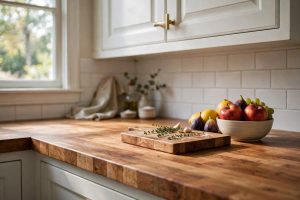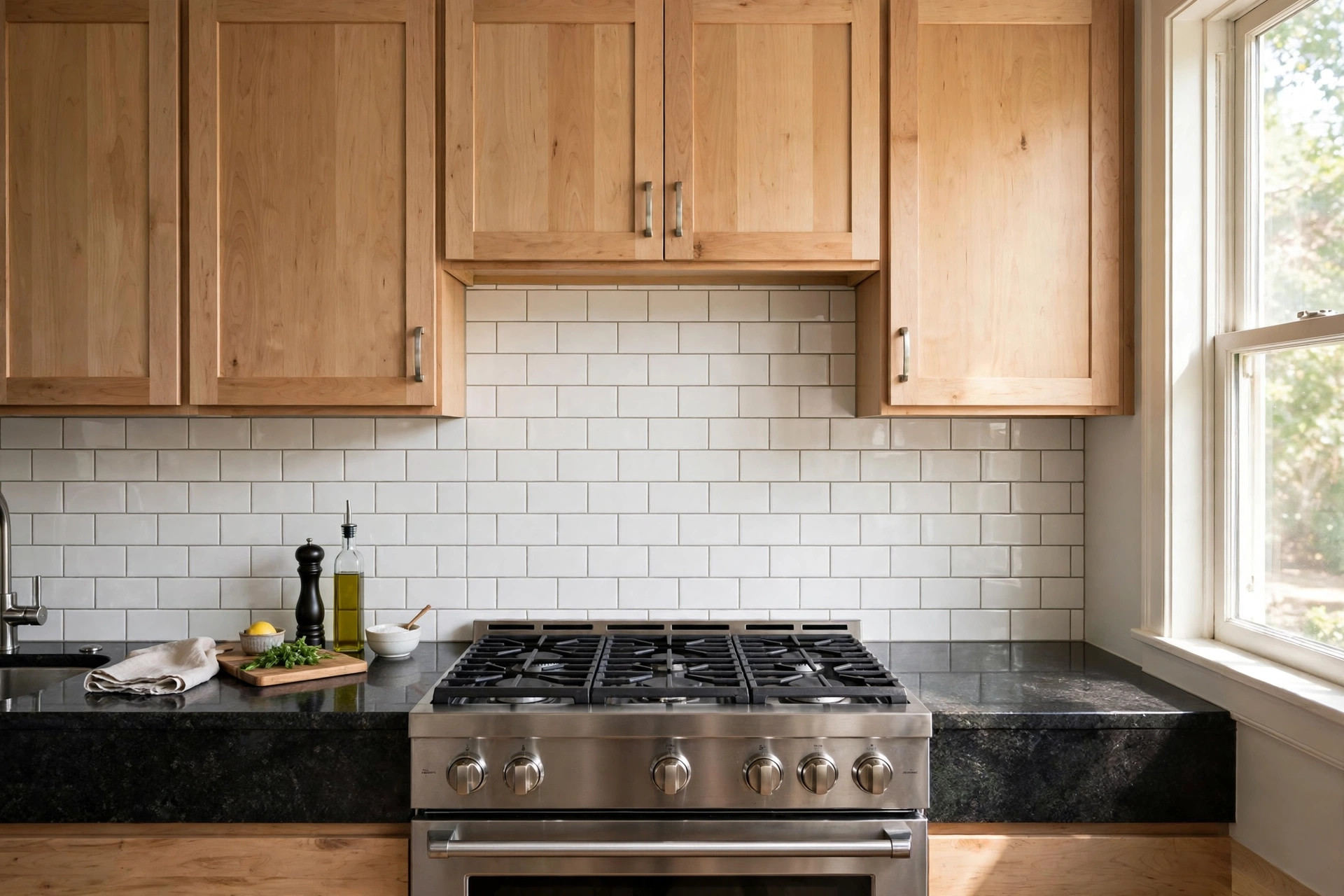

A kitchen backsplash is the strip of wall between the countertop and the upper cabinets. This kitchen backsplash tiles buying guide USA will help you pick the right tile the first time you shop. Tiles guard the wall against water, grease, and heat from cooking. They also set the look of the whole room. A well chosen backsplash can last for twenty years or more. A poor choice will chip, stain, or look dated in a short time. Read the sections below before you visit a store or order online. You will learn what the main tile types are, what they cost, and how to match them to your kitchen.
Why a Backsplash Matters
The wall behind a stove and sink takes daily abuse. Steam rises. Grease pops out of pans. Water splashes from the faucet. Paint soaks up this mess and is hard to clean. Drywall soaks it up too and can grow mold. Tile forms a hard, smooth shield that wipes clean in seconds. That is the main job of a backsplash. Style is the second job. The backsplash sits at eye level and runs the full length of the kitchen. It is one of the first things a visitor sees. A plain white subway tile can make a small kitchen feel bright and open. A bold patterned tile can turn a dull kitchen into a warm one. Real estate agents often point to the backsplash when they praise a kitchen. A clean, current backsplash helps a home sell. Advice from This Old House notes that small updates in the kitchen often return more value than big ones. A new backsplash is one of the smallest and most useful updates you can make.
How to Choose the Right Tile: Kitchen Backsplash Tiles Buying Guide Usa
Measure Your Wall Space
Start with a tape measure. Measure the length of the wall between the counters and the cabinets. In most American kitchens this height is about eighteen inches. Measure the full length too. Multiply length by height to get square feet. Add ten percent for cuts and waste. Tiles break during cutting, and boxes sometimes hold a bad tile. If your backsplash runs behind a range with no cabinet above it, measure up to the range hood. Write the numbers down and take them to the store. Staff at The Home Depot or any tile shop can use your square footage to tell you how many boxes you need. Buying too little tile is a common mistake. Tile lots change color slightly from run to run, so a second order may not match.
Match the Tile to Your Kitchen
Look at your counters, cabinets, and floor first. The backsplash should tie these together, not fight them. If your counters have a busy pattern, pick a simple tile. If your counters are plain, you can pick a busier tile. Dark cabinets pair well with light tile. Light cabinets pair well with both light and dark tile. Take a small sample of your countertop with you when you shop. Many stores give out free tile samples or small chip boards. Hold the sample against your counter in your own kitchen light. Store lights are very bright and can lie. What looks gray in the store may look blue at home. Shoppers searching for kitchen backsplash tiles for sale usa online should order samples before they place a large order. Most major sellers mail samples for a few dollars.
Types of Backsplash Tile
Ceramic and Porcelain Tile
Ceramic is the most popular backsplash tile in the United States. It is cheap, easy to cut, and comes in hundreds of colors and shapes. The classic choice is the white subway tile, three inches by six inches, set in a brick pattern. It fits almost any kitchen style. Porcelain is a denser form of ceramic. It resists stains and water better than plain ceramic. Porcelain costs a little more. Both work well behind a stove. Glazed tiles have a glass-like skin that wipes clean. Unglazed tiles look natural but need sealing. For a backsplash, glazed tile is the simpler choice. Guides at The Spruce often list ceramic as the best tile for first time tile buyers because it is so easy to install and replace.
Natural Stone Tile
Marble, travertine, and slate give a kitchen a rich, natural look. No two stone tiles look exactly alike. That is part of the appeal. Stone costs more than ceramic and needs more care. Most stone is soft and soaks up liquids. You must seal stone tiles before grouting and seal them again every year or two. Lemon juice, vinegar, and tomato sauce can etch marble and leave dull spots. If you cook with a lot of acid foods, stone may frustrate you. Travertine has small pits that can trap grease. Filling the pits at install time helps. Slate is darker and more stain resistant than marble. Stone works best in kitchens that are used gently. It is not the low care choice.
Glass Tile
Glass tile reflects light and can make a small kitchen feel bigger. It comes in clear, frosted, and colored forms. Mosaic sheets of small glass tiles are popular because they bend around outlets and corners. Glass costs more than ceramic. It is also harder to cut. A cheap tile cutter can crack glass. A wet saw with a fine blade is the right tool. Many do it yourself owners pay a pro to set glass tile. Behind the stove, glass handles heat well. Grease wipes off the smooth face with ease. Some glass tile has a painted back that can scratch. Check the maker notes before you buy. Dark glass shows water spots more than light glass.
Metal and Specialty Tile
Metal tiles in stainless steel, copper, or tin give a modern or industrial look. They match well with steel appliances from makers such as Bosch Home and Whirlpool. Metal tiles are thin and light. They cut with tin snips. They can dent if you hit them hard. Copper will darken over time unless it has a clear coat. Specialty tiles include hand painted ceramic, cement tile, and peel and stick panels. Hand painted tile is lovely but costly. Cement tile is thick and needs sealing. Peel and stick panels are the cheapest option. They suit renters. Real heat from a gas range can loosen the glue on some peel and stick brands. Check the heat rating on the package.
Cost and Price in the USA
Backsplash tile prices in the United States vary a lot. Cheap ceramic tile can cost two to five dollars per square foot. Mid range porcelain and glass run five to fifteen dollars per square foot. Natural stone and hand made tile can run fifteen to forty dollars per square foot or more. Grout, mortar, and tools add about one to three dollars per square foot. If you hire a pro to install, labor often costs five to fifteen dollars per square foot, based on tile type and pattern. A simple subway tile pattern costs less to install than a mosaic or herringbone pattern. A standard ten foot run of backsplash is about fifteen square feet. Do the math before you shop. Tile for a small backsplash can cost under one hundred dollars. A large stone backsplash with pro labor can pass two thousand dollars. Price lists at Lowe’s and The Home Depot show that stock ceramic is often the best value. Fancy imported tile can cost ten times as much and last no longer.
Ways to Save Money
Buy stock sizes. Odd sizes cost more. Pick a simple pattern. Herringbone looks fine but takes twice as long to set. Install the tile yourself if you are handy. A small backsplash is a good first tile job. Buy all your tile at once from the same lot. Ask the store about open box deals. Rent a wet saw for a day instead of buying one. These steps can cut the total cost in half.
Care and Upkeep
Tile is easy to care for, but it still needs a routine. Wipe the backsplash with a damp cloth once a week. Use a mild dish soap for grease. Do not use harsh acids on stone or on colored grout. They can eat the finish or bleach the color. Seal grout lines once a year with a grout sealer. Sealed grout resists stains and mold. Reseal stone tiles on the schedule the maker gives. Check caulk lines where the tile meets the counter. Caulk cracks over time. Cut out old caulk and lay a fresh bead when you see gaps. This stops water from getting behind the tile. If a tile chips, you can often pop it out and set a spare. That is why you should keep a few spare tiles from the same lot. Reviews at Consumer Reports point out that the grout, not the tile face, is what wears out first in most kitchens.
Safety
Tile work is safe if you take basic care. Wear safety glasses when you cut tile. Chips can fly. Wear gloves when you handle cut edges. They are sharp. A wet saw is the safest cutting tool for a home owner. It is slower than a snap cutter but it breaks less tile. Keep the work area dry except at the saw. Mortar and grout contain fine dust. Wear a dust mask when you mix them. Keep children and pets out of the work area until the grout cures. Most grouts cure in one to three days. Vent the room while adhesives dry. Some mastics have strong fumes. Read the label on every product you buy. If your home was built before 1978, test old paint for lead before you scrape the wall. Bob Vila guides remind home owners that wall prep is as important as the tile itself.
Frequently Asked Questions
What is the most popular backsplash tile in the USA? White glazed ceramic subway tile is still the top seller. It is cheap, easy to clean, and fits old and new kitchens alike. Gray and beige subway tiles are close behind. Large format tiles with fewer grout lines are gaining ground.
Can I install a backsplash over old tile? Yes, in many cases. The old tile must be solid, flat, and clean. Scuff the glaze with sandpaper so the new mortar can grip. Use a mortar rated for tile over tile. If the old tile is loose or cracked, remove it first. A second layer makes the wall thicker, so check that outlets and trim still fit.
How do I clean grease off a tile backsplash? Wipe with warm water and dish soap. For heavy grease near the stove, use a paste of baking soda and water. Let it sit for ten minutes, then wipe. Avoid steel wool on glazed tile. It will scratch the finish. Steam cleaners work well on grout lines.
Should the backsplash match the countertop? It should work with the countertop, not copy it. A tile that is the exact same color as the counter can look flat. Pick a tile that picks up one color from the counter and adds a new one. If you plan new counters soon, read a quartz countertop installation buying guide and a butcher block countertops buying guide before you choose tile. The counter is harder to change than the tile.
What tile works best behind a gas range? Glazed ceramic, porcelain, and glass all handle the heat of a gas range. Keep the tile at least a few inches from an open flame. Metal tile works too but can show heat marks over time. Avoid peel and stick panels right behind a high output burner unless the maker rates them for heat. Range guides from GE Appliances note that a range hood helps pull heat and grease away from the wall.
Do I need to seal my backsplash tile? Glazed ceramic, porcelain, and glass do not need sealing. The glaze is the seal. Natural stone must be sealed before grouting and resealed every year or two. Cement tile needs sealing too. Grout lines should be sealed once a year no matter what tile you pick. An undermount stainless sinks buying guide can help you plan the sink area, where sealing matters most.
A Short Final Word
This kitchen backsplash tiles buying guide USA comes down to three steps. Measure your space. Pick a tile that fits your cooking style and your budget. Seal what needs sealing and keep spares. A backsplash is a small job with a big visual payoff. Take your time at the store, order samples, and look at them in your own light. The right tile will serve your kitchen well for many years.
References
Bob Vila. (n.d.). Home improvement advice. https://www.bobvila.com Bosch. (n.d.). Home appliances. https://www.bosch-home.com Consumer Reports. (n.d.). Product reviews and ratings. https://www.consumerreports.org GE Appliances. (n.d.). Kitchen and home appliances. https://www.geappliances.com Lowe’s. (n.d.). Home improvement products. https://www.lowes.com The Home Depot. (n.d.). Home improvement products. https://www.homedepot.com The Spruce. (n.d.). Home and garden advice. https://www.thespruce.com This Old House. (n.d.). Home renovation guidance. https://www.thisoldhouse.com Whirlpool. (n.d.). Home appliances. https://www.whirlpool.com
Was this guide helpful?

About Robert Taylor
The My Garden US editorial team writes practical, in-depth home and garden guides for American homeowners — tested advice, no fluff.
You May Also Like
Kitchen Backsplash Tiles Deals Near Me: A Plain Guide to Smart Buying
July 1, 2026 0 views
Quartz Countertop Installation in Texas Homes: A Plain and Full Guide
January 28, 2026 0 views
Vinyl Plank Flooring Reviews and Buying Guide for USA Homes
June 23, 2026 0 views