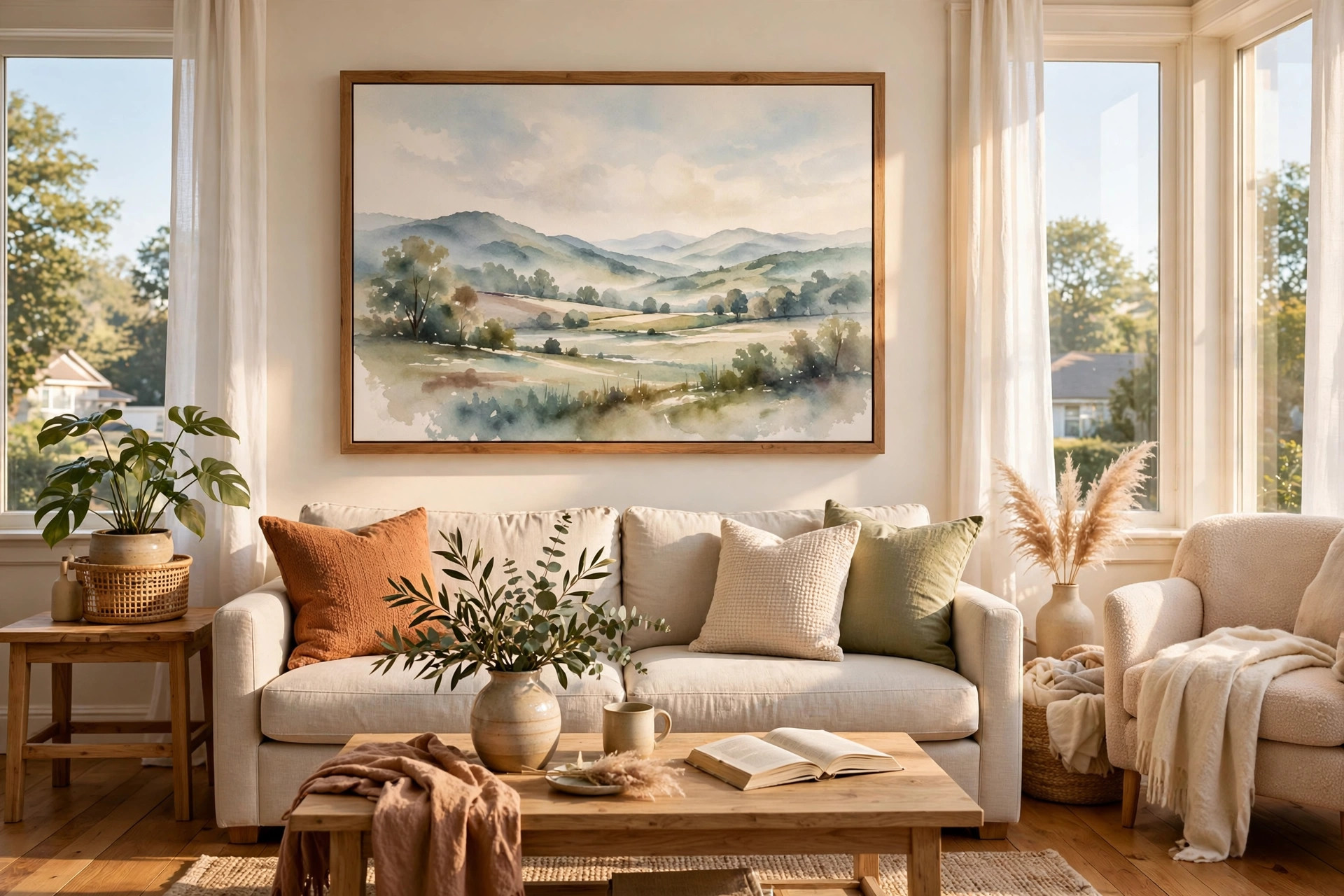

The living room wall art american homes guide begins with a simple truth. The walls of a home set the mood of the room. A bare wall can feel cold. A wall with well chosen art can feel warm and complete. Many American homes have large, open living rooms. These rooms need art that fills the space in the right way. This guide will help you choose, hang, and care for wall art in your living room. It is written for the everyday home owner. No art degree is required.
Why Living Room Wall Art Matters
A living room is the center of most American homes. It is where families gather at the end of the day. It is where guests sit when they visit. The art on the walls speaks before you do. It shows what the home owner values. It sets a tone for the whole room.
Studies of home design often point to one fact. People feel more at ease in rooms that look finished. A finished room has color on the walls in the form of art, photos, or prints. The living room wall art american homes guide shows that even one large piece can change a room. It can make a small room feel larger. It can make a large room feel cozy.
Art also adds color without new paint. A painting with warm reds can add heat to a gray room. A print with cool blues can calm a busy room. This is a cheap way to change the look of a home. Paint costs money and takes time. A new piece of art hangs in minutes.
How to Choose the Right Piece: Living Room Wall Art American Homes Guide
Choosing wall art can feel hard. There are many options. The steps below make it simple. Follow them in order.
Measure First
Before you shop, measure your wall. Use a tape measure. Write down the height and width of the space. Most designers follow one rule. The art should fill about two thirds to three quarters of the wall space above a sofa or console table. A piece that is too small looks lost. A piece that is too large can crush the room.
Measure the sofa too. If the art hangs above a sofa, the art should be about two thirds the width of the sofa. A 90 inch sofa pairs well with art that is about 60 inches wide. You can use one large piece or two to three smaller pieces to reach that width.
Match the Style of Your Home
American homes come in many styles. A farmhouse home has wood beams and warm tones. A modern home has clean lines and open space. A colonial home has classic wood trim and rich colors. The art should match the style of the home. A modern abstract print may look out of place in a rustic cabin. A landscape painting may look wrong in a sleek city loft.
Look at your furniture. Note the colors and shapes. Pick art that shares one or two colors with your room. It does not need to match exactly. It should feel like it belongs. For help with matching furniture and art, see our guide to velvet living sofas for color ideas that pair well with wall art.
Pick a Color Palette
Most rooms have a main color and one or two accent colors. Pick art that uses those colors. If your room is blue and gray, look for art with blue tones. If your room is warm beige, look for art with warm browns and golds. The art can also add a new accent color. Just make sure that color shows up somewhere else in the room, such as a pillow or a throw.
Black and white art works in almost any room. It adds shape without adding new color. It is a safe choice for homes with bold wall colors. Many design guides, such as those found on The Spruce, suggest starting with black and white pieces if you are unsure.
Consider the Mood
Art sets a mood. A stormy seascape feels dramatic. A soft floral print feels calm. A city skyline feels lively. Think about how you want the room to feel. Most living rooms aim for a calm, welcoming mood. Soft landscapes, gentle abstracts, and warm still life images work well. Save the bold, loud pieces for a home office or a hallway.
Types of Living Room Wall Art
There are many types of wall art. Each type has its own look and price. The main types are described below.
Canvas Prints
Canvas prints are the most common type in American homes. The image is printed on canvas fabric and stretched over a wood frame. They have no glass. They are light and easy to hang. They cost less than original paintings. They come in many sizes, from small to very large. A large canvas over the sofa is the classic American living room look.
Framed Prints and Posters
A framed print is a paper print inside a frame with glass or acrylic. Frames come in wood, metal, and plastic. A set of two or three framed prints can line a hallway or fill a wall. Posters are cheaper but thinner. With a good frame, a poster can look fine. Retailers like IKEA sell low cost frames in standard sizes that fit most posters and prints.
Original Paintings
Original paintings cost more. Each one is unique. Oil paintings have rich color and texture. Watercolors are softer and lighter. An original piece from a local artist can be a good buy. It supports local talent. It also gives your home a one of a kind feel. Check local art fairs and galleries. Prices start around one hundred dollars for small works.
Photography
Framed photos of nature, cities, or family scenes are popular. Black and white photos give a timeless look. Color photos add life. You can print your own travel photos at a local shop. This is a low cost way to get personal art. Family photos in the living room are common in American homes. Keep them in a group or a gallery wall for the best effect.
Gallery Walls
A gallery wall is a group of small pieces hung close together. It can mix photos, prints, and small paintings. This style is popular in farmhouse and modern homes. Plan the layout on the floor first. Lay the pieces out in the shape you want. Then hang them one by one. Keep the space between frames small, about two to three inches. For more ideas on gallery wall layouts, browse the inspiration pages on Houzz.
Mirrors as Wall Art
A large mirror counts as wall art. It adds light and makes a room feel bigger. Decorative mirrors with wood or metal frames fit many styles. A mirror over a fireplace is a classic choice. To learn more, read our entryway decorative mirrors guide, which covers mirror styles that also work well in living rooms.
Tapestries and Textile Art
A woven wall hanging adds warmth and texture. Tapestries are popular in bohemian and farmhouse homes. They are light and easy to hang with a rod. They also help soften the sound in a room with hard floors. This is a good option for renters since it leaves no nail holes.
Where to Hang Your Art
Placement matters as much as the art itself. The best piece can look bad if it hangs in the wrong spot.
The center of the art should hang at eye level. Eye level is about 57 to 60 inches from the floor to the center of the piece. This is the rule used by most galleries. If you hang art above a sofa, leave six to eight inches between the top of the sofa and the bottom of the frame. Do not hang it too high. High art makes the sofa and the art look disconnected.
For large walls, center the art on the wall or on the furniture below it. For a gallery wall, start with the largest piece in the center. Build outward from there. Step back often to check the look. Apartment Therapy offers free guides with photos that show proper hanging heights in real homes.
Above a fireplace is a common spot. Make sure the art is wide enough for the mantel. Leave at least four inches between the mantel and the frame. Do not hang paper prints or photos too close to a working fireplace. Heat and soot can damage them over time.
Cost and Price Guide
Wall art prices vary widely. The living room wall art american homes guide covers the full range so you can plan a budget.
Small prints in basic frames cost 20 to 60 dollars. Medium canvas prints cost 60 to 200 dollars. Large canvas prints, 36 by 48 inches or more, cost 150 to 500 dollars. Custom framing adds 100 to 400 dollars per piece, based on size and frame style.
Original paintings start around 100 dollars for small works by new artists. Known artists charge far more. A gallery piece for a living room often costs 500 to 2,000 dollars. Tapestries cost 30 to 150 dollars. Large decorative mirrors cost 100 to 400 dollars.
Set a budget before you shop. A good plan is to spend more on one large piece for the main wall. Spend less on smaller fill pieces. Watch for sales at home stores. Stores like Wayfair and Crate and Barrel run seasonal sales where wall art prices drop by 20 to 40 percent. Online marketplaces also offer wide choice at low prices. Check buyer reviews and return rules before you buy. Sites reviewed by Consumer Reports buying guides can help you compare quality across brands.
Frames and Finishing Touches
The frame is part of the look. A thin black frame gives a modern feel. A thick wood frame gives a classic feel. A gold frame suits formal rooms. White frames work well in bright, beach style homes. Keep frames consistent on one wall. Mixed frames work only in a planned gallery wall.
Glass or acrylic covers protect paper prints. Acrylic is lighter and safer than glass. It is the better choice for large pieces. It also resists breaking if the piece falls. Canvas prints need no cover. They can be dusted with a soft, dry cloth.
Lighting makes art look better. A picture light mounted above the art adds a gallery feel. Track lights aimed at the wall work well too. Even good living room floor lamps placed near the wall can wash light across a large canvas. Warm white bulbs, about 2700 to 3000 Kelvin, show colors in a natural way. Cool bulbs can make art look harsh.
Care and Upkeep
Wall art lasts for years with simple care. Dust frames and glass once a month. Use a soft microfiber cloth. Do not use water on paper prints or canvas. Water can stain and warp the surface. For glass, a small amount of glass cleaner on the cloth is fine. Do not spray cleaner right on the frame.
Keep art out of direct sun. Sunlight fades colors over time. This is true for prints, photos, and paintings. If a wall gets strong sun, use UV protective glass. Move or rotate pieces every year or two if fading is a concern.
Check the hanging hardware once a year. Make sure hooks and wires are firm. Heavy pieces need wall anchors or studs. A large canvas can weigh 15 pounds or more. Drywall alone may not hold it. Use the right anchor for the weight. This is a key safety step in any American home with plaster or drywall walls.
Safety Tips
Art safety is often ignored. It should not be. Heavy frames can hurt if they fall. Use two hooks for wide pieces. This keeps the piece level and spreads the weight. In homes with small children, avoid glass frames at low heights. Use acrylic or canvas instead. Do not hang heavy pieces over cribs or beds where a child sleeps.
In quake prone areas, use quake safe hooks or putty. These small steps stop art from sliding off the wall. Keep art away from heat sources. Do not hang paper art near radiators or heating vents. Heat dries the paper and can cause warping.
Frequently Asked Questions
How big should living room wall art be?
The art should be about two thirds to three quarters as wide as the furniture below it. For a 90 inch sofa, look for art around 60 inches wide. On an empty wall, one large piece or a group that fills the space works best. When in doubt, go larger. Most home owners pick art that is too small.
What kind of art is popular in American homes right now?
Landscapes, abstract prints, and black and white photography lead the list. Farmhouse styles favor rustic signs and nature scenes. Modern homes favor large abstract canvas prints. Coastal homes favor beach and sea themes. Personal photos remain popular in family rooms. Browse current trends on HGTV to see what styles designers are using this year.
Should all the art in a room match?
No. The art should share a mood or a color, not match exactly. A room with three identical prints can look flat. Mix sizes and types for more interest. Keep one thread in common, such as all landscapes or all black frames. This gives unity without boredom.
Can I hang art in a rented home?
Yes. Use options that do not damage walls. Adhesive hooks hold light frames. A leaning frame on a console table needs no nails. Tapestries hang from a rod with small hooks. Always check your lease rules first. Many landlords allow small nail holes but not large anchors.
How high should I hang art above a sofa?
Leave six to eight inches between the top of the sofa and the bottom of the frame. The center of the art should sit near 57 to 60 inches from the floor. This keeps the art and the sofa visually linked. Hanging too high is the most common mistake.
Where can I find low cost wall art?
Home stores, online retailers, and thrift shops all sell low cost art. West Elm and CB2 carry mid priced modern prints. Thrift shops often have good frames that you can reuse with new prints. Local art fairs offer original works at fair prices. Print shops can turn your own photos into large prints for under 50 dollars.
A Final Word
The living room wall art american homes guide ends where it began. Good wall art makes a home feel complete. Start with measurements. Match the style of your home. Pick colors that fit your room. Hang at the right height. Care for your pieces with simple dusting. You do not need a large budget. You need a clear plan. With these steps, any living room can gain the warmth and character that good wall art brings.
References
Apartment Therapy. (n.d.). Home design ideas and inspiration. https://www.apartmenttherapy.com CB2. (n.d.). Modern furniture and decor. https://www.cb2.com Consumer Reports. (n.d.). Product reviews and ratings. https://www.consumerreports.org Crate and Barrel. (n.d.). Furniture and home decor. https://www.crateandbarrel.com HGTV. (n.d.). Home and garden ideas. https://www.hgtv.com Houzz. (n.d.). Home design and remodeling. https://www.houzz.com IKEA. (n.d.). Home furnishings. https://www.ikea.com The Spruce. (n.d.). Home and garden advice. https://www.thespruce.com Wayfair. (n.d.). Furniture and home goods. https://www.wayfair.com West Elm. (n.d.). Modern furniture and home decor. https://www.westelm.com
Was this guide helpful?

About Robert Taylor
The My Garden US editorial team writes practical, in-depth home and garden guides for American homeowners — tested advice, no fluff.
You May Also Like

Living Room Ottomans for Sale USA: A Simple Buyer’s Guide
July 9, 2026 0 views
How to Find Luxury Area Rugs USA Online Deals Without Paying Too Much
September 14, 2026 0 views
Entryway Decorative Mirrors for California Homes
March 6, 2026 0 views