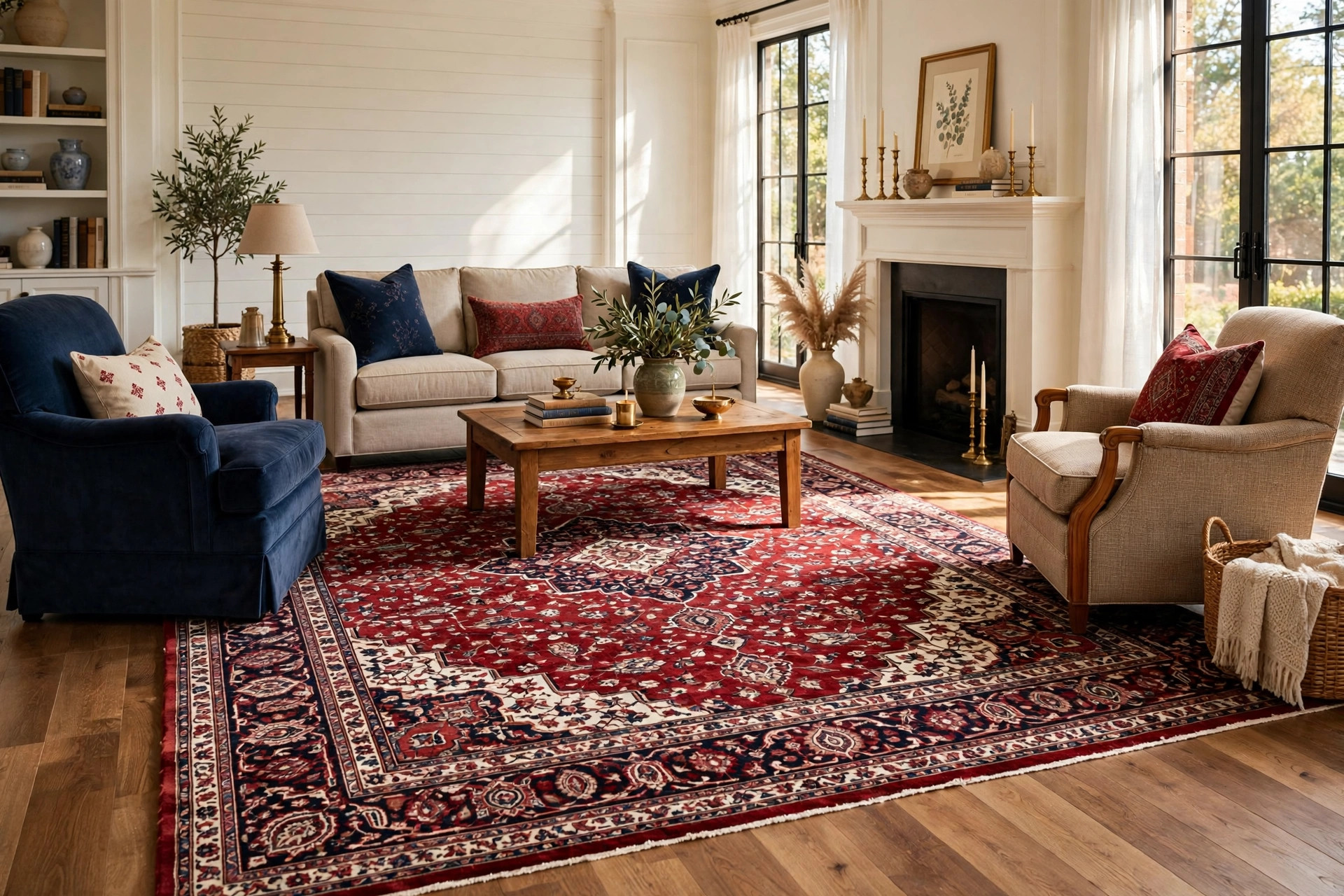

A good rug changes a room. This luxury area rugs American homes guide will help you choose a fine rug with care. A luxury rug is more than a soft floor cover. It adds warmth, cuts noise, and gives a room a finished look. In many American homes, the rug is the piece that ties the furniture together. This guide walks you through the main choices step by step. You will learn what makes a rug a luxury rug, which fibers and weaves to trust, how to size a rug for each room, what fair prices look like, and how to keep a fine rug in good shape for years.
Why a Luxury Rug Matters
A rug is often the largest textile in a room. It sets the mood. A cheap rug can make fine furniture look poor. A fine rug can make simple furniture look rich. That is why a luxury area rug is worth some thought.
Rugs also serve a real purpose. Hard floors are loud. A thick rug lowers echoes and keeps rooms quiet. It feels soft under bare feet. In winter, it adds warmth. In homes with children, it gives them a soft place to play.
Luxury rugs hold their value. A hand-knotted wool rug from a known region can last thirty years or more. Machine-made rugs rarely last that long. If you buy once and buy well, the cost per year is often lower than buying cheap rugs again and again.
How to Choose a Luxury Rug: Luxury Area Rugs American Homes Guide
Start with the room, not the rug. Look at your light, your wall color, and your furniture. The rug must work with what you own. Bring paint chips or fabric samples when you shop. In person, nothing beats seeing the rug next to your things.
Fiber First
Fiber decides how the rug feels and how long it lasts. Wool is the classic choice for luxury area rugs. It is soft, strong, and cleans well. Good wool keeps its shape for decades. Silk gives a fine shine and feels cool to the touch, but it costs more and needs gentle care. Many luxury rugs mix wool with silk for both strength and glow.
Cotton rugs are flat and light. They cost less but they are not usually classed as luxury. Viscose, sometimes sold as art silk, looks shiny but wears fast. It stains easy and should not go in busy rooms. Natural plant fibers like jute and sisal are strong but rough. They fit casual rooms, not formal ones.
Weave and Craft
Hand-knotted rugs are the top of the market. Each knot is tied by hand. A fine hand-knotted rug may hold hundreds of knots per square inch. These rugs last the longest and cost the most. Hand-loomed rugs are woven on a loom by hand. They are faster to make and cost less, but the quality is still high.
Hand-tufted rugs are made with a tufting gun. They are thick and soft but they shed more and do not last as long. Machine-made rugs are the least costly. Some fine machine-made rugs look very good, but they will not hold value like handmade pieces.
Color and Pattern
Pick colors that fit your room. Neutral rugs in ivory, gray, and beige work in most homes. They let your furniture stand out. Bold rugs with deep reds or blues become the star of the room. That is fine if your other pieces are plain.
Pattern matters too. Persian and Oriental patterns bring a classic feel. Modern rugs use plain fields, lines, and soft washes of color. If your room is small, a light rug with a simple pattern makes it feel larger. If your room is large, a bold pattern adds life.
Types of Luxury Area Rugs
Persian and Oriental rugs. These are the old masters. Names like Tabriz, Kashan, and Heriz tell where the design was born. Many are hand-knotted in wool. They suit classic and mixed rooms. You can find them in many homes across the country, from the East Coast to the West.
Contemporary designer rugs. Big names in design sell rugs with modern patterns. Stores such as Ikea and Wayfair carry wide ranges, and shops like Article and West Elm focus on clean modern styles. These rugs work well in newer homes.
Moroccan rugs. Beni Ourain rugs, with their thick pile and simple dark lines on ivory wool, have grown very popular in American homes. They fit farmhouse, boho, and modern rooms alike.
Natural fiber luxury rugs. High-end sisal and abaca rugs, often with fine cotton borders, give a beach-house feel. They are tough and clean easy. They work well in sunrooms and coastal homes.
Vintage and antique rugs. Old rugs have charm. A true antique rug, often a hundred years old, is one of a kind. Prices vary a lot. Buy from a dealer you trust. Check for repairs, thin spots, and color runs.
Sizing a Rug for Each Room
Size is where most buyers go wrong. A rug that is too small makes a room look cheap. A rug that is too large crowds the floor. Follow these plain rules.
Living room. The front legs of all main seats should sit on the rug. In a large room, all four legs can sit on it. Common sizes are 8 by 10 feet or 9 by 12 feet. Leave six to twelve inches of bare floor around the edges.
Dining room. The rug must be big enough for the chairs when they are pushed back. Add at least 24 inches on each side of the table. For a six-seat table, a 9 by 12 foot rug is often right. A dining room set should sit fully on the rug.
Bedroom. Place a large rug under the bed, with two to three feet of rug showing on each side. A 9 by 12 foot rug fits a king bed well. Or use two runners, one on each side of the bed.
Hallway and entry. Runners should run the length of the hall. Leave a few inches of floor on each side. In the entry, a rug that is at least four feet wide greets guests with warmth.
Home office and reading corner. A rug under the desk chair must be big enough for the chair to roll. Hard plastic chair mats can go over the rug. Pair your rug with solid modern wall bookshelves for a warm work space.
Measure twice before you buy. Use painter’s tape on the floor to mark the size. Live with the tape outline for a day. Then order.
Cost and Price
Luxury rug prices run wide. Knowing the ranges will help you spot a fair deal.
Machine-made luxury-look rugs run from about 200 to 800 dollars for an 8 by 10 foot size. They look fine but will not last like handmade pieces.
Hand-tufted and hand-loomed rugs run from about 800 to 3,000 dollars for the same size. Quality is good. They shed more at first but settle down.
Hand-knotted rugs start near 2,000 dollars and can pass 20,000 dollars for fine pieces. Wool hand-knotted rugs from India are often the best value. Silk pieces and named Persian designs cost the most.
What sets the price? Four things: fiber, knot count, labor hours, and design rights. Silk costs more than wool. A rug with 300 knots per square inch takes far longer to make than one with 100. That labor shows in the price.
Watch out for fake sales. Some stores mark rugs up and then cut the price in half. The real price is what the rug sells for most days. Read guides from Consumer Reports and The Spruce before you shop. Sites like Apartment Therapy and HGTV show how real homes use these rugs. For home styling ideas, Houzz has thousands of room photos, and CB2 and Crate and Barrel offer strong modern picks.
Care and Upkeep
A fine rug needs steady, simple care. Do this and it will last for decades.
Vacuum often. Vacuum once or twice a week. Use suction only, or set the beater bar high. Never pull on loose threads. Clip them with scissors.
Rotate the rug. Turn the rug a half turn once or twice a year. Sun and foot traffic wear one side faster. Rotation keeps wear even.
Clean spills fast. Blot, do not rub. Rubbing pushes the stain deep. Use plain water first. For tough spots, call a rug cleaner. Do not use harsh chemicals on wool or silk.
Deep clean every few years. A good rug cleaner washes the rug by hand. This costs more than steam cleaning but it is safer for fine rugs. Ask how they clean before you hand over your rug.
Use a rug pad. A pad keeps the rug from slipping. It also adds softness and keeps the rug from wearing on hard floors. Buy a pad made for your floor type. Felt pads work on wood. Rubber pads work on tile but can stain some floors, so check with your floor maker.
Keep out of harsh sun. Strong sun fades colors. Use window curtain panels or blinds to cut glare in bright rooms.
Safety
Rugs must be safe as well as fine. A loose rug can slide and cause a fall. Always use a good pad under a rug on hard floors. Tape the edges if the rug still moves.
Check that the rug lies flat. A rug that curls at the edge is a trip risk. Some new rugs need time to lie flat. Heavy books on the corners for a day can help.
Keep rugs away from open heat. Do not place a rug right against a fireplace or a hot stove. Sparks can burn wool. Clean up dust and lint near heaters.
If anyone in the home has dust or wool allergies, choose a low-pile rug and vacuum with a HEPA filter. Washable rugs are also an option for allergy homes.
Frequently Asked Questions
How do I know a rug is truly handmade? Turn the rug over. On a hand-knotted rug you can see each knot and the pattern shows clear on the back. On a machine-made rug the back is flat and the pattern looks blurred. A dealer should tell you the knot count and where the rug was made.
What is the best fiber for a busy family room? Wool is the best all-around fiber. It is soft, strong, and hides dirt well. It cleans up from spills if you blot fast. A low-pile wool rug is easy to vacuum and safe for kids and pets.
Should the rug match the curtains or the sofa? It does not need to match either one exactly. It should share one or two colors with them. If your sofa is plain, a patterned rug adds life. If your curtains are bold, a calm rug keeps the room in balance.
How long should a luxury rug last? A fine hand-knotted wool rug can last 30 to 50 years with care. Hand-tufted rugs often last 10 to 15 years. Machine-made rugs last 5 to 10 years in busy rooms. Rotation, pads, and gentle cleaning all add years.
Is it worth buying a rug online? Yes, if you shop with care. Read the return rules first. Order the smallest size to test color if you can. Check reviews with photos from buyers. When the rug arrives, unroll it and look at it in your room light before you decide.
Can I layer rugs? Yes. Layering is a popular look. Put a large flat rug down first, then a smaller soft rug on top. Keep the colors in the same family. Make sure the top rug does not slide. A pad between layers helps.
A Final Word
Buying a luxury rug is not hard when you take it step by step. Pick a fiber you trust. Choose a weave that fits your budget. Size it to the room, not to the price tag. Buy a good pad. Clean it with care. This luxury area rugs American homes guide gives you the plain facts you need. Take your time, compare a few shops, and choose the rug that feels right under your feet. A fine rug rewards you every day you walk on it.
References
Apartment Therapy. (n.d.). Home design ideas and inspiration. https://www.apartmenttherapy.com Article. (n.d.). Modern furniture. https://www.article.com CB2. (n.d.). Modern furniture and decor. https://www.cb2.com Consumer Reports. (n.d.). Product reviews and ratings. https://www.consumerreports.org Crate and Barrel. (n.d.). Furniture and home decor. https://www.crateandbarrel.com HGTV. (n.d.). Home and garden ideas. https://www.hgtv.com Houzz. (n.d.). Home design and remodeling. https://www.houzz.com IKEA. (n.d.). Home furnishings. https://www.ikea.com The Spruce. (n.d.). Home and garden advice. https://www.thespruce.com Wayfair. (n.d.). Furniture and home goods. https://www.wayfair.com West Elm. (n.d.). Modern furniture and home decor. https://www.westelm.com
Was this guide helpful?

About Emily Rodriguez
The My Garden US editorial team writes practical, in-depth home and garden guides for American homeowners — tested advice, no fluff.
You May Also Like

Living Room Floor Lamps American Homes Guide: Choosing, Placing, and Caring for Your Lamp
January 31, 2026 0 views
Window Curtain Panels USA Online Deals: A Plain Guide to Buying Well
May 16, 2026 0 views
Living Room TV Stands Texas Homes USA: A Complete Buying Guide
January 19, 2026 0 views