
A good rug can change a room in a single afternoon. This guide to luxury area rugs california homes usa covers what to buy, what to pay, and how to care for fine rugs in the Golden State.
California homes pose special tests for fine floor coverings. Bright sun fades weak dyes. Sea air in coastal towns brings moisture. Desert heat in the inland valleys bakes fibers dry. Busy households from San Diego to Sacramento also mean foot traffic, pets, and spilled coffee. A cheap rug gives up within a year. A well made luxury rug holds its looks for decades.
Why a Luxury Area Rug Matters in a California Home
An area rug does quiet work. It softens hard floors underfoot. It defines the seating zone in an open plan great room. It adds warmth in houses with tile or polished concrete floors. In California, many living rooms open straight onto a patio. The rug becomes the visual anchor that ties the indoors together.
Luxury rugs differ from mass market rugs in three ways. First, the materials are better. Fine wool, silk, and long staple cotton replace synthetic fibers. Second, the making is slower. Many are hand knotted by skilled weavers, a process that can take months. Third, the dyes hold. Quality vegetable and chrome dyes resist the strong California sun far better than cheap printed prints.
A luxury rug also protects the floor beneath it. Hardwood floors in California homes are expensive to refinish. A dense rug with a proper pad cuts wear and scratching. The pad also stops the rug from sliding, which matters on smooth oak or travertine floors.
What to Look For When You Choose: Luxury Area Rugs California Homes Usa
Fiber and Material
Wool is the classic choice for luxury area rugs. It is springy, resists dirt, and hides wear. New Zealand wool is prized for its bright color and long fibers. Wool also sheds water for a time, which helps in beach towns with damp air.
Silk adds sheen and fine detail. Many high end rugs blend silk with wool for pattern sharpness. Pure silk rugs are delicate and best for low traffic rooms. They are also priced well above wool rugs.
Cotton shows up in flat weave rugs and in the foundation of knotted rugs. It is strong and washable, but it wears faster than wool. Some modern luxury rugs use cotton for light summer weight pieces in coastal homes.
Plant based fibers such as sisal and jute suit the California casual look. They are tough and natural, but they stain easily and feel rough. They are best in sunrooms and casual family rooms rather than under the dining table.
Construction
Hand knotted rugs are the top tier. Each knot is tied by hand, so patterns are crisp and the rug lasts fifty years or more. The price reflects the labor. A good guide is that more knots per square inch means finer detail and higher cost.
Hand tufted rugs are made with a tufting gun and a backing. They look rich but cost far less than knotted rugs. They can shed for a few months. They are a sound middle choice for family rooms.
Hand loomed and hand woven rugs are built on a loom. They are flat or low pile. They suit modern and coastal styles common across California.
Machine made rugs copy the look of hand work at low prices. They are not true luxury rugs, though some high end machine pieces serve well in busy hallways.
Size and Placement
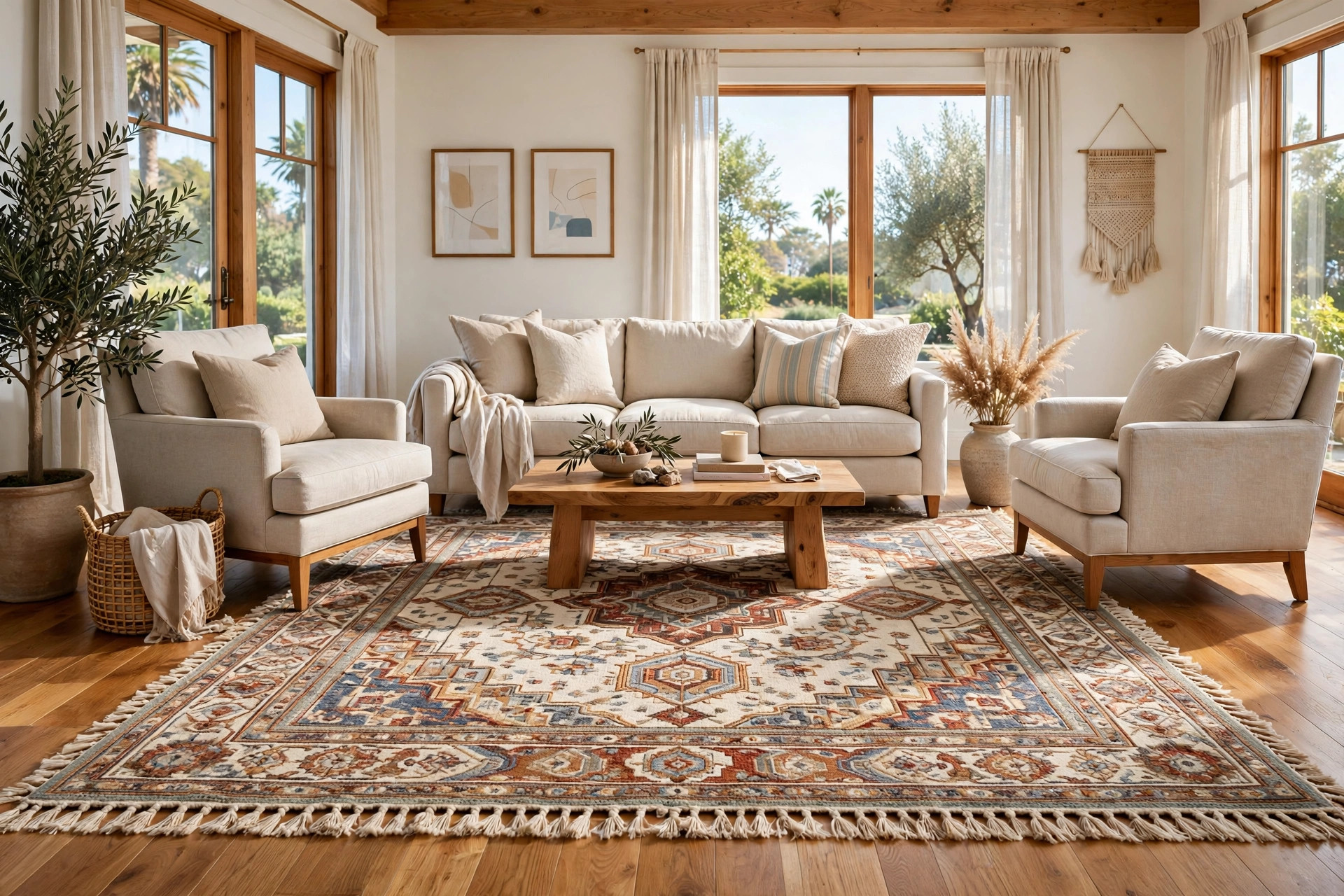
Measure the room before you shop. In a living room, the front legs of all seating should rest on the rug. A common rule is that the rug should extend at least six inches beyond the sofa on each side. For dining rooms, add three feet beyond the table on all sides so chairs stay on the rug when pulled out.
Common sizes in California homes are eight by ten feet for living rooms and nine by twelve for large great rooms. Runners suit the long hallways found in ranch style houses. Round rugs soften entry foyers.
Leave a border of floor showing. Twelve to eighteen inches of bare floor around the rug frames it well and shows off the wood.
Types and Styles Suited to California Homes
Persian and Oriental Styles
Traditional Persian designs bring rich color to homes in the Bay Area and Los Angeles. Deep reds, navy, and gold pair well with dark wood furniture. Hand knotted Persian rugs are among the most durable luxury rugs ever made.
Contemporary and Modern
Homes with clean lines call for abstract or solid rugs. Many California designers favor soft grays, warm ivory, and muted blues. These colors echo the coast and the sky. Modern luxury rugs often use high low pile to add texture without busy pattern.
Coastal and California Casual
Coastal style favors light blues, sand tones, and sea grass looks. Flat weaves and jute blends fit this relaxed style. They suit second homes in Malibu, Santa Barbara, and the Monterey coast. Keep these rugs out of wet zones, as natural fibers dislike standing water.
Transitional
Transitional rugs blend old and new. Faded antique looks, soft vintage patterns, and worn Oushak styles lead this group. They suit homes that mix a modern sofa with a classic wood table. A faded rug hides wear well, which helps in busy family homes.
Shag and High Pile
Thick shag rugs feel wonderful underfoot. They suit bedrooms and reading corners. They demand regular care, as dust settles deep in the pile. In sandy areas near the beach, a low pile rug is easier to keep clean.
Cost and Price Guide in the USA
Luxury area rug prices vary widely. Hand tufted rugs in the eight by ten size often run from five hundred to two thousand dollars. Hand loomed pieces in fine wool run from one thousand to three thousand dollars.
Hand knotted wool rugs start near two thousand dollars for small sizes and climb past ten thousand for large fine pieces. Persian and silk rugs can reach twenty thousand dollars or more for room size pieces. Price depends on knot count, material, and age.
Pads add fifty to two hundred dollars but protect both rug and floor. Delivery of a large rug can cost one hundred dollars or more. Professional cleaning runs from three to five dollars per square foot.
Budget with care. A rug is a long term purchase. Spending more on a hand knotted wool rug often costs less per year than replacing cheap rugs every few years. Watch for seasonal sales at major retailers, where fine rugs drop by twenty to forty percent.
Care and Upkeep
Weekly Care
Vacuum the rug weekly with a suction only head or with the beater bar raised. Brush fringe by hand rather than vacuuming it. Rotate the rug once or twice a year so wear and sun fade spread evenly.
Spots and Spills
Blot spills at once with a clean white cloth. Never rub, as rubbing spreads the stain and damages fibers. Plain water handles most fresh spills. For red wine or coffee, a mix of water and white vinegar often works. Test any cleaner on a hidden corner first.
California sun is the great enemy of color. Move rugs away from direct south facing windows or add window film. Even fine dyes fade after years of hard sun.
Professional Cleaning
Have luxury rugs cleaned by a rug specialist every two to three years, or yearly in busy homes. A specialist washes the rug flat and dries it with care. Steam cleaning machines meant for wall to wall carpet are too harsh for hand knotted work.
Storage
If you must store a rug, roll it pile side out around a tube. Never fold it. Wrap it in breathable cloth, not plastic. Store it flat in a cool dry place. Moth proof paper guards wool rugs in storage.
Safety in the Home
Place a quality rug pad under every area rug. Pads stop slipping, which prevents falls on smooth floors. They also add cushion and extend rug life. Choose a pad made for the floor type, since some pads stain certain finishes.
Keep rugs flat at doorways and thresholds to avoid tripping. Tape curling corners with rug tape until they settle. In homes with small children or older adults, low pile rugs with pads are the safest choice.
Check for chemical smell when a new rug arrives. Air it out in a shaded open space for a day. Most luxury rugs use safer dyes and backings than cheap imports, but good ventilation is wise in any case.
Pairing Rugs With the Rest of the Room
A rug should speak to the other pieces in the room. Pull one color from the rug into pillows or throws. Let the curtains share a tone with the rug. This simple trick makes the room feel planned.
Texture matters as much as color. A smooth leather sofa needs a soft wool rug for balance. A glass coffee table sits best on a patterned rug that hides reflections.
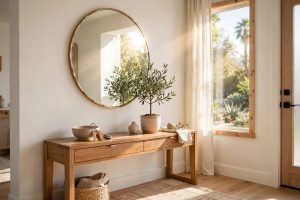
For entryways, pair a runner with a narrow storage bench to keep shoes and bags off the rug. In a living room, a rustic console table behind the sofa can frame the rug from above. Finish windows with curtain panels in a tone drawn from the rug for a pulled together look.
Design sites such as West Elm and CB2 show styled rooms that make these pairings easy to picture. Readers who enjoy seeing real homes may also like the room tours on Houzz and Apartment Therapy. For broad shopping ranges, IKEA and Crate and Barrel carry rugs across many price points. Care guides on The Spruce explain cleaning steps in plain detail. Those who shop online often compare finds on Wayfair, while HGTV offers design ideas for every room of the house.
Frequently Asked Questions
What size rug fits a standard California living room?
Most living rooms take an eight by ten foot rug. Larger great rooms common in newer California builds take a nine by twelve. Measure the seating area and keep front legs of furniture on the rug.
Are luxury area rugs worth the money in homes with pets?
Yes, if you choose well. Dense wool rugs hide wear and resist stains better than cheap synthetics. Choose darker patterns that mask pet hair. Avoid silk and pale shag in rooms where pets sleep.
How do I keep a rug from fading in bright sun?
Rotate the rug every six months. Add window film or sheer curtains on south and west windows. Choose rugs with high quality dyes, since they hold color longer under strong light.
Can I use a luxury wool rug in a home near the beach?
Yes, with care. Wool handles damp air well. Use a breathable rug pad so moisture does not trap underneath. Shake sand out often, since grit wears fibers. Keep the rug out of direct splash zones.
How long should a luxury area rug last?
A hand knotted wool rug can last fifty years or more with proper care. Hand tufted rugs often last ten to fifteen years. Even machine made luxury look rugs last five to eight years in normal use.
Do I really need a rug pad?
Yes. A pad stops slipping, protects the floor finish, adds comfort, and extends rug life. It is the cheapest way to make any rug perform better and is strongly advised on hard floors.
A Short Final Word
A luxury area rug is one of the best buys for a California home. It warms hard floors, anchors open rooms, and stands up to sun and traffic when chosen with care. Pick good fiber, buy the right size, use a pad, and clean it on schedule. The rug will reward you for decades.
References
Apartment Therapy. (n.d.). Home design ideas and inspiration. https://www.apartmenttherapy.com CB2. (n.d.). Modern furniture and decor. https://www.cb2.com Crate and Barrel. (n.d.). Furniture and home decor. https://www.crateandbarrel.com HGTV. (n.d.). Home and garden ideas. https://www.hgtv.com Houzz. (n.d.). Home design and remodeling. https://www.houzz.com IKEA. (n.d.). Home furnishings. https://www.ikea.com The Spruce. (n.d.). Home and garden advice. https://www.thespruce.com Wayfair. (n.d.). Furniture and home goods. https://www.wayfair.com West Elm. (n.d.). Modern furniture and home decor. https://www.westelm.com
Was this guide helpful?

About Robert Taylor
The My Garden US editorial team writes practical, in-depth home and garden guides for American homeowners — tested advice, no fluff.
You May Also Like
Velvet Living Sofas for Sale USA: A Complete Buying Guide
January 23, 2026 0 views
Bedroom Dressers Mirror Florida Homes USA: A Practical Buying Guide
March 12, 2026 0 views
Modern Wall Bookshelves for Sale in the USA: A Complete Buyer’s Guide
March 19, 2026 0 views