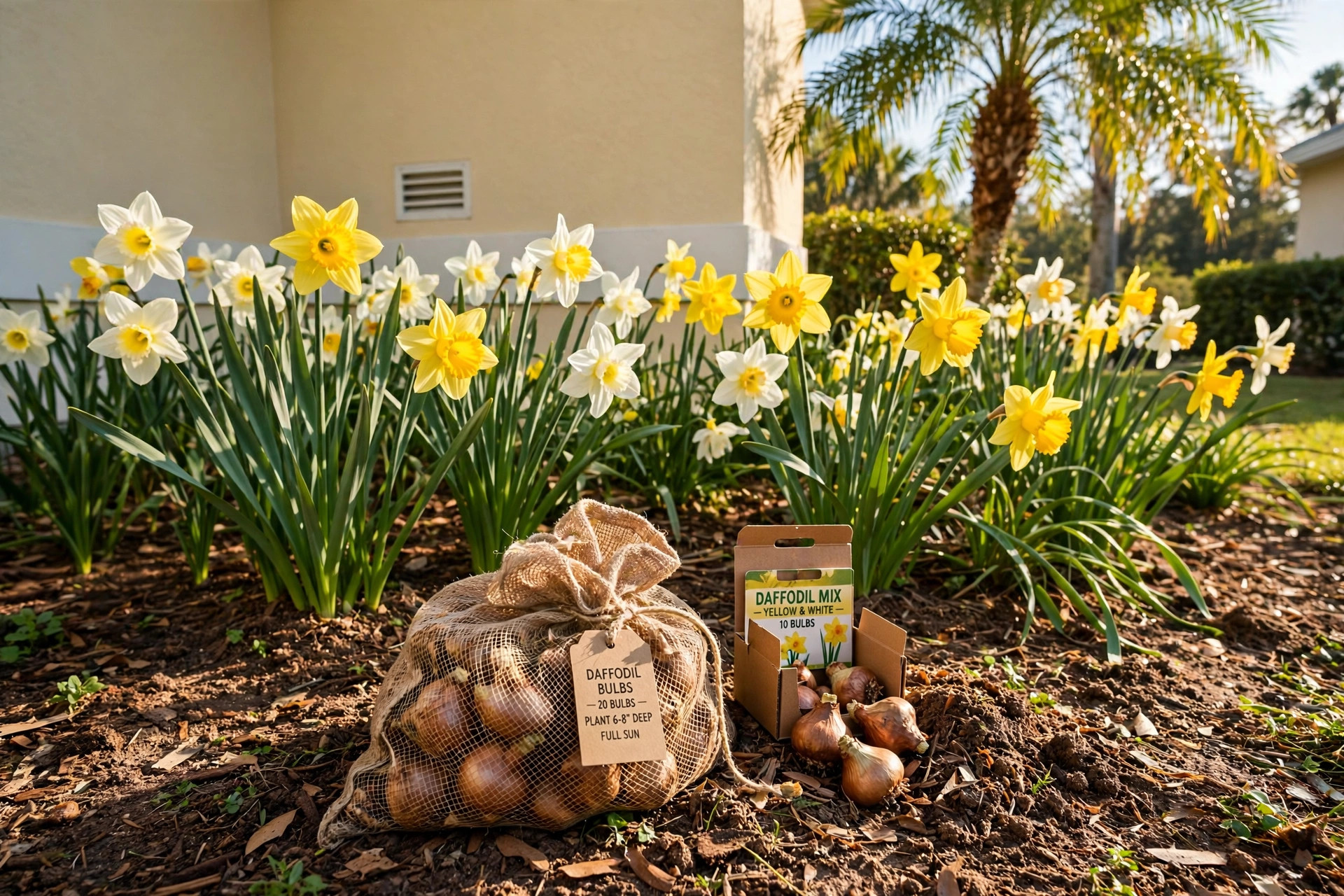
Many gardeners believe daffodils cannot grow in Florida. The winters feel too mild, and the soil seldom gets cold. Yet with the right daffodil bulb packs, Florida homes across the state can enjoy yellow and white blooms in late winter and early spring. The key lies in how you buy the bulbs, how you chill them, and when you put them in the ground. This guide explains each step in plain words so that any homeowner in the USA can succeed with these cheerful flowers.
Why Daffodils Matter for Florida Homes
Daffodils are among the first flowers to bloom each year. In northern states they push through melting snow in March. In Florida they can bloom even earlier, often in January or February, which brings color to the yard at a time when few other plants flower. For Florida homes, that early display has real value. The garden looks alive during the cooler months, and the flowers last for weeks with little work.
Daffodils also suit the busy homeowner. Once planted, they need no daily care. They ask for water during dry spells and a little plant food in the season. Deer and rabbits tend to leave them alone because the bulbs taste bitter. Many Florida neighborhoods struggle with deer, so a flower that wildlife avoids is a welcome change. A pack of bulbs costs only a few dollars, yet it can give years of bloom if the bulbs are handled well.
There is one challenge that every Florida gardener must face. Daffodils need a cold rest to bloom. In the wild and in cold states, winter gives them weeks of temperatures between 35 and 45 degrees. Most of Florida never gets that much cold. Without it, the bulbs grow leaves but make no flowers. The good news is that you can give the bulbs the cold they need before planting. This one trick makes the whole project possible.
What to Look for When Buying Bulb Packs: Daffodil Bulb Packs Florida Homes Usa
Not every bag of bulbs on the shelf suits a Florida yard. When you shop for daffodil bulb packs, Florida homes need packs that list a count, a variety name, and a size grade. Good packs tell you the bulb size in centimeters, often 12/14 or 14/16. Larger bulbs hold more food for the flower, so they give stronger blooms. Small, dry bulbs may grow leaves but fail to flower.
Check that the bulbs feel firm when you press them. Soft or moldy bulbs will not grow. A healthy daffodil bulb looks like a small onion with a papery brown skin. It should have no green shoots longer than a finger, since long shoots mean the bulb started growing in storage and lost strength.
Look for the words “pre-chilled” on the pack. Pre-chilled daffodil bulbs have already spent weeks in cold storage at the nursery. They are ready to plant and bloom in warm climates. Many packs sold for the southern USA carry this label in the fall. If the pack does not say pre-chilled, you can chill the bulbs yourself in a refrigerator, which we explain below. Guides on The Spruce from garden sites can help you compare pack labels before you buy.
Buy from sellers who ship bulbs at the right time. For Florida, bulbs should arrive between October and December. Bulbs that arrive in summer may sit too long in the heat. Trusted seed houses such as Www.burpee.com and Www.parkseed.com sell bulb packs with clear planting dates for each region.
Types and Options for Warm Climates
Daffodils come in many types, but only some do well in warm states. The best choice for Florida homes is the tazetta group. These daffodils carry several small flowers on each stem and have a sweet scent. They need less cold than the big trumpet types. Popular tazetta varieties include Paperwhite, Grand Soleil d’Or, Erlicheer, and Falconet. These names may appear on bulb packs aimed at southern gardeners.
The large trumpet daffodils, the classic yellow kind seen in northern gardens, can also bloom in Florida, but only from pre-chilled bulbs, and they often bloom only once. Many Florida gardeners treat them as annual flowers, planting fresh bulbs each fall for one season of color. There is nothing wrong with this plan. The bulbs are cheap, and the show is worth it.
Bulb packs come in different sizes. A pack of 10 bulbs suits a small bed near the front door. A pack of 25 fills a border along a walk. A pack of 50 or 100 works for a large yard or for planting in drifts under trees. When you compare packs, look at the price per bulb, not just the pack price. A larger pack often costs less per bulb. Some sellers mix several varieties in one pack for a longer bloom season, which can be a fine choice if the pack lists low-chill types.
If you also like other spring bulbs, you may enjoy reading a Thespruce before you order, since tulips need the same chilling trick in Florida. A Burpee can also help you compare pack sizes across sellers.
How to Plant Daffodil Bulbs Step by Step
Planting daffodils in Florida follows a simple order. First, chill the bulbs if they are not pre-chilled. Place them in a paper bag in the refrigerator for 10 to 12 weeks. Keep them away from fruit, since fruit gives off a gas that can harm flower buds. Do not freeze the bulbs. A crisper drawer set above freezing works well.
Second, pick a planting spot. Daffodils like full sun or light shade. In Florida, a spot with morning sun and afternoon shade suits them well, since strong afternoon heat can shorten the bloom. The soil should drain well. Daffodils rot in standing water, so avoid low spots where rain gathers. If your soil is heavy clay or sand, mix in compost to help it hold some moisture while still draining.
Third, plant at the right depth and time. Set each bulb three times as deep as the bulb is tall, usually about 6 inches deep, with the pointed end up. Space bulbs 4 to 6 inches apart. For Florida homes, the right planting time is November through December, after the soil has cooled a little. Water the bed well after planting. The The Old Farmer’s Almanac offers planting calendars that list the best weeks for each zone.
Fourth, mark the spot. The bulbs sleep underground for weeks, and it is easy to dig into them by accident. A few small plant markers or a ring of mulch will remind you where they rest. Mulch also keeps the soil cool and holds moisture, which helps in Florida’s warm falls.
Cost and Price of Bulb Packs
Daffodil bulb packs are one of the cheapest ways to fill a yard with flowers. A pack of 10 bulbs often costs between 6 and 12 dollars. A pack of 25 runs about 12 to 20 dollars. Large packs of 50 or 100 bulbs can cost 20 to 40 dollars, which brings the price per bulb down near 40 cents. Pre-chilled packs cost a little more than plain packs, usually one or two dollars extra, because the nursery pays for cold storage.
Shipping can add to the cost when you order online. Many sellers offer free shipping over a set amount, so it pays to order bulbs for several beds at once. Buying daffodil bulbs online from Www.gurneys.com or Www.whiteflowerfarm.com often gives you access to low-chill varieties that local stores may not carry.
For the price of one potted plant at a garden center, a pack of bulbs can give you dozens of flowers. Even if you treat the bulbs as annuals and buy fresh packs each fall, the yearly cost stays low. A Florida homeowner can fill a front bed with 50 bulbs for less than the cost of a bag of fertilizer.
Care and Upkeep Through the Season
Daffodils ask for little once they are in the ground. Water the bed when the top inch of soil feels dry. In Florida, fall rains often do this job for you. When flower buds appear, keep the soil evenly moist but not soggy. A light feeding with a balanced bulb fertilizer at planting time helps. Do not use fresh manure, which can burn the bulbs.
After the flowers fade, leave the leaves alone. This is the most important rule of daffodil care. The green leaves make food that the bulb stores for next year. Cut the dead flower heads so the plant does not waste energy on seeds, but let the leaves stand until they turn yellow and fall over on their own. In Florida this takes about six weeks after bloom. Many gardeners plant low ground cover around the daffodils to hide the yellowing leaves.
If you want the bulbs to bloom again next year, you have two choices. You can dig the bulbs after the leaves yellow, dry them in a shady spot, and chill them in the refrigerator for 10 to 12 weeks before replanting in fall. Or you can leave them in the ground and accept that they may bloom weakly or not at all. Most Florida gardeners find it simpler to plant fresh pre-chilled bulbs each year. Advice on lifting and storing bulbs appears in many Www.gardeningknowhow.com written for home gardeners.
Watch for a few common problems. Soft rot turns bulbs to mush and comes from wet soil, so good drainage is the best defense. Bulb flies can attack weakened bulbs; firm healthy bulbs resist them. If leaves emerge but no flowers follow, the cause is almost always too little chilling. Note it for next fall and chill the bulbs longer.
Safety Around Pets and Children
Daffodils are lovely, but every part of the plant is toxic if eaten, and the bulbs are the most dangerous part. They hold sharp crystals that burn the mouth and compounds that can cause nausea and stomach pain. Dogs are the most common victims because they dig up and chew the bulbs. Teach children not to put any part of the flower in their mouths, and plant bulbs where digging dogs cannot reach them.
When you plant, wear gloves. The sap can irritate skin, and some people get a rash called “daffodil itch” from handling many bulbs. Wash your hands after planting. Store unused bulbs where pets and small children cannot find them. If a pet eats a bulb, call your veterinarian at once. Plant care references from Www.provenwinners.com and Www.monrovia.com include safety notes worth reading before you plant.
Compost the spent leaves, but never compost the bulbs themselves if pets can reach the pile. With these simple steps, daffodils are a safe and happy part of any Florida yard.
Frequently Asked Questions
When should I plant daffodil bulbs in Florida? Plant from November to December. The soil should feel cool to the touch. Planting too early in warm October soil can cause weak growth. If your bulbs arrived pre-chilled, plant them within a week or two of arrival.
Do daffodil bulbs need to be chilled in Florida? Yes, in most cases. Florida winters are too mild to give bulbs the 10 to 14 weeks of cold they need. Buy pre-chilled packs or chill plain bulbs in the refrigerator for 10 to 12 weeks before planting. Tazetta types need less chilling than trumpet types.
Which daffodil varieties grow best in Florida? Low-chill tazetta types do best. Paperwhite, Grand Soleil d’Or, Erlicheer, and Falconet are proven choices for warm states. Look for packs that name these varieties. Big trumpet daffodils will bloom from pre-chilled bulbs but often act as annuals.
Can I leave daffodil bulbs in the ground year-round in Florida? You can, but they may not bloom well the next year. Florida summers are hot and wet, which can rot bulbs left in the soil. For the best show, lift the bulbs after the leaves yellow, or simply plant fresh pre-chilled packs each fall.
How deep should I plant daffodil bulbs? Plant each bulb about three times as deep as the bulb is tall, which is usually 6 inches. Set the pointed end up and the flat root end down. Space bulbs 4 to 6 inches apart for a full look.
Are daffodils safe for dogs and cats? No. All parts of the daffodil are toxic, and the bulbs are the most toxic part. Plant bulbs where pets cannot dig them up, and store spare bulbs out of reach. Call a veterinarian at once if a pet eats any part of the plant.
A Final Word
Daffodil bulb packs give Florida homes a simple path to winter and spring color. Choose firm, large bulbs, pick low-chill varieties or pre-chilled packs, plant in November or December, and leave the leaves to feed the bulb. The cost is small and the reward is large: weeks of bright blooms when the rest of the garden rests. For more ideas on filling beds with easy bulbs, see a guide to Parkseed for summer color that follows the spring show. Research from the Www.nifa.usda.gov also offers sound guidance on home gardening in warm regions. With one pack of bulbs and a little patience, any Florida yard can wear the gold of spring.
Related guides on this site include heirloom vegetable seeds buying guide usa, organic herb seeds buying guide usa, and wildflower seed mixes buying guide usa.
References
Burpee. (n.d.). Seeds, plants, and gardening supplies. https://www.burpee.com Burpee. (n.d.). Home and garden information. https://www.burpee.com/daffodil-bulb-packs-buying-guide-usa/ Gardening Know How. (n.d.). Gardening guides and plant care. https://www.gardeningknowhow.com Gurney’s Seed & Nursery Co. (n.d.). Seeds, plants, and garden supplies. https://www.gurneys.com Monrovia. (n.d.). Plants for home gardens. https://www.monrovia.com Park Seed. (n.d.). Seeds, plants, and gardening supplies. https://www.parkseed.com Proven Winners. (n.d.). Plants and gardening inspiration. https://www.provenwinners.com The Old Farmer’s Almanac. (n.d.). Gardening calendars and advice. https://www.almanac.com The Spruce. (n.d.). Home and garden advice. https://www.thespruce.com Thespruce. (n.d.). Home and garden information. https://www.thespruce.com/tulip-bulbs-fall-buying-guide-usa/ White Flower Farm. (n.d.). Plants, bulbs, and garden supplies. https://www.whiteflowerfarm.com Www. (n.d.). Home and garden information. https://www
Was this guide helpful?

About Lisa Anderson
The My Garden US editorial team writes practical, in-depth home and garden guides for American homeowners — tested advice, no fluff.