
Why Lavender Seed Packets Are Worth a Try in Florida Homes
Many gardeners believe that lavender can only grow in dry, cool places. That is not the whole story. Gardeners who search for lavender seed packets florida homes usa have good reason: with the right type, this fragrant herb can grow here too. Florida is hot and humid. Summers are long. Rain falls in heavy bursts. Lavender comes from the dry hills of the Mediterranean. The two climates do not match well. Still, many Florida gardeners raise lavender year after year with good care and smart choices.
The Florida Challenge: Heat, Humidity, and Heavy Rain: Lavender Seed Packets Florida Homes Usa
To grow lavender well, one must first understand what hurts it. Three Florida conditions work against lavender.
First, humidity. Florida air is wet for much of the year. Lavender leaves and stems rot when they stay damp. The plant likes dry air moving around it. In Florida, that means good spacing and morning sun that dries the dew.
Second, rain. Summer storms can dump several inches of water in an hour. Lavender roots drown in wet soil. They need soil that drains fast. Heavy clay or low spots in the yard are poor places for lavender. Raised beds and pots drain better.
Third, heat with no rest. Lavender likes warm days, but Florida nights in summer stay hot too. Some types handle this better than others. Choosing a heat-tough type is half the battle.
What to Look for When Buying Lavender Seed Packets
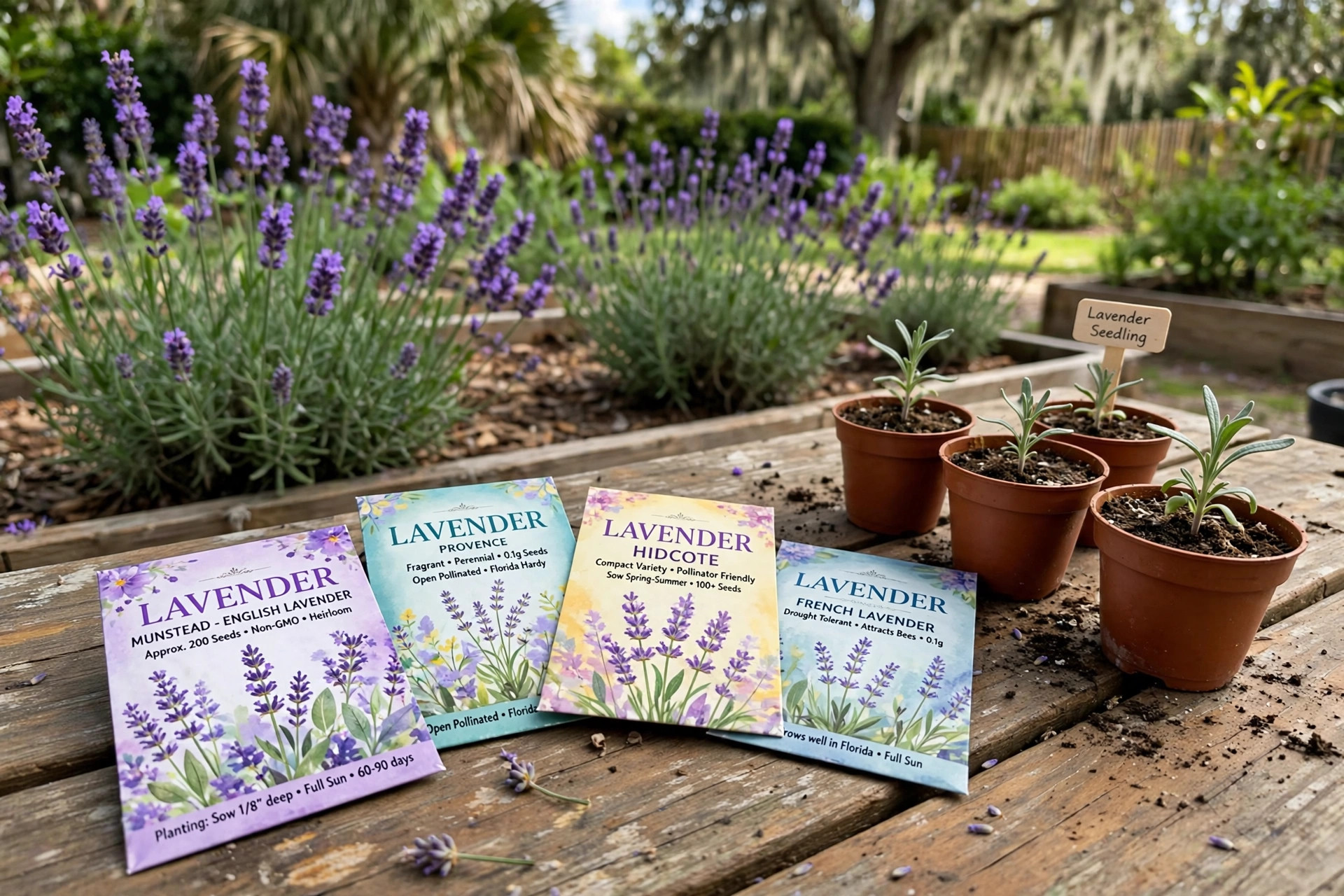
Not all lavender seed packets are the same. The packet should tell you the type of lavender. That detail matters more in Florida than anywhere else. Look for these words on the packet:
– Spanish lavender (Lavandula stoechas). This type handles Florida heat and humidity better than most. It blooms earlier in the year and tolerates warm nights. – Lavandin (Lavandula x intermedia). A cross between English and Portuguese lavender. It grows big, smells strong, and handles heat well. – Fernleaf lavender (Lavandula multifida). This one is made for hot places. It is often grown as a one-year plant in Florida, and it blooms fast from seed. – English lavender (Lavandula angustifolia). The classic type with the sweetest scent. It is the hardest in Florida. It prefers cool nights. Some gardeners in north Florida succeed with it in pots. In south Florida, it often fails.
A good lavender seed packets buying guide usa will explain these types in more detail. For Florida homes, Spanish, lavandin, and fernleaf types are the safest picks. The packet should also show a “packed for” date or a sell-by date. Lavender seed stays good for two to three years if kept cool and dry. Old seed sprouts poorly. Buy fresh packets each year if you can.
Check the seed count too. Some packets hold 50 seeds. Some hold 200. A larger count is better for a beginner, since not every seed will sprout. Reputable sellers test their seed and print the result. Sellers such as Burpee, Park Seed, and Gurney’s sell tested seed and show growing notes on their homepages.
Types and Options: Picking the Right Lavender for Florida
Florida is a long state. North Florida sees frosts. South Florida almost never does. The USDA hardiness zones run from zone 8 in the panhandle to zone 11 in the Keys. Lavender care changes a bit by zone, so know your zone before you plant. The Almanac homepage offers zone maps and planting calendars that help.
Here are the main options for Florida homes:
Spanish lavender. Compact plants, about one to two feet tall. The flowers have little “ears” or bracts on top that look like rabbit ears. It blooms in spring and often again in fall. It is the top pick for most of Florida. Plant growers such as Proven Winners and White Flower Farm describe its habits in plain terms on their homepages.
Lavandin. Taller plants, up to three feet. Strong scent, big flower spikes. Good for hedges and large pots. It needs more space but rewards with heavy blooms.
Fernleaf lavender. Soft, ferny leaves unlike other lavender. Blooms the first year from seed. It grows fast and dies back in winter in north Florida. Treat it as an annual in zone 8 and a short-lived perennial further south.
English lavender. Best for north Florida gardeners who want the classic scent. Grow it in pots so you can move it under cover during rainy spells. Give it the sunniest, airiest spot you have.
Many gardeners start with wildflower seed mixes buying guide usa ideas for borders and then add lavender as the fragrant anchor. Lavender mixes well with wildflowers because both like sun and poor soil.
Cost and Price: What Lavender Seed Packets Cost
Lavender seed packets are cheap. Most packets cost between one and six dollars. A packet of Spanish lavender seed often costs about three dollars. Specialty types or large-count packets may cost five or six dollars. Compared with buying started plants at a nursery, which can cost eight to fifteen dollars each, seed is a bargain.
Think about the math. A three-dollar packet with 100 seeds might give you 20 to 40 plants if you sow with care. That is the same as 20 to 40 nursery plants for the price of one small coffee. The trade is time. Seeds take weeks to sprout and months to bloom. Nursery plants give flowers sooner. Many gardeners buy a few nursery plants for instant color and sow seed packets for the long term.
Other small costs add up. Seed starting trays cost a few dollars. A bag of seed-starting mix costs about five to ten dollars. In all, a Florida gardener can start a lavender bed from seed for under twenty dollars.
How to Sow Lavender Seeds in Florida: Step by Step
Lavender seed needs light to sprout. Do not bury it deep. Here is a plain method that works in Florida homes.
Step 1: Time it right. Sow seeds indoors in late winter, about eight to ten weeks before your last frost date in north Florida. In central and south Florida, where frost is rare, sow in late winter or early spring so seedlings are ready for the mild spring months. Spring is the kindest season for young lavender in Florida. Summer heat is hard on tiny plants.
Step 2: Use the right mix. Fill trays or small pots with a light seed-starting mix. Do not use heavy garden soil. Lavender seed rots in dense, wet mix. Some gardeners mix a little extra perlite into the starting mix for drainage.
Step 3: Sow on the surface. Press seeds gently onto the damp mix. Do not cover them, or cover with only the thinnest dusting of mix. They need light to wake up.
Step 4: Keep it warm and damp, not wet. Cover the tray with a clear dome or plastic wrap to hold moisture. Keep it near 65 to 70 degrees. A warm windowsill or the top of a refrigerator works. Check daily. Mist if the surface dries out.
Step 5: Give light after sprouting. When green sprouts appear, remove the cover at once. Put the tray under bright light or in a sunny window. Weak, leggy seedlings come from too little light.
Step 6: Water with care. Water from the bottom if you can. Let the mix dry a little between waterings. Overwatering kills more lavender seedlings than anything else.
Step 7: Harden off. Before planting outside, set pots outdoors for a few hours a day, increasing the time over a week.
Some growers chill the seed first. Lavender seed can sprout better after a few weeks in the refrigerator in a damp paper towel inside a sealed bag. This cold treatment mimics winter and wakes the seed up. It is not required, but it can raise the sprout rate. The Gardening Know How homepage has plain guides to seed starting that cover this method.
Planting Out: Soil, Sun, and Spacing in Florida
When seedlings are a few inches tall and the weather is mild, plant them out. Choose the sunniest spot in the yard. Lavender wants at least six to eight hours of direct sun. Morning sun is best because it dries dew from the leaves early.
Soil is the big decision. Florida soils vary. Sandy soil drains fast and suits lavender well. Clay soil holds water and must be fixed. For any soil, dig the planting hole wide and mix in coarse sand or small gravel. Many Florida gardeners plant lavender in raised beds, six to eight inches above the ground. Raised beds drain fast after storms. Pots are another fine choice. Use a potting mix made for cactus or add perlite to regular mix.
Set plants 12 to 18 inches apart. Good air flow between plants keeps leaves dry and cuts disease. Do not mulch with bark or wood chips right against the stems. Use light gravel mulch or none at all.
Water new plants gently for the first few weeks. Then cut back. Established lavender in Florida often needs no extra water except in long dry spells. When you do water, water the soil, not the leaves, and water in the morning so leaves dry by night.
Care and Upkeep Through the Florida Year
Spring. This is the main growing season. Plants put on new growth and bloom. Cut flower stems for drying just as the buds open. Cut back lightly after the first bloom to shape the plant.
Summer. The hard season. Watch for heavy rain. Make sure pots and beds drain. Do not let plants sit in saucers of water. If a plant looks yellow and limp after storms, let the soil dry fully before watering again.
Fall. A second, milder growing season. Spanish lavender often blooms again. This is a good time to take cuttings from strong plants to make more for free.
Pruning is the main yearly task. Shape plants after blooming. Keep them rounded and open in the center so air moves through. A plant that is cut back each year lives longer and looks better than one left to grow wild.
Pests are few. Lavender’s scent keeps most bugs away. Root rot from wet soil is the main killer. Fungal leaf spots can appear in very humid weather. Good spacing, morning sun, and dry leaves prevent most trouble. If a plant rots at the base, pull it out. The Spruce homepage gives plain advice on spotting and handling common garden plant troubles.
Safety: A Few Plain Cautions
Lavender is a safe plant for most homes, but a few cautions apply.
Lavender oil is strong. Do not let small children or pets drink lavender oil or eat large amounts of the plant. A nibble of a flower is not a worry, but the concentrated oil can upset stomachs. Keep bottles of essential oil out of reach.
Some people get skin rashes from lavender oil. Test a small drop on the skin before using it widely. Stop if redness or itching appears. University extension programs share research on herbs and garden safety; the National Institute of Food and Agriculture homepage points gardeners to that work.
In the garden, lavender is not listed as a danger to pets in normal garden use, but cats and dogs that chew plants should be watched. The ASPCA homepage is a good place to check plant safety for pets, though note that ASPCA is a general pet-safety resource rather than a seed seller.
Sun and heat safety matters for the gardener too. Florida sun is fierce. Work in the garden in the morning or late afternoon. Wear a hat, drink water, and rest in shade. Gardening should not end with heat sickness.
Frequently Asked Questions
Can lavender seeds grow in Florida at all? Yes. Many Florida gardeners grow lavender from seed. Choose heat-tough types like Spanish lavender, lavandin, or fernleaf lavender. Give them sun, fast-draining soil, and space for air flow. English lavender is harder but possible in pots in north Florida.
When should I plant lavender seed packets in Florida? Start seeds indoors in late winter. Move seedlings outside in spring when nights are mild. In south Florida, late winter sowing lets plants grow through the gentle spring months before summer heat arrives.
How long do lavender seeds take to sprout? Expect three to six weeks. Lavender is slow. Keep the seedbed damp and warm, near 65 to 70 degrees. Do not give up after two weeks. Fresh seed sprouts faster than old seed.
Why did my lavender seedlings die? The most common cause is too much water. Seedlings rot in wet mix. Use light starting mix, water from below, and let the surface dry between waterings. Weak light is the second cause. Give strong light as soon as seeds sprout.
Can I grow lavender in pots in Florida? Yes, and pots are often the best choice. Pots drain fast and can be moved under cover during heavy rain. Use a large pot, at least 12 inches wide, with drainage holes. A cactus-type potting mix works well.
Will lavender come back every year in Florida? It depends on the type and your zone. Spanish lavender and lavandin often live several years in central and south Florida. In north Florida, cold snaps can kill tender types. Fernleaf lavender is often grown as a one-year plant. Even short-lived plants are worth it from cheap seed.
A Short Final Word
Lavender seed packets give Florida gardeners a low-cost way to try a classic herb in a tough climate. Pick a heat-tough type. Start seeds indoors in late winter. Plant out in sun and fast-draining soil. Water little. Space wide. Cut back each year. Follow these plain steps and lavender seed packets florida homes usa will be more than a search phrase. They will be purple rows along your walk, scent on the evening air, and dried bundles in your drawers. The work is small. The reward lasts for years.
References
ASPCA. (n.d.). Pet care and animal welfare resources. https://www.aspca.org Burpee. (n.d.). Seeds, plants, and gardening supplies. https://www.burpee.com Gardening Know How. (n.d.). Gardening guides and plant care. https://www.gardeningknowhow.com Gurney’s Seed & Nursery Co. (n.d.). Seeds, plants, and garden supplies. https://www.gurneys.com National Institute of Food and Agriculture. (n.d.). Agricultural research and extension. https://www.nifa.usda.gov Park Seed. (n.d.). Seeds, plants, and gardening supplies. https://www.parkseed.com Proven Winners. (n.d.). Plants and gardening inspiration. https://www.provenwinners.com The Old Farmer’s Almanac. (n.d.). Gardening calendars and advice. https://www.almanac.com The Spruce. (n.d.). Home and garden advice. https://www.thespruce.com White Flower Farm. (n.d.). Plants, bulbs, and garden supplies. https://www.whiteflowerfarm.com
Was this guide helpful?

About Lisa Anderson
The My Garden US editorial team writes practical, in-depth home and garden guides for American homeowners — tested advice, no fluff.
You May Also Like
Heirloom Vegetable Seeds Reviews Buying Guide USA
June 10, 2026 0 views
Succulent Variety Packs Buying Guide USA
July 1, 2026 0 views
Native Grass Seed Reviews Buying Guide USA: Pick the Right Seed for Your Land
July 11, 2026 0 views