
The dahlia bulbs bulk texas homes usa market has grown fast in the last few years. Texas gardeners have learned that dahlias do not have to be short-lived novelties in the South. With the right stock and the right timing, they can fill a yard with bold color from June into October. Buying in bulk makes sense when a home has large beds, a long fence line, or a cutting garden to fill. A single tuber costs more per bloom than a bulk bag of twenty-five or fifty. This guide walks through why bulk buying works for Texas homes, how to choose stock, how to plant for the heat, what to pay, and how to keep tubers year after year.
Why Bulk Dahlia Bulbs Suit Texas Homes
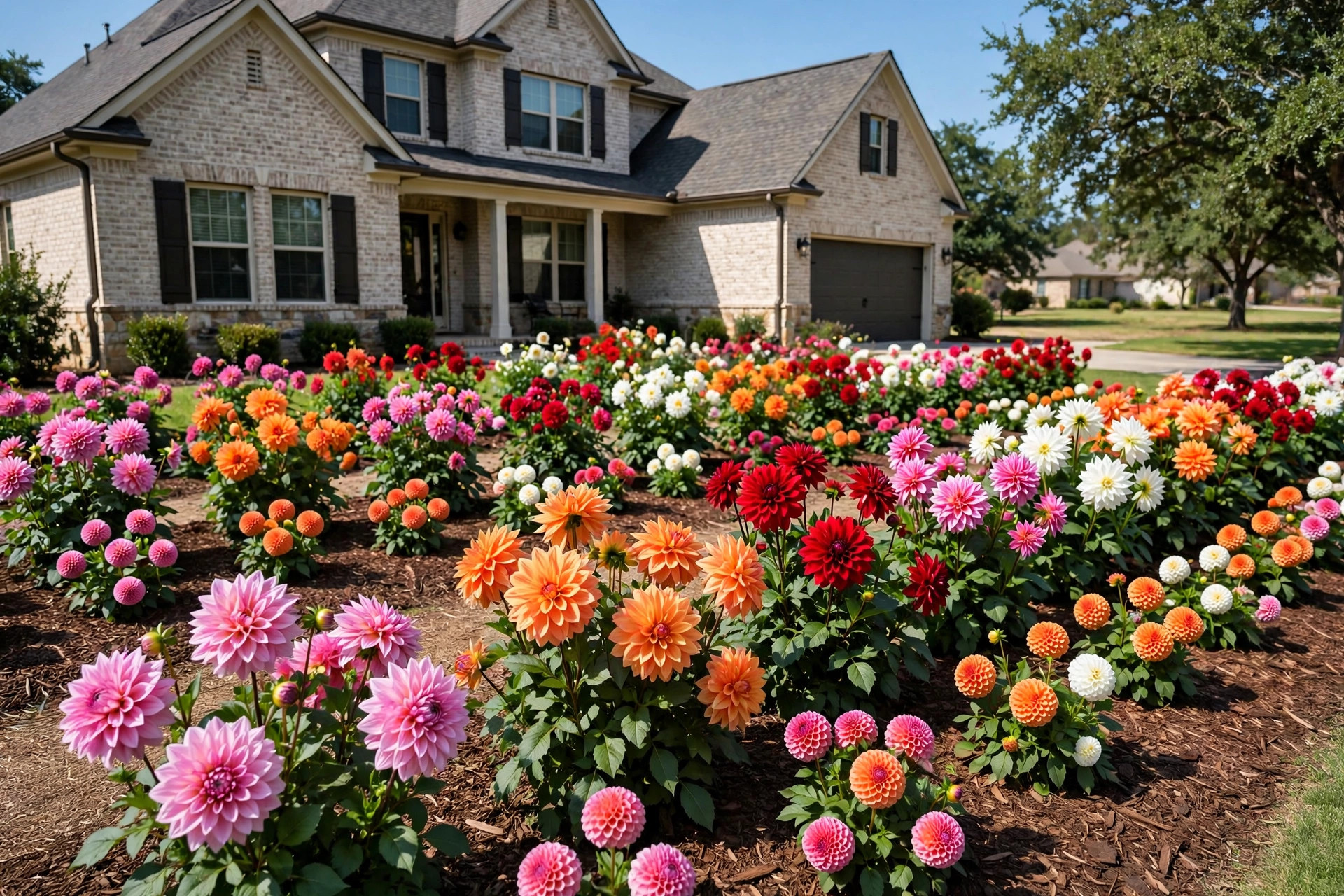
Texas homes often sit on lots larger than the national norm. A small patch of five dahlias looks lost in a wide front bed. Bulk packs of twenty-five or fifty tubers let a gardener plant in drifts. Drifts are the secret of a full-looking garden. The same color repeated in groups of five or seven reads as a design, not as an accident.
Bulk buying also spreads the risk. Texas heat is hard on tubers. A few will rot in a wet spring. A few will sulk through August. When you plant forty, a loss of five still leaves a strong show. When you plant five and lose two, the bed looks thin.
Cost is the third reason. A single dahlia tuber at a garden center can cost six or eight dollars. A bulk bag of fifty tubers from a farm or catalog often works out to two or three dollars each. For homes with beds along the driveway, the porch, and the back fence, that math matters. A full yard of dahlias for the price of two garden-center bags is a fair trade.
Cut-flower gardeners have one more reason. Dahlias are cut-and-come-again flowers. The more stems you cut, the more buds the plant makes. A bulk planting gives stems to spare. A vase on the table every week of summer costs nothing extra once the tubers are in the ground.
What to Look For When You Buy: Dahlia Bulbs Bulk Texas Homes Usa
Buying dahlia bulbs in bulk is different from picking up a few singles. The rules below keep quality high.
Size and Firmness
Tubers should feel firm and heavy, like a small potato. Soft spots, wrinkles, and mush are signs of rot or drying out. Each tuber should have at least one eye, the small bud on the crown end. In bulk bags you cannot inspect every tuber, but a good seller guarantees firm stock. Ask about the grade. Field-grown clumps divided in winter are better than tiny machine-graded tubers.
True Variety Names
Honest sellers list the true variety names: Cafe au Lait, Thomas Edison, Kelvin Floodlight, and the like. A bag that only says “mixed dahlias” is a gamble. Mixed bags are fine for a wild back border, but a named variety gives you the size and color you planned for. When buying fifty or more, ask for the variety list on the invoice.
Disease-Free Stock
Dahlia mosaic virus and gall are real problems in bulk stock. Reputable farms inspect their fields and rogue out sick plants. Look for sellers who state that their stock is virus-indexed or inspected. If a tuber has rough, warty growth at the crown, throw it away. Gall spreads in soil and on tools.
Sourced for the South
Tubers grown in Texas or the Gulf states face less shock than stock shipped from the cold Northwest. Southern-grown tubers have already seen heat and humidity. Ask the seller where the field sits. A farm in Texas growing bulbs under southern sun knows what survives there.
Types and Options for Texas Planting
Dinnerplate Dahlias
Dinnerplate types make flowers eight inches across or more. Cafe au Lait, with its blush-cream petals, is the most famous. These tall plants reach four feet and need staking. They bloom later in Texas, often August into fall, because they put energy into stems first. Buy them in bulk for the back of the border where height is a virtue.
Cactus and Semi-Cactus Dahlias
These have rolled, spiky petals that open in a starburst. They stand up to wind better than flat dinnerplates. In Texas, where Gulf storms can shred big flat blooms, cactus types hold their shape. They come in hot colors: reds, oranges, magentas. A bulk bag of cactus types makes a vivid summer border.
Ball and Pompon Dahlias
Ball dahlias are round, tight, and long-lasting in the vase. They are workhorses for cutting gardens. They are also some of the most heat-tolerant types. A Texas cutting garden can run fifty ball dahlias in two rows and supply flowers from July to first frost.
Border and Bedding Dahlias
Short bedding types grow twelve to eighteen inches tall and bloom early. They need no staking. They suit the front edge of a bed or pots on a porch. In bulk, they fill a long foundation bed with even color. They fade faster in August heat, so plant them where afternoon shade can help.
Planting Dahlia Bulbs in Texas Heat
Timing is the first decision. Most of Texas should plant dahlia tubers after the last frost, when soil stays above sixty degrees. That is mid-March in South Texas and early April in North Texas. Planting too early in cold, wet soil causes rot. Planting too late pushes bloom into the worst heat.
Soil comes next. Dahlias need soil that drains. Texas clay holds water, and tubers rot in standing water. Dig the planting hole a foot deep and mix in compost and coarse sand or expanded shale. A raised bed eight inches high solves most drainage problems in clay yards.
Plant tubers four to six inches deep, eye up, and space them twelve to eighteen inches apart. Tall types go eighteen inches apart so air can move. Good air flow cuts down on powdery mildew, which thrives in Texas humidity.
Water deeply at planting, then hold back until shoots show. Too much water before the plant has leaves is the main cause of rot. Once plants are a foot tall, water two or three times a week in summer heat. A drip line beats overhead sprinklers because wet leaves invite disease.
Mulch with three inches of shredded bark or pine straw. Mulch cools the soil, holds water, and keeps tubers from cooking. In August, when soil in full sun can pass one hundred degrees, mulch is the difference between blooming plants and stalled ones.
Shade cloth is a Texas secret. From late June through August, a light shade cloth over the bed can drop leaf temperature ten degrees. Blooms hold their color and petals longer. Many Texas growers run shade cloth only during the worst six weeks.
Staking matters from the start. Drive a stake at planting time, not after the plant flops. Tall dinnerplates in a Texas thunderstorm will snap without support. Tie stems loosely with soft twine.
Cost and Price for Bulk Packs
Bulk dahlia prices in the United States run in a wide range. Small bags of ten tubers start near twenty dollars. Bags of twenty-five named varieties run forty to eighty dollars. Fifty-tuber farm packs run seventy-five to one hundred fifty dollars, depending on the variety mix and size.
Per-tuber cost drops as the bag grows. Ten-tuber packs cost about three to four dollars each. Fifty-tuber packs cost about two to three dollars each. Dinnerplate varieties cost more than bedding types. New or rare varieties cost more than old standbys.
Shipping adds cost. Tubers ship in spring, and cold packs or fast freight can add fifteen to thirty dollars to an order. Order with a neighbor or a garden club to split shipping. Some Texas farms allow local pickup, which cuts the cost to zero.
Compare this with garden-center singles at six to eight dollars each. Fifty tubers at the garden center would cost three hundred to four hundred dollars. The same count in bulk costs under one hundred fifty. For a Texas home with big beds, bulk is the only sane way to buy.
Care and Upkeep Through the Season
Feed dahlias lightly. A balanced slow-release fertilizer at planting, then a low-nitrogen feed in July, keeps blooms coming. Too much nitrogen grows leaves at the cost of flowers. Texas soils are often low in organic matter, so a spring top-dress of compost helps every bed.
Deadhead every few days. Cut spent blooms back to a leaf joint. This single habit doubles the number of flowers a plant makes. Let the stems go to seed and the plant slows down. A weekly walk through the bed with shears takes twenty minutes for fifty plants.
Watch for pests. Japanese beetles and cucumber beetles chew petals in June and July. Spider mites love hot, dry weather and turn leaves bronze. A strong spray of water knocks mites off. Hand-pick beetles in the morning. Avoid broad insecticides that kill bees, since bees work the blooms all day.
In fall, Texas gardeners face a choice: lift or leave. In zones nine and ten, along the Gulf and in the Rio Grande Valley, tubers can stay in the ground with a thick mulch. In zones seven and eight, lift tubers after the first light frost kills the tops. Dig clumps, let them dry a day, and store in peat moss or wood shavings at forty to fifty degrees. A garage or cool closet works. Check stored tubers monthly and toss any that soften.
Safety Notes for Homes and Pets
Dahlia tubers and foliage are mildly toxic to dogs and cats. Chewing tubers can cause stomach upset. Most pets leave the plants alone, but homes with digging dogs should fence the bed. Planting in raised beds also keeps curious paws out.
Stakes and twine are trip hazards in yards where children play. Use rounded-top stakes and keep twine ties above knee height. Shade cloth frames should be stable in wind. Anchor them well before storm season.
Bulk tuber orders sometimes include treated stock dusted with fungicide. Wash hands after handling, and keep bags away from children until planting day. Planting in gloves is a simple habit.
FAQ
Can dahlias survive a Texas summer?
Yes, with help. Heat-tolerant types like ball and cactus dahlias bloom through summer in Texas when they get deep water, mulch, and some afternoon shade. Blooms may pause in the hottest weeks of August and return strong in September.
How many tubers do I need for a full bed?
For a bed four feet wide and twenty feet long, twenty-five tubers planted in two rows give a full look. For a long fence line of fifty feet, fifty tubers in a single row spaced a foot apart make a solid hedge of flowers.
When should I order bulk dahlia bulbs in Texas?
Order in January or February for the best choice of varieties. Good bulk packs sell out by March. Tubers ship in March and April, timed to planting after the last frost.
Are mixed bulk bags worth it for Texas homes?
Mixed bags cost less and suit wild-style borders where exact color does not matter. For a planned color scheme, pay more for named varieties. Many gardeners buy one named bag for the front bed and a cheap mixed bag for the back.
Do I have to dig up tubers every year in Texas?
In South Texas, no. Mulch them well and they return. In Central and North Texas, lifting after frost is safer. A hard freeze below twenty degrees can kill tubers left in wet soil.
How do bulk dahlias compare with daffodil bulb packs for spring color?
Daffodils bloom in February and March in Texas and need no summer care. Dahlias bloom in summer and fall but need water, staking, and deadheading. Many Texas gardeners plant both: daffodils for spring, dahlias for summer, so the yard has color in every season but winter.
A Short Final Word
Bulk dahlia buying is a plain, practical move for Texas homes. Large lots, long summers, and high single-tuber prices all point the same way. Pick firm stock with true names, plant after the frost in drained soil, mulch hard, and cut the blooms often. The bed will pay you back in color from June to frost. A Texas yard full of dahlias is not a trick of a cool climate. It is a habit of good stock, good soil, and steady care.
For more background, see The Old Farmer’s Almanac, The Spruce, and Burpee. For more background, see National Institute of Food and Agriculture, Park Seed, and Gurney’s Seed & Nursery Co. Buying guides are also published by White Flower Farm and Monrovia.
References
Burpee. (n.d.). Seeds, plants, and gardening supplies. https://www.burpee.com Gurney’s Seed & Nursery Co. (n.d.). Seeds, plants, and garden supplies. https://www.gurneys.com Monrovia. (n.d.). Plants for home gardens. https://www.monrovia.com National Institute of Food and Agriculture. (n.d.). Agricultural research and extension. https://www.nifa.usda.gov Park Seed. (n.d.). Seeds, plants, and gardening supplies. https://www.parkseed.com The Old Farmer’s Almanac. (n.d.). Gardening calendars and advice. https://www.almanac.com The Spruce. (n.d.). Home and garden advice. https://www.thespruce.com White Flower Farm. (n.d.). Plants, bulbs, and garden supplies. https://www.whiteflowerfarm.com
Was this guide helpful?

About David Wilson
The My Garden US editorial team writes practical, in-depth home and garden guides for American homeowners — tested advice, no fluff.
You May Also Like
Seed Starting Trays: Where to Buy in the USA
April 1, 2026 0 views
Air Plants Bulk California Homes USA: A Complete Buying Guide
March 5, 2026 0 views
Snake Plants Indoor California Homes USA: A Complete Care Guide
May 22, 2026 0 views