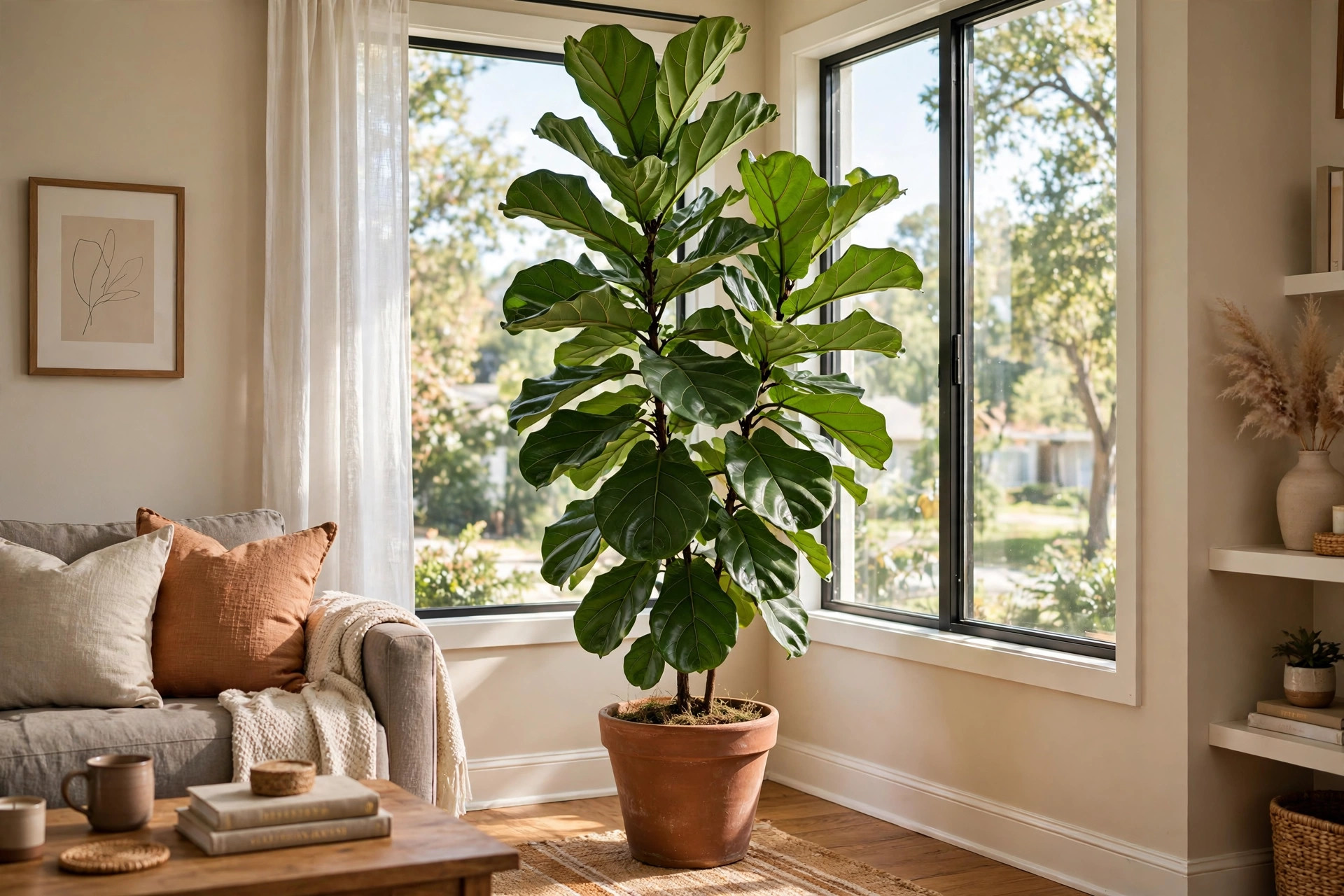

Many home gardeners search for fiddle leaf figs where to buy usa because this plant has become a favorite in American homes. The broad, violin-shaped leaves give a room a fresh look. The plant is also known by its Latin name, Ficus lyrata. It comes from West Africa, where it grows tall in warm forests. In the United States, most people grow it in pots indoors.
Finding a good plant takes care. Some shops sell weak plants with brown spots. Other shops charge too much for a small stem. This guide helps you find trusted sellers. It covers online stores, garden centers, and big-box shops. It also explains what to check before you pay. By the end, you will know how to choose a strong plant and where to get it.
Why It Matters Where You Buy
The seller matters as much as the plant. A good grower ships plants with care. A poor seller sends a plant that drops its leaves in a week. Fiddle leaf figs are known for being fussy. They do not like rough handling or long dark boxes. A seller who grows figs in clean greenhouses gives you a head start.
Where you buy also affects the price. A small six-inch pot may cost twenty dollars at a big store. The same plant may cost forty dollars from a specialty nursery. A large six-foot tree can cost over two hundred dollars. Knowing the price range helps you spot a fair deal.
Support matters too. Good sellers answer questions. They tell you how to water and where to place the plant. Some even promise to replace the plant if it dies in the first month. That promise is worth a lot with a plant this sensitive.
Types of Fiddle Leaf Figs You Can Buy: Fiddle Leaf Figs Where to Buy Usa
Not all fiddle leaf figs look the same. There are two main forms. The standard form grows as a single trunk with large leaves. It can reach six feet or more indoors. It works well as a tall floor plant in a living room or office.
The bush or compact form stays shorter and fuller. It branches low and makes a wide shape. It suits small rooms and shelves. Some growers train plants into tree shapes with a clean trunk and a round top. These shaped plants cost more because they need years of care.
You can also buy plants in many sizes. A four-inch pot holds a young plant with a few leaves. It is cheap and easy to ship. A ten-inch pot holds a plant that is two to three feet tall. A large container can hold a plant that is five to six feet tall. Larger plants give instant effect but cost more to ship.
What to Look for in a Healthy Plant
When you search for fiddle leaf figs where to buy usa, you will see many photos. Do not trust photos alone. Learn the signs of a strong plant. Look for deep green leaves with no brown edges. The leaves should feel firm, not limp. A healthy plant has new growth at the top. New leaves are soft and light green at first.
Check the stem. It should be firm and brown at the base. A soft or black stem can mean rot. If the shop shows the soil, it should look fresh, not packed and dry. Ask how long the plant sat in its pot. Plants that sat for years in one pot may have tight, crowded roots.
Avoid plants with many fallen leaves at the bottom. A few old leaves are normal. Many bare stems point to stress. Also avoid plants with white spots or sticky leaves. These can be signs of pests like mealybugs or scale.
How to Choose Between Online and Local Shops
Both paths have strengths. Online shops offer wide choice. You can compare prices across the country. Many online nurseries grow figs in warm states like Florida and California. They pack plants in tall boxes and ship them fast. Some ship within two or three days.
Local shops let you see the plant before you buy. You can touch the leaves and check the roots. There is no shipping stress. You can also carry the plant home the same day. Big cities have many plant shops. Small towns may have fewer choices.
A mix works well for many buyers. Visit a local shop first to learn what a healthy plant looks like. Then order online if the local price is high. If you live far from plant shops, online may be your only option. Either way, buy from a seller with clear photos and fair reviews.
Cost and Price Ranges in the USA
Prices vary by size and seller. Here is what most buyers see in the United States. Small plants in four-inch pots sell for fifteen to thirty dollars. Medium plants in six-inch pots sell for thirty to sixty dollars. Large plants in ten-inch pots sell for seventy to one hundred fifty dollars.
Very large trees, five feet or more, sell for one hundred fifty to three hundred dollars. Shaped or braided trunks add to the price. Rare forms can cost even more. Shipping adds ten to forty dollars per order. Some shops offer free shipping over a set amount.
Watch for sales. Spring is the best season to buy. Nurseries restock in March and April. Fall sales can also bring low prices. Winter shipping costs more because the seller must add heat packs. If you can wait until spring, you will get a fresher plant at a better price.
Top Places to Buy Fiddle Leaf Figs in the USA
Start with local garden centers. They grow or source plants for your climate. Staff can give care tips. Many garden centers carry fiddle leaf figs in spring and summer. Call ahead to ask about sizes.
Big-box home stores also carry them. Their prices are often low. The plants may need extra care at first, since store conditions are not ideal. Still, a careful buyer can find a good plant for a fair price.
Specialty online nurseries offer the best choice for rare sizes. Sites like Burpee carry seeds and plants for home growers, and White Flower Farm lists many indoor plants with care notes. For plant background and growing facts, Proven Winners and Monrovia are useful nursery resources. Seed and plant catalogs such as Park Seed and Gurney’s show what American growers offer each season.
For growing advice, Gardening Know How publishes plain care guides. The Old Farmer’s Almanac gives seasonal planting tips. The National Institute of Food and Agriculture shares research on plant care. And The Spruce covers houseplant buying and care for American readers.
Farmers markets are another good source. Local growers bring fresh plants each week. You can ask the grower directly how the plant was raised. Prices at markets are often fair, and the plants have not sat in a dark truck.
If you want other bold indoor plants, see our guide to monstera plants sale where to buy usa. For those who like easy, small greens, read air plants bulk deals near me. And if you plan to grow food too, our heirloom vegetable seeds reviews buying guide usa may help.
Care and Upkeep After You Buy
Your work does not end at the shop. Fiddle leaf figs need steady care. Place the plant near a bright window. East-facing windows are ideal. South windows work if the light is not too harsh at midday. Turn the pot a quarter turn each week so all sides get light.
Water only when the top two inches of soil feel dry. Pour water until it drains from the bottom. Empty the saucer so the roots do not sit in water. Too much water causes yellow leaves. Too little water causes brown, dry edges.
Keep the room warm. The plant likes temperatures between sixty and eighty degrees. Keep it away from cold drafts and heating vents. Sudden cold can shock the plant and drop leaves.
Dust the leaves once a month with a damp cloth. Dust blocks light and slows growth. Feed the plant with a mild liquid fertilizer in spring and summer. Follow the label dose. Do not feed in winter, when growth slows.
Repot every one to two years. Move up one pot size at a time. Use a well-draining potting mix made for indoor plants. Add perlite or bark chips to improve drainage.
Safety Notes for Homes With Pets and Kids
Fiddle leaf figs are toxic if eaten. The leaves contain compounds that can upset the stomach. Cats and dogs may chew the leaves. Signs of trouble include drooling, vomiting, and loss of appetite. Keep the plant out of reach of pets and small children.
Place tall plants in heavy pots so they cannot tip. A falling pot can break and spill soil. If a pet eats part of the plant, call your vet at once. Take a photo of the plant to show the vet.
Wash your hands after pruning. The white sap can irritate skin. Wear gloves when you trim stems or wipe leaves. Keep pruning tools clean and sharp.
Common Problems and Quick Fixes
Leaf drop is the most common issue. It often happens after the plant moves to a new home. Give it time. Keep the care steady, and new leaves will come.
Brown spots on leaves can mean many things. Dry brown edges point to low water or dry air. Dark brown spots with yellow rings may point to too much water. Check the soil before you change your routine.
Leaning stems happen when light comes from one side. Rotate the pot often. You can also stake a young plant with a bamboo pole and soft ties.
Slow growth in winter is normal. The plant rests in cold months. Do not force growth with extra fertilizer. Wait for spring, when longer days bring new leaves.
FAQ: Buying Fiddle Leaf Figs in the USA
How much should I pay for a fiddle leaf fig? Small plants cost fifteen to thirty dollars. Medium plants cost thirty to sixty dollars. Large trees cost one hundred fifty to three hundred dollars. Prices depend on size, shape, and seller.
Is it better to buy online or at a local shop? Local shops let you inspect the plant. Online shops offer more sizes and often better prices. Both are fine if the seller has good reviews and clear photos.
What size should a beginner buy? A six-inch pot is a good start. The plant is big enough to look full but small enough to move. It also costs less, so a mistake hurts less.
When is the best time to buy? Spring is best. Plants ship in warm weather, and nurseries have fresh stock. Avoid ordering in deep winter unless the seller adds heat packs.
How do I know the seller is trustworthy? Look for real photos of the actual plant, not stock images. Read recent reviews. Check the return policy. A seller who answers questions before the sale is usually reliable.
Can fiddle leaf figs survive shipping across the USA? Yes, if packed well. Good sellers use tall boxes and secure the pot. Most plants arrive fine in two to three days. Open the box at once and water if the soil is dry.
A Short Final Word
Searching for fiddle leaf figs where to buy usa is the first step. Picking a healthy plant is the next. Buy from a seller you trust. Check the leaves, the stem, and the soil. Give the plant bright light and steady water. With care, your fig will grow tall and fill your home with bold green leaves for years.
References
Burpee. (n.d.). Seeds, plants, and gardening supplies. https://www.burpee.com Gardening Know How. (n.d.). Gardening guides and plant care. https://www.gardeningknowhow.com Gurney’s Seed & Nursery Co. (n.d.). Seeds, plants, and garden supplies. https://www.gurneys.com Monrovia. (n.d.). Plants for home gardens. https://www.monrovia.com National Institute of Food and Agriculture. (n.d.). Agricultural research and extension. https://www.nifa.usda.gov Park Seed. (n.d.). Seeds, plants, and gardening supplies. https://www.parkseed.com Proven Winners. (n.d.). Plants and gardening inspiration. https://www.provenwinners.com The Old Farmer’s Almanac. (n.d.). Gardening calendars and advice. https://www.almanac.com The Spruce. (n.d.). Home and garden advice. https://www.thespruce.com White Flower Farm. (n.d.). Plants, bulbs, and garden supplies. https://www.whiteflowerfarm.com
Was this guide helpful?

About Sarah Mitchell
The My Garden US editorial team writes practical, in-depth home and garden guides for American homeowners — tested advice, no fluff.
You May Also Like
Air Plants Bulk Reviews Buying Guide USA: How to Buy Healthy Tillandsia in Large Packs
July 20, 2026 0 views
Snake Plants Indoor Reviews Buying Guide USA: How to Choose a Healthy Plant
September 4, 2026 0 views
Wildflower Seed Mixes for Florida Homes: A Plain Guide for American Gardeners
January 21, 2026 0 views