
Why Gardeners Ask About Dahlia Bulbs Bulk Where to Buy USA
The question of dahlia bulbs bulk where to buy usa comes up each year as spring draws near. Dahlias give some of the boldest color in the home garden. One plant can carry a dozen blooms at once. Flowers come in red, pink, white, yellow, orange, and deep purple. Sizes range from small pompoms two inches wide to dinnerplate blooms a foot across. When a gardener plans a full bed or a long border, one tuber is not enough. Ten or twenty may be the plan. A hundred is common for a cutting garden. That is why buying in bulk matters. It saves money and time. It also lets a gardener match one variety across a whole row.
Dahlias are not hardy in most of the country. They grow as tender perennials. In warm zones they can stay in the ground all winter. In cold zones the tubers must be lifted in fall and stored until spring. This habit shapes how bulbs are bought and sold. Most suppliers ship dormant tubers in late winter and early spring. Orders must be placed ahead of time. The best varieties sell out early. Knowing where to look is the first step.
Buying in bulk is different from buying single packets at a garden center. Bulk lots often come as mixes or as one named variety in quantity. Some sellers offer fifty or one hundred tubers of a single type. Others sell a sampler of many types. Prices fall per tuber as the count rises. Quality still matters most. A cheap lot of dry or damaged tubers will waste a whole season. This guide walks through the main places to buy, what to check, what prices to expect, and how to care for the tubers once they arrive.
Where to Buy Dahlia Bulbs in Bulk in the USA: Dahlia Bulbs Bulk Where to Buy Usa
There are four main sources for bulk dahlia tubers in the United States. Each has its strengths. Many gardeners use more than one.
Mail-Order Seed and Bulb Companies
Large mail-order houses are the most common source. They ship all over the country. They offer named varieties and bulk packs. Some of the oldest names in American seed supply carry dahlia collections each spring. Shoppers can browse full-color catalogs and choose exact colors and forms. These firms often guarantee live arrival. That promise matters when money is spent on a large order.
Shopping guides from major gardening references can help a buyer compare the range of bulb suppliers before placing a spring order. The catalog of a well-known supplier such as Gurney’s shows how bulk dahlia packs are listed, with tuber counts and bloom details spelled out. Many gardeners also check the seasonal listings at Burpee for mixes and named varieties in quantity. For buyers who want seed as well as tubers, the offerings at Park Seed give a sense of how bulk flower orders are priced.
Specialty Dahlia Growers
A second source is the small specialty grower. These farms grow dahlias as their main crop. They often sell fresh, hand-divided tubers that have never been in long storage. Quality is high. Prices may be higher than mass-market lots. But the stock is usually fresher and the varieties more unusual. Many of these growers take orders through their own web sites in fall for spring delivery. They sell out fast. Ordering early is wise.
Newer breeding lines also come through firms that focus on garden plants. The variety pages at Proven Winners and the grower listings at Monrovia show how modern plant brands present dahlia stock to home gardeners. A specialty nursery such as White Flower Farm is known for generous tuber sizes and clear growing notes.
Local Nurseries and Farm Stores
Local garden centers sell dahlia tubers each spring. Bulk choice may be limited. But the tubers are often fresh and the staff can give advice suited to the local soil. Farm supply stores in rural areas sometimes carry large bags at fair prices. Buying local has one more benefit. The stock has already traveled a short distance. It has not sat in a warehouse for months.
Gardener Exchanges and Sales
Local dahlia societies hold tuber sales each spring. Members sell extra tubers at low prices. The stock is usually true to name and well grown. Garden clubs and plant swaps are another path. For the gardener who wants many tubers of one variety, a trade with a fellow grower can be the best deal of all.
What to Look for When Buying in Bulk
Firm, Plump Tubers
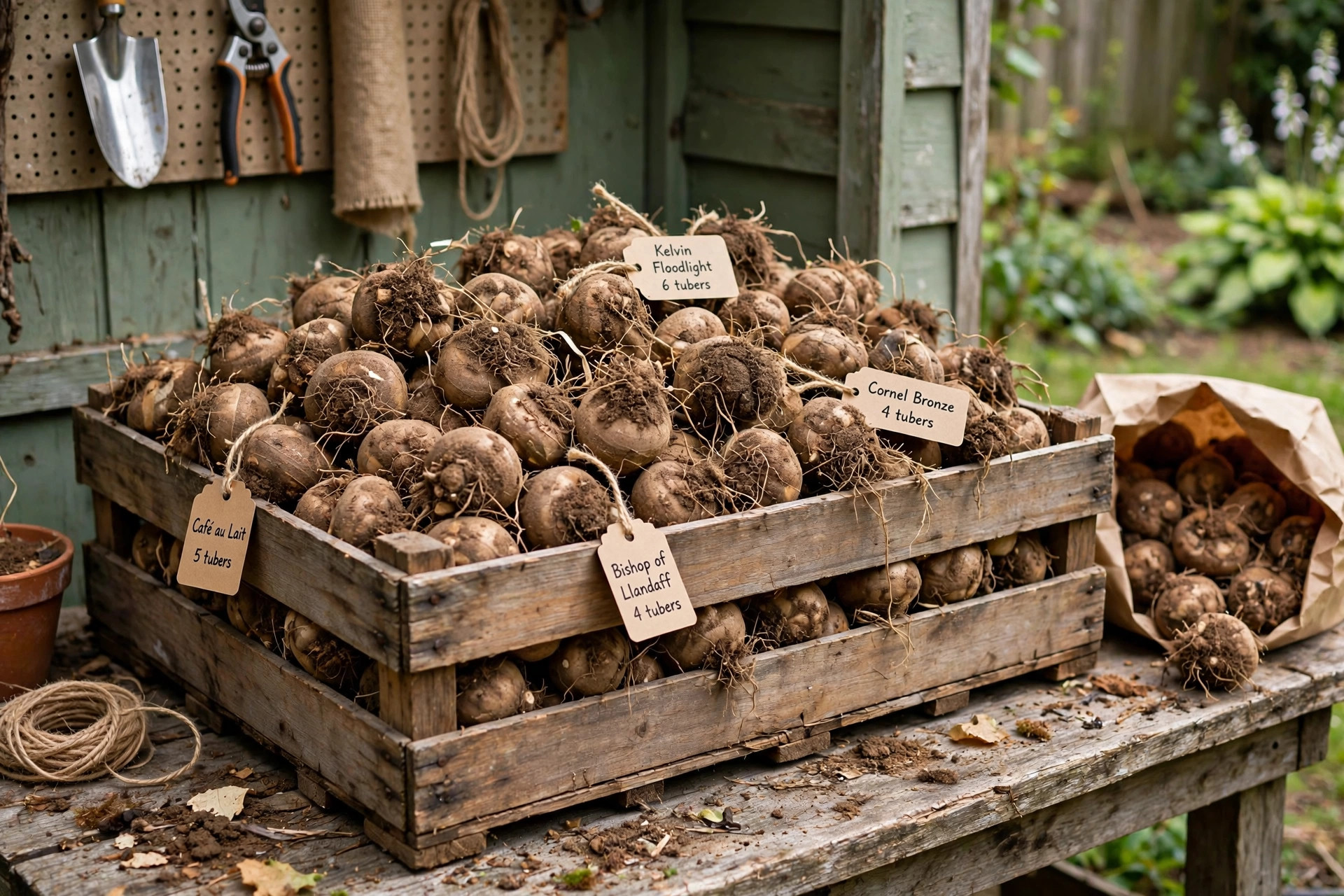
A good dahlia tuber feels firm, like a small potato. It should not be soft or shriveled. The skin should be dry but not cracked. Each tuber must carry at least one eye. The eye is the small bud where the new shoot will start. It sits near the old stem end. Tubers with no eye will not grow.
Clear Labels
Bulk lots should name the variety or at least the mix. Mystery lots are fine for a cottage border. But a cutting garden needs known types. Check that the pack states the bloom size, plant height, and color. This helps with garden design.
Honest Tuber Count
Compare prices by the cost per tuber, not by the bag price. A bag of fifty small tubers at forty dollars costs eighty cents each. A bag of twenty large tubers at thirty dollars costs a dollar and fifty cents each. The cheaper per-tuber price is not always the better buy if the tubers are weak.
Growing references can help a buyer judge what healthy stock should look like. The how-to guides at Gardening Know How explain how to inspect tubers and spot common defects before planting.
Shipping Season
Order in fall or early winter for the best pick. Most firms ship in March and April. Plant after the last frost. Tubers that sit too long in warm mail rooms can dry out. A seller who ships at the right time for your zone is worth more than a seller who ships late.
Types and Options for Bulk Dahlia Orders
Single-Variety Lots
These packs hold many tubers of one named type. They suit rows, hedges, and cutting beds where even color matters. A lot of fifty Cafe au Lait tubers, for example, will give a long row of the same blush blooms.
Mixed Packs
Mixes hold many colors in one bag. They cost less per tuber. They suit borders where variety is welcome. The trade-off is surprise. A mix may lean heavily toward one color. Read the label for hints about the blend.
Size Grades
Some sellers grade tubers by size. Jumbo or number-one tubers are the largest and most vigorous. Number-two tubers are smaller but still sound. Smaller grades cost less and still bloom well in good soil. For a large bed on a budget, the smaller grade is often the smart pick.
Organic and Untreated Stock
A few growers sell tubers raised without synthetic chemicals. These cost more. They suit gardeners who keep an organic plot. Ask the seller how the stock was raised if this matters to you.
Related bulk buying guides cover other plants bought in quantity. Readers planning a fuller garden may also look at pothos plants in bulk for Texas homes, onion sets for planting on sale in the USA, and fiddle leaf figs in American homes.
Cost and Price of Bulk Dahlia Bulbs
Prices vary by variety, grade, and seller. As a rule, expect these ranges in the USA:
– Budget mixes: fifty tubers for twenty-five to forty dollars. – Named variety lots: twenty-five tubers for thirty to sixty dollars. – Premium or new varieties: ten tubers for forty to eighty dollars. – Specialty farm stock: five to ten tubers for thirty to fifty dollars.
Shipping adds to the cost. Some firms ship free above a set order total. Others charge by weight. Compare the final delivered price before choosing.
Money can be saved in several ways. Order with a friend and split a large lot. Join a dahlia society for access to member sales. Buy smaller grades for large beds. Save your own tubers in fall so the next spring costs nothing.
H3: When Cheap Is Not a Bargain
A very low price can hide weak stock. Tubers that arrive moldy or broken will not recover. Read reviews before ordering from an unknown seller. Check that the firm offers a replacement policy. A fair price for sound tubers beats a low price for poor ones.
Planting and Care After a Bulk Order
Timing
Plant tubers after the last spring frost, when soil has warmed to about sixty degrees. In the South this may be March. In the North it may be late May. Planting in cold soil invites rot.
Depth and Spacing
Dig a hole four to six inches deep. Lay the tuber on its side with the eye facing up. Cover with soil. Space plants twelve to eighteen inches apart. Taller varieties need more room. Water lightly after planting. Do not soak the soil until shoots appear.
Staking
Tall dahlias need support. Place a stake at planting time, not later. Driving a stake later can pierce the tuber. Tie stems loosely as they grow. A bulk bed of tall types will look messy without stakes.
Water and Feed
Dahlias like steady moisture. Water deeply once or twice a week in dry weather. Feed with a low-nitrogen fertilizer once plants are a foot tall. Too much nitrogen grows leaves at the cost of blooms. Mulch helps hold soil moisture and keeps weeds down.
Planting calendars from garden almanacs help set the right dates for each region. The seasonal charts at The Old Farmer’s Almanac give frost dates and planting windows by zip code. Research notes from the national agriculture extension system at NIFA also support home gardeners with region-based growing advice.
Lifting and Storing
After the first hard frost, cut stems to a few inches. Lift tubers with a fork. Let them dry for a day or two in a cool, shaded place. Pack in peat, vermiculite, or sawdust. Store at forty to fifty degrees through winter. Check monthly and remove any that rot. Bulk growers who lift their stock each fall save hundreds of dollars each year.
Safety Notes for the Home Garden
Dahlia tubers are not food. Keep them away from children and pets who might chew them. Wash hands after handling stored tubers packed in dusty material. Wear gloves if the packing dust bothers your lungs. Store tubers in a locked shed if small children play nearby.
Chemicals used in dahlia care call for care as well. Read every label before use. Keep fertilizers and sprays locked away. Do not mix products unless the label allows it. Water the garden in the morning so leaves dry by night. This simple habit cuts disease more than any spray.
FAQ About Buying Dahlia Bulbs in Bulk
How many tubers do I need for a full bed?
A bed four feet wide and twelve feet long holds about twenty to thirty plants at normal spacing. For a cutting garden of one hundred square feet, plan on forty to sixty tubers. Bulk lots of fifty are a natural fit for beds this size.
Are bulk dahlia tubers as good as single ones?
Often yes. The difference is packaging, not plant quality. Bulk lots may hold smaller grades, but sound small tubers bloom well. Inspect on arrival. Firm tubers with visible eyes are the mark of good stock at any price.
Can I store leftover tubers for next year?
Yes, if they stay firm and disease-free. Lift them in fall, cure them, and store them cool through winter. Mark the variety with a tag. Stored tubers planted next spring bloom just as well as new ones.
When should I place a bulk order?
Order in fall or early winter for spring delivery. Popular varieties sell out by January at many firms. Late orders face a thin pick. Mark the order date on your garden calendar so you do not miss it.
Do dahlia tubers from big stores grow true to name?
Mostly yes, but mix-ups happen in large packing houses. Specialty growers tend to be more exact. If true variety matters, buy from a source that specializes in dahlias. For a mixed border, exact names matter less.
How do I keep cut blooms fresh longer?
Cut stems in the cool of the morning. Place them in warm water at once. Remove lower leaves. Change the water every two days. A bulk cutting bed can fill the house with blooms from July to October with this simple care.
A Short Final Word
Dahlias reward the gardener who plans ahead. A bulk order placed in winter becomes a summer of color. Choose firm tubers from a trusted seller. Plant them at the right time in warm soil. Stake the tall kinds. Lift and store the tubers in fall. Do these simple things, and the question of dahlia bulbs bulk where to buy usa will have a happy answer: the same good seller, year after year.
References
Burpee. (n.d.). Seeds, plants, and gardening supplies. https://www.burpee.com Gardening Know How. (n.d.). Gardening guides and plant care. https://www.gardeningknowhow.com Gurney’s Seed & Nursery Co. (n.d.). Seeds, plants, and garden supplies. https://www.gurneys.com Monrovia. (n.d.). Plants for home gardens. https://www.monrovia.com National Institute of Food and Agriculture. (n.d.). Agricultural research and extension. https://www.nifa.usda.gov Park Seed. (n.d.). Seeds, plants, and gardening supplies. https://www.parkseed.com Proven Winners. (n.d.). Plants and gardening inspiration. https://www.provenwinners.com The Old Farmer’s Almanac. (n.d.). Gardening calendars and advice. https://www.almanac.com White Flower Farm. (n.d.). Plants, bulbs, and garden supplies. https://www.whiteflowerfarm.com
Was this guide helpful?

About Jennifer Lee
The My Garden US editorial team writes practical, in-depth home and garden guides for American homeowners — tested advice, no fluff.
You May Also Like
Sunflower Seed Packs: Reviews and a Buying Guide for USA Gardeners
May 12, 2026 0 views
Monstera Plants Sale California Homes USA: A Buyer’s Guide
February 20, 2026 0 views
Finding Morning Glory Seeds Deals Near Me: A Practical Buying Guide
June 6, 2026 0 views