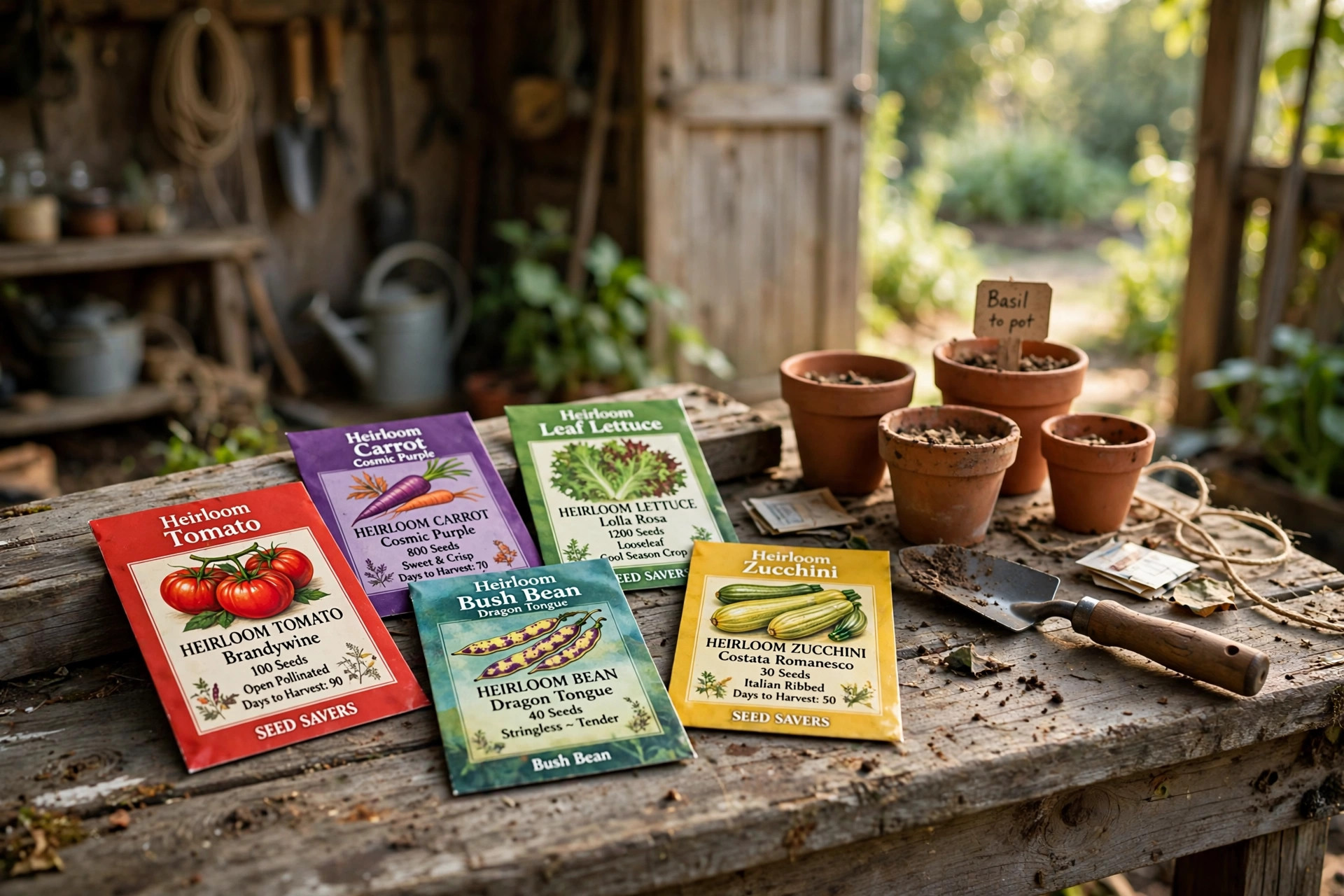

Any good heirloom vegetable seeds buying guide USA gardeners read should start with a plain fact. Heirloom seeds are not a marketing trick. They are real plant varieties that have been grown and saved for many years. Most experts say a variety must be at least fifty years old to count as an heirloom. Some say the seed line must be open-pollinated, which means you can save the seeds and get the same plant next year. When you buy true heirloom seeds, you buy a piece of garden history. You also buy seed that will grow true year after year if you save it with care.
This guide walks through the whole job step by step. You will learn what makes a seed an heirloom, how to read a packet, what fair prices look like, and how to start your seeds so they grow strong. Nothing here is fancy. It is the plain method that home gardeners have used for generations.
Why Heirloom Seeds Matter
Heirloom varieties exist because gardeners kept them alive. Long before big seed firms, families saved seeds from their best plants. They saved the sweetest tomato. They saved the bean that came up early in a cold spring. Over many years, these choices built varieties with deep flavor and steady habits. That is why many heirloom tomatoes taste richer than store types. That is why some heirloom beans climb harder and bear longer.
There is a second reason. Heirloom seeds keep choice alive. Big firms sell a small list of hybrid types. Hybrids are fine, but they are all alike. Heirlooms come in hundreds of shapes, colors, and tastes. When you grow them, you keep that range from dying out. Garden groups across the country run seed swaps for this very reason. They trade rare beans and old-time corn so the lines do not vanish.
A third reason is thrift. One packet of open-pollinated seed can serve you for years. You grow the crop, let a few of the best plants go to seed, and store the seed dry for next spring. No need to buy again. No need to pay for the same seed twice. With hybrid seed, this trick does not work. The next generation comes out mixed and weak. With true heirlooms, it works the way seed saving always has.
How to Tell a True Heirloom from a Hybrid: Heirloom Vegetable Seeds Buying Guide Usa
The packet should say it plainly. Look for the words “heirloom” or “open-pollinated.” These two terms often go together. Open-pollinated means bees and wind do the work, and the seed grows true. Heirloom means the variety is old and has been passed down. A seed can be open-pollinated without being an heirloom. It can be an heirloom without saying so on the front. Read the back panel. Good firms print the story of the variety. They tell you where it came from and how long it has been grown.
Watch for the letters F1. F1 marks a first-generation hybrid. Hybrid seed is a cross of two parent lines. It grows well in year one. But saved seed from a hybrid gives mixed plants. If your aim is to save seed year after year, skip F1 types. If you only want one good crop and do not plan to save seed, hybrids are fine. Just know what you are buying.
Also watch for words like “heirloom-type” or “heirloom-style.” These hint that the variety is new but looks old. It may be a fine plant. It is not a true heirloom. A real heirloom vegetable seeds buying guide USA shoppers can trust must draw this line. Buy the real thing when the real thing is what you want.
What to Look For Before You Buy
The Packet Label
A good packet tells you six things. The variety name. Whether it is heirloom or open-pollinated. The days to maturity. The sowing depth and spacing. The germination rate. And the pack date or the “packed for” year. If any of these are missing, buy from a firmer seller. The best seed houses print all of this as a matter of course.
Germination Rate and Seed Count
Germination rate is the share of seeds that sprout in a lab test. A rate of 85 percent or higher is good for most vegetables. Some crops, like parsley and parsnips, test lower by nature. The packet should show the test date. Fresh tests matter more than old ones. Seed count matters too. One packet may hold 30 tomato seeds. Another may hold 200. Price per seed is the fair way to compare. A three-dollar packet with 200 seeds beats a four-dollar packet with 25.
Open-Pollinated and Organic Marks
Many gardeners pair heirloom seed with organic growing. If that is your aim, look for organic seed that is also heirloom. The two labels answer different questions. Organic says how the seed crop was grown. Heirloom says how old and stable the variety is. You can have one without the other. The Burpee seed catalog and other long-running seed houses list both kinds clearly, which makes the choice easy.
Days to Maturity and Your Zone
Days to maturity tells you how long the plant needs from sowing or transplant to harvest. Match this number to your frost dates. A tomato that needs 90 days will not ripen in a short northern summer if you sow it late. The Old Farmer’s Almanac planting calendar gives frost dates by zip code and shows when to start each crop. Use it before you order. It takes two minutes and saves a lost season.
Types of Heirloom Vegetable Seeds Worth Trying
Heirloom Tomatoes
Tomatoes are the king of heirlooms. Brandywine, Cherokee Purple, Mortgage Lifter, and Green Zebra are old names that still sell out each spring. For beginners, the best heirloom tomato seeds for home gardens are the ones that suit your summer. Short-season types like Stupice ripen fast in cool zones. Big beefsteaks like Brandywine need long hot summers. Buy one early type and one main type your first year. You will learn what your soil and sun can do.
Heirloom Peppers and Beans
Peppers and beans are easy wins. Jimmy Nardello peppers are sweet and mild. Fish peppers are hot and handsome. For beans, try Blue Lake pole beans or Kentucky Wonder. Beans sprout fast and forgive rough handling. They are a good first crop for children and new gardeners. The Park Seed catalog carries deep lists of both peppers and beans with plain growing notes on each packet.
Root Vegetables and Greens
Carrots, beets, lettuce, and kale all have fine heirloom lines. French Breakfast radishes are ready in under a month. Detroit Dark Red beets have fed families for a century. Loose-leaf lettuces like Black Seeded Simpson cut and come again all spring. These crops need no special skill. Sow them right in the ground, thin them once, and keep them watered. The Gurneys seed house and similar firms sell these in large, low-cost packets that suit big rows.
If you plan to grow herbs next to your vegetables, our organic herb seeds buying guide for the USA covers herb packets in the same plain way.
Cost and Price: What Fair Prices Look Like
Heirloom seed is not costly. Most packets run from two to five dollars. Rare or large-seeded types may cost a bit more. Bulk seed for row crops costs less per seed. Here is a plain rule. Under two dollars a packet, check the seed count and the pack date. Over six dollars a packet, ask what makes it special. Some firms charge more for hand-packed or regionally grown seed. That can be worth it. But the middle range, three to four dollars, buys fine seed from honest firms.
Do not pay extra for the word “heirloom” alone. Some sellers mark up common open-pollinated types just by adding the word. Compare the variety name across two or three sellers. If the same Cherokee Purple seed costs twice as much at one shop, buy it at the other. When you are ready to shop, our companion page on heirloom vegetable seeds for sale in the USA lists the main buying routes side by side.
Watch shipping cost. A two-dollar packet with five-dollar shipping is a seven-dollar packet. Many seed houses waive shipping over a set order size. It often pays to order all your spring seed at once. The White Flower Farm site and other large sellers post their shipping terms plainly, so check before you check out.
Starting and Saving Seeds
How to Start Seeds Indoors
Most heirloom vegetables start well indoors six to eight weeks before the last frost. Use clean trays and fresh seed-starting mix. Old potting soil can carry disease. Sow at the depth shown on the packet. Most seeds want twice their own width of cover. Keep the trays warm. A heat mat helps peppers and tomatoes. Keep the soil damp but not wet. A clear dome holds in moisture until sprouts show.
Light matters more than most beginners think. A sunny window is rarely enough. Hang a shop light with cool tubes two inches above the seedlings. Raise it as they grow. Run the light fourteen to sixteen hours a day. Weak, leggy seedlings come from dim light, not bad seed. Our seed starting trays buying guide for the USA shows which tray types hold up for years and which crack in one season.
How to Save Your Own Seeds
Saving seed is the heart of heirloom growing. Let one or two of your best plants mature past eating stage. For tomatoes, scoop the seeds with their gel into a jar of water. Let it sit two or three days until a light mold forms. Rinse the seeds clean and dry them on a paper plate. For beans and peas, let the pods dry on the vine, then shell them. For lettuce, let a plant bolt and catch the fluffy seed heads in a bag.
Dry seed fully before storage. A week on a plate in a dry room is enough. Then pack the seed in paper envelopes. Write the variety and the year on each one. Store envelopes in a glass jar in a cool, dark place. A basement shelf works. A refrigerator works better. Most vegetable seed keeps three to five years this way. Test old seed by sprouting ten seeds on a damp paper towel. If seven sprout, the batch is still good.
Keep varieties apart if you want pure seed. Squash, corn, and cucumbers cross with near kin. Tomatoes and beans mostly self-pollinate and stay true with little effort. The NIFA research pages from the federal agriculture agency explain pollination and seed saving in plain terms for home growers.
Care and Upkeep Through the Season
Heirloom plants need the same care as any vegetable. Water deep and less often. An inch a week from rain or hose is the old rule. Mulch with straw to hold moisture and stop weeds. Feed with compost at planting time. Side-dress heavy feeders like tomatoes and corn with more compost mid-season. Watch for pests early. Hand-pick hornworms. Use row cover against flea beetles on young greens.
Keep notes. Write what you planted, when it sprouted, and how it tasted. This small habit is what turned plain gardeners into the seed savers who gave us heirlooms in the first place. After two or three years, your notes will tell you which varieties suit your ground. Then you can stop buying those kinds and save your own. That is the whole point.
For step-by-step growing help through the season, the Gardening Know How guides and the garden section of The Spruce both carry plain, tested advice for each crop.
Safety and Handling
Seeds are safe to handle, but a few rules keep you and your garden well. Wash your hands after handling seed treated with fungicide. Most heirloom seed is untreated, and packets say so. Keep seed packets away from small children and pets. Seeds are not food in packet form, and some are coated.
In the garden, wear gloves when working compost and soil. A tetanus shot should be current for anyone who digs often. Read the label on any spray you use, even organic ones. More is not better. If you buy live plants to go with your seeds, check them for pests before they enter your garden. The plant library at Monrovia shows what healthy nursery stock should look like, and Proven Winners posts clear care tags that apply to vegetables as well as flowers.
Frequently Asked Questions
Are heirloom seeds harder to grow than hybrids?
Not as a rule. They need the same sun, water, and soil. Some heirlooms are less uniform than hybrids, so one plant may ripen a week before its neighbor. Some old varieties resist disease less well than new hybrids. Read the variety notes before you buy. Pick types known to do well in your region, and you will have no more trouble than with any other seed.
How long do heirloom seeds last in storage?
Most vegetable seeds keep for three to five years in cool, dry storage. Onions and parsnips are short-lived and best bought fresh each year. Beans, tomatoes, and cucumbers often last five years or more. The pack date on the envelope is your guide. When in doubt, run the damp paper towel test described above before sowing day.
Can I save seeds from grocery store heirloom tomatoes?
Sometimes, but it is a gamble. Store fruit may be a hybrid sold under a fancy name. It may have been picked green and gassed to ripen, which can hurt seed life. It may also carry disease from the field. Seed from a trusted packet costs a few dollars and removes all doubt. Save your own seed from the plants you grow instead.
What is the difference between heirloom and organic seeds?
Heirloom describes the age and stability of the variety. Organic describes how the seed crop was grown, without synthetic pesticides or fertilizers. A seed can be heirloom but not organic, or organic but not heirloom, or both. Decide which matters to you. Many gardeners buy seed that is both, and firms now label this clearly.
How many seeds do I need for a family garden?
Fewer than you think. One packet of tomato seed, with 25 to 50 seeds, can plant a garden for two years. One packet of bean seed plants a long row. Buy small the first year. Learn what grows well for you. Then buy bigger packets of your winners, or save your own seed and buy nothing at all.
Where should beginners buy their first heirloom seeds?
Start with long-running American seed houses that print full packet information. The firms linked in this guide all sell true heirloom lines with germination rates and growing notes. Local garden centers are good too, and you can ask the staff what grows well nearby. Seed swaps and county extension sales are fine once you know the basics.
A Final Word
Buying heirloom vegetable seeds is a small act with long roots. Each packet carries work done by gardeners you will never meet. Grow them well. Save the best. Pass them on. That is how heirlooms were made, and it is how they survive. Start with two or three kinds this year. Keep notes. Next spring you will know more than any guide can teach, and your garden will show it.
References
Burpee. (n.d.). Seeds, plants, and gardening supplies. https://www.burpee.com Gardening Know How. (n.d.). Gardening guides and plant care. https://www.gardeningknowhow.com Gurney’s Seed & Nursery Co. (n.d.). Seeds, plants, and garden supplies. https://www.gurneys.com Monrovia. (n.d.). Plants for home gardens. https://www.monrovia.com National Institute of Food and Agriculture. (n.d.). Agricultural research and extension. https://www.nifa.usda.gov Park Seed. (n.d.). Seeds, plants, and gardening supplies. https://www.parkseed.com Proven Winners. (n.d.). Plants and gardening inspiration. https://www.provenwinners.com The Old Farmer’s Almanac. (n.d.). Gardening calendars and advice. https://www.almanac.com The Spruce. (n.d.). Home and garden advice. https://www.thespruce.com White Flower Farm. (n.d.). Plants, bulbs, and garden supplies. https://www.whiteflowerfarm.com
Was this guide helpful?

About Emily Rodriguez
The My Garden US editorial team writes practical, in-depth home and garden guides for American homeowners — tested advice, no fluff.
You May Also Like
Daffodil Bulb Packs Buying Guide USA: How to Choose, Buy, and Plant
September 28, 2026 0 views
Fiddle Leaf Figs American Homes Guide: Growing Tall Trees Indoors
July 19, 2026 0 views
Monstera Plants for Sale: Where to Buy Them in the USA
May 6, 2026 0 views