

What Is a Cold Frame, and Why Should a Beginner Use One?
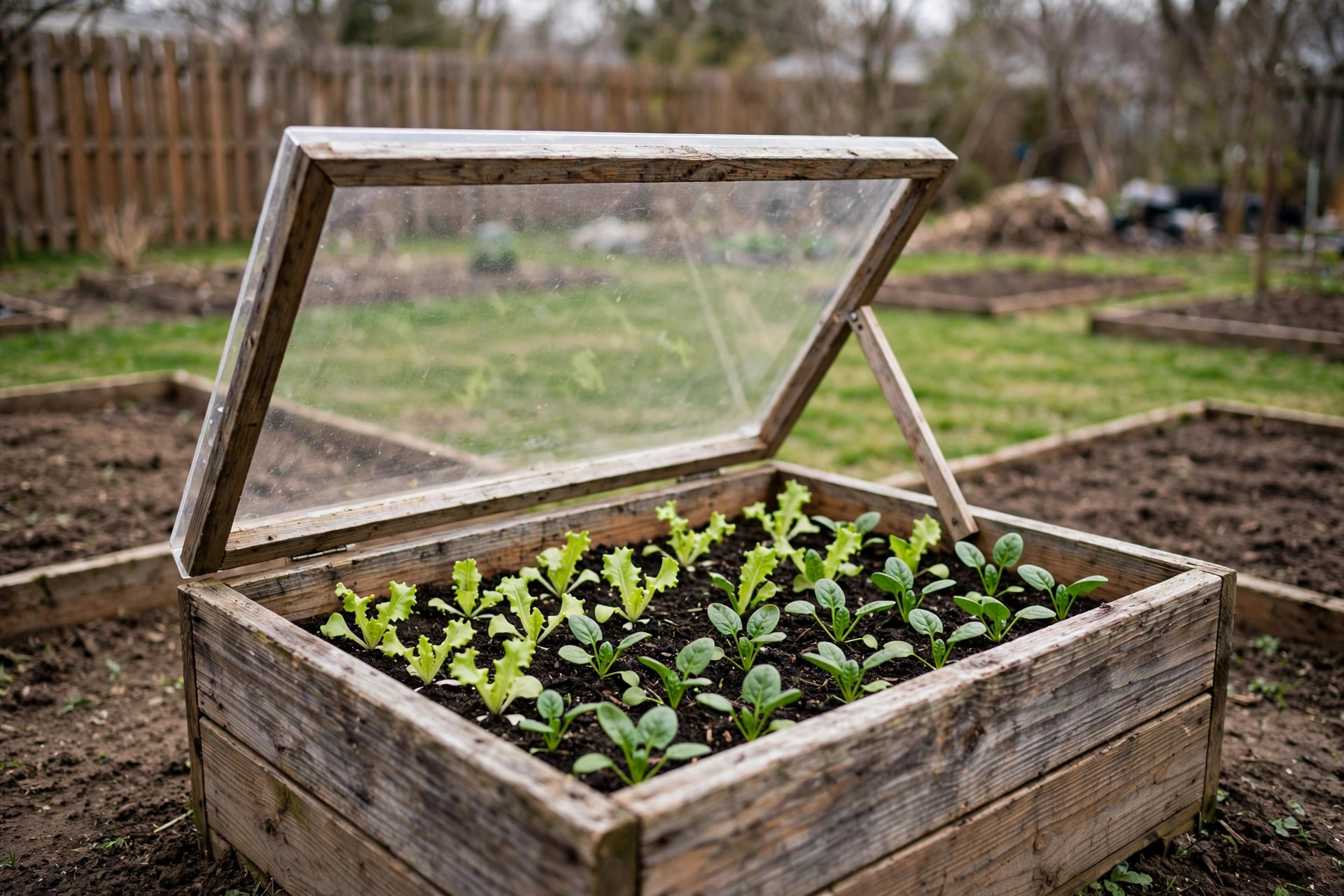
A cold frame is a simple box with a clear lid. It has no heater and no electric cord. Sunlight passes through the lid and warms the air and soil inside. The walls block wind. This creates a small sheltered space where plants can grow when the weather outside is too cold for them.
For beginners, these cold frame gardening tips for beginners matter because a cold frame is the cheapest and simplest way to lengthen the growing season. It lets you sow salad greens and hardy vegetables weeks before the last spring frost, and keep them growing weeks after the first autumn frost. Some gardeners in mild regions harvest through the whole winter with nothing but a cold frame and careful timing.
A failed crop in a cold frame costs a packet of seed, not a whole garden bed.
Why Cold Frame Gardening Matters: Cold Frame Gardening Tips for Beginners
The open garden is ruled by frost dates. Most seeds and young plants cannot survive a hard freeze. A cold frame changes that rule by adding warmth. On a still, sunny day the air inside a closed cold frame can be twenty or thirty degrees warmer than the air outside, and that difference often carries hardy crops through a cold night.
A cold frame gives you a head start. Seeds sown directly in cold soil sit still for weeks. The same seeds sown inside a cold frame sprout faster and grow on without checks. When the weather settles, you transplant strong plants into the open garden, already ahead of seeds planted the day the frost passed. If you are also learning how to start seeds indoors, you will find a cold frame makes a good partner. Tender indoor seedlings can move to the frame to harden off before facing the open garden.
Choosing Your First Cold Frame
The beginner is wise to buy or build simple. A good first cold frame is three to four feet long and about two feet deep, a size easy to reach across from one side. A lid that opens on hinges is a great help, since you will open and close it every day in spring. Look for a lid that props open safely at several heights.
The frame is often wood, and cedar or redwood boards hold up well to weather. Some frames are plastic or metal, which last long and weigh little. The lid is usually glass or clear polycarbonate. Polycarbonate twin-wall panels are light, strong, and hold heat a little better because of their double layer, which is why many gardeners choose them for a first frame.
Look for a lid that seals well when closed, since gaps let warm air escape. The frame should hold six to eight inches of soil. Shallow boxes dry out fast and cramp roots. Reading cold frame for winter gardening reviews can help you compare lids and frames before you spend money. The buying guides at Consumer Reports also rate garden gear on real test results, which helps a beginner choose well.
Where to Place a Cold Frame
Site selection is the single most important of all cold frame gardening tips for beginners. Set the frame where it will catch the low winter sun. A south-facing wall is best. The wall reflects extra light and heat onto the bed and blocks the cold north wind. Without a south-facing wall, any open sunny spot with shelter from the wind will do.
Avoid low ground where cold air settles. On still nights, cold air flows downhill and pools in hollows, so a frame in a hollow may be several degrees colder than one on a slight rise nearby. Avoid the deep shade of trees and buildings. A cold frame needs full sun in winter and spring to do its work.
Face the lid toward the south. Leave room behind the frame for the lid to swing open, since many gardeners place the frame too close to a fence and then cannot open the lid fully.
Building a Cold Frame Yourself
You do not have to buy a cold frame. Build a box about four feet wide, two feet deep, and one foot high at the front, with the back about four inches higher than the front. This slope faces the lid up toward the sun and lets rain run off. Use weather-resistant lumber at least one inch thick. Many gardeners use cedar fence boards because they are cheap and last for years.
Hinge an old window sash or a frame of clear polycarbonate to the back edge of the box. Add a prop stick with notches so the lid can be held open at several heights. A handle on the lid helps you lift it without touching the clear panel. The project guides at Family Handyman show cold frame builds with clear step-by-step plans, and This Old House covers similar simple garden structures.
What to Grow in a Cold Frame
Beginners should start with crops that forgive mistakes. The best first crops are cool-season vegetables that tolerate light frost. They grow fast, cost little to replace, and reward you quickly.
Salad greens lead the list. Lettuce, spinach, arugula, and Asian greens such as bok choy and mizuna all thrive in a cold frame. Sow them in early spring while snow may still lie in shaded corners. Sow another round in late summer for autumn and winter harvest. Many gardeners keep spinach and kale growing under a closed lid through months of frost.
Herbs are another fine choice. Parsley, cilantro, chives, and green onions all do well in cool sheltered soil. Root crops such as radishes and baby carrots grow fast and please children with quick results. Spring is also the season to start warm-season plants for later transplanting. Tomato, pepper, and squash seedlings can move into the cold frame on mild days as part of how to transplant seedlings outdoors safely, then move back inside or under cover on cold nights. This hardens them off, and hardened plants settle into the summer garden far more easily than tender ones.
Sowing and Planting Inside the Frame
In spring, sow hardy seeds in the frame four to six weeks before the last expected frost in your area. The soil inside warms earlier than open ground, and the lid holds the warmth. This sounds daring to a beginner, but the frame is built for it.
Sow seeds a little shallower than the packet suggests, because the damp air of a closed frame keeps the surface moist. Water gently after sowing with a fine rose or a light mist so small seeds are not washed away. Watch soil moisture every day. A closed frame can dry out fast on sunny days and stay too wet if you water with a heavy hand. The soil should feel like a wrung-out sponge.
Thin seedlings on time. Crowded plants grow tall and weak as they stretch for light. Pull or snip the extras when seedlings have two true leaves. The plants you keep will grow stouter and give better crops.
Managing Temperature: The Daily Routine
The daily routine is where beginners win or lose. A cold frame has no thermostat, so you are the thermostat. Open the lid when it warms up, and close it before it gets cold.
On spring mornings, check the frame early. If the sun is out and the air inside feels warm, prop the lid open a crack, and widen the opening as the day warms. A thermometer inside the frame removes guesswork.
Close the lid in the late afternoon, before the sun sinks low, so the frame traps the day’s warmth for the night. On very cold nights, throw an old blanket or a sheet of bubble wrap over the lid, and remove it in the morning so the sun can enter. Dark jugs of water set inside the frame also help, since water holds heat through the day and releases it slowly at night.
The greatest beginner danger is overheating, not cold. A closed frame in full spring sun can reach one hundred degrees by midday, and young plants cook quickly at such heat. Get into the habit of venting early. It is better to vent too soon than too late. A chilled plant recovers, but a cooked one does not.
Watering and Feeding
Water in the morning so leaves dry before night. Wet leaves in a cold frame can invite gray mold and damping-off, the fungal diseases that kill seedlings at the soil line. Water at the base of the plants when you can, and use room-temperature water, since cold water on warm soil shocks roots. In winter, water little and only on mild days. Plants grow slowly in the cold and need little water, and wet cold soil harms roots more than dry cold soil.
Cost and Price
A cold frame is one of the cheapest garden structures you can own. A simple ready-made frame of wood and polycarbonate costs between fifty and one hundred fifty dollars in most years. Larger or finer frames with cedar and glass can cost two hundred dollars or more. A homemade frame built from cedar boards and an old window sash may cost twenty to forty dollars in lumber and screws.
The running cost is nearly nothing. There is no heater to power and no light to run. Seed, soil, and compost are your only yearly costs, and many gardeners make their own compost. For a family that buys salad greens through spring and autumn, a cold frame can pay for itself in a single season.
The garden centers at The Home Depot and Lowe’s carry several cold frame models in season. Gardener’s Supply Company also sells cold frames and season extenders made for home gardeners. For seeds bred to perform in cool conditions, Burpee lists varieties with notes on cold tolerance that help a beginner choose well.
Care and Upkeep Through the Year
In spring, wash the lid inside and out. A dirty lid cuts the light and slows growth. Check the hinges and the prop stick each spring and replace what is worn. In summer, most gardeners rest the frame. You can remove the lid and use the box as a raised bed, or store the frame in a shed. If the frame stays out, keep the lid open so the box does not become an oven.
In autumn, wash the lid again and reseal gaps around the frame with soil or straw. A tight frame holds heat better through winter. Check that the lid still closes flat, since a warped lid leaks the warmth you are trying to keep.
Keep the area around the frame clear of weeds, which shelter slugs and snails that love young greens at night. The Spruce keeps a large library of beginner garden articles on cleaning and seasonal upkeep.
Safety
Glass lids are the main risk in a cold frame. An old window sash can break if it slams in the wind, so hinge it well, fit a strong prop, and add a hook or cord that keeps the lid from blowing open or slamming shut. If children play nearby, choose a polycarbonate lid, which will not shatter.
Mind your back. A frame set at ground level asks you to bend and kneel, so use a kneeling pad or set the frame on a low stand. Lift the lid with both hands and keep your footing steady on wet soil.
On hot days, never leave the frame closed and walk away. A forgotten closed lid on a sunny day can destroy a whole planting by afternoon.
Frequently Asked Questions
How cold can a cold frame protect plants? A simple cold frame usually adds five to fifteen degrees of frost protection, depending on the sun, the wind, and how well the frame seals. Hardy greens such as spinach and kale can survive inside a frame through nights well below freezing. Tender plants such as tomatoes need indoor warmth until the weather settles.
Do I need to heat my cold frame? No. The sun provides the heat, and your job is to trap it at night with the closed lid and extra covers, and release it by day with venting. If you want heated growing, you are looking for a hotbed or a small greenhouse instead.
When should I open and close the lid? Open it on spring mornings when the inside air starts to feel warm, and widen the opening as the day warms. Close it in the late afternoon while the sun is still on the frame. In deep winter, open it only on mild sunny days and keep it shut the rest of the time.
What is the best direction for a cold frame to face? Face the sloping lid toward the south to catch the low winter and spring sun. A spot against a south-facing wall is best, since the wall adds shelter and reflected warmth.
What should I do if my seedlings get leggy? Leggy seedlings are tall, pale, and weak, usually from too little light or too much warmth. Wash the lid so full light enters, vent the frame more so nights stay cool, and thin crowded seedlings on time.
A Short Final Word
A cold frame asks for one thing a beginner can give: attention. Open it, close it, water it, watch it. In return it gives fresh food when the garden is bare and teaches the rhythm of sun and season better than any book. Start small, with hardy greens and a simple frame, and by your second season you will read the sky the way experienced gardeners do. Bob Vila covers cold frame construction from a builder’s point of view, while Fiskars and Corona Tools publish guides on keeping your hand tools sharp and clean.
References
Bob Vila. (n.d.). Home improvement advice. https://www.bobvila.com Burpee. (n.d.). Seeds, plants, and gardening supplies. https://www.burpee.com Consumer Reports. (n.d.). Product reviews and ratings. https://www.consumerreports.org Corona Tools. (n.d.). Garden and landscape tools. https://www.corona-tools.com Family Handyman. (n.d.). DIY home repair and maintenance. https://www.familyhandyman.com Fiskars. (n.d.). Garden and cutting tools. https://www.fiskars.com Gardener’s Supply Company. (n.d.). Gardening tools and supplies. https://www.gardeners.com Lowe’s. (n.d.). Home improvement products. https://www.lowes.com The Home Depot. (n.d.). Home improvement products. https://www.homedepot.com The Spruce. (n.d.). Home and garden advice. https://www.thespruce.com This Old House. (n.d.). Home renovation guidance. https://www.thisoldhouse.com
Was this guide helpful?

About Michael Thompson
The My Garden US editorial team writes practical, in-depth home and garden guides for American homeowners — tested advice, no fluff.
You May Also Like

Best Garden Rake for Leveling Soil: A Practical Buying Guide
February 8, 2026 0 views
Best Garden Cart for Seniors Reviews: How to Pick the Right Cart
August 28, 2026 0 views
Best Garden Soil for Raised Beds: A Plain Guide
February 12, 2026 0 views