---
Table of Contents
Table of Contents
- Organize a Deep Pantry: Why Deep Shelves Turn Into Such a Mess
- The Bin Trick: Make Your Own Pullouts
- Group Food the Way You Cook
- The One-Category-Per-Bin Rule
- Make the Back of the Shelf Reachable
- A Simple System for Dates and Freshness
- Keep It Going: The Five Minute Weekly Reset
- What to Buy and What to Skip
- A Sample Layout, Shelf by Shelf
- The Bottom Line
- References
A deep pantry gives you plenty of room, and that is the whole problem. Cans slide to the back. Bags of rice disappear behind boxes of cereal. You buy a second jar of peanut butter because you never saw the first one. Pullout drawers would fix it, but they cost money and take a carpenter to install. The good news is that you can get almost the same result with a few cheap bins, a little planning, and a system that anyone in the house can follow. This guide shows how to organize a deep pantry in plain steps.
This guide walks you through how to organize a deep pantry without pullouts, step by step. You will learn how to group food by how you cook, how to make the back of the shelf reachable, and how to keep the whole thing tidy with a five minute weekly reset.
Organize a Deep Pantry: Why Deep Shelves Turn Into Such a Mess
When it comes to organize a deep pantry, getting the details right makes all the difference.
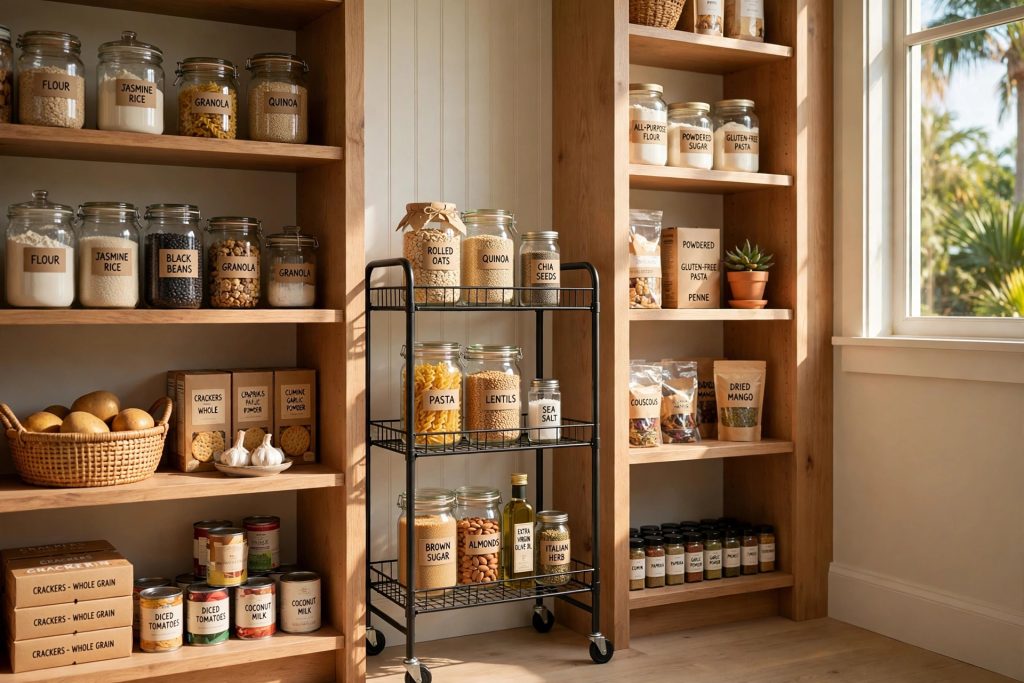
Many homeowners find that organize a deep pantry is easier than they expected once they know the basics.
Deep shelves fail for one simple reason: the back half of the shelf is invisible. When you open the pantry door, your eyes take in the front row. Anything behind that row might as well not exist. So you stack new groceries in front, push old food further back, and over time the rear of the shelf becomes a graveyard of stale crackers and expired cans.
Professional organizers call the fix for this the FIFO method, which stands for first in, first out. Grocery stores use it on their own shelves. When you bring home a new can of tomatoes, it goes behind the can you already own. The oldest item always sits in front, so it gets used first. The method is simple, but it only works if you can reach the back of the shelf without knocking everything over. That is where bins come in.
Another reason deep pantries fail is mixing categories. When pasta, snacks, baking supplies, and canned soup all share one shelf, nobody can find anything and nobody puts anything back in the right spot. Homes and Gardens notes that assigning the heaviest items to shelves you can reach without stretching, and saving the highest shelves for things you rarely touch, cuts down on the daily wrestling match (Homes and Gardens, n.d.).
The Bin Trick: Make Your Own Pullouts
Many homeowners find that organize a deep pantry is easier than they expected once they know the basics.
The key to organize a deep pantry is choosing the right approach for your space and budget.
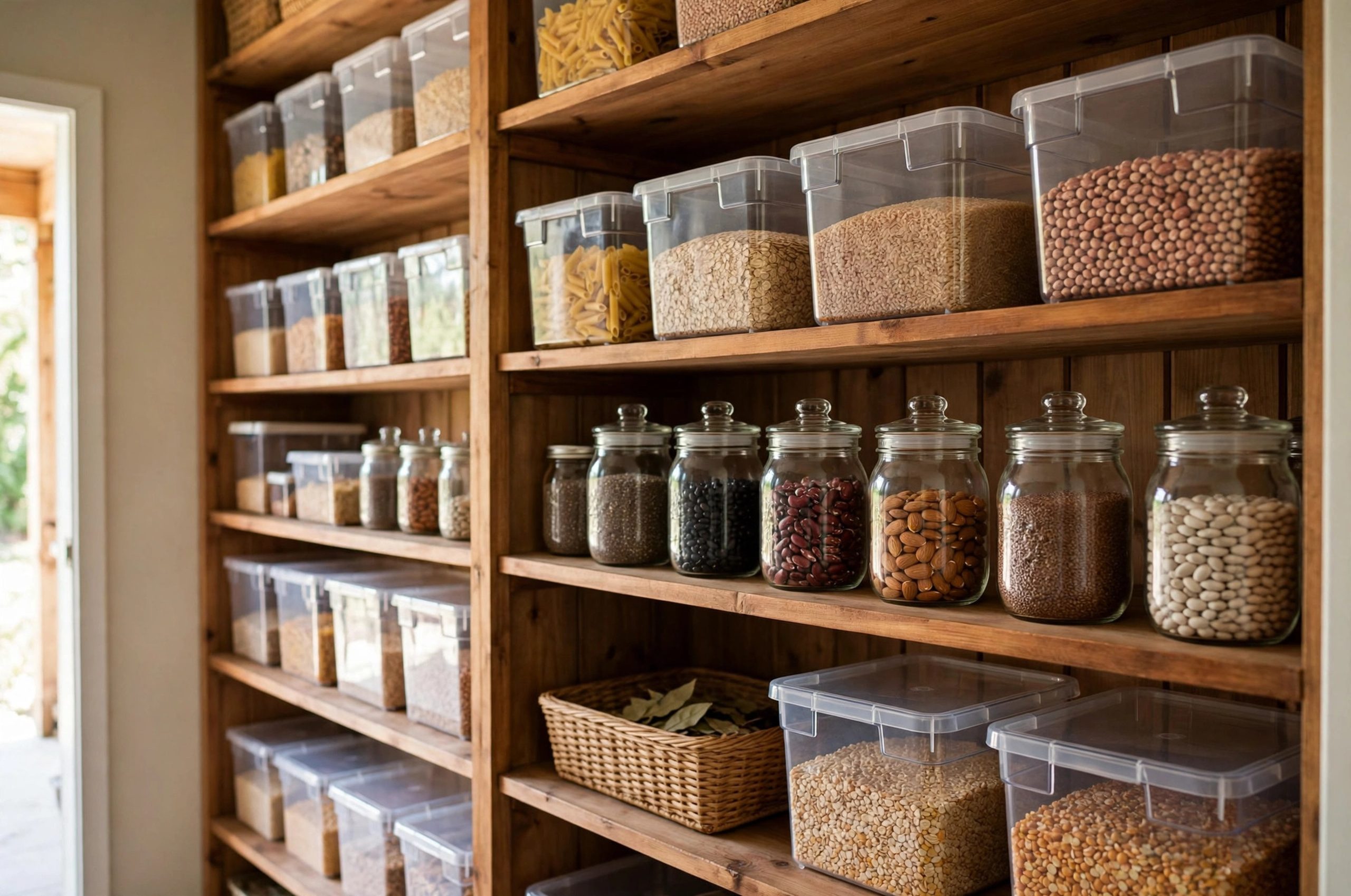
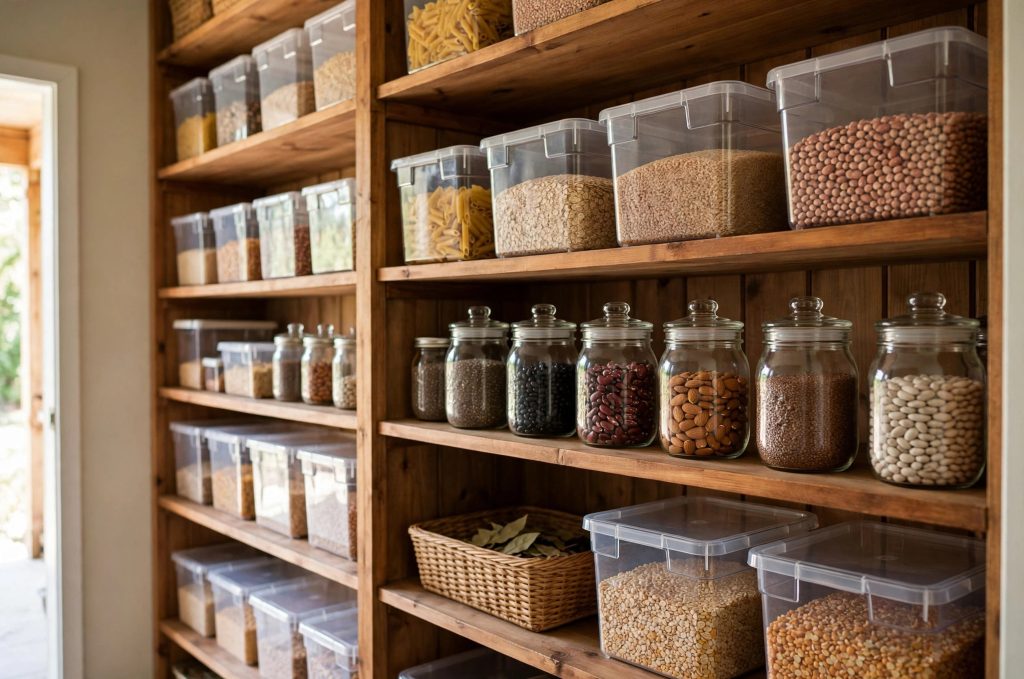
Here is the core idea, and it costs very little. Buy long, narrow bins that are almost as deep as your shelf. Put your food groups in them. When you need something from the back, you slide the whole bin forward like a drawer, grab what you need, and push it back. You just built a pullout for a few dollars.
Measure your shelves before you buy anything. Write down the depth, width, and height of each shelf. Most pantry shelves run 14 to 18 inches deep, and bins made for pantries usually come in depths that match. Tasting Table points out that long containers you can pull out like drawers are the single best fix for deep pantry shelves, since they end the digging entirely (Tasting Table, n.d.).
A few rules for picking bins:
- Clear bins beat colored ones. You can see what is inside without opening or pulling anything. That alone cuts down on duplicate buying.
- Open-top or open-front bins are easier to reach into than lidded boxes. Save the lids for flour, sugar, and anything that needs to stay fresh.
- Handles help. A bin with a cutout handle or a grip on the front is much easier to slide in and out.
- Match the bin to the job. Use tall narrow bins for bottles and oils, short wide bins for cans and jars, and big bins for bulky bags of chips and snacks.
House Digest suggests that you do not need expensive pullout hardware, since inexpensive bins from discount stores can do the same job when you slide them forward to reach the back (House Digest, n.d.). A second House Digest piece adds that open-front stackable bins let you reach inside without sliding the bin at all, which is handy for the snacks the kids grab every day (House Digest, n.d.).
If you want ideas for sturdy bins that hold up in a kitchen, our comparison of clear storage bins with lids covers sizes and prices worth knowing before you shop.
Group Food the Way You Cook
The key to organize a deep pantry is choosing the right approach for your space and budget.
With a little planning, organize a deep pantry can fit even a busy schedule.
Bins only work if each one holds a clear category. Before you buy a single bin, pull everything off the shelves and sort it on the kitchen table. This is the annoying part, and it is also the most important part. Throw away anything stale or expired. Donate the cans you know you will never open. Then sort what is left into groups that match real meals:
- Breakfast: cereal, oats, pancake mix, syrup, peanut butter
- Pasta and grains: all pasta shapes, rice, quinoa, couscous
- Canned goods: tomatoes, beans, soups, broth, tuna
- Baking: flour, sugar, chocolate chips, baking powder, oils
- Snacks: crackers, chips, granola bars, nuts, dried fruit
- Drinks: coffee, tea, drink mixes, juice boxes
Designing Idea recommends grouping like items together and putting the groups you reach for most often at eye level, with seldom-used items up high (Designing Idea, n.d.). This matters more in a deep pantry than anywhere else, because a misplaced item is an invisible item.
Once you have your groups, assign each group to one bin or one shelf zone. Put a label on the front of every bin. A label maker is nice, but masking tape and a marker work just as well. World Article 9 suggests labeling not just the bins but the shelf edge itself, so the zone stays put even when a bin comes out for cleaning (the label method is covered in detail by World Article 9, n.d.).
The One-Category-Per-Bin Rule
Resist the urge to toss "a few extras" into a bin that has room. Every mixed bin is a future mess. If your snack bin is full, that is useful information. It means you have too many snacks, or you need a second snack bin. Let the bins tell you the truth about how much food you keep.
Make the Back of the Shelf Reachable
With a little planning, organize a deep pantry can fit even a busy schedule.
Before you start, it helps to understand how organize a deep pantry works in real homes.
Bins handle most of the problem, but a few extra tools make deep shelves even better:
Risers for cans. A stepped can riser sits at the back of the shelf and lifts the rear row of cans above the front row, like stadium seating. You can see every label without moving a thing. This is the cheapest way to fix the classic lost-can problem.
Turntables for bottles. A lazy Susan on a deep shelf holds oils, vinegars, and sauces. Spin it and the bottle you need comes to the front. Tasting Table notes that a turntable is one of the two items that can tame a deep pantry almost by itself, along with clear containers (Tasting Table, n.d.).
Shelf risers for short items. A wire shelf riser splits a tall shelf into two levels. Cans or spice jars go on top, shorter items tuck underneath. You double the usable space without adding a shelf.
The door. The inside of the pantry door is free real estate. A narrow over-the-door rack holds spices, small packets, and wraps. It keeps little things from vanishing behind the big bins.
High shelves for the rarely used. The top shelf is for the turkey roaster, the holiday cookie cutters, and the extra paper towels. Life and Work suggests keeping that shelf only 80 to 90 percent full and using labeled bins, because a crammed top shelf rains objects on your head (Life and Work, n.d.).
If your pantry is part of a bigger kitchen storage puzzle, you may also want to look at kitchen cabinet organizers for the cabinets flanking the pantry, and wall-mounted storage shelves for overflow items that do not need to live inside the pantry at all.
A Simple System for Dates and Freshness
Before you start, it helps to understand how organize a deep pantry works in real homes.
A good plan for organize a deep pantry saves time, money, and frustration.
A deep pantry hides expiration dates as well as it hides food. When you organize, build freshness into the system:
1. When you unload groceries, put new items behind the old ones (FIFO). Every time, no exceptions. 2. Write the month you opened a bag of flour or a box of cereal on a piece of tape stuck to the container. You will thank yourself later. 3. Keep a small basket or bin labeled "use soon" at the front of one shelf. Anything close to its date goes in there, where you will actually see it. 4. Twice a year, pull the bins out and check dates. Toss what is past its prime.
Ohio State University Extension reminds pantry cleaners that once a can is opened it becomes perishable and needs refrigeration, and that whole spices keep about two years while ground spices lose strength after about one (Ohio State University Extension, n.d.). Build those timelines into your reset routine and you will waste far less food.
Keep It Going: The Five Minute Weekly Reset
A good plan for organize a deep pantry saves time, money, and frustration.
For most people, organize a deep pantry comes down to a few smart choices.
An organized pantry stays organized only if someone maintains it. The trick is to make maintenance tiny. Once a week, when you put groceries away, spend five minutes doing this:
- Pull each bin forward and push the older items to the front.
- Put the new groceries behind them.
- Straighten anything that tipped over.
- Check the "use soon" bin and plan one meal around it.
That is it. Five minutes. The system does the heavy lifting the rest of the week because every item has a labeled home and every home is a bin you can slide out.
Get the whole household on board with one rule: everything goes back in its labeled bin. Kids can follow this. Guests can follow this. The label is doing the teaching, so you do not have to.
What to Buy and What to Skip
For most people, organize a deep pantry comes down to a few smart choices.
If you are new to organize a deep pantry, start with the simplest option and build from there.
You do not need much. A realistic shopping list for a medium pantry:
- 6 to 10 long bins, sized to your shelf depth
- 1 or 2 can risers
- 1 turntable for oils and vinegars
- Labels (maker, chalk labels, or tape and marker)
- 1 "use soon" basket
Skip the fancy matching container sets unless decanting genuinely appeals to you. Pouring every box of pasta into a matching jar looks lovely and takes real upkeep. For most families, keeping food in its original package inside a labeled bin works better and costs nothing extra.
Also skip buying organizers before you sort. Measure first, sort second, buy third. The number one mistake is buying pretty bins that do not fit the shelf depth, which leaves you with a new problem instead of a solution.
For homes where the pantry overflows into other rooms, our guide to attic storage solutions for cold climates can help you move bulk backup stock somewhere it will keep well.
A Sample Layout, Shelf by Shelf
If you are new to organize a deep pantry, start with the simplest option and build from there.
When it comes to organize a deep pantry, getting the details right makes all the difference.
If you are staring at your pantry and do not know where to start, here is a layout that works for most deep pantries:
- Top shelf: labeled bins for holiday baking, party supplies, and rarely used gadgets.
- Eye-level shelf: breakfast bin, snack bin, and the "use soon" basket. This shelf gets opened the most, so keep it simple.
- Middle shelf: pasta and grains bin, canned goods on a riser, baking bin.
- Lower shelf: drinks, heavy items like big bags of rice or pet food, and cleaning-adjacent overflow like paper towels.
- Door: spices, wraps, and small packets in an over-the-door rack.
Adjust for your household. If you bake every week, baking moves up to eye level. If you have small kids, snacks move down low where little hands can reach a labeled bin without climbing.
The Bottom Line
When it comes to organize a deep pantry, getting the details right makes all the difference.
Many homeowners find that organize a deep pantry is easier than they expected once they know the basics.
You do not need pullout drawers to fix a deep pantry. Long bins act like drawers when you slide them forward. Clear categories keep every item findable. Labels keep every item put-backable. And a five minute weekly reset keeps the whole system honest. Start with the sort, buy bins that fit your shelves, and enjoy a pantry where nothing hides in the back anymore. With these steps, you can organize a deep pantry with confidence.
References
Many homeowners find that organize a deep pantry is easier than they expected once they know the basics.
Designing Idea. (n.d.). Deep pantry organization (Best storage tips & ideas). https://designingidea.com/deep-pantry-organization/
Homes and Gardens. (n.d.). How to organize deep pantry shelves: 10 ways to organize pantry shelves. https://www.homesandgardens.com/kitchens/how-to-organize-deep-pantry-shelves
House Digest. (n.d.). How to get the most storage out of kitchen pantries with deep shelves. https://www.housedigest.com/1662528/deep-shelf-kitchen-pantry-organization/
House Digest. (n.d.). 13 budget-friendly Dollar Tree solutions for organizing deep pantry shelves. https://www.housedigest.com/2041421/organize-pantry-deep-shelves-budget-friendly-dollar-tree-diys/
Life and Work. (n.d.). Top pantry shelf: Best storage hacks for rarely used items. https://lifeandwork.blog/top-pantry-shelf-best-storage-hacks-rarely/
Ohio State University Extension. (n.d.). Points to ponder while cleaning out the pantry. https://wayne.osu.edu/news/points-ponder-while-cleaning-out-pantry
Tasting Table. (n.d.). The absolute best storage hack for deep pantry shelves. http://tastingtable.com/1822351/deep-pantry-shelves-long-storage-containers-hack/
Tasting Table. (n.d.). Finally tame your deep pantry mess with just 2 simple items. https://www.tastingtable.com/1852277/two-items-deep-pantry-organization/
World Article 9. (n.d.). How to organize a pantry with deep narrow shelves. https://worldarticle9.com/how-to-organize-a-pantry-with-deep-narrow-shelves/
The key to organize a deep pantry is choosing the right approach for your space and budget.
With a little planning, organize a deep pantry can fit even a busy schedule.
Before you start, it helps to understand how organize a deep pantry works in real homes.
Was this guide helpful?

About My Garden US
The My Garden US editorial team writes practical, in-depth home and garden guides for American homeowners — tested advice, no fluff.
You May Also Like
Corner Closet Organizers Reviews and Buying Guide
August 25, 2026 12 views
The Best Shoe Storage Racks for American Homes
January 10, 2026 16 views
The Best Stackable Shoe Storage Boxes with Free Shipping: A Practical Guide
May 24, 2026 16 views