---
Table of Contents
Table of Contents
- Plan a Cut Flower Garden for Beginners: Start with the Right Mindset
- Picking the Spot
- The Easiest Cut Flowers for Beginners
- Zinnias
- Cosmos
- Sunflowers
- Snapdragons
- Marigolds
- Celosia
- A Simple Layout
- Succession Planting: Flowers All Season
- Soil Prep
- Seeds or Transplants?
- Watering and Feeding
- Staking and Support
- How to Harvest for Long Vase Life
- Fillers and Greenery
- Dealing with Pests
- Planning for Next Year
- The Bottom Line
- References
Imagine walking outside with scissors and coming back with an armful of flowers. No florist. No bill. Just your own garden, producing bouquets from summer through fall. That is what a cut flower garden gives you. If you are new to plan a cut flower garden for beginners, start with the basics below.
A cutting garden is different from a flower bed. Flower beds are for looking at. A cutting garden is for harvesting. You plant in rows, you cut deeply and often, and the plants respond by making more flowers. Learning how to plan a cut flower garden for beginners is easy, because the best cut flowers are also the easiest flowers to grow.
Plan a Cut Flower Garden for Beginners: Start with the Right Mindset
When it comes to plan a cut flower garden for beginners, getting the details right makes all the difference.

Many homeowners find that plan a cut flower garden for beginners is easier than they expected once they know the basics.
Beginners sometimes feel guilty cutting flowers. Do not be. Most cut flowers bloom more when you cut them. Zinnias, cosmos, and snapdragons are "cut and come again" plants. Every stem you harvest signals the plant to branch and make two more.
Think of your cutting garden as a small farm, not a decoration. Straight rows beat curvy drifts. Function beats form. The beauty comes later, in the vase.
Picking the Spot
Many homeowners find that plan a cut flower garden for beginners is easier than they expected once they know the basics.
The key to plan a cut flower garden for beginners is choosing the right approach for your space and budget.
Cut flowers need what all flowers need:
- Full sun. Six to eight hours of direct sun daily. More is better.
- Good drainage. Flowers hate wet feet. If water puddles after rain, build a raised bed or choose a higher spot.
- Water access. You will water a lot in summer. Put the garden near a hose or rain barrel.
- Room to work. Leave paths wide enough for you, a bucket, and a wheelbarrow. You will be in this garden with scissors every few days.
You do not need a big space. A 4 by 8 foot bed grows an astonishing number of bouquets. Even a few large containers work for a casual cutting patch. Mississippi State University Extension's cut flower guide starts with the same advice: note your sun hours, test your soil, and give flowers room (source).
The Easiest Cut Flowers for Beginners
The key to plan a cut flower garden for beginners is choosing the right approach for your space and budget.
With a little planning, plan a cut flower garden for beginners can fit even a busy schedule.
Start with annuals. They are cheap, fast, and forgiving. These six rarely disappoint. Moon and Magnolia's beginner cut flower guide recommends the same starter set: zinnias, cosmos, sunflowers, snapdragons, and marigolds.
Zinnias
The number one beginner cut flower. They germinate in days, bloom in weeks, and flower until frost. The more you cut, the more they branch. Grow the tall, large-flowered types for cutting, not the dwarf bedding kinds. See our zinnia growing guide for the best cutting varieties.
Cosmos
Feathery foliage, daisy-like flowers, and total ease. Cosmos thrive on neglect. Too much fertilizer or water gives you leaves instead of blooms, so plant them in average soil and leave them alone. 'Sensation' mix is a classic.
Sunflowers
Nothing says summer like a sunflower bouquet. For cutting, choose branching varieties that make many smaller heads, or pollenless singles like the ProCut series that do not shed yellow pollen on your table. Sow every two weeks for a steady supply, since each stem blooms once. Our sunflower growing guide has variety picks.
Snapdragons
Cool-season stars with tall spikes in every color. Start them early or buy transplants. They bloom in spring, rest in summer heat, and often bloom again in fall. Cut the central spike and side shoots follow.
Marigolds
Big, bold, and nearly indestructible. African marigolds make excellent large cut flowers in gold and orange. They also bloom for months with zero fuss.
Celosia
Celosia's flame-like plumes and cockscomb heads add texture no other flower matches. They love heat, need little water once established, and dry beautifully for winter arrangements.
Savvy Gardening's cut flower guide recommends this same starter set for first timers: zinnias, sunflowers, cosmos, and other easy annuals, with tall plants at the back of the bed (source).
A Simple Layout
With a little planning, plan a cut flower garden for beginners can fit even a busy schedule.
Before you start, it helps to understand how plan a cut flower garden for beginners works in real homes.
Draw your bed on paper before you plant. A simple plan prevents a tangled mess. Our Vintage Bungalow's cut flower design guide suggests sketching the bed on graph paper first and grouping three to four flower colors per section.
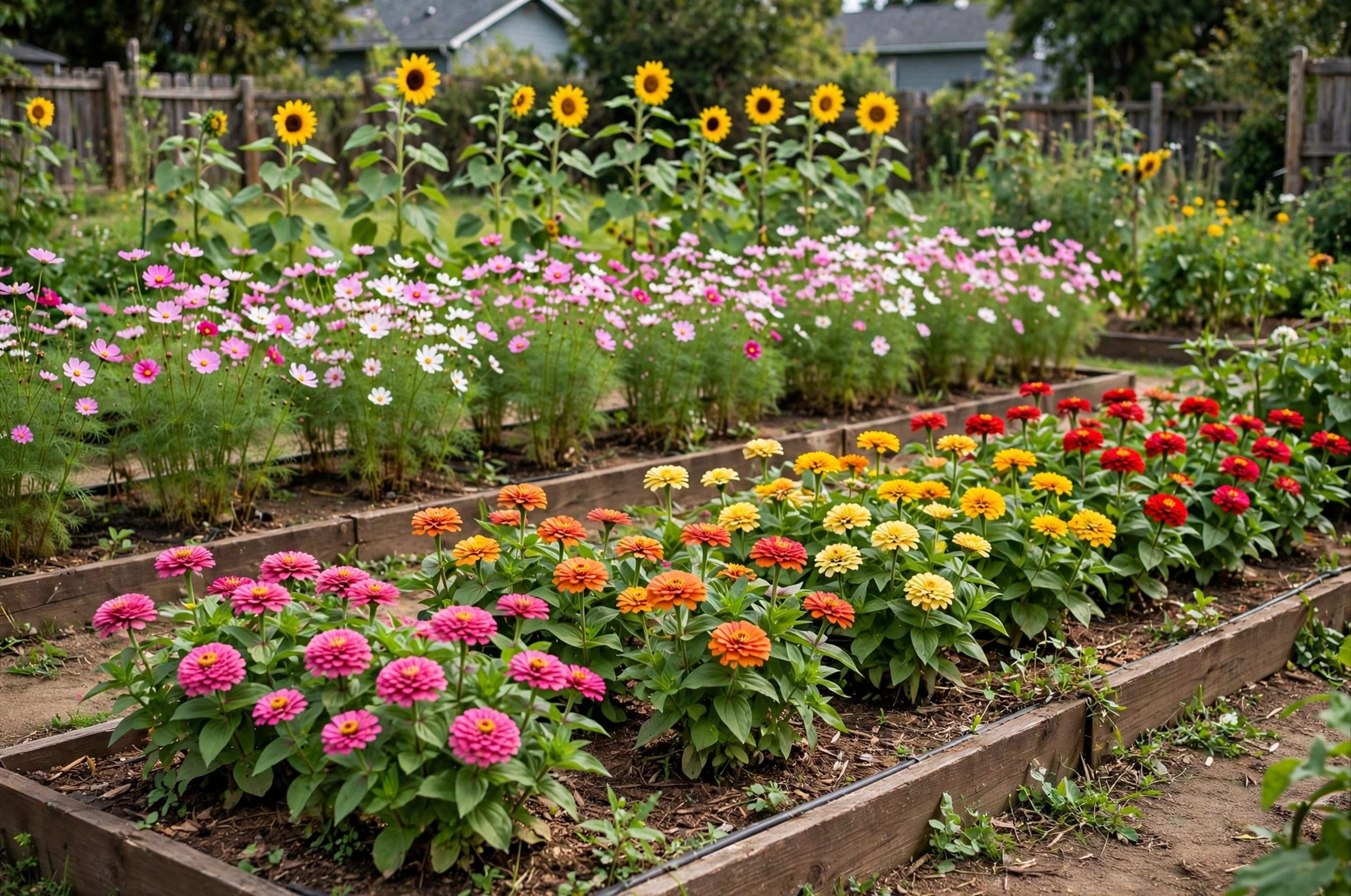
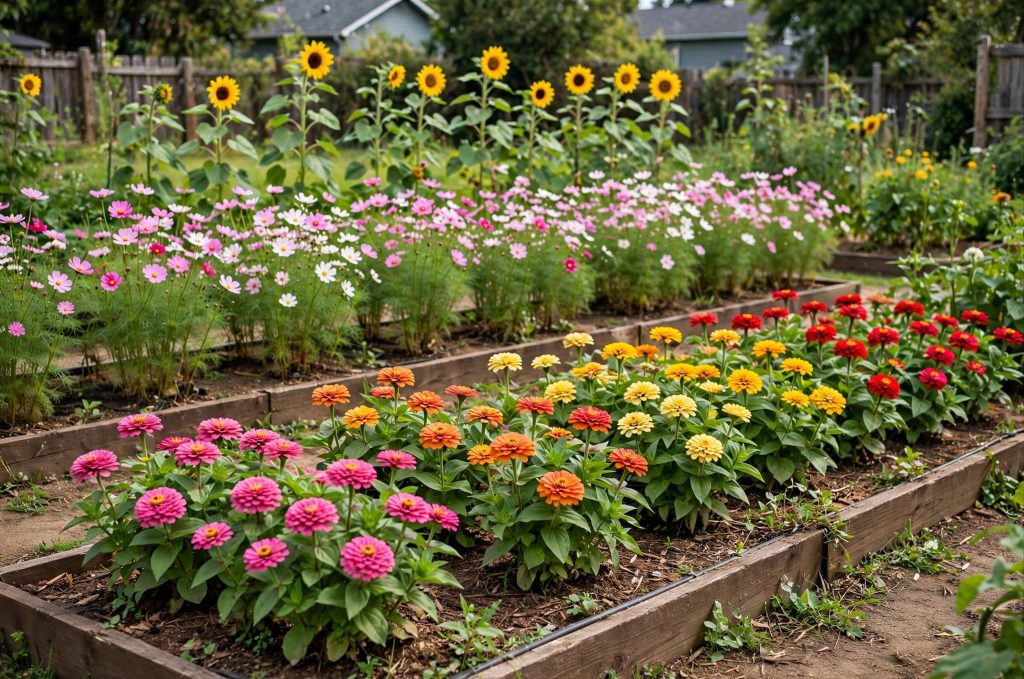
The row method: Divide the bed into rows running north to south for even sun. Put the tallest flowers (sunflowers, tall zinnias) on the north side so they do not shade the rest. Medium flowers (cosmos, snapdragons) go in the middle. Short ones (marigolds) go on the south edge.
Spacing for production: Cut flower gardens are planted tighter than ornamental beds. Closer spacing pushes stems to grow long and straight as they reach for light. Follow the packet, then lean toward the close end of the range. Zinnias at 9 inches apart make longer stems than zinnias at 18 inches. 55+ Life's cut flower guide gives the same advice: plant more closely than you think, since the competition is what pushes stems long and straight.
Leave paths: A 2-foot path down the middle of a 4-foot-wide bed lets you reach everything without stepping on soil. Never walk on the growing area. Compacted soil stunts flowers.
The Old Farmer's Almanac cut flower layout shows this exact approach: tall plants at the back, annuals planted generously for abundant cutting, and dill tucked in as a filler (source).
Succession Planting: Flowers All Season
Before you start, it helps to understand how plan a cut flower garden for beginners works in real homes.
A good plan for plan a cut flower garden for beginners saves time, money, and frustration.
One sowing gives one flush. Staggered sowings give months of flowers.
Sow fast annuals like zinnias, cosmos, and sunflowers every two to three weeks from spring through midsummer. Each sowing replaces the last as it fades. Mark your sowings on a calendar so you do not forget.
Also mix early, mid, and late bloomers. Snapdragons and sweet peas for the cool months. Zinnias and sunflowers for high summer. Asters and late cosmos for fall. With a little planning, something is always ready to cut.
Soil Prep
A good plan for plan a cut flower garden for beginners saves time, money, and frustration.
For most people, plan a cut flower garden for beginners comes down to a few smart choices.
Cut flowers are hungry. They build a huge amount of stem and bloom in one season, and they need fuel.
- Work 2 to 3 inches of compost into the top 6 inches of soil before planting.
- Test your soil if you can. Most flowers like a pH between 6.0 and 7.5.
- Add a balanced slow-release fertilizer at planting time.
- Mulch paths, not the rows. Keep the growing rows clear for sowing and hoeing.
Rich soil grows long stems. Poor soil grows short ones. This is one garden where feeding well pays off visibly.
Seeds or Transplants?
For most people, plan a cut flower garden for beginners comes down to a few smart choices.
If you are new to plan a cut flower garden for beginners, start with the simplest option and build from there.
Seeds are cheaper and offer far more varieties. Zinnias, cosmos, sunflowers, and marigolds all direct-sow easily. Just poke the seeds into warm soil and water. The University of Georgia's cut flowers from seed guide notes that almost all annual cut flowers are easiest and cheapest grown from seed.
Transplants save time and give earlier blooms. Snapdragons, lisianthus, and stock do better started indoors or bought as plugs. If you are new to seed starting, our seed starting mistakes guide will help.
Many beginners do a mix: direct-sow the easy ones, buy transplants of the fussy ones. There is no rule against it.
Watering and Feeding
If you are new to plan a cut flower garden for beginners, start with the simplest option and build from there.
When it comes to plan a cut flower garden for beginners, getting the details right makes all the difference.
Cut flowers need steady water. Aim for about an inch a week, more in heat. Water at the base, not overhead. Wet foliage invites disease, and spotted leaves ruin bouquets.
Drip irrigation or soaker hoses are ideal. They keep leaves dry and deliver water right to the roots. If you water by hand, do it in the morning so leaves dry by evening.
Feed every few weeks with a balanced liquid fertilizer during peak bloom, or side-dress with compost mid-season. Cut flowers are heavy feeders. A hungry zinnia makes short stems and small blooms.
Staking and Support
When it comes to plan a cut flower garden for beginners, getting the details right makes all the difference.
Tall flowers flop. Wind, rain, and their own weight bend stems. Support them early, before they need it.
- Push bamboo stakes next to tall zinnias and sunflowers. Tie loosely with twine.
- Stretch horizontal netting over the bed at 12 and 24 inches high. Stems grow up through the mesh and stay upright. This is how the pros do it.
- Give sweet peas and climbing nasturtiums a trellis or fence from day one.
Stone Post Gardens' beginner guide stresses setting supports in place early, before plants get large and unwieldy (source).
How to Harvest for Long Vase Life
Many homeowners find that plan a cut flower garden for beginners is easier than they expected once they know the basics.
Cutting technique decides how long your bouquets last.
- Cut in the cool of morning. Stems are full of water. Flowers last days longer than afternoon-cut ones.
- Use clean, sharp scissors or pruners. Clean cuts heal fast. Crushed stems rot.
- Cut long stems. Take as much stem as you can. You can always trim later. Cut just above a leaf joint to encourage branching.
- Strip the lower leaves. Leaves below the waterline rot and foul the vase. Strip them in the garden.
- Get stems into water fast. Carry a bucket of cool water to the garden. Plunge stems in within seconds of cutting.
- Harvest at the right stage. Most flowers last longest cut just as buds crack open, not fully blown. Zinnias are the exception: cut them fully open, since buds do not open off the plant.
PBS Utah's cut flower guide adds a key point: harvest often. The more you cut, the more the plants produce. A garden picked clean on Friday is full again by Monday (source).
Fillers and Greenery
The key to plan a cut flower garden for beginners is choosing the right approach for your space and budget.
Bouquets need more than star flowers. Fillers add texture and volume.
- Dill and fennel: Airy yellow umbels that float above everything.
- Basil: Especially purple basil. Spicy scent, great foliage.
- Bupleurum and orlaya: Lacy white fillers the pros love.
- Grasses: Fountain grass plumes and wheat stems for movement.
- Mint: Tough, fragrant, and free.
Grow a row of fillers alongside your stars. A bouquet of zinnias alone is nice. Zinnias plus dill plus basil is a florist arrangement.
Dealing with Pests
With a little planning, plan a cut flower garden for beginners can fit even a busy schedule.
Aphids love snapdragons. Japanese beetles love zinnias. A few tactics:
- Inspect every few days. Catch problems early.
- Blast aphids off with a strong jet of water.
- Hand-pick beetles in the morning into soapy water.
- Encourage beneficial insects with diverse plantings.
- Use insecticidal soap only as a last resort, and never spray open blooms where bees feed.
Healthy, well-fed plants resist pests better than stressed ones. Good soil is pest control.
Planning for Next Year
At season's end, take notes. Which varieties bloomed longest? Which colors did you reach for? What flopped? A few lines in a notebook make next year's plan twice as good.
Save seeds from open-pollinated favorites. Pull spent plants before they self-sow everywhere (unless you want volunteers). Mulch the bed with leaf mold compost or shredded leaves to protect the soil over winter.
And consider perennials for the future. Peonies, coneflowers, and black-eyed Susans return every year and make superb cut flowers once established. Start with annuals this year. Add perennials as you learn.
The Bottom Line
Planning a cut flower garden for beginners comes down to this: pick a sunny spot, prepare the soil well, start with easy annuals like zinnias and cosmos, plant in rows, sow in succession, and cut often. The garden rewards bold harvesting with more flowers, not fewer.
Your first bouquet from your own garden will hook you. There is nothing like it in a store. Start small this season, learn your favorites, and expand next year. For seed-starting gear, see our seed starting trays guide. A little care goes a long way with plan a cut flower garden for beginners.
References
- Mississippi State University Extension. (n.d.). How to grow a cut flower garden. https://extension.msstate.edu/blogs/extension-for-real-life/how-grow-cut-flower-garden?page=4
- Savvy Gardening. (n.d.). How to plant and grow a cut flower garden. https://savvygardening.com/cut-flower-garden/
- The Old Farmer's Almanac. (n.d.). Cut flower garden layout and planting map. https://cdn.almanac.com/cut-flower-garden-layout-perennials-and-annuals
- Stone Post Gardens. (n.d.). Cut flower garden for beginners: A step-by-step guide. https://stonepostgardens.com/cut-flower-garden-for-beginners/
- PBS Utah. (n.d.). Tips for starting your own cut flower garden. https://www.pbsutah.org/blogs/modern-gardener/tips-for-starting-your-own-cut-flower-garden/
- Moon and Magnolia. (n.d.). How to start a cut flower garden for beginners. https://moonandmagnolia.com/cut-flower-garden-for-beginners/
- Our Vintage Bungalow. (n.d.). How to design a cut flower garden from scratch. https://ourvintagebungalow.com/how-to-design-a-cut-flower-garden/
- University of Georgia CAES. (n.d.). Growing great cut flowers from seed. https://fieldreport.caes.uga.edu/news/growing-great-cut-flowers-from-seed/
- 55+ Life. (n.d.). How to grow a cut-flower garden almost anywhere. https://55pluslife.com/how-to-grow-a-cut-flower-garden-almost-anywhere/
- Bloom Boss. (n.d.). Beginner's guide to starting a cut flower garden at home. https://typesofchicken.com/bloom-boss-beginners-guide-to-starting-a-cut-flower-garden-at-home/
Was this guide helpful?

About My Garden US
The My Garden US editorial team writes practical, in-depth home and garden guides for American homeowners — tested advice, no fluff.