Renting comes with a familiar trade-off. You get the balcony or the deck, but you cannot drill into the walls, bolt into the railing, or build anything permanent. Meanwhile the neighbors can see straight into your morning coffee. Freestanding privacy screens solve this cleanly. They stand on their own, need no screws or anchors, and move with you when the lease ends. Here is what to know about freestanding privacy screens before you start.
Table of Contents
Table of Contents
A good screen does more than block a view. It cuts wind, softens street noise a little, and turns an exposed slab into a room that feels like yours. Here are the options that actually work for renters, from quick buys to weekend projects.
Freestanding Privacy Screens: Folding Screens: The Fastest Fix
When it comes to freestanding privacy screens, getting the details right makes all the difference.
Many homeowners find that freestanding privacy screens is easier than they expected once they know the basics.
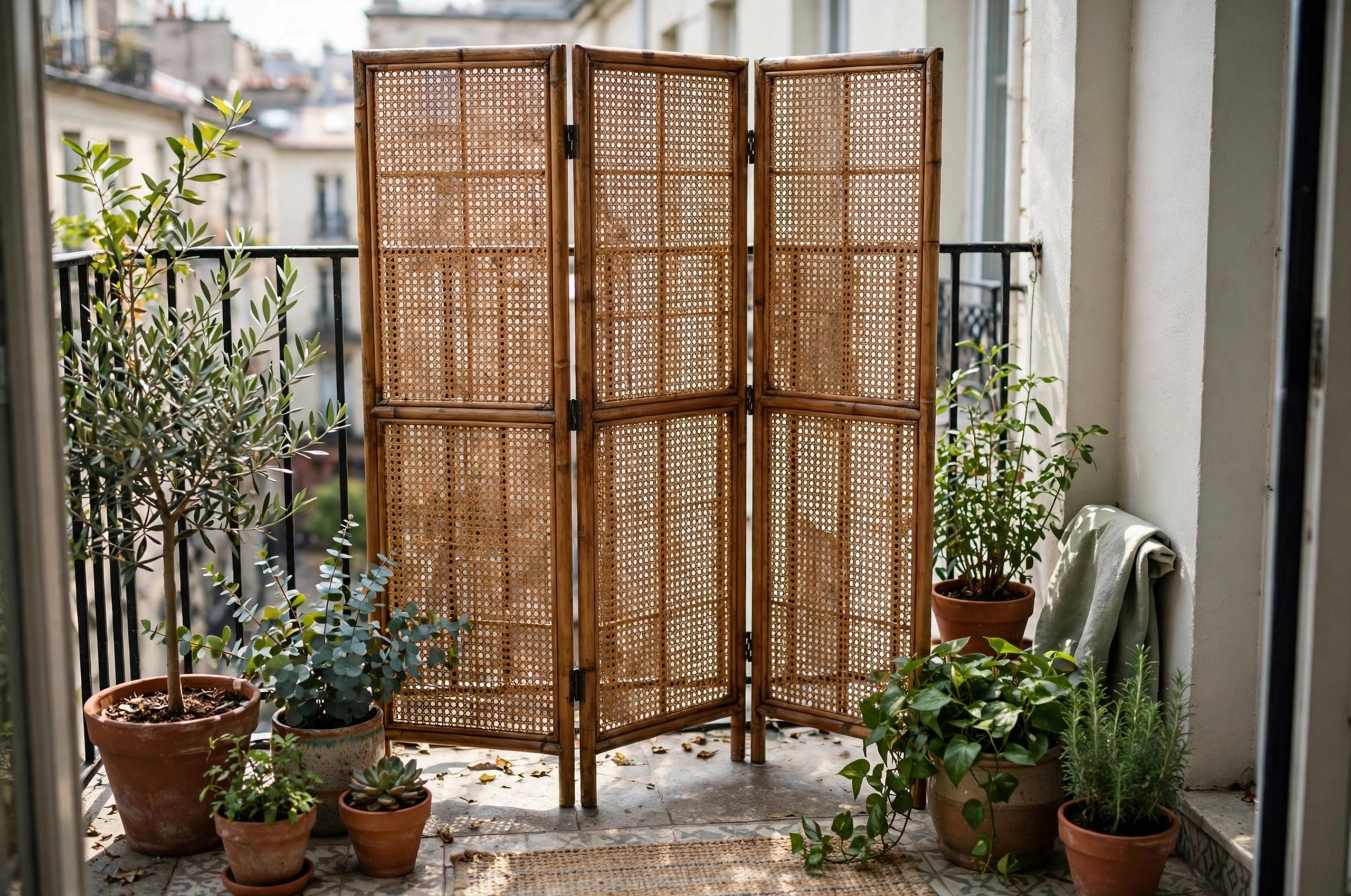
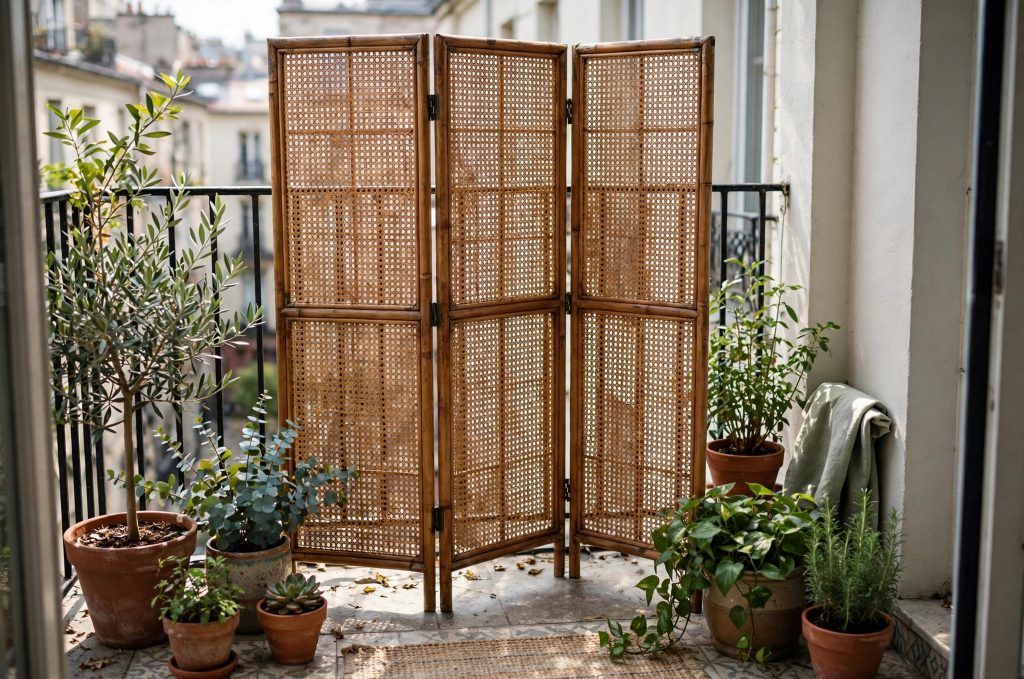
A folding screen is the classic renter move. Three or four hinged panels stand in a zigzag, and the angles keep it upright with no hardware at all. You can buy one, unfold it, and have privacy in five minutes.
Look for screens made for outdoor use: treated wood, resin wicker, powder-coated metal, or weather-safe composite. An indoor screen will warp or rust in one season outside. Height matters. Aim for a screen that reaches at least seated eye level plus a few inches, which usually means five to six feet tall on a balcony with a standard railing.
The zigzag is what keeps it standing, so do not try to stretch it flat like a wall. Angle the panels. On a windy balcony, set a heavy planter at the base of each outer panel. The weight anchors the screen without attaching anything, and the plants soften the look at the same time.
Folding screens are also the most flexible option. Angle one beside a lounge chair for afternoon sun. Use one to hide the storage corner. Fold it flat and lean it against the wall when guests come over and you want the space open. Nothing else adapts this fast.
Planter Screens: Privacy That Grows
Many homeowners find that freestanding privacy screens is easier than they expected once they know the basics.
The key to freestanding privacy screens is choosing the right approach for your space and budget.
A planter with a built-in trellis or slatted screen gives you privacy and greenery in one footprint. The planter box sits on the ground, the screen rises from its back edge, and the whole thing is freestanding. Fill the box with soil and plants and it gets heavier and more stable as the season goes on.
You can buy these ready-made in wood, metal, and composite. Or build a simple version: a rectangular planter box with vertical slats screwed to the back. Cedar and redwood resist rot naturally. If you build with pine, seal it well.
What you plant decides how much privacy you get. Tall ornamental grasses fill in fast and move nicely in the breeze. Climbing vines on the trellis, like clematis or annual morning glories, weave through the slats and thicken the screen by midsummer. For year-round coverage in mild climates, compact evergreens in a row of tall planters work well.
Keep weight in mind. Soil is heavy, and a row of big planters adds up fast. Balconies have load limits. Use lightweight potting mix rather than garden soil, and check your lease or building rules before you line the whole railing with planters. On a ground-level deck this is less of a worry, but drainage still matters. Make sure water can escape without pooling on the deck boards.
Bamboo and Reed Rolls
The key to freestanding privacy screens is choosing the right approach for your space and budget.
With a little planning, freestanding privacy screens can fit even a busy schedule.
Bamboo fencing rolls are cheap, light, and easy to handle. Unroll a section, stand it against the railing, and tie it on with zip ties or sturdy string. No drilling. No damage. When the lease ends, cut the ties and roll it back up.
Bamboo gives a tropical look and filters the view rather than blocking it fully. That is often enough. You do not always need a blackout wall. Softening the sightline so you cannot see your neighbor's face is usually all it takes to make a balcony feel private.
The trade-off is wind. Bamboo rolls are light and catch the breeze. On a high or exposed balcony, keep the sections short, tie them at several points, and bring them in when a real storm comes. They will not survive being left up through a rough season the way a heavier screen will.
Outdoor Curtains on Tension Rods
With a little planning, freestanding privacy screens can fit even a busy schedule.
Before you start, it helps to understand how freestanding privacy screens works in real homes.
If your balcony has two facing walls or a covered ceiling, outdoor curtains are worth a look. A tension rod wedges between the walls with no screws. Hang mildew-resistant outdoor curtain panels and you can draw them closed for full privacy or tie them back for sun and air.
Curtains are the softest-looking option. They make a balcony feel like an indoor room, which is exactly the point for many renters. They also block low sun beautifully in the late afternoon.
They need the right conditions, though. You need two solid surfaces for the tension rod, and the rod has to be rated for the span. A long span with heavy curtains will sag or slip. In wind, unsecured curtains whip around, so use tie-backs and bring them in or tie them tight when storms come. And they must be outdoor fabric. Indoor curtains will mildew in weeks.
Artificial Hedge Panels
Before you start, it helps to understand how freestanding privacy screens works in real homes.
A good plan for freestanding privacy screens saves time, money, and frustration.
Faux hedge panels are the instant-gratification option. They are plastic greenery on a grid backing, and they look surprisingly real from a few feet away. Zip-tie them to a freestanding frame or directly to the railing. Instant green wall.
The appeal is obvious: no watering, no waiting for plants to grow, no dead spots. They look the same on day one and day one hundred. On a shady balcony where real plants struggle, they are sometimes the only green option that works.
The downsides are cost and heat. Good panels are not cheap, and cheap ones look cheap. Dark plastic in full sun gets hot and can fade. But for a quick, no-maintenance screen on a rental, they earn their place.
Making It Stable Without Drilling
A good plan for freestanding privacy screens saves time, money, and frustration.
For most people, freestanding privacy screens comes down to a few smart choices.
Whatever screen you choose, wind is the thing that defeats it. A few renter-safe tricks keep everything standing.
Weight the base. Planters are the prettiest ballast. Sandbags or decorative stones in the bottom of a planter screen add hidden weight. For folding screens, a heavy pot at each end works.
Keep screens permeable. A solid wall catches wind like a sail. Slatted screens, lattice, and spaced boards let air through, which cuts the wind load dramatically. This matters most above the fourth floor, where wind runs much stronger than at street level.
Stay below the railing top with heavy items. Building codes set guard heights for a reason. A tall, heavy screen perched above the railing is a hazard in a storm. Keep the mass low and bring lightweight screens inside when severe weather is forecast.
Check the lease. Most leases ban permanent changes, but some also restrict what can go on a balcony at all. A quick read of the balcony section saves an argument with the landlord later. When in doubt, freestanding and removable is the safest category. If it comes down as fast as it went up, most landlords will not object.
What to Measure Before You Buy
For most people, freestanding privacy screens comes down to a few smart choices.
A tape measure saves more returns than any review. Before you order a screen, measure the exact sightline you want to block. Stand where you sit and have someone hold a broom at the railing. Mark the height where their head disappears. That is your minimum screen height.
Measure the width of the area too. A screen that covers only half the railing looks unfinished and leaves you exposed from an angle. It is better to cover one full side well than to spread a narrow screen thin across two sides.
Check the floor space. Folding screens need room for their zigzag footprint, which is deeper than it looks. Planter screens need the depth of the box plus a little clearance behind. On a four-foot-deep balcony, a screen with a two-foot footprint leaves you two feet to walk. That is tight. In that case, a flat folding screen angled in a corner, or curtains on a tension rod, wastes less floor.
Finally, weigh your wind. A ground-floor deck behind a fence sees a fraction of the wind of a tenth-floor balcony. Buy for the wind you have. Heavy planters and slatted wood suit exposed spots. Light bamboo and curtains suit sheltered ones.
Putting It Together
If you are new to freestanding privacy screens, start with the simplest option and build from there.
You do not need to pick just one idea. The best rental balconies layer two or three. A folding screen at one end for the worst sightline. Tall planters along the railing for softness. A curtain on the side that gets the harsh afternoon sun.
Keep the materials consistent. Two finishes at most. Wood and green plants. Black metal and neutral fabric. A jumble of bamboo, white plastic, and bright canvas looks cluttered even when each piece is fine on its own.
And leave a clear path to the door. Screens eat floor space fast on a small balcony. Measure before you buy, and keep at least a comfortable walking lane open. Privacy is the goal, but you still have to live out there.
For more small-space ideas, see our rooftop deck furniture guide and small balcony grill picks. If your deck needs evening light too, our small-deck grill guide pairs well with a newly private space. Once you try it, freestanding privacy screens gets easier each time.
References
When it comes to freestanding privacy screens, getting the details right makes all the difference.
Cabin Life. (n.d.). How to use plants for outdoor privacy. https://www.cabinlife.com/articles/how-to-use-plants-for-outdoor-privacy/
Everyday Homestyle. (n.d.). 12 balcony privacy screen ideas that feel cozy. https://everydayhomestyle.io/home_improvement/balcony-privacy-screen-ideas/
Houzz. (n.d.). How do I create privacy on a shared deck? https://www.houzz.com/discussions/4534065/how-do-i-create-privacy-on-a-shared-deck
Livingetc. (n.d.). These viral planter screens are great for backyard privacy. https://www.livingetc.com/news/viral-moveable-planter-screens
Maison Ly Interior Design. (n.d.). Balcony privacy screen ideas for cozy outdoor spaces. https://maisonlyinteriordesign.com/balcony-privacy-screen-ideas-for-cozy-outdoor-spaces/
Nestsorted. (n.d.). 10 small apartment balcony decorating ideas (no drilling). https://nestsorted.com/balcony-decorating-ideas/
Quiet Minimal. (n.d.). 12 bamboo in tall planters privacy screen ideas for a modern patio. https://quietminimal.com/bamboo-in-tall-planters-privacy-screen-ideas-for-modern-patio/
Quiet Minimal. (n.d.). 15 patio ideas for rentals with no permanent changes or drilling allowed. https://quietminimal.com/patio-ideas-for-a-rental-with-no-permanent-changes-or-drilling-allowed/
The Backyard Pros. (n.d.). 9 balcony privacy ideas that don't require drilling. https://thebackyardpros.com/balcony-privacy-ideas-that-dont-require-drilling/
Many homeowners find that freestanding privacy screens is easier than they expected once they know the basics.
Was this guide helpful?

About My Garden US
The My Garden US editorial team writes practical, in-depth home and garden guides for American homeowners — tested advice, no fluff.