---
Table of Contents
Table of Contents
Crib mattresses take a beating. Leaky diapers, spit-up, drool, and the occasional full-blown blowout all land in the same small sleep space. Your instinct might be to reach for the strongest cleaner under the sink. Resist it. A baby spends ten to fourteen hours a day with their face inches from that mattress, breathing whatever you put on it. This guide shows how to clean crib mattresses without harsh chemicals in plain steps.
Learning how to clean crib mattresses without harsh chemicals is simpler than you think. Pantry staples like baking soda and white vinegar handle most messes, sunlight does the disinfecting, and a good protector prevents the next disaster. Here is the full routine, from quick wipe-downs to deep cleans.
Clean Crib Mattresses without Harsh Chemicals: Why Gentle Cleaning Matters Here
When it comes to clean crib mattresses without harsh chemicals, getting the details right makes all the difference.
Many homeowners find that clean crib mattresses without harsh chemicals is easier than they expected once they know the basics.
Baby skin is thinner and more absorbent than adult skin. Their lungs are still developing, and they breathe faster relative to their size, which means they take in more of whatever is in the air around them. Strong cleaners leave residues and fumes that adults barely notice but babies live inside of.
Bleach, ammonia, and harsh disinfectant sprays can irritate a baby's skin, eyes, and airways. Scented cleaners add fragrance chemicals on top of the cleaning agents. Even products labeled natural can contain irritants, so simple is usually safest. When you clean with mild ingredients and rinse or wipe well, there is nothing left behind to worry about.
There is also the mattress itself to think about. Harsh chemicals can break down mattress materials, waterproof coatings, and adhesives over time. Gentle cleaning preserves the mattress while it cleans it. A crib mattress that gets mild care lasts longer and stays safer.
The Basic Toolkit
Many homeowners find that clean crib mattresses without harsh chemicals is easier than they expected once they know the basics.
The key to clean crib mattresses without harsh chemicals is choosing the right approach for your space and budget.
You need less than you think. Gather these before you start.
Baking soda is the workhorse. It absorbs moisture, neutralizes odors, and gives a mild scrubbing action without scratching. Chemical-free crib cleaning guides put baking soda at the top of the list for exactly these reasons. Keep a big box in the nursery closet just for mattress duty.
Distilled white vinegar cuts through dried messes and mineral deposits. Its acidity dissolves the crusty stuff that water alone leaves behind. Mattress cleaning guides call baking soda and vinegar the best pair for the job, and the smell fades as it dries, leaving no scent behind.
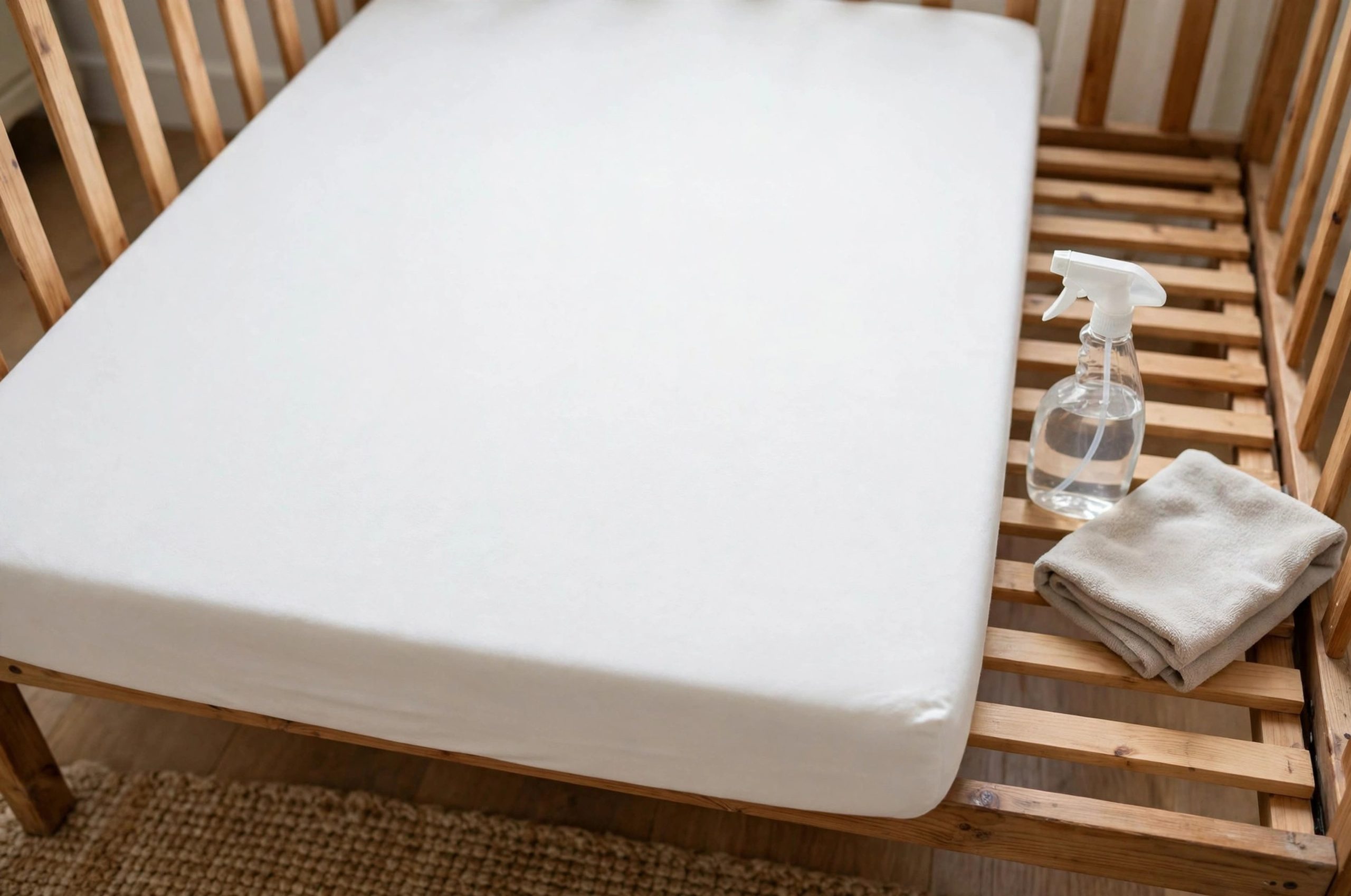
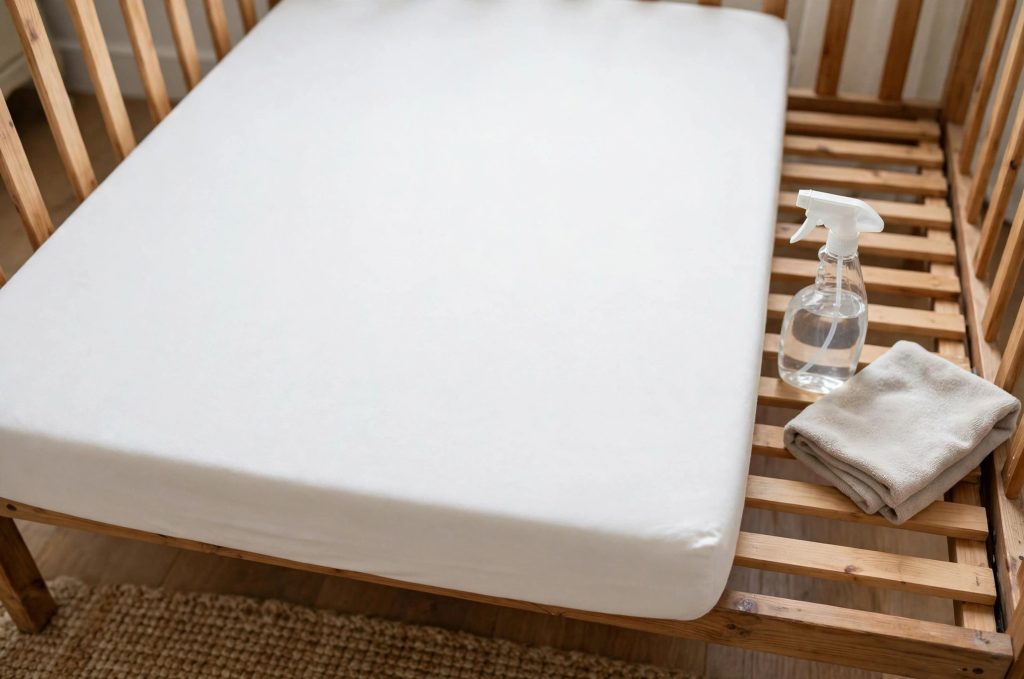
A spray bottle lets you mist vinegar lightly instead of soaking the mattress. Control matters, because a soaked mattress grows mold. Light misting is the rule for every step.
Soft cloths and a soft-bristle brush handle the physical work. White cloths are best so you can see what is coming up. An old soft toothbrush reaches into seams and piping where grime hides.
A vacuum with an upholstery attachment finishes the job. It pulls baking soda, dust, and dried residue out of the fabric surface. If your vacuum has a crevice tool, use it along the seams.
Sunlight is the secret weapon. UV rays kill many common germs and freshen fabric naturally. If you can get the mattress outside or near a sunny window for a few hours, do it.
The Regular Routine: Monthly Freshening
The key to clean crib mattresses without harsh chemicals is choosing the right approach for your space and budget.
With a little planning, clean crib mattresses without harsh chemicals can fit even a busy schedule.
You do not need a disaster to justify cleaning the mattress. A monthly freshening keeps odors and dust mites from building up.
Strip the crib completely. Wash the sheet, the mattress protector, and any blankets in hot water. While they wash, vacuum the bare mattress thoroughly. Go slowly over the whole surface, then hit the seams and edges with the crevice tool. You will be surprised what comes up.
Sprinkle baking soda generously over the entire surface. Use enough to dust it lightly all over, like a snowfall. Let it sit for at least an hour. For a mattress that smells stale, leave it for several hours or even overnight. The baking soda pulls moisture and odor out of the fabric.
Vacuum it all up. Go over the surface twice to make sure no powder remains. Baking soda left behind can irritate skin, so be thorough. Flip the mattress if it is double-sided and repeat on the other side.
Finish with sunlight if you can. Lean the mattress near a bright window or carry it outside for an hour. Then remake the crib with fresh, clean bedding. The whole routine takes about fifteen minutes of actual work plus waiting time.
Handling Spills and Accidents
With a little planning, clean crib mattresses without harsh chemicals can fit even a busy schedule.
Before you start, it helps to understand how clean crib mattresses without harsh chemicals works in real homes.
When a diaper leaks at 2 a.m., you need a fast method that works half-asleep.
First, strip the wet bedding immediately. The longer moisture sits, the deeper it soaks. Toss the sheets straight in the wash.
Blot the mattress. Press a clean, dry cloth firmly onto the wet spot. Do not rub. Rubbing pushes moisture deeper and spreads the stain. Blot, lift, and repeat with a fresh section of cloth until no more moisture transfers.
Mist the spot lightly with a mix of equal parts white vinegar and water. Vinegar mattress cleaning walkthroughs recommend this exact ratio for breaking down stains without harsh chemicals. Just a light spray, enough to dampen, not soak. Let it sit for five to ten minutes. The vinegar breaks down the dried proteins in milk, spit-up, and urine that cause both stains and smells.
Sprinkle baking soda over the damp spot. It will clump as it absorbs the moisture. Leave it for at least thirty minutes, longer if you can. The baking soda pulls the remaining dampness and odor out of the surface.
Vacuum up the dried baking soda. Check the spot. If a faint stain remains, repeat the vinegar mist and baking soda once more. Stubborn spots sometimes need two rounds. Let the mattress air dry completely before remaking the crib. A fan pointed at the spot speeds drying without heat.
For middle-of-the-night emergencies, keep a spare protector and sheet in the nursery. Strip, wipe, remake, and deal with the deep clean in the morning. Nobody does their best stain work at 2 a.m.
The Deep Clean: Twice a Year
Before you start, it helps to understand how clean crib mattresses without harsh chemicals works in real homes.
A good plan for clean crib mattresses without harsh chemicals saves time, money, and frustration.
Every six months or so, give the mattress the full treatment. Pick a warm, sunny day when you can leave the crib empty for hours.
Take the mattress out of the crib and, if possible, outside. Deep mattress cleaning routines start the same way: vacuum first, treat stains second, deodorize third. Vacuum both sides thoroughly, spending extra time on seams, piping, and any tufted areas. These crevices collect dust, dead skin, and allergens over months of use.
Treat any visible stains with the vinegar and baking soda method, working one stain at a time. For yellowing, which comes from months of body oils and moisture, a paste of baking soda and a little water worked gently into the fabric with a soft brush can lift discoloration. Wipe away the paste with a barely damp cloth.
Give the whole surface a baking soda treatment and let it sit for several hours in the sun. The combination of baking soda drawing out impurities and UV light sanitizing the surface is remarkably effective. Parents who do this regularly report that old mattresses smell noticeably fresher afterward.
Vacuum everything up meticulously. Inspect the mattress in good light. Look for sagging, tears in the cover, exposed foam, or a fit that has loosened in the crib. A mattress that no longer fits snugly, with gaps you can fit more than two fingers into at the sides, needs replacing. Crib safety checklists stress a firm, tight fit with no gaps a baby could wedge into. Guidance on choosing a safe crib makes the same point about snug mattress fit.
Let the mattress air out fully before it goes back in the crib. If it went outside, brush off any pollen or debris first. Then remake with a clean protector and fresh sheets.
Prevention: The Waterproof Protector
A good plan for clean crib mattresses without harsh chemicals saves time, money, and frustration.
For most people, clean crib mattresses without harsh chemicals comes down to a few smart choices.
The best stain is the one that never reaches the mattress. A quality waterproof mattress protector is the single best investment in crib mattress care.
Look for a protector with a waterproof membrane bonded to a soft cotton top. The cotton side sleeps cool and comfortable against the baby. The membrane underneath stops liquids cold. Avoid protectors that feel plasticky or crinkly, since they trap heat and make noise every time the baby moves. Breathable waterproof protectors exist and are worth seeking out. Our guide to crib mattress protector waterproof breathable covers what to look for.
Use two protectors in rotation. When one is in the wash, the other goes on the mattress. This simple system means you never have to put a baby down on a bare or damp mattress while laundry runs.
Wash protectors regularly in hot water. They collect the same sweat, drool, and spills the mattress would have absorbed. A protector that never gets washed becomes its own odor source. Most quality protectors handle frequent washing without losing their waterproofing.
Skip the plastic mattress covers that encase the whole mattress in vinyl. They trap heat, make the baby sweat, and crinkle loudly. A fitted-style protector with a waterproof layer does the same protective job while sleeping far cooler and quieter.
What Not to Do
For most people, clean crib mattresses without harsh chemicals comes down to a few smart choices.
If you are new to clean crib mattresses without harsh chemicals, start with the simplest option and build from there.
A few common mistakes can ruin a mattress or create new hazards.
Do not soak the mattress. Crib mattresses have foam or fiber cores that trap water deep inside. A soaked core grows mold and mildew where you cannot see it. Every cleaning step should use minimal moisture. Mist, do not drench.
Do not use bleach on a baby's mattress. It is too harsh for the materials and too risky for the residue. The same goes for ammonia-based cleaners and strong disinfectant sprays. If a stain truly will not come out with gentle methods, living with a faint mark is safer than attacking it with chemicals.
Do not put the mattress in the washing machine or dryer unless the manufacturer explicitly says you can. Most crib mattresses will be destroyed by machine washing. The agitation breaks down the core and the heat warps the shape.
Do not ignore a mattress that smells musty even after cleaning. A persistent musty smell can mean mold inside the core, which you cannot clean out. When in doubt, replace the mattress. A new basic crib mattress costs far less than the worry.
Keeping the Whole Sleep Area Clean
If you are new to clean crib mattresses without harsh chemicals, start with the simplest option and build from there.
When it comes to clean crib mattresses without harsh chemicals, getting the details right makes all the difference.
The mattress is the center, but the area around it matters too.
Wipe down the crib rails regularly with a damp cloth. Teething babies chew the rails, and drool builds up fast. Safe sleep checklists remind parents that the whole sleep surface, rails included, should stay clean and clear. A crib rail guard fabric for chewing protection or a crib rail cover for teething protection padded keeps the wood clean and gives sore gums something safe to gnaw.
Vacuum under and around the crib monthly. Dust bunnies, lost socks, and forgotten toys collect there. While you are at it, check that the crib hardware is still tight and nothing has worked loose.
Wash the sheets often. In hot weather or during illness, change them every couple of days. Keep at least three fitted sheets in rotation so a clean one is always ready. A best nursery rug for tummy time play nearby deserves regular vacuuming too, since floor dust drifts up into the sleep zone.
Clean the room's air as well as its surfaces. Dust the shelves, wash the curtains occasionally, and keep the room ventilated. A parent's guide to safe sleep covers the full sleep environment, and a clean room means a cleaner mattress, because less dust settles on the bedding in the first place. With these steps, you can clean crib mattresses without harsh chemicals with confidence.
References
When it comes to clean crib mattresses without harsh chemicals, getting the details right makes all the difference.
Simple Tips For You. (n.d.). How to clean your baby's crib without chemicals. https://simpletipsforyou.com/how-to-clean-your-babys-crib-without-chemicals
Dandy Fox Cleaning. (n.d.). Why baking soda and vinegar are your mattress's best friends. https://dandyfoxcleaning.co.uk/why-baking-soda-and-vinegar-are-your-mattress-s-best-friends
Sleep Bloom. (n.d.). Will white vinegar clean your mattress? Effective DIY steps without harsh chemicals. https://sleepbloom.com/will-white-vinegar-clean-mattress/
Sparkling and Beyond. (n.d.). How to clean your mattress quickly and effortlessly. https://www.sparklingandbeyond.com/how-to-clean-your-mattress-quickly-and-effortlessly/
What to Expect. (n.d.). How to make sure your baby's crib is safe. https://registry.whattoexpect.com/pregnancy/ask-heidi/crib-safety.aspx
Dadada Baby. (n.d.). How to choose a crib: A comprehensive guide for parents. https://dadadababy.com/blogs/dadada-daily/how-to-choose-a-crib-a-comprehensive-guide-for-parents
Best Baby Cart. (n.d.). What to put in a crib: Safe sleep checklist. https://bestbabycart.com/what-to-put-in-a-crib-safe-sleep-checklist-the-honest-way/
HealthyChildren.org. (n.d.). A parent's guide to safe sleep. https://www.healthychildren.org/English/ages-stages/baby/sleep/Pages/a-parents-guide-to-safe-sleep.aspx
Many homeowners find that clean crib mattresses without harsh chemicals is easier than they expected once they know the basics.
The key to clean crib mattresses without harsh chemicals is choosing the right approach for your space and budget.
With a little planning, clean crib mattresses without harsh chemicals can fit even a busy schedule.
Before you start, it helps to understand how clean crib mattresses without harsh chemicals works in real homes.
Was this guide helpful?

About My Garden US
The My Garden US editorial team writes practical, in-depth home and garden guides for American homeowners — tested advice, no fluff.
You May Also Like
Best Bunk Bed With Stairs for Kids Room: A Parent's Buying Guide
July 24, 2026 16 views
Kids Toy Box with Lid for Living Room: A Practical Buying Guide
January 3, 2026 13 views
Low VOC Paint Picks for a Safer Nursery
October 24, 2026 23 views