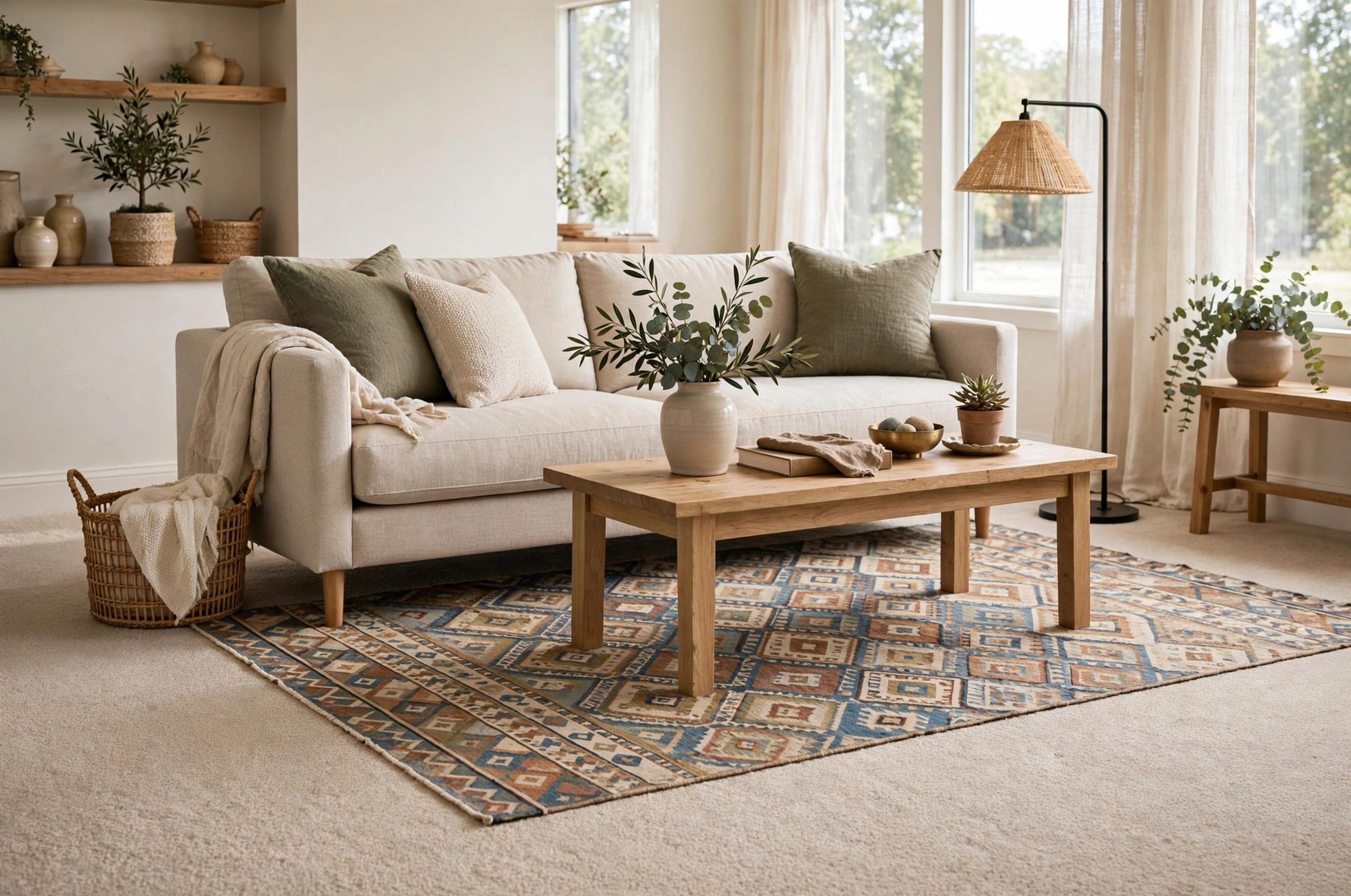
Wall-to-wall carpet is practical, but it can be boring. You cannot rip it out, maybe you rent, maybe the budget is not there, so the carpet stays, beige and flat, under everything you own. Layering an area rug over that carpet is the fix designers reach for first, The Spruce's rental experts count layered rugs among the fastest ways to make a rental feel like home. It adds color, pattern, and texture without touching the floor underneath. This article explains how to layer area rugs over carpet in simple terms.
Table of Contents
Table of Contents
- Layer Area Rugs over Carpet: Why Layer Rugs Over Carpet at All
- Start With the Right Base Carpet
- Choose a Low-Profile Top Rug
- The Rug Pad Is Non-Negotiable
- Sizing and Placement Rules
- Mix Textures and Patterns Like a Pro
- Keep the Edges Neat
- Protect the Carpet Underneath
- Cleaning Layered Rugs
- When Layering Does Not Work
- The Bottom Line
- References
But there is a right way to layer area rugs over carpet neatly, and a wrong way that ends with a wrinkled, sliding mess. The rug has to stay flat, stay put, and look deliberate. This guide covers the whole method: choosing the right rug, keeping it from slipping, sizing it properly, and caring for the layers so they look good for years.
Layer Area Rugs over Carpet: Why Layer Rugs Over Carpet at All
When it comes to layer area rugs over carpet, getting the details right makes all the difference.
Many homeowners find that layer area rugs over carpet is easier than they expected once they know the basics.
First, the case for doing it. Carpet that came with the house is rarely anyone's dream floor. A layered rug covers the boring parts and adds the personality the room is missing. It defines zones in open rooms; the seating area gets a rug, the rest stays bare carpet. It adds warmth underfoot in a way carpet alone cannot, because two layers insulate better than one.
It is also the cheapest big change you can make. Paint is cheaper per gallon, but a rug transforms a room in an afternoon with no fumes and no landlord permission. And when you move, the rug rolls up and comes with you. The carpet stays behind, unharmed.
Designers layer rugs over carpet for another reason: texture. A flat-weave kilim over a low-pile carpet, or a nubby wool rug over a smooth Berber, creates depth that one surface alone cannot. Chairish's layering guide shows how mixing textures this way turns flat rooms into interesting ones.
Start With the Right Base Carpet
Many homeowners find that layer area rugs over carpet is easier than they expected once they know the basics.
The key to layer area rugs over carpet is choosing the right approach for your space and budget.
Layering works best when the carpet underneath cooperates. Low-pile, tight carpet, the typical rental beige, is the ideal base. It is flat enough that a rug sits evenly on it, and firm enough that furniture does not wobble.
High-pile or plush carpet is harder. A rug on top of thick carpet floats and shifts, and chair legs sink unevenly. If your carpet is plush, choose a larger, heavier rug that can settle into place, and definitely use a rug pad. Very thick carpet plus a thick rug can also make doors drag, check door clearance before you commit.
If the carpet is patterned, keep the top rug simple. Pattern on pattern fights. A solid or subtly textured rug over a patterned carpet calms the floor down. If the carpet is solid, you have freedom; this is where a bold patterned rug earns its keep.
Choose a Low-Profile Top Rug
The key to layer area rugs over carpet is choosing the right approach for your space and budget.
With a little planning, layer area rugs over carpet can fit even a busy schedule.
The number one rule for the top layer: keep it thin. A flat-weave, low-pile, or vintage-style rug sits neatly on carpet. A thick shag on top of carpet bunches, ripples, and creates a tripping hazard at the edges.
Good top-layer choices: flat-weave wool, cotton dhurries, vintage or vintage-style rugs (which are thin by nature), and low-pile synthetics. These lie flat, stay put, and let furniture sit level on them.
Avoid: high-pile shags, thick hand-tufted rugs, and anything with a stiff backing that cannot flex over the carpet's texture. The top rug needs to conform slightly to what is underneath. Stiff rugs bridge over carpet instead of settling into it, and the edges curl.
Size matters too. The top rug should be large enough to anchor the furniture, front legs of the sofa and chairs on the rug, the standard rule. A rug that is too small looks like a postage stamp and slides around more. When in doubt, go bigger. Rugs Direct's carpet layering guide has room-by-room sizing advice that applies whether the base is hard floor or carpet.
The Rug Pad Is Non-Negotiable
With a little planning, layer area rugs over carpet can fit even a busy schedule.
Before you start, it helps to understand how layer area rugs over carpet works in real homes.
This is the step people skip, and it is the reason layered rugs fail. A rug pad between the carpet and the area rug does three jobs: it stops the rug from sliding, it keeps the rug flat instead of rippling, and it protects the carpet underneath from the rug's backing.
Not any pad will do. You need a pad made for use over carpet, thin, dense, and grippy on both sides. Thick cushioned pads designed for hard floors are too soft for this job; they let the rug float and shift. Look for a low-profile rug-to-carpet pad, sometimes sold as a carpet-to-carpet pad. Felt-and-rubber combination pads work well: the felt side cushions, the rubber side grips.
Cut the pad slightly smaller than the rug, about an inch short on every side, so no pad edge peeks out. If the rug still creeps, rug tape (double-sided carpet tape) on the pad's edges adds extra hold. Food52's rug layering tips include designer advice on non-slip pads that hold rugs in place without residue.
One caution: check that the pad breathes. A solid rubber pad on carpet can trap moisture underneath. Felt blends and open-weave pads let air through, which keeps both layers fresh.
Sizing and Placement Rules
Before you start, it helps to understand how layer area rugs over carpet works in real homes.
A good plan for layer area rugs over carpet saves time, money, and frustration.
The standard rug rules still apply over carpet, with a few tweaks.
Living room: the rug should extend under the front legs of all seating. Maia Homes' complete layering guide shows living-room layouts where a large base rug plus a smaller accent rug define the seating zone. In a small room, all legs on the rug is even better. Leave a border of carpet showing around the rug, twelve to eighteen inches is ideal, so the layering reads as intentional.
Bedroom: place a large rug under the lower two-thirds of the bed, extending past the sides and foot. Small Space Home's small-room guide notes that one large rug beats several small ones for making a room feel unified. Or use runners on each side of the bed. Both work over carpet and both feel wonderful under bare feet.
Dining room: the rug must be big enough that chairs stay on it when pulled out. Measure the table, add at least 24 inches on every side, and buy that size. A too-small dining rug over carpet is the worst offender, chairs catch on the edge every time someone sits down.
Hallways and entries: runners over carpet work fine with a pad. Keep them centered and make sure door swings clear them.
Our guide to choosing a rug for under the dining table covers the measuring method in detail, and the same math works when the base is carpet.
Mix Textures and Patterns Like a Pro
A good plan for layer area rugs over carpet saves time, money, and frustration.
For most people, layer area rugs over carpet comes down to a few smart choices.
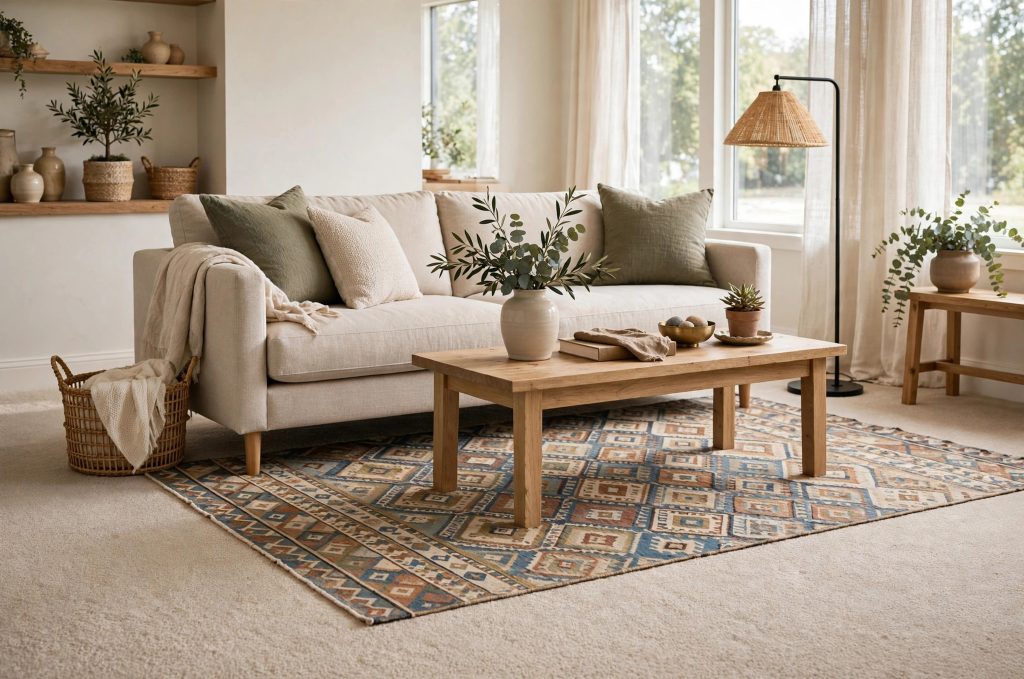
This is the fun part. The layered look works because the two surfaces are different. Same-on-same, a beige rug on beige carpet, disappears. Contrast is the point.
Texture contrast is the safest move. Smooth carpet plus nubby rug. Flat carpet plus a rug with a raised pattern. The eye reads the difference as richness even when the colors are close.
Pattern mixing takes more care. One pattern plus one solid is foolproof. Two patterns can work if they share a color and differ in scale, a large-scale geometric rug over a small-scale carpet texture, for example. Two bold patterns at the same scale fight each other.
Color should tie to the room, not just the floor. Pull one color from the rug into the pillows, the art, or the curtains. That repetition is what makes the rug look like it belongs rather than like it was dropped there. Luxeyard Designs' layering strategies break down how to balance color and texture between layers without visual chaos.
Keep the Edges Neat
For most people, layer area rugs over carpet comes down to a few smart choices.
If you are new to layer area rugs over carpet, start with the simplest option and build from there.
Neat edges are what separate a styled room from a messy one. A few habits keep the top rug crisp:
- Vacuum the edges regularly. Dust collects where the rug meets the carpet and makes the edge look wavy. A quick pass with the vacuum's edge tool keeps the line sharp.
- Straighten after cleaning. Every time you vacuum under or around the rug, smooth it back into place and check the corners.
- Rotate seasonally. Turn the rug 180 degrees a few times a year so wear and sunlight even out. This matters more over carpet, where the covered carpet stays pristine and the exposed carpet fades; rotation keeps the contrast from becoming a visible outline.
- Watch the corners. If a corner curls, reverse-roll it overnight or place a heavy book on it for a day. Persistent curling usually means the rug is too stiff for the carpet; a thinner rug solves it.
Protect the Carpet Underneath
If you are new to layer area rugs over carpet, start with the simplest option and build from there.
When it comes to layer area rugs over carpet, getting the details right makes all the difference.
A common worry: will the rug damage the carpet? Done right, layering protects the carpet; it shields high-traffic areas from wear and sun. Done wrong, it can cause problems.
Use a breathable pad. Trapped moisture is the main risk. Felt or open-weave pads let air circulate.
Lift and air occasionally. Once or twice a year, roll the rug back and vacuum the carpet underneath. This prevents dust from grinding into the carpet fibers under the rug's edges.
Watch for dye transfer. Very cheap rugs with unstable dyes can bleed onto light carpet, especially if they get wet. Test a corner with a damp white cloth before committing. Wool and quality synthetics are safe bets.
Mind the sun. The carpet under the rug will not fade while the exposed carpet does. Over years, this can leave a visible outline. Rotating the rug and occasionally shifting its position prevents a hard line from forming. SleepBloom's layering safety guide covers these precautions in detail, including material choices that protect indoor air quality.
Cleaning Layered Rugs
When it comes to layer area rugs over carpet, getting the details right makes all the difference.
Two layers mean a slightly different cleaning routine. Vacuum the top rug weekly; dirt falls through to the carpet below otherwise. Use suction only (no beater bar) on delicate top rugs like vintage pieces.
Every few months, lift the rug and vacuum the carpet beneath. Crumbs and grit migrate to the edges and grind into both layers if ignored. Spot-clean spills on the top rug immediately; if liquid soaks through, lift the rug and blot the carpet underneath too.
Once a year, take the top rug outside for a good beating or a professional cleaning. The carpet underneath will look brand new by comparison, one of the quiet perks of layering.
When Layering Does Not Work
Many homeowners find that layer area rugs over carpet is easier than they expected once they know the basics.
Honesty matters: sometimes the answer is no rug. If the carpet is very thick plush, if doors will not clear a second layer, or if someone in the house uses a wheelchair or walker, a layered rug creates more problems than it solves. In those cases, style the room around the carpet as-is; good furniture placement and wall art do plenty on their own. Our living room wall art guide and floor lamp guide can carry a room when the floor has to stay simple.
The Bottom Line
The key to layer area rugs over carpet is choosing the right approach for your space and budget.
Layer a thin, low-profile rug over low-pile carpet. Put a proper rug-to-carpet pad underneath. Size it to anchor the furniture. Mix textures, keep edges neat, and lift it occasionally to care for the carpet below. Follow that method and the layered look stays flat, safe, and sharp; the beige carpet disappears and the room finally feels finished. That is all it takes to layer area rugs over carpet with confidence.
References
With a little planning, layer area rugs over carpet can fit even a busy schedule.
Chairish. (n.d.). How to layer area rugs on carpet: Transform your space. https://www.chairish.com/blog/sc-how-to-layer-area-rugs-on-carpet-transform-your-space/
Food52. (n.d.). How to layer your rugs: Layered rugs trend. https://food52.com/story/27451-how-to-layer-your-rugs
Luxeyard Designs. (n.d.). Layering area rugs over carpet: A design guide. https://luxeyarddesigns.com/articles/layering-area-rugs-over-carpet-living-room/
Maia Homes. (n.d.). How to layer rugs: A complete guide for stunning floors. https://maiahomes.com/blogs/blogs/layer-rugs-complete-guide-stunning
Rugs Direct. (n.d.). Can you put an area rug on carpet? https://www.rugs-direct.com/area-rugs-on-carpet
SleepBloom. (n.d.). Do area rugs over carpet hurt the carpet? Tips for safe layering and protection. https://sleepbloom.com/do-area-rugs-over-carpet-hurt-the-carpet-2/
Was this guide helpful?

About My Garden US
The My Garden US editorial team writes practical, in-depth home and garden guides for American homeowners — tested advice, no fluff.
You May Also Like
Entryway Decorative Mirrors: An American Homes Guide
September 23, 2026 23 views
Dining Room Sets Deals Near Me: A Plain Guide to Buying Well
August 12, 2026 11 views
Modern Wall Bookshelves for Florida Homes: A Practical Guide
August 17, 2026 23 views