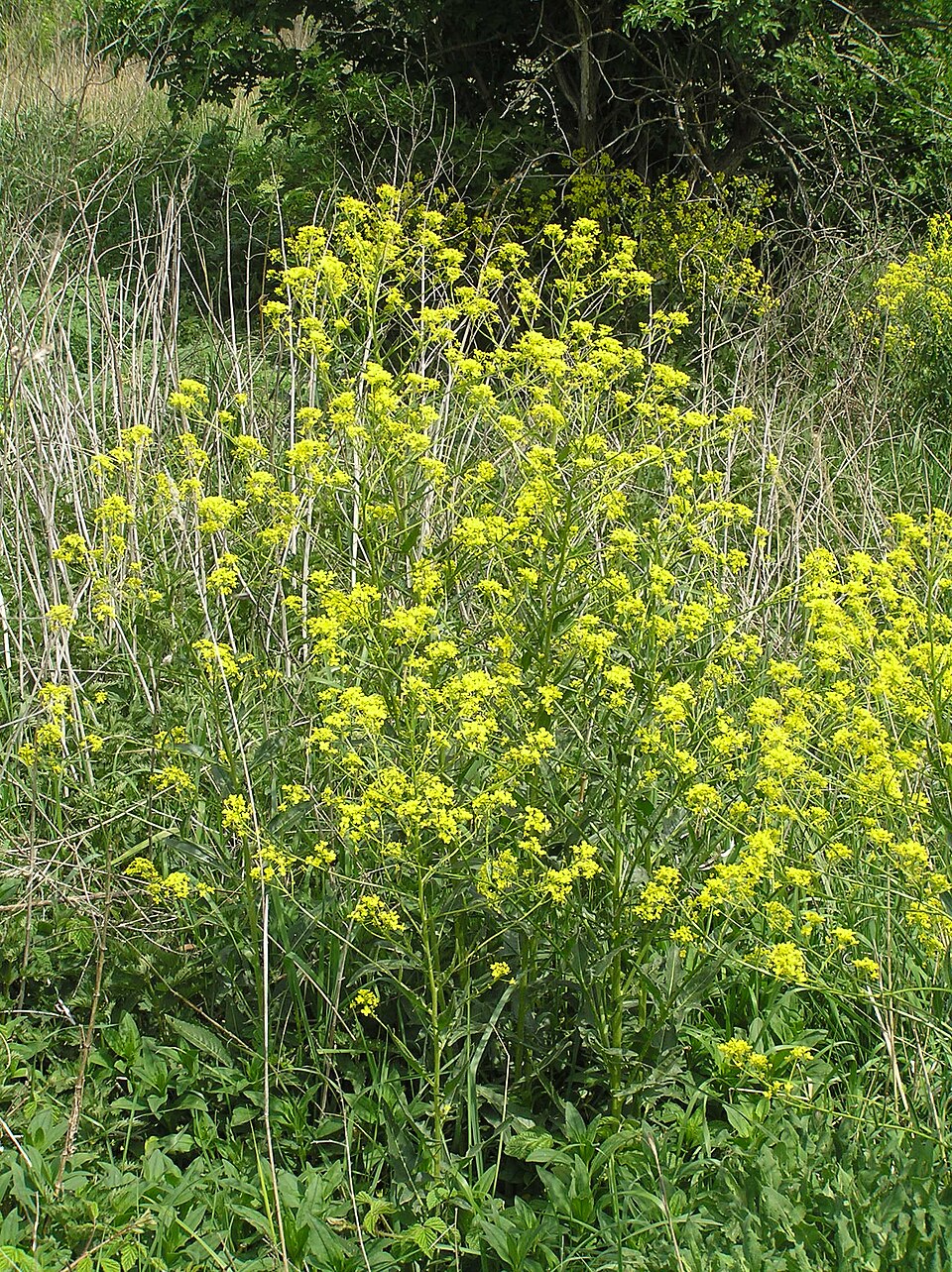
Turkish rocket is perennial broccoli raab. Each spring, this hardy brassica sends up stalks of unopened flower buds that you cut and cook just like broccoli raab, and it does it year after year from the same roots. Gardeners learning how to grow turkish rocket get a permanent brassica patch that produces with almost no annual work.
Table of Contents
Table of Contents
The plant is bold and handsome, with large leaves and bright yellow flowers if you let it bloom. It is tough, cold-hardy, and productive. The one caution: it self-seeds enthusiastically, so deadhead the flowers you do not harvest, or Turkish rocket will plant itself everywhere. Managed with the scissors, it is a crop. Neglected, it is a weed.

Photo: Wikimedia Commons
Quick facts: Sun: full sun. Soil: tolerates poor soil. Water: moderate. Sow 0.25 inch deep, thin to 18 inches apart. Days to first harvest: 60 to 90. Hardy perennial in zones 4 to 8; can be weedy where it self-seeds freely.
Choosing a Variety and Getting Started
When it comes to how to grow turkish rocket, getting the details right makes all the difference.

Many homeowners find that how to grow turkish rocket is easier than they expected once they know the basics.
Turkish rocket seed is sold by perennial vegetable specialists, usually just under its common name. There are no varieties to choose between. The seed is straightforward to handle, and germination is reliable in cool soil.
Because the plant makes a deep taproot and resents transplanting, sow it directly where it will stay. Choose the spot like a permanent planting: a corner of the garden, the back of a bed, or a dedicated perennial row. The plants are large and long-lived, so give them a place where they will not be disturbed. Before sowing, check your USDA zone planting dates on the planting calendar; Turkish rocket suits zones 4 to 8.
If you have grown broccoli for heads or kale for leaves, Turkish rocket combines the two harvests in one perennial plant. Mustard greens share the peppery brassica bite.
When and How to Plant
Many homeowners find that how to grow turkish rocket is easier than they expected once they know the basics.
The key to how to grow turkish rocket is choosing the right approach for your space and budget.
Direct sow Turkish rocket in spring, around your last spring frost date. The seed germinates well in cool soil, so there is no need to wait for warmth. Sow about a quarter inch deep where the plants will live permanently, because the deep taproot makes transplanting a poor idea.
Thin the seedlings to 18 to 24 inches apart once they are sturdy. This feels like a lot of space for small seedlings, but mature plants are big, and crowding invites disease and reduces the bud harvest. Give them room from the start and you will not have to move them later.
The Old Farmer's Almanac planting calendar can confirm your sowing date. Water the seedbed gently after sowing and keep it moist until the seedlings are established.
Soil and Sun
The key to how to grow turkish rocket is choosing the right approach for your space and budget.
With a little planning, how to grow turkish rocket can fit even a busy schedule.
Give Turkish rocket full sun to part shade and any decent soil. It tolerates poor soil better than most brassicas, which is part of its charm. That said, a little compost at planting grows stronger plants and a heavier bud harvest. It is not fussy, but it appreciates generosity.
Good drainage helps, especially in winter. The deep taproot reaches down for water, which makes established plants quite drought-tough, but crowns in waterlogged winter soil can rot. On heavy ground, a raised bed or a slight mound keeps the crowns happy. The Clemson Home & Garden Information Center covers bed preparation for perennial plantings.
Look up its background under Bunias orientalis in the USDA PLANTS Database. Cold-climate perennial advice is available through the University of Minnesota Extension.
Watering and Feeding
With a little planning, how to grow turkish rocket can fit even a busy schedule.
Before you start, it helps to understand how how to grow turkish rocket works in real homes.
Water through the first season while the taproot establishes. After that, Turkish rocket is tough and needs only moderate watering. A deep watering during dry spells keeps the bud harvest coming, but the plants survive neglect that would kill fussier brassicas.
Feed lightly. A compost mulch each spring is plenty for most soils. Turkish rocket is not a heavy feeder, and excess nitrogen pushes soft, pest-prone growth. If the plants are vigorous and the spring buds are plentiful, nutrition is fine.
Care Through the Season
Before you start, it helps to understand how how to grow turkish rocket works in real homes.
A good plan for how to grow turkish rocket saves time, money, and frustration.
Cut the flower stalks for the bud harvest, and deadhead the rest. This two-part routine is the whole management program. Harvesting the unopened buds for the kitchen removes many potential seed heads, but any stalks you do not eat should be cut before they set seed. Left alone, Turkish rocket self-seeds enthusiastically and pops up everywhere, which is how it earned its weedy reputation in some regions.
Watch for flea beetles on young leaves. These tiny jumping beetles chew pinhead holes in brassica foliage. Row cover over young plantings excludes them during the vulnerable stage. Established plants usually outgrow flea beetle damage.
The plants are otherwise trouble-free. They stand up to cold, shrug at drought once established, and return reliably each spring. Divide crowded clumps every few years in early spring if the center gets woody and unproductive.
Harvest
A good plan for how to grow turkish rocket saves time, money, and frustration.
For most people, how to grow turkish rocket comes down to a few smart choices.
Harvest the unopened flower buds like broccoli raab. That is the main crop. Cut the stalks when the buds are plump but still tight, before any yellow shows. Steam, saute, or stir-fry them; the flavor is like a mild, sweet broccoli raab with a pleasant brassica bite.
Young leaves work in salads too. Pick the tender outer leaves in spring for a peppery addition to mixed salads. As the season warms, the leaves get stronger in flavor; use them cooked at that point.
Cut buds regularly to extend the season. The more you cut, the more the plant produces, sending up side shoots after the main stalk is taken. A small patch can supply buds for weeks in spring. Stop harvesting once the plant is in full flower and let it finish its cycle, deadheading what you do not eat.
Turkish Rocket Through the Seasons
For most people, how to grow turkish rocket comes down to a few smart choices.
If you are new to how to grow turkish rocket, start with the simplest option and build from there.
Spring is the main event. The plants wake early, throwing up stalks of plump, unopened buds. This is the broccoli raab harvest, and it lasts for weeks if you keep cutting. Take the central stalk when the buds are tight, and side shoots follow. Cut every few days at the peak; the patch produces more the more you harvest. Steam the buds briefly and dress with olive oil and lemon, or saute with garlic and chile flakes the way you would any raab.
Summer is maintenance season. Once the main bud harvest passes, the plants want to flower and set seed. Let a few stalks bloom for the pollinators if you like; the yellow flowers are genuinely pretty and the bees love them. But deadhead the rest before the seed heads mature, or you will have Turkish rocket seedlings in every bed next year. This is the plant's one bad habit, and the scissors are the cure.
Fall and winter are rest. Cut back the spent stalks, tidy the crowns, and let the plants go dormant. They are fully hardy and need no protection. In early spring, before growth starts, divide any crowded clumps to keep the patch vigorous. Then the cycle begins again: buds, deadheading, rest. A well-managed patch produces for a decade or more.
Saving Turkish Rocket Seed
If you are new to how to grow turkish rocket, start with the simplest option and build from there.
When it comes to how to grow turkish rocket, getting the details right makes all the difference.
If you want to save seed, do it deliberately and carefully. Choose one or two of your best plants, ideally at a distance from the harvest patch, and let them flower and set seed while you deadhead everything else. The seed heads mature in summer; cut the stalks when the pods turn brown and dry them further indoors in a paper bag. The small seeds shake out easily once fully dry.
Store the seed cool and dry, labeled clearly. Turkish rocket seed stays viable for several years, so a single saving lasts a long time. Because the plant self-seeds so freely, your saved seed is really about control: known seed, sown where you want it, beats volunteers appearing where you do not.
One warning: do not save seed from a patch you failed to deadhead. If unknown volunteers have been flowering nearby, your seed might carry crosses or simply continue the weedy habit. Save from isolated, well-managed plants, rogue out anything suspicious, and your Turkish rocket stays a crop rather than becoming a colonist. Managed with intention, the plant's vigor is an asset; it is only neglect that turns it into a weed.
Troubleshooting
When it comes to how to grow turkish rocket, getting the details right makes all the difference.
Many homeowners find that how to grow turkish rocket is easier than they expected once they know the basics.
Seedlings vanish after transplanting. Turkish rocket resents transplanting because of its taproot. Always direct sow where the plants will stay.
Plants pop up everywhere. You let seed heads mature. Deadhead religiously, and pull volunteers while they are small. The taproot makes large volunteers hard to remove.
Flea beetles riddle the leaves. Cover young plantings with row cover. Established plants tolerate the damage, but seedlings need protection.
Patch gets woody and unproductive. Divide the crowns every few years in early spring to rejuvenate them.
Think of Turkish rocket as perennial broccoli raab: cut the buds, deadhead the rest, and enjoy the spring harvest for years. For an annual brassica to grow alongside it, broccoli is the natural partner. More on perennial vegetables is available through the Missouri Botanical Garden's plant finder, and background through the USDA National Agricultural Library.
References
University of Minnesota Extension. (n.d.). Growing perennial vegetables in home gardens. https://extension.umn.edu/
Old Farmer's Almanac. (n.d.). Growing brassicas in home gardens. https://www.almanac.com/
Clemson Cooperative Extension. (n.d.). Home & Garden Information Center. https://hgic.clemson.edu/
Missouri Botanical Garden. (n.d.). Plant finder. https://www.missouribotanicalgarden.org/
Was this guide helpful?

About My Garden US
The My Garden US editorial team writes practical, in-depth home and garden guides for American homeowners — tested advice, no fluff.