When it comes to how to grow Fuyu persimmons, getting the details right makes all the difference.
Table of Contents
Table of Contents
Photo: Wikimedia Commons
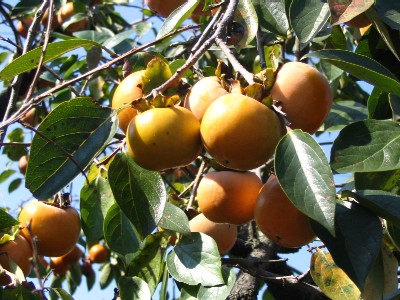
The persimmon family confuses beginners because its members play by opposite rules. Astringent types like Hachiya must soften fully before eating, while Fuyu and its non-astringent kin are eaten firm and crisp. Once you know which type you planted, everything is simple. Fuyu trees are handsome, nearly pest-free, and undemanding, with glossy foliage that turns brilliant color in fall. The fruit hangs like orange lanterns when the rest of the orchard is bare.
Most people know persimmons as the fruit you have to wait for: pick it too soon and the astringency puckers your whole face. Fuyu changes the deal. It is the non-astringent type, eaten firm and crisp like an apple, sweet the moment it turns fully orange. The tree itself is one of the lowest-maintenance fruit trees you can plant, with few pests and almost no pruning needs. Learning how to grow Fuyu persimmons gives you a tree that asks for little and delivers glossy orange fruit in the fall when most of the orchard is done.
The species is Diospyros kaki, hardy in zones 7 through 10. It needs a long, hot season to ripen fruit well; in short, cool summers the fruit might stay astringent or never ripen. The USDA PLANTS Database documents the species. Fuyu is self-fertile, so one tree is enough, and it typically bears three to five years after planting.
Choosing a Variety
When it comes to how to grow Fuyu persimmons, getting the details right makes all the difference.

Many homeowners find that how to grow Fuyu persimmons is easier than they expected once they know the basics.
Buy a grafted tree. Fuyu is the standard non-astringent variety, flat-sided and tomato-shaped, but the nursery trade also sells close relatives like Jiro, which behaves the same way. Any non-astringent kaki type eats firm. Avoid astringent types like Hachiya unless you specifically want the soft-ripe experience; they need bletting, the slow softening that removes astringency, and beginners often pick them too early.
Check the graft union and the roots before you buy. Reject trees with circling roots in the pot or damage at the graft. A young, vigorous whip establishes faster than a large, root-bound specimen. The Missouri Botanical Garden plant finder includes persimmon notes that help with variety choice.
When and How to Plant
Many homeowners find that how to grow Fuyu persimmons is easier than they expected once they know the basics.
The key to how to grow Fuyu persimmons is choosing the right approach for your space and budget.
Plant in the dormant season, after leaf drop and before spring bud break. Bare-root trees must go in during this window. Dig a hole twice as wide as the root ball and no deeper, set the graft union above the soil line, backfill with native soil, and water deeply.
Space trees 15 to 20 feet apart. Persimmons make broad, handsome trees, and crowding invites disease. Mulch with several inches of wood chips, keeping mulch off the trunk. Water deeply at planting and through the first growing season. Look up your USDA zone planting dates to catch the dormant window in your region.
Persimmons tolerate clay soil better than most fruit trees, which makes them a good choice where apples struggle. They still want drainage; no fruit tree likes standing water.
Soil and Sun
The key to how to grow Fuyu persimmons is choosing the right approach for your space and budget.
With a little planning, how to grow Fuyu persimmons can fit even a busy schedule.
Full sun and well-drained loam. Six or more hours of direct sun ripens the fruit and keeps the tree healthy. Persimmons handle poor, rocky, and clay soils better than almost any other fruit tree, but they draw the line at waterlogged ground.
Soil pH near neutral to slightly acidic suits them. A soil test through your state extension service is cheap insurance before planting any fruit tree. The University of Minnesota Extension soil pages explain testing, though persimmons themselves are a warm-climate tree; southern growers should check Clemson Cooperative Extension for regional fruit-tree guidance.
Watering and Feeding
With a little planning, how to grow Fuyu persimmons can fit even a busy schedule.
Before you start, it helps to understand how how to grow Fuyu persimmons works in real homes.
Water deeply at planting, then moderately. Persimmons are drought tolerant once established, with deep roots that find water. Young trees need regular water for the first two seasons. In dry summers, a deep soak every couple of weeks keeps fruit sizing up.
Feed lightly. Persimmons need little fertilizer. A ring of compost in spring suffices in most soils. Excess nitrogen causes fruit drop and soft growth, so skip the heavy feeding. If leaves look deep green and growth is steady, the tree is telling you it needs nothing. The Clemson Home & Garden Information Center fruit-tree pages echo the same restraint.
Care Through the Season
Before you start, it helps to understand how how to grow Fuyu persimmons works in real homes.
A good plan for how to grow Fuyu persimmons saves time, money, and frustration.
Persimmons need little pruning. Remove dead or crossing branches in the dormant season and leave the rest alone. The tree forms a naturally attractive shape. Young trees might drop fruit for a season or two before settling into bearing; this is normal, not failure.
Pests are few. Persimmons have fewer insect and disease problems than nearly any other fruit tree, which is a large part of their charm. Watch for scale on bark in neglected trees and for fruit drop in drought. Otherwise, the seasonal routine is mostly watering and waiting.
Do not confuse Fuyu with astringent types at harvest time. This is the most common beginner mistake, and it leads people to leave Fuyus on the tree waiting for softness that should never come. If you also grow the American persimmon, remember that one does need full softening; the two fruits play by opposite rules.
Harvest
A good plan for how to grow Fuyu persimmons saves time, money, and frustration.
For most people, how to grow Fuyu persimmons comes down to a few smart choices.
Expect fruit three to five years after planting. Pick Fuyus when fully orange and still firm. The fruit should detach with a gentle lift and smell faintly sweet at the stem. Eat them crisp, like apples: sliced, in salads, or out of hand.
Do not wait for softness. Picking Fuyu firm is correct, not early. A soft Fuyu is an overripe Fuyu. This single fact separates successful Fuyu growers from disappointed ones. The fruit stores well in the refrigerator for weeks, and the flavor stays sweet and mild.
Taste one before harvesting the whole tree. Color usually signals ripeness accurately, but a taste test removes all doubt. The Old Farmer's Almanac harvest guides list persimmons among fall fruits, and the UF IFAS Gardening Solutions site covers persimmon culture for warm-climate growers.
Fuyu Persimmons Through the Seasons
For most people, how to grow Fuyu persimmons comes down to a few smart choices.
If you are new to how to grow Fuyu persimmons, start with the simplest option and build from there.
The dormant season is for planting and light pruning. Set out bare-root trees after leaf drop. Prune established trees minimally, removing only dead or crossing branches; persimmons need little shaping. This is also the time to check the graft union and refresh mulch, keeping it away from the trunk.
Spring growth is vigorous and trouble-free. The trees leaf out late, which usually dodges late frosts. Young trees might drop fruitlets for a season or two before settling into bearing; this is normal calibration, not failure. Water young trees steadily through their first two seasons.
Summer needs little beyond water in drought. The trees are heat-tolerant and pest-free compared with most fruits. Let the fruit size up undisturbed. Avoid heavy nitrogen, which pushes soft growth and increases fruit drop.
Fall is the show. The foliage colors brilliantly, and the orange fruit ripens on the tree. Pick Fuyus when fully orange and still firm, and eat them crisp like apples. After harvest, clean up fallen fruit. Like jujubes and pomegranates, persimmons store well and extend the fresh-fruit season deep into fall.
Eating and Storing Fuyus
If you are new to how to grow Fuyu persimmons, start with the simplest option and build from there.
When it comes to how to grow Fuyu persimmons, getting the details right makes all the difference.
Eat Fuyus firm and crisp, sliced like apples. They shine in salads where their sweetness balances bitter greens, and they pair beautifully with cheese. Sliced and dried, they make chewy sweet snacks; a food dehydrator handles a big harvest easily. Ripe fruit keeps for weeks in the refrigerator, and the tree holds fruit well, so pick as you need rather than all at once. One mature tree feeds a neighborhood, so plan for sharing.
Troubleshooting
When it comes to how to grow Fuyu persimmons, getting the details right makes all the difference.
Fruit drop on young trees is normal for the first bearing years. The tree is calibrating its crop load. Persistent drop on mature trees suggests drought stress or overfeeding; deep water and skip the fertilizer.
No fruit after five years might mean the tree needs more heat, the variety is mismatched to your chill, or late frosts are killing the blossoms. Persimmons bloom late, which usually dodges frost, but marginal zones test the limits. In short, cool summers, fruit might stay astringent or fail to ripen; this tree needs the long hot season of zones 7 through 10.
Mushy, overripe fruit means you waited too long. Pick firm. Birds and squirrels take ripe persimmons; netting or early picking solves it. The USDA National Agricultural Library indexes persimmon research for the curious, and Gardenia.net variety notes help match types to climates.
Fruit that stays astringent or never ripens usually means the season was too short or too cool. Fuyu needs a long, hot summer; in marginal climates, plant against a warm south-facing wall for extra heat. There is no shortcut around the climate requirement.
Branches that break under the crop load were allowed to overbear. Thin young fruit in early summer, leaving one fruit per cluster, and prop heavy limbs if needed. A thinned tree also produces larger, sweeter fruit.
If bark splits in winter, the damage comes from rapid temperature swings. In marginal zones, wrap young trunks for the first winters and site the tree where afternoon winter sun does not strike the trunk directly.
References
Clemson University Cooperative Extension. (n.d.). Home & Garden Information Center. https://hgic.clemson.edu/
Missouri Botanical Garden. (n.d.). Plant finder. https://www.missouribotanicalgarden.org/
U.S. Department of Agriculture. (n.d.). PLANTS database. https://plants.usda.gov/home
University of Florida IFAS Extension. (n.d.). Gardening solutions. https://gardeningsolutions.ifas.ufl.edu/
Was this guide helpful?

About My Garden US
The My Garden US editorial team writes practical, in-depth home and garden guides for American homeowners — tested advice, no fluff.
You May Also Like
How to Grow Chaya: Tropical Spinach Tree Guide
November 7, 2026 14 views
How to Grow Longevity Spinach: USA Care Guide
October 17, 2026 21 views
Wildflower Seed Mixes Buying Guide USA: How to Choose the Right Mix for Your Yard
April 27, 2026 24 views