Table of Contents
Table of Contents
- Choosing a Variety
- When and How to Plant
- Timing your sowing
- Spacing, depth, and days to harvest
- Soil and Sun
- Light needs
- Building good soil
- Watering and Feeding
- Watering routine
- Feeding
- Care Through the Season
- Companions and Placement
- Harvest
- Troubleshooting
- Through the Seasons
- Spring
- Summer
- Fall and Winter
- Quick Answers
- Using the Harvest
- Keep Growing
- References
Photo: Wikimedia Commons
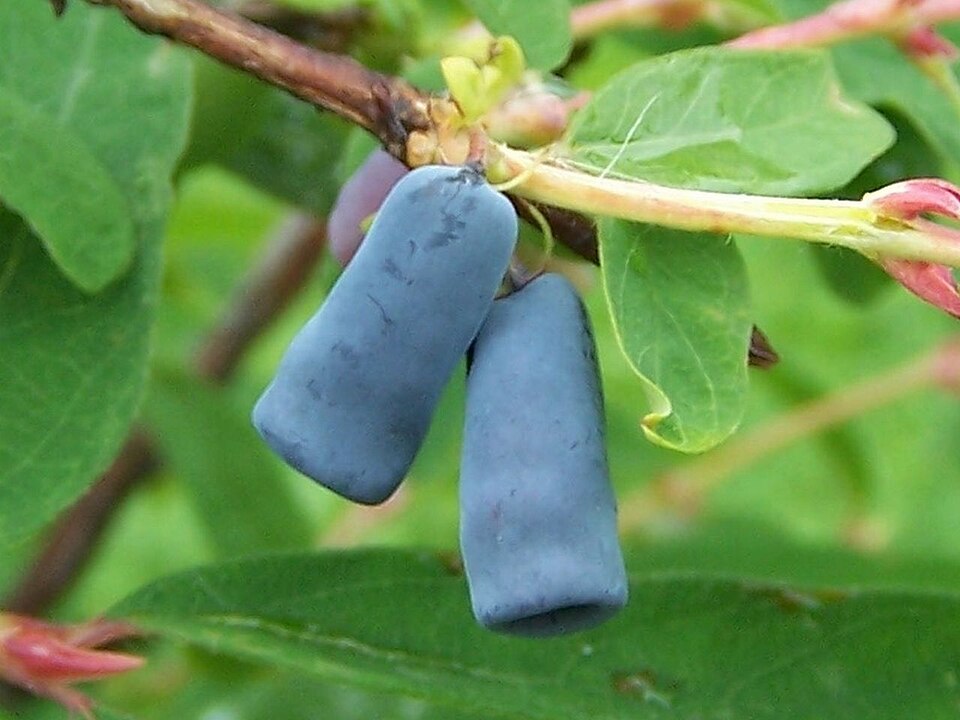
Honeyberries - also sold as haskap - are the first blue fruit of the year, ripening weeks before strawberries and tasting like a cross between blueberry and raspberry with a wine-like depth. The bushes are absurdly cold-hardy, shrug off late frosts that kill other fruit blossoms, and ask for almost nothing once established. The catch is pollination: you must plant two compatible varieties, because a lone bush fruits poorly. Learning how to grow honeyberries is mostly about that pairing, plus one picking lesson - berries look blue a full week before they are truly ripe.
The USDA PLANTS entry for Lonicera caerulea confirms its northern credentials. This guide covers varieties, planting, pruning, bird protection, and the true-ripeness test. For a quick botanical overview, see the USDA PLANTS entry for Lonicera caerulea.
Choosing a Variety
When it comes to how to grow honeyberries, getting the details right makes all the difference.

Many homeowners find that how to grow honeyberries is easier than they expected once they know the basics.
Buy two different, compatible varieties - nurseries label which ones pollinate each other, so follow their pairing charts rather than guessing. Popular pairs include Borealis with Tundra, or Aurora with Honey Bee; newer releases keep improving berry size and sweetness. Late-blooming types dodge spring frosts best, which matters in frost-pocket sites. The Old Farmer's Almanac guide to honeyberries stresses the two-variety rule above all else. Plants are sold as small potted bushes; they look unimpressive at first but size up steadily. Space them four to five feet apart, since mature bushes reach five feet wide and you need room to net them against birds.
When and How to Plant
Many homeowners find that how to grow honeyberries is easier than they expected once they know the basics.
The key to how to grow honeyberries is choosing the right approach for your space and budget.
Timing your sowing
Honeyberry is almost always planted from nursery stock, bare-root plants, or divisions rather than seed. Set plants out around your last spring frost, about a week after it, when the soil is workable and warming. Plant at the same depth the plant grew in its pot, firm the soil gently, and water it in well.
Spacing, depth, and days to harvest
The first season is mostly about roots and establishment; the real payoff begins in the second season, so plant with patience.
The day you plant matters less than the week after: keep new plants watered and mulched while roots knit into the surrounding soil. An overcast planting day gives them the gentlest possible start.
Frost-date charts from a ZIP-code planting calendar help if you are new to reading your zone.
Soil and Sun
The key to how to grow honeyberries is choosing the right approach for your space and budget.
With a little planning, how to grow honeyberries can fit even a busy schedule.
Light needs
Full sun is ideal, but light afternoon shade is fine and even welcome in hot regions.
Building good soil
Plant in average, well-drained soil. If your ground is heavy clay, plant a little high and mulch well; if it is sand, compost is your best friend.
It is rated for zones 3 to 7. Outside that range, treat it as an annual or grow it in containers you can move with the seasons.
A two-inch mulch of straw or shredded bark does triple duty: it conserves water, suppresses weeds, and moderates soil temperature. Keep mulch a finger's width from stems to prevent rot.
Soil testing labs listed through the University of Minnesota Extension can confirm your pH before you plant.
Watering and Feeding
With a little planning, how to grow honeyberries can fit even a busy schedule.
Before you start, it helps to understand how how to grow honeyberries works in real homes.
Watering routine
Keep the soil evenly moist but not soggy. An inch of water a week, from rain or the hose, is the usual target.
Feeding
A spring mulch of compost is sufficient; honeyberries are light feeders and dislike rich chemical fertilizers. Go light on fertilizer. Compost worked in at planting plus a mid-season mulch feeding will carry it; overfeeding causes more problems than it solves.
Water in the morning so foliage dries by evening - wet leaves overnight invite disease. A rain gauge, or even a tuna can set out in the rain, tells you how much fell; adjust the hose accordingly.
Irrigation basics from Clemson's Home & Garden Information Center apply to all of these schedules.
Care Through the Season
Before you start, it helps to understand how how to grow honeyberries works in real homes.
A good plan for how to grow honeyberries saves time, money, and frustration.
Through the season, water young plants well for the first year; established bushes are hardy and low-maintenance, tolerating cold and even wet soils where blueberries struggle. Prune lightly after harvest: thin out the oldest wood, since fruit forms on one-season growth, but do not shear the bush hard. Few pests trouble honeyberries, which is part of their charm - but birds are relentless. Net the bushes before berries turn blue, because birds watch ripeness as closely as you do.
Weed under the bushes by hand; the roots are shallow. Clemson's Home & Garden Information Center has general bush-fruit pruning diagrams that apply well. Fruit hides under the leaves, so at picking time part the foliage and look underneath rather than judging from above.
Companions and Placement
A good plan for how to grow honeyberries saves time, money, and frustration.
For most people, how to grow honeyberries comes down to a few smart choices.
The home orchard corner suits honeyberries planted near Blueberry, Raspberry, and Lingonberry, all wanting sun, air flow, and fertile ground. Space for mature size, not nursery size - crowding invites disease and makes harvest miserable. A grass-free mulched zone under each plant keeps mowers away from trunks and stems. Prune yearly to let light into the center, and thin fruit where needed for size. Keep a harvest calendar on the fridge; the season moves fast and each fruit has its week.
Harvest
For most people, how to grow honeyberries comes down to a few smart choices.
If you are new to how to grow honeyberries, start with the simplest option and build from there.
Here is the lesson that separates good honeyberry growers from disappointed ones: berries turn blue outside about a week before they are ripe inside. Wait until the flesh is deep blue-purple all the way through and the berry tastes sweet rather than mouth-puckering. Truly ripe berries practically fall into your hand; if you have to tug, wait. They are among the earliest fruits of the season, often beating strawberries by weeks. Eat them fresh, freeze them on trays, or cook them into jam - the Missouri Botanical Garden plant finder notes their excellent freezing quality. Expect modest crops for the first couple of seasons, then increasing harvests for decades; plant them where they can stay undisturbed.
Troubleshooting
If you are new to how to grow honeyberries, start with the simplest option and build from there.
When it comes to how to grow honeyberries, getting the details right makes all the difference.
No fruit on a healthy-looking bush almost always means a pollination problem - either a single variety or two incompatible ones. Add a compatible partner within bee-flying distance. Berries that taste sour and astringent were picked too early; wait for the inside to turn fully blue. In zones 8 and warmer, bushes leaf out weakly and fruit poorly for lack of winter chill - honeyberry is a true northern plant, and the USDA National Agricultural Library's resources confirm it needs long cold winters. Mildew is rare, but good air flow from proper spacing prevents most of it. If bushes stall, check drainage; they tolerate wet soil better than blueberries but still dislike standing water.
Through the Seasons
When it comes to how to grow honeyberries, getting the details right makes all the difference.
Spring
Spring is the busiest fruit season: prune before bud break, top-dress with compost, and mulch the root zones. Set out new plants early so roots establish before heat. Hang bird netting before fruit colors - once birds find the crop, netting is a rescue, not a plan.
Summer
Summer means water, netting, and harvest. Keep fruiting plants evenly watered - drought during fruit swell costs size and flavor. Pick at peak ripeness and process promptly; fruit waits for no one. After harvest, prune out spent wood where the type calls for it, and keep up with weeds.
Fall and Winter
In fall, clean up fallen fruit to break pest cycles, and do the dormant pruning each type needs. Mulch root zones after the ground cools. Winter is for planning and ordering - new bushes planted in early spring establish fastest. Sharpen pruners; spring comes fast.
Quick Answers
Many homeowners find that how to grow honeyberries is easier than they expected once they know the basics.
How long until I can harvest honeyberries?
The first season is about establishment; expect the real harvest to begin in the second season. Perennials reward patience.
Where will honeyberries grow?
Zones 3 through 7. Inside that range it is hardy and reliable; outside it, grow as an annual or in containers.
Does honeyberries need full sun?
Full sun to part shade. A little afternoon shade is welcome where summers run hot.
What spacing does honeyberries need?
About 60 inches apart. Crowding stunts plants and invites disease, so give each one its room - the harvest is bigger, not smaller, for the space.
Using the Harvest
Eat the first honeyberries fresh and warm from the bush - that early-season sweetness, weeks before any other blue fruit, is the whole point. They cook into a jam with unusual depth, somewhere between blueberry and blackcurrant, and they freeze beautifully on trays for winter smoothies and baking. Fold them into muffins, clafoutis, and pies where their wine-like tang shines. A simple honeyberry sauce over ice cream or yogurt takes minutes and tastes like a farmers-market luxury. Because the season is early and short, freeze the surplus the day you pick; properly frozen berries keep their flavor for months. Browse more plant profiles at Gardenia.net's plant profiles for ideas.
Keep Growing
How to grow honeyberries boils down to this: two compatible varieties, full sun, netting against birds, and patience at picking time. Do that and you will eat blue fruit weeks before anyone else in the neighborhood. For planting dates, check your USDA zone planting dates and round out the berry patch with our guides to how to grow blueberries, how to grow raspberries, and how to grow lingonberries - all fellow lovers of cool climates and acidic ground.
References
- U.S. Department of Agriculture. (n.d.). Honeyberry (Lonicera caerulea) plant profile. https://plants.usda.gov/home
- University of Minnesota Extension. (n.d.). Growing honeyberries in home gardens. https://extension.umn.edu/
- Clemson University Cooperative Extension. (n.d.). Home & Garden Information Center. https://hgic.clemson.edu/
- Old Farmer's Almanac. (n.d.). Growing honeyberries in home gardens. https://www.almanac.com/
Was this guide helpful?

About My Garden US
The My Garden US editorial team writes practical, in-depth home and garden guides for American homeowners — tested advice, no fluff.