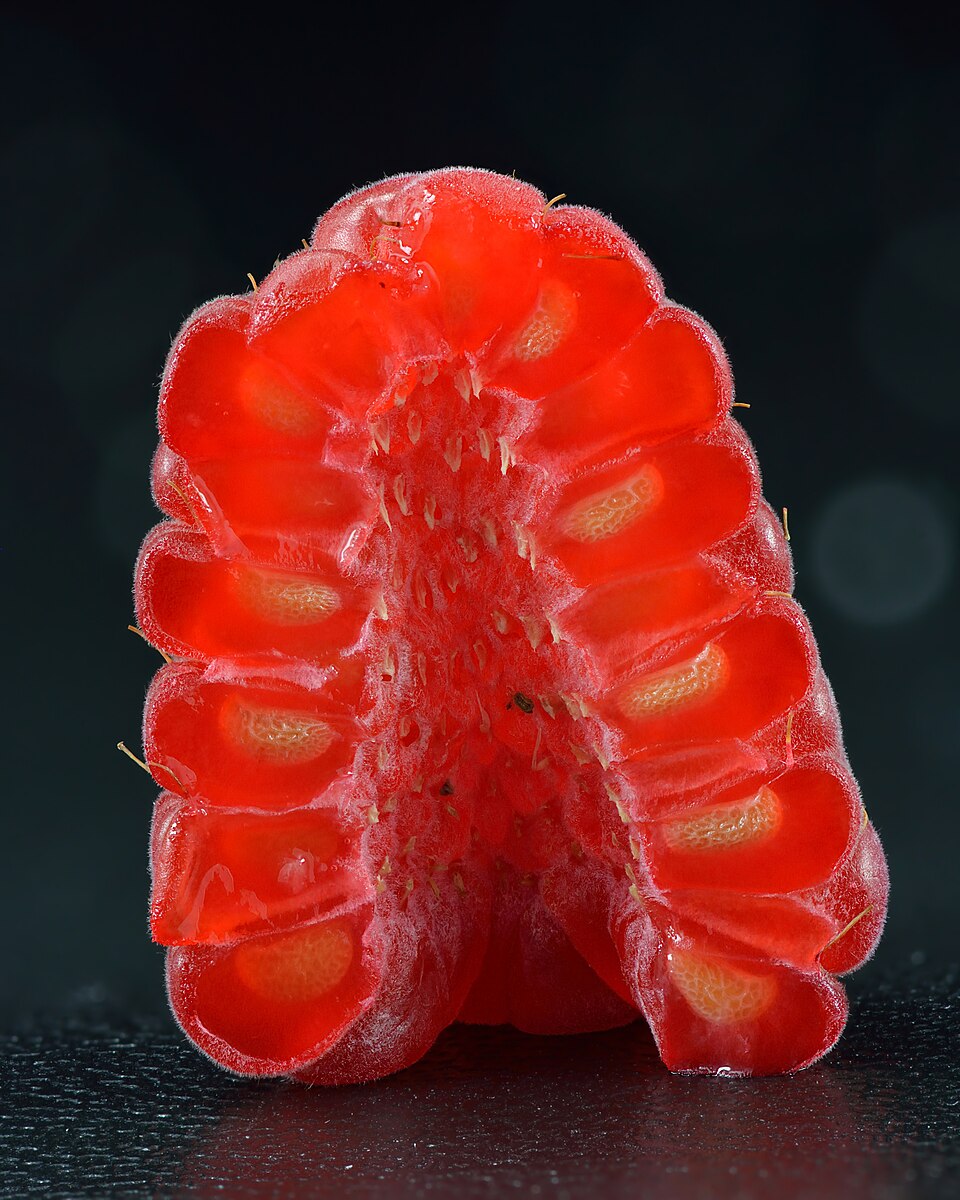

Raspberry (Rubus idaeus) is a fruit that earns its keep. Hardy in zones 3 to 9, it wants full sun and rich, well-drained soil. Summer-bearers fruit on second-year canes; everbearing types give a fall crop on first-year canes. Trellis or contain – canes spread. Get those basics right and the plant does the rest.
What follows is the complete season, step by step: varieties, planting dates by zone, soil and water, seasonal care, and harvest. Gardenia also carries a solid growing profile for raspberry as a second opinion.
Raspberry earns its bed. The return is a perennial planting that pays you back for years. The first season is about roots, not harvests — gardeners who accept that trade end up with the heaviest crops. Gardeners in zones 3 through 9 can grow it outdoors without heroics. Needs winter chill; suffers in the heat of zones 10-13.

Photo: Wikimedia Commons
At a Glance
- Botanical name: Rubus idaeus
- Type: Fruit
- USDA zones: 3 to 9
- Sun: Full sun
- Soil: Rich, well-drained soil
- Water: Even moisture
- Spacing: 24 inches apart
- Planting depth: at the same depth it grew before
- Days to maturity: first light crop in year two; full harvests from year three
- How to start: Plant nursery stock or bare-root plants
Choosing a Variety
Summer-bearing raspberries fruit once on second-year canes — the traditional heavy early-summer crop. Everbearing types fruit on first-year canes in fall, and you can mow them down each winter for the simplest pruning of any fruit. Yellow and black raspberries offer novelty flavors beyond the classic red. In cold regions choose hardy types; in warm regions choose heat-tolerant ones, since raspberries dislike hot nights. Start with five to ten canes — raspberries multiply on their own soon enough. Our guide to growing blackberries pairs well with this one if you are planning the bed. Compare variety descriptions at the Clemson Home and Garden Information Center before you buy seed.
When and How to Plant
Plant at the wrong time and raspberry sulks; plant at the right time and it takes off. Set transplants out right around your last spring frost date.
Do not guess your frost dates — check your USDA zone planting dates on our planting calendar and work backward from there. The Almanac’s planting calendar gives a second reference.
Set plants 24 inches apart with seed or crowns at the same depth it grew before, in ground loosened a good 8 inches down. Tight spacing starves plants of air and light. Needs winter chill; suffers in the heat of zones 10-13. The Gardenia has more on timing raspberries by region.
Soil and Sun
Two things decide how your raspberry performs: light and ground. Give it full sun, and plant in rich, well-drained soil. Compost — 2 to 3 inches mixed into the bed — is the single best amendment for almost any soil.
Do not plant in a low spot where water stands after rain; roots rot there. Raised beds solve most drainage sins. The Almanac planting calendar covers soil prep for raspberries in plain detail.
Watering and Feeding
Raspberry does best with even moisture. Water early in the day so leaves dry by nightfall, and aim the hose at the base — wet foliage invites half the diseases in this guide’s troubleshooting section.
Container plants dry out far faster than garden beds — check pots daily in summer heat. In the ground, mulch 2 to 3 inches deep to even out moisture. See the USDA PLANTS database for watering schedules by region.
Fertilizer is seasoning, not the meal. A bed enriched with compost at planting, plus one light feeding mid-season, carries raspberries through. Too much nitrogen gives leaves instead of the harvest you actually want.
Care Through the Season
Once established, raspberry runs on routine. Install a simple wire trellis at planting to keep canes upright. Mulch to hold moisture and water an inch a week during fruiting. Prune by type: cut out fruited summer canes after harvest, and for everbearing, mow all canes to the ground in late winter for one big fall crop. Watch for cane borers, which cause wilting tips. A weekly walk-through to check water, weeds, and pests keeps small issues small.
And do not skip this: summer-bearers fruit on second-year canes; everbearing types give a fall crop on first-year canes. trellis or contain – canes spread. Simple, free, and effective — the best kind of garden advice. For a neighboring planting, see our guide to growing boysenberries. For pest ID with photos, the USDA PLANTS database guides are hard to beat.
Keep a simple garden log: planting date, variety, weather quirks, what worked. Next season that notebook is worth more than any new product, because your own yard’s history beats generic advice every time.
Everbearing raspberries offer a clever double-crop option if you’d rather prune than mow. Leave the canes standing over winter, and they’ll fruit low on the cane in early summer, then again at the tips in fall — two harvests from one planting. The tradeoff is smaller crops each time and fiddlier pruning, so weigh it honestly. For most home gardeners the mow-everything method wins, but if you love fresh berries from early summer straight through frost, the double-crop patch is worth a row.
Season by Season
A simple seasonal rhythm keeps raspberry productive. Spring — Set transplants out right around your last spring frost date. Work compost in early and harden seedlings before transplanting. Summer — consistent water, a fresh mulch layer, and a weekly pest check; harvest promptly and often. Fall — final pickings, then cleanup: In mild-winter areas, a late planting can carry the harvest into cool weather; elsewhere, finish up before hard frost. Compost what is healthy and mulch the bare ground. Winter — plan, order, and maintain.In winter, established plantings rest under mulch; prune and tidy in the dormant season and plan any additions for spring.
Harvest
Harvesting raspberry well is a skill worth learning: pick at peak ripeness, handle gently, and store correctly, and the harvest lasts far longer.
Pick berries when they slip off the core with a gentle tug; they do not ripen after picking. Harvest every day or two in peak season and refrigerate promptly. Pro tip: the mow-everything method for everbearing raspberries removes all pruning guesswork and gives the cleanest, heaviest fall harvest. Pair this planting with our guide to growing strawberries and the two harvests will overlap nicely. The University of Minnesota Extension covers harvest handling for raspberries in more depth.
Storing and Preserving the Harvest
A heavy fruit harvest is a good problem. Eat fresh at peak — tree- and vine-ripened flavor never survives storage fully — and preserve the rest promptly. Refrigerate unwashed fruit and process within a day or two for best quality. Tray-freezing keeps berries individual for easy measuring later. Cooked preserves — jams, jellies, sauces, syrups — need tested recipes; safe ratios of sugar and acid are not negotiable. Drying works for grapes, figs, and berries with firm flesh. Whatever you make, label jars and bags with the fruit, the variety, and the batch; next winter you will thank yourself. Keep notes on yield per plant too, since the numbers tell you which varieties earn their space.
Troubleshooting
Cane borers cause wilting shoot tips — prune below the damage. Gray mold in wet weather; pick often. Poor fruit set may mean old canes — renew the patch. Spreading suckers invade lawns; mow the edges. The National Agricultural Library problem guides cover these issues with photos, which helps when words fall short.
Frequently Asked Questions
How long does raspberry take to grow?
Expect the first light crop in the second season and full harvests after that. The plant spends year one building roots — that investment is what makes later years abundant.
Can I grow raspberry in containers?
Yes, in a roomy container — think 5 gallons or larger with drainage holes. Compact varieties do best in pots. In-ground plants still outperform pots, but a sunny patio works fine.
What is the hardest part of growing raspberry?
Summer-bearers fruit on second-year canes; everbearing types give a fall crop on first-year canes. Trellis or contain – canes spread. Master that one point and most other problems never show up.
When should I plant raspberry?
Work backward from your frost dates: Set transplants out right around your last spring frost date. Check your USDA zone planting dates on our planting calendar to pin down your exact window.
One Last Tip
If pruning confuses you, grow everbearing raspberries and mow every cane to the ground in late winter. No decisions, no mistakes — just one heavy fall crop on fresh new canes. It is the lowest-maintenance way to grow raspberries, and the berries taste every bit as good. Mark your calendar by the seasons, not dates: cut when the canes are fully dormant and the worst cold has passed, and new shoots will race up within weeks.
References
University of Minnesota Extension. (n.d.). Growing raspberries in home gardens. https://extension.umn.edu/
Clemson Cooperative Extension. (n.d.). Raspberry. Home & Garden Information Center. https://hgic.clemson.edu/
Old Farmer’s Almanac. (n.d.). Growing raspberries. https://www.almanac.com/
U.S. Department of Agriculture. (n.d.). Rubus idaeus. National Agricultural Library. https://www.nal.usda.gov/
Was this guide helpful?

About My Garden US
The My Garden US editorial team writes practical, in-depth home and garden guides for American homeowners — tested advice, no fluff.
You May Also Like
Succulent Variety Packs: A Practical Guide for Florida Homes
June 14, 2026 0 views
Pothos Plants Bulk Florida Homes USA: A Plain Guide for Buyers
February 5, 2026 0 views
Snake Plants for Indoor Florida Homes: A Complete Guide
August 10, 2026 0 views