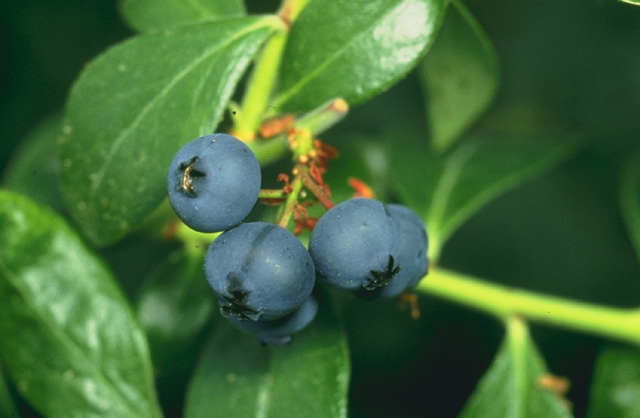

If you grow one fruit this year, make it blueberry. Known to botanists as Vaccinium corymbosum, it suits zones 3 through 9 and once established, it feeds you for years with little fuss. Remember this and you are most of the way there: test your soil – blueberries demand acidity; amend with sulfur and peat. plant two varieties for better pollination.
This guide covers the full season in plain terms — varieties, timing, soil, water, pests, and harvest. The USDA PLANTS database lists Vaccinium corymbosum with its full background if you want the botanical fine print.
Why bother with blueberry? Because it delivers a perennial planting that pays you back for years. The first season is about roots, not harvests — gardeners who accept that trade end up with the heaviest crops. Across zones 3 to 9, home gardeners grow it with steady success. Fails in alkaline soil; needs winter chill so not viable in zones 10-13.

Photo: Wikimedia Commons
At a Glance
- Botanical name: Vaccinium corymbosum
- Type: Fruit
- USDA zones: 3 to 9
- Sun: Full sun
- Soil: Acidic soil pH 4.5-5.5, rich in organic matter
- Water: Consistent moisture; mulch well
- Spacing: 48 inches (4 feet) apart
- Planting depth: at the same depth it grew before
- Days to maturity: first light crop in year two; full harvests from year three
- How to start: Plant nursery stock or bare-root plants
Choosing a Variety
Northern highbush types suit cold winters and most of the country. Rabbiteye types handle heat and suit the Southeast. Southern highbush types need fewer chill hours for mild-winter areas. Lowbush types are groundcover plants with intense wild flavor. Always plant at least two different varieties that bloom together — cross-pollination boosts berry size and yield. For pots, choose compact half-high or dwarf varieties bred for containers. Taste varies widely; if a nursery lets you sample, pick the flavor you like, since you will live with the bush for decades. Our guide to growing raspberries pairs well with this one if you are planning the bed. The Old Farmer’s Almanac variety guides add regional picks worth comparing.
When and How to Plant
Get the timing right and blueberry nearly grows itself. Set transplants out right around your last spring frost date.
Zones shift every date by weeks, so check your USDA zone planting dates on our planting calendar to pin yours down. The Old Farmer’s Almanac publishes frost-date tables worth bookmarking too.
Space plants 48 inches (4 feet) apart and place seed or roots at the same depth it grew before. Crowding invites disease and cuts yields, so resist the urge to squeeze in extras. Fails in alkaline soil; needs winter chill so not viable in zones 10-13. For regional timing detail, the Missouri Botanical Garden is worth a read.
Soil and Sun
Sun first: full sun is non-negotiable for strong blueberry plants. For soil, aim for acidic soil ph 4.5-5.5, rich in organic matter. A 2- to 3-inch layer of compost worked into the top 8 inches fixes most problems before they start.
Sandy soil dries fast — compost helps it hold water. Clay holds too much — compost and raised beds fix that. Either way, the Old Farmer’s Almanac has solid guidance on preparing ground for blueberries.
Watering and Feeding
The watering recipe for blueberry is simple: consistent moisture; mulch well. Deep, less-frequent soakings beat daily sprinkles; they push roots down where the soil stays cool and moist longer.
Mulch is the cheapest irrigation helper you own: 2 to 3 inches of straw or shredded leaves keeps soil moisture even between waterings. The USDA PLANTS database covers watering blueberries through hot spells.
Go easy on fertilizer. Compost at planting time plus a modest mid-season feeding is plenty for blueberries. Heavy nitrogen grows big soft plants that pests and disease love.
Care Through the Season
Mid-season care is where harvests are won or lost. Mulch with 3 to 4 inches of pine needles or bark to hold moisture and keep soil acidic, and water consistently, since drought ruins berry size. Fertilize with an acid-forming fertilizer made for azaleas. Birds are the top pest, so net bushes as berries ripen. Remove mummy-berry fruits, which turn gray and shriveled. Walk the rows weekly — catching a pest or a dry spell early beats any rescue later.
Take this tip to heart: test your soil – blueberries demand acidity; amend with sulfur and peat. plant two varieties for better pollination. It sounds small and it matters more than most products sold to gardeners. Our guide to growing strawberries makes a good companion read for the same bed. When pests show up, the USDA PLANTS database guides help you name them fast.
Do not overlook airflow. Plants packed too tightly stay wet longer after rain, and wet leaves are where fungal diseases start. Thin to the spacing in this guide even when seedlings look lonely — they will fill in faster than you expect.
Pruning is what turns a blueberry bush into a long-lived producer. Each dormant season, cut out the oldest gray canes at ground level — they bear little — and thin weak twiggy growth from the center. Aim for a vase shape: five to eight strong canes of different ages. Strip blossoms off new bushes for the first year or two; fruit this early stunts the plant for years after. A bush that gets this treatment outproduces a neglected one two to one, and the berries grow noticeably larger.
Season by Season
Think of the year in four jobs. Spring: Set transplants out right around your last spring frost date. Get compost into the bed early and give transplants a week of hardening off. Summer: water deeply, mulch well, and scout for trouble weekly; harvest at peak and keep picking to prolong the season. Fall: gather the last of the crop. In mild-winter areas, a late planting can carry the harvest into cool weather; elsewhere, finish up before hard frost. Clear finished plants and protect the soil with mulch or a cover crop. Winter: sharpen tools, order seed, and plan rotations.In winter, established plantings rest under mulch; prune and tidy in the dormant season and plan any additions for spring.
Harvest
Nothing beats the flavor of blueberry picked at the right moment. Here is how to tell when that moment arrives, and what to do next.
Harvest when berries are fully blue with a whitish bloom and roll off easily; underripe berries never sweeten. Expect several pickings over a few weeks. Pro tip: containers are the easiest path to success, since you control the acidic mix completely; choose compact varieties bred for pots. For another harvest-season read, see our guide to growing blackberries. Cross-check ripeness signs with the University of Minnesota Extension harvest notes.
Storing and Preserving the Harvest
A heavy fruit harvest is a good problem. Eat fresh at peak — tree- and vine-ripened flavor never survives storage fully — and preserve the rest promptly. Refrigerate unwashed fruit and process within a day or two for best quality. Tray-freezing keeps berries individual for easy measuring later. Cooked preserves — jams, jellies, sauces, syrups — need tested recipes; safe ratios of sugar and acid are not negotiable. Drying works for grapes, figs, and berries with firm flesh. Whatever you make, label jars and bags with the fruit, the variety, and the batch; next winter you will thank yourself. Keep notes on yield per plant too, since the numbers tell you which varieties earn their space.
Troubleshooting
Yellow leaves with green veins mean the soil is not acidic enough — test pH and amend with sulfur. Birds take berries before you do — net early. Mummy berry turns fruit gray and shriveled; pick and destroy affected berries. Drought shrinks berries — water consistently. For help naming a mystery symptom, the National Agricultural Library diagnostic pages are excellent.
Frequently Asked Questions
How long does blueberry take to grow?
Expect the first light crop in the second season and full harvests after that. The plant spends year one building roots — that investment is what makes later years abundant.
Can I grow blueberry in containers?
It can be done in a very large container such as a half-barrel, but blueberry is happier in the ground where roots roam. If you try a pot, choose a compact variety and water faithfully.
What is the hardest part of growing blueberry?
Test your soil – blueberries demand acidity; amend with sulfur and peat. Plant two varieties for better pollination. Master that one point and most other problems never show up.
When should I plant blueberry?
Work backward from your frost dates: Set transplants out right around your last spring frost date. Check your USDA zone planting dates on our planting calendar to pin down your exact window.
References
University of Minnesota Extension. (n.d.). Growing blueberries in home gardens. https://extension.umn.edu/
Clemson Cooperative Extension. (n.d.). Blueberry. Home & Garden Information Center. https://hgic.clemson.edu/
Old Farmer’s Almanac. (n.d.). Growing blueberries. https://www.almanac.com/
U.S. Department of Agriculture. (n.d.). Vaccinium corymbosum. National Agricultural Library. https://www.nal.usda.gov/
Was this guide helpful?

About My Garden US
The My Garden US editorial team writes practical, in-depth home and garden guides for American homeowners — tested advice, no fluff.
You May Also Like
Wildflower Seed Mixes USA Online Deals: How to Buy Well and Pay Less
August 11, 2026 0 views
Native Grass Seed for Sale USA: A Practical Guide for Homeowners
January 2, 2026 0 views
Succulent Variety Packs USA Online Deals: A Complete Buyer’s Guide
June 19, 2026 0 views