
A small deck should not stop you from good outdoor cooking. The best outdoor grill for small deck spaces is one that fits your square footage, suits your fuel of choice, and still leaves room to stand, turn, and eat in comfort. Many buyers pick a grill that is too big and then find the deck feels crowded. Others pick one that is too small and cook in three batches. This guide will help you land in the middle. We will look at why size matters, what features count, the main types of compact grills, what they cost, how to care for them, and how to grill safely on a tight deck.
Why the Right Size Grill Matters on a Small Deck
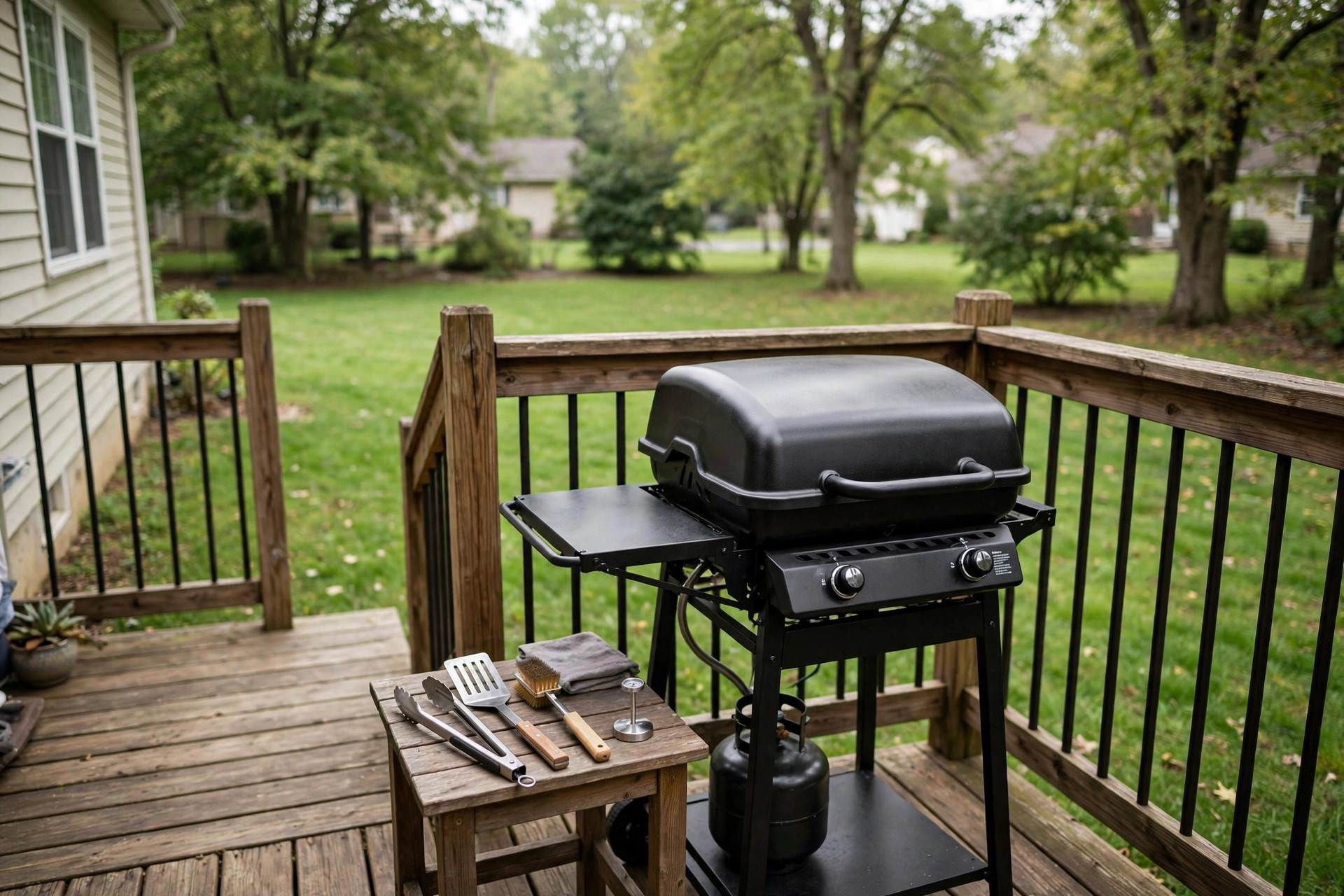
A deck is an outdoor room. Like any room, it needs clear paths and working space. A full-size grill with side shelves open can take up five or six feet of width. On a ten-by-ten deck, that is half the floor. A compact grill keeps the working area open and still cooks a full family meal. Most decks also have railings on two or three sides. Heat and smoke rise along those rails. A grill placed close to a rail needs steady airflow and safe distance from wood. The best outdoor grill for small deck owners is often a two-burner gas grill, a tabletop model, or a compact kettle that tucks against the rail when not in use.
Think about how you cook week to week. If you grill burgers and chicken for four people, a grill with about 300 square inches of cooking space is plenty. If you host large parties, a small deck may be the wrong place for the main cook anyway. Match the grill to your normal routine, not your biggest party of the year. This single choice will guide every other decision.
What to Look for When You Choose: Best Outdoor Grill for Small Deck
Start with the footprint. Measure your deck and mark the spot where the grill will sit. Leave at least three feet of clear floor in front of the grill. That is your working zone. Then check the grill’s dimensions with the lid open and the side shelf down, because those numbers are larger than the closed size on the box.
Fuel comes next. Gas is clean and quick. Charcoal gives deep smoky flavor. Electric grills suit decks where open flame is not allowed. Pellet grills add wood smoke with push-button ease, but they are often larger. For a small deck, gas and electric win on convenience.
Heat control matters more than the number of burners. Two burners that hold a steady temperature beat four burners that run hot and cold. Look for solid grates, a working thermometer in the lid, and a grease system that drains into a removable pan. Cast iron grates hold heat well and give strong sear marks. Learning how to season cast iron grill grates will keep them smooth and rust-free for years.
Build quality shows in the small parts. Wheels should roll straight. Handles should stay cool. Hinges should feel firm. Thin sheet metal rusts fast and loses heat in wind. A well-built compact grill from a known maker will outlast two cheap ones.
Types of Compact Grills for Tight Spaces
Two-burner gas grills. These are the workhorses of small-deck cooking. They run on a standard propane tank stored under the cart. Most offer 280 to 330 square inches of cooking space. That is enough for about twelve burgers at once. Fold-down side shelves cut the width in half for storage. Major makers such as Weber and Char-Broil both sell proven models in this size. You can compare specs on sites like Weber and Char-Broil before you shop.
Tabletop and portable grills. These sit on a sturdy table or a built-in cart. They weigh less and store inside when the season ends. Many run on small propane canisters, which removes the need for a big tank on a tight deck. The trade-off is cooking space. A tabletop grill feeds two to four people, not a crowd.
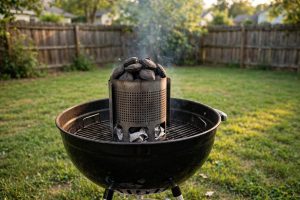
Compact charcoal kettles. The classic kettle shape comes in 18-inch models that suit small decks well. Charcoal asks for more time and skill, but many cooks swear by the flavor. If you love slow-cooked ribs and smoky chicken, read our notes on the best charcoal grill for backyard bbq to see whether a larger model fits your life. For a small deck, the 18-inch kettle is the sweet spot. Brands like Napoleon and Big Green Egg also make compact charcoal cookers worth a look.
Electric grills. Where building rules ban gas and charcoal, electric is the answer. These plug into a standard outlet and heat up fast. They produce less smoke, which your neighbors will thank you for. Infrared electric models sear well. Check that your deck outlet is on a circuit that can handle the draw.
Pellet grills in small sizes. Pellet cooking is loved for set-it-and-forget-it smoking. Full-size pellet grills are too big for most small decks, but tabletop pellet models now exist. They need an outlet for the auger and fan. See the lineup at Traeger if this style interests you.
Recipe sites such as The Spruce Eats and AmazingRibs offer tested guidance on getting the best flavor from any of these types.
Cost and Price: What to Expect
Compact grills span a wide price range. A basic tabletop gas grill may cost under one hundred dollars. A well-built two-burner cart grill usually runs between two hundred and four hundred dollars. Premium compact models with heavy lids, stainless steel, and better warranties can reach five hundred dollars or more.
Price follows materials. Stainless steel resists rust and costs more. Porcelain-coated steel is the common middle ground. Cast aluminum bodies hold heat well and last long. Do not judge by looks alone. Check the warranty on burners and grates. A five-year burner warranty signals a maker that trusts its product.
Running costs are modest. A standard twenty-pound propane tank gives about eighteen to twenty hours of grilling time on medium heat. Charcoal costs more per cook but many users accept the trade for flavor. Electric models add a few cents per hour to your power bill. Budget a little extra for a grill cover, a brush, and a thermometer. A cover alone can double the life of a grill left on a deck year-round.
Independent testing helps at every price point. Consumer Reports publishes grill ratings that compare heating evenness and durability across brands. Retailers like The Home Depot list full specs and owner reviews that reveal how a model performs after a year of real use.
Care and Upkeep
A small deck grill works hard in a small space, so care matters. After each cook, brush the grates while they are still hot. Empty the grease tray before it fills. Grease buildup is the leading cause of flare-ups. Once a month, check the gas hose for cracks and test connections with soapy water. Bubbles mean a leak. Tighten or replace the part before you light the grill again.
Deep clean twice a year. Remove the grates and heat tents. Scrape the firebox. Wash the drip pan. For gas models, pull the burners and clear the ports with a soft brush. Our step-by-step notes on how to clean gas grill burners properly walk through the full process. Charcoal users should empty ash after every cook. Ash holds moisture and speeds rust.
Cover the grill between uses. Even a roofed deck lets in wind-blown rain. A fitted cover keeps water off the metal and keeps spiders out of the burner tubes. In winter, store propane tanks outdoors in an upright position, never in a closed garage or shed.
Safety on a Small Deck
Safety deserves extra attention where space is tight. Place the grill at least three feet from the house wall, the railing, and any overhang. Never grill under a low roof or awning. Keep a spray bottle of water nearby for small flare-ups and a fire extinguisher rated for grease fires within reach of the door.
Read your lease or local rules before you buy. Many apartment buildings and condo associations limit grill types on decks. Some allow gas but ban charcoal. Some ban all open flame above the first floor. Electric grills often pass where others do not. A quick check with the building manager saves an expensive mistake.
Children and pets need a clear boundary. On a small deck, the grill may sit close to the play area. Set a simple rule: no one crosses the working zone while the grill is hot. Let the grill cool fully before you cover it. Lids trap heat for a long time after the burners go off.
Wind is a real factor on raised decks. A gust can blow out a burner or push flames sideways. Most gas grills have wind guards, but a strong crosswind still affects cooking. Position the grill so the prevailing wind hits the back, not the front where you stand. If the wind is too strong, postpone the cook.
Frequently Asked Questions
What size grill fits a small deck? For most small decks, a grill with 280 to 330 square inches of cooking space is ideal. That handles a family meal without eating the whole deck. Measure your space first. Leave three feet of clear floor in front of the grill for safe working room.
Is gas or charcoal better for a small deck? Gas is the practical pick. It lights fast, controls easily, and makes little smoke. Charcoal gives richer flavor but needs more time, more space for safe ash handling, and produces more smoke. If your building allows both, pick the one that matches your cooking style.
Can I use a grill on a wooden deck? Yes, with care. Use a grill mat under the unit to catch grease and sparks. Keep the grill well away from rails and walls. Never leave a lit grill alone. A mat plus proper distance makes wood-deck grilling safe for most setups.
Do I need a grill with side shelves? Side shelves help, but fixed shelves add width. Look for shelves that fold down or remove. On a tight deck, a small side table next to the grill can serve the same purpose without widening the unit.
How long do compact grills last? A well-made grill lasts five to ten years with basic care. Cheap models may fail in two or three. The cover, regular cleaning, and keeping the grill dry matter more than the brand name on the lid. Burner warranties are a good clue to expected life.
Are electric grills any good? Modern electric grills cook well for everyday meals. They heat fast and clean easily. They cannot match the high searing heat of gas or the smoke of charcoal, but for burgers, chicken, and vegetables they do a fine job. They are often the only legal choice on apartment decks.
A Short Final Word
The best outdoor grill for small deck living is the one that fits your space, your fuel rules, and your cooking habits. Measure first. Pick a proven compact model. Keep it clean and covered. Respect the three-foot rule. Do these simple things and your small deck will serve great meals for years. Good grilling does not need a big yard. It needs a good plan and a grill that suits the space you have.
References
AmazingRibs.com. (n.d.). Barbecue and grilling science. https://www.amazingribs.com Big Green Egg. (n.d.). Kamado grills and outdoor cooking. https://www.biggreenegg.com Char-Broil. (n.d.). Gas and charcoal grills. https://www.charbroil.com Consumer Reports. (n.d.). Product reviews and ratings. https://www.consumerreports.org Napoleon. (n.d.). Fireplaces, grills, and heating products. https://www.napoleon.com The Home Depot. (n.d.). Home improvement products. https://www.homedepot.com The Spruce Eats. (n.d.). Recipes and cooking guides. https://www.thespruceeats.com Traeger. (n.d.). Wood pellet grills. https://www.traeger.com Weber. (n.d.). Grills and outdoor cooking. https://www.weber.com
Was this guide helpful?

About Sarah Mitchell
The My Garden US editorial team writes practical, in-depth home and garden guides for American homeowners — tested advice, no fluff.
You May Also Like
How to Make Pulled Pork on Smoker: A Simple Step-by-Step Guide
January 4, 2026 0 views
Best Kamado Grill for the Money: What to Know Before You Buy
May 9, 2026 0 views
Best Grill for Condo Balcony Reviews: What Small-Space Cooks Should Know
February 21, 2026 0 views