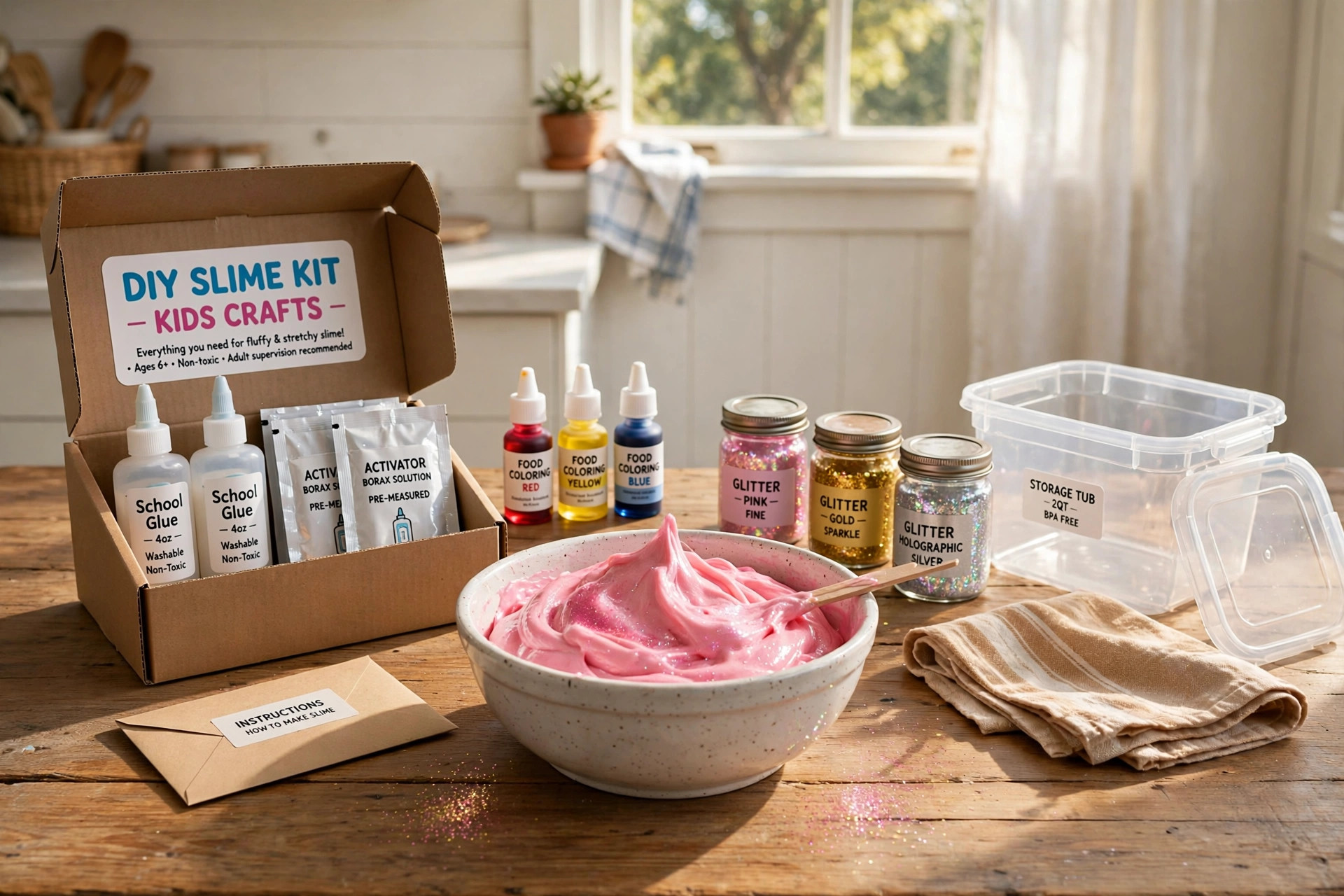

A diy slime kit for kids crafts safe usa shoppers can trust is one of the simplest ways to bring a rainy afternoon back to life. The box holds everything a child needs to mix, stretch, and shape slime at the kitchen table. There is no need to hunt down glue, color, and activator one by one. A good kit puts it all in one place, in amounts sized for small hands. Parents like these kits because the ingredients are measured and the steps are printed on the box. Children like them because the result is real, squishy, and theirs.
Slime has been a favorite of young crafters for years. It teaches mixing and measuring in a way that feels like play. A safe kit keeps that play worry-free. The best kits sold in the United States follow clear safety rules and use non-toxic materials. This guide explains what makes a kit safe, how to pick one for the right age, what the options cost, and how to keep slime fresh after the fun begins.
Why a Slime Kit Matters for Kids Crafts
A slime kit does more than fill an hour. It gives a child a small project with a clear start and a clear finish. The child reads the steps, measures the glue, adds the color, and stirs in the activator. Each step builds patience and care. When the slime turns from a sticky mess into a smooth stretch, the child feels the reward of work done well.
Kits also teach basic science. A child sees how two liquids become a stretchy solid. That simple change opens the door to questions about mixing and materials. A parent can answer those questions while the slime is still warm from stirring. It is learning without a lesson plan.
For families, a kit keeps the mess in check. Loose crafts can spread across a house. A kit with measured packets and one mixing bowl keeps the work in one spot. Most kits also include a storage tub, so the slime has a home when play ends. Compared with buying each item alone, a kit often costs less and wastes less. Stores like Michaels and JOANN stock full shelves of these kits, which shows how steady the demand has become. Families looking for other tabletop projects may also enjoy friendship bracelet kits, which offer the same kind of step-by-step fun.
What to Look for in a Safe Slime Kit: Diy Slime Kit for Kids Crafts Safe Usa
Safety starts on the box. Read the label before you buy. A safe kit states its age range in plain print. Most slime kits are marked for ages six and up. That mark exists for a reason. Small parts and powders can be a risk for toddlers who still put things in their mouths.
Look for the words “non-toxic” on the front. In the United States, craft materials must meet the federal toy safety standard known as ASTM F963. Many brands print that mark on the box. It tells you the product passed tests for harmful substances. A quick check of the U.S. Consumer Product Safety Commission site can help you learn what that standard covers and how to report a problem if one arises.
The ingredient list should be short and clear. Glue, water, baking soda, and a saline or borax-based activator are the common parts. Clear wording is a good sign. Vague terms or missing lists are not.
Ingredients Parents Can Trust
The safest kits use school glue as the base. School glue is water-based and washes out of clothes with warm water. Food coloring or cosmetic-grade color gives the slime its bright look without harsh dyes. The activator is the part that turns glue into slime. Many safe kits use a saline solution or a contact lens solution with borate, added in small measured amounts.
Avoid kits with strong chemical smells. A faint glue smell is normal and fades fast. A sharp or burning smell is not. Put that kit aside and pick another. Also skip kits that ask children to handle raw borax powder on their own. Pre-measured, child-sized packets are far safer than open containers of powder.
Labels and Certifications Worth Noting
Beyond ASTM F963, look for the AP seal from the Art and Creative Materials Institute. That seal means the product was reviewed by a toxicologist and found safe for its stated use. Brands that sell through art supply houses such as Blick often carry this mark. It adds one more layer of trust.
Check that the box lists a maker with a real address or website. A brand that stands behind its product will print contact details. Store brands from big retailers like Target and Home Depot usually meet this test, since those chains hold their suppliers to safety rules.
Types of DIY Slime Kits
Not all slime is the same. Kits come in several styles, and each gives a different kind of play.
Basic slime kits hold white or clear glue, color, and activator. They make the classic stretchy slime most children know. These are the best first kits for beginners.
Fluffy slime kits add shaving cream or a foam base. The result is light and puffy, like whipped topping. It feels soft in the hand but does not stretch as far.
Clear slime kits use clear glue for a glass-like look. Children often add glitter or tiny beads. Clear slime takes longer to turn fully clear, so it suits patient crafters.
Butter slime kits mix in clay to make a smooth, spreadable texture. It feels like soft butter and holds shapes well.
Glow and color-change kits add special pigments. Glow slime needs light to charge before it shines in the dark. Color-change slime shifts shade with warmth from hands.
For a first purchase, a basic kit is the wise choice. It teaches the core steps. Once a child masters those, a fluffy or clear kit adds new fun. A trusted craft brand such as Crayola offers simple starter sets that many parents choose for a first try.
How to Choose the Right Kit for the Age
Age matters more than price. A kit that fits the child will get used. A kit that does not will sit on a shelf.
For ages six to eight, pick a kit with few steps and big print. Pre-measured packets work best. The child can do most of the work with a parent nearby. Avoid kits with many add-ins at this age. Too many choices can turn fun into fuss.
For ages nine to twelve, a child can handle more steps and more mixing. Kits with several colors, glitter, and scents suit this group. They can also try clear slime, which needs more care and waiting. Reading the full label first is still a good habit to build.
For teens, the sky is the limit. Advanced kits with clay, beads, and charms let older kids make slime that looks like a small work of art. Some teens collect slime the way others collect cards. If your teen also sews, a sewing machine cover is a handy way to keep the craft table tidy between projects.
One rule holds for every age. An adult should be present for the first mixing. The adult can read the steps aloud and watch the amounts. After one or two rounds, most older children can work on their own.
Cost and Price
Slime kits are kind to the family budget. Small starter kits often sell for five to ten dollars. These make enough slime for one or two play sessions and are perfect for parties.
Mid-range kits run from ten to twenty dollars. They hold more glue, more colors, and more mix-ins. A kit in this range can keep a child busy for several weekends.
Large deluxe kits cost twenty to forty dollars. They may include dozens of colors, storage tubs, and tools. These suit birthdays or holiday gifts.
Watch for value, not just price. A cheap kit with weak glue makes poor slime and ends in tears. A mid-priced kit from a known maker usually gives better results. Sales at craft chains bring the price down further. Buying just before school breaks often finds the best deals, when stores stock up for holiday crafters.
Care, Storage, and Upkeep
Slime lasts longer with simple care. Keep it in an airtight tub between play sessions. Most kits include one. If not, any clean jar with a lid will do. Air is the enemy of slime. Left out, it dries into a hard lump.
Store slime at room temperature. Heat melts it into soup. Cold makes it stiff and hard to stretch. A shelf in a cool room is ideal. Keep it out of direct sun.
Wash hands before and after play. Clean hands keep dirt out of the slime. They also keep color off the furniture. If slime sticks to fabric, scrape off what you can and wash with warm water. School-glue slime usually washes out with ease.
Slime does not last forever. After two to four weeks of regular play, it turns sticky or tears too easily. That is the sign to make a fresh batch. Throw old slime in the trash, not the sink. It can clog drains. A home project site like Family Handyman notes that glue-based crafts and drains are a poor mix, and plumbers agree.
Safety First
Safe slime play rests on a few plain rules. Follow them every time.
First, no tasting. Slime looks like candy but is not food. Remind young children of this before each session. Store kits out of reach of toddlers and pets.
Second, protect the skin. Most children play with slime bare-handed with no trouble. If a child has cuts, rashes, or very sensitive skin, use the kit another day or have them wear thin gloves. Stop play if skin turns red or itchy, and wash with soap and water.
Third, keep slime away from hair, carpet, and upholstery. Long hair and slime are a bad pair. Tie hair back before play. Work on a washable table or a craft mat.
Fourth, supervise the mixing. The activator does the chemical work, so an adult should handle or at least watch that step with younger kids. Never let a child mix unknown powders from outside the kit into the slime.
Fifth, check recalls now and then. The federal safety agency posts recalls for toys and craft kits that fail tests. A fast search before a birthday purchase takes one minute and buys real peace of mind. Families who garden indoors may also like a herb garden kit for the kitchen windowsill, another safe project for young hands.
Frequently Asked Questions
Is slime safe for kids? Slime from a marked, non-toxic kit is safe for children in the stated age range when used as directed. Adult supervision during mixing is still wise, and children should wash their hands after play.
What age is right for a DIY slime kit? Most kits are marked for ages six and up. Children under six should not use them, since small parts and powders can be a choking or ingestion risk.
Does slime contain borax? Many kits use an activator that contains borate compounds, the same family as borax. Safe kits pre-measure the amount so children handle only a small, tested dose. Choose kits where the activator comes in sealed single-use packets.
How long does homemade slime last? With airtight storage at room temperature, slime stays good for two to four weeks of regular play. When it turns sticky, tears easily, or smells off, throw it away and make a fresh batch.
Can slime stain clothes or furniture? Slime made with school glue usually washes out of washable fabric with warm water. Dark or red dyes can leave a light mark on light cloth. Play in old clothes and on a washable surface to be safe.
Where can I buy a safe slime kit in the USA? Craft stores, big-box retailers, and art supply shops across the country carry tested kits. National craft retailers, home improvement stores like Home Depot, and project resources like This Old House can point you toward reputable brands and safe craft practices.
A Final Word
A diy slime kit for kids crafts safe usa parents can buy with confidence turns an ordinary afternoon into a small workshop. Pick a kit with clear labels, non-toxic parts, and an age range that fits your child. Mix the first batch together. Store it well. When it wears out, make more. The real craft is not the slime itself. It is the time spent side by side, measuring, stirring, and learning how things come together.
References
Blick Art Materials. (n.d.). Art and craft supplies. https://www.dickblick.com Crayola. (n.d.). Creative products for families. https://www.crayola.com Family Handyman. (n.d.). DIY home repair and maintenance. https://www.familyhandyman.com JOANN. (n.d.). Fabric and craft supplies. https://www.joann.com Michaels. (n.d.). Arts and crafts supplies. https://www.michaels.com Target. (n.d.). Retail store. https://www.target.com The Home Depot. (n.d.). Home improvement products. https://www.homedepot.com This Old House. (n.d.). Home renovation guidance. https://www.thisoldhouse.com U.S. Consumer Product Safety Commission. (n.d.). Product safety information. https://www.cpsc.gov
Was this guide helpful?

About Sarah Mitchell
The My Garden US editorial team writes practical, in-depth home and garden guides for American homeowners — tested advice, no fluff.
You May Also Like

Best Yarn for Crochet Blankets: Soft Picks for USA Crafters
May 14, 2026 0 views
The Best Sewing Kit for Beginners: A Practical Guide for Adults and Crafts
September 11, 2026 0 views
The Best Craft Storage Drawers for Beads and Findings
May 18, 2026 0 views