
Learning to crochet should be a pleasure. Many new crafters give up in the first week. The reason is often simple. Their hands ache. Their fingers cramp. The hooks they bought are thin metal sticks with no grip at all. Choosing the best crochet hook set ergonomic for beginners changes that story. A good set holds comfort first. It lets a new crafter work for an hour without pain. It makes the loops even. It turns practice into progress.
This guide explains what to buy, what to skip, and how to care for the hooks you choose. It is written for the person who has never finished a scarf. It uses plain words. It covers grip shape, sizes, materials, price, care, and safety. By the end, you will know exactly what to look for on the shelf or online.
Why the Right Hooks Matter for Beginners
Crochet is a hand craft. The hook is the only tool that touches your hand for hours. A plain metal hook is cheap. It is also thin and hard. It forces the fingers into a tight pinch. After twenty minutes, the thumb joint burns. The wrist stiffens. Many beginners think they are simply bad at crochet. They are not. Their tools are wrong.
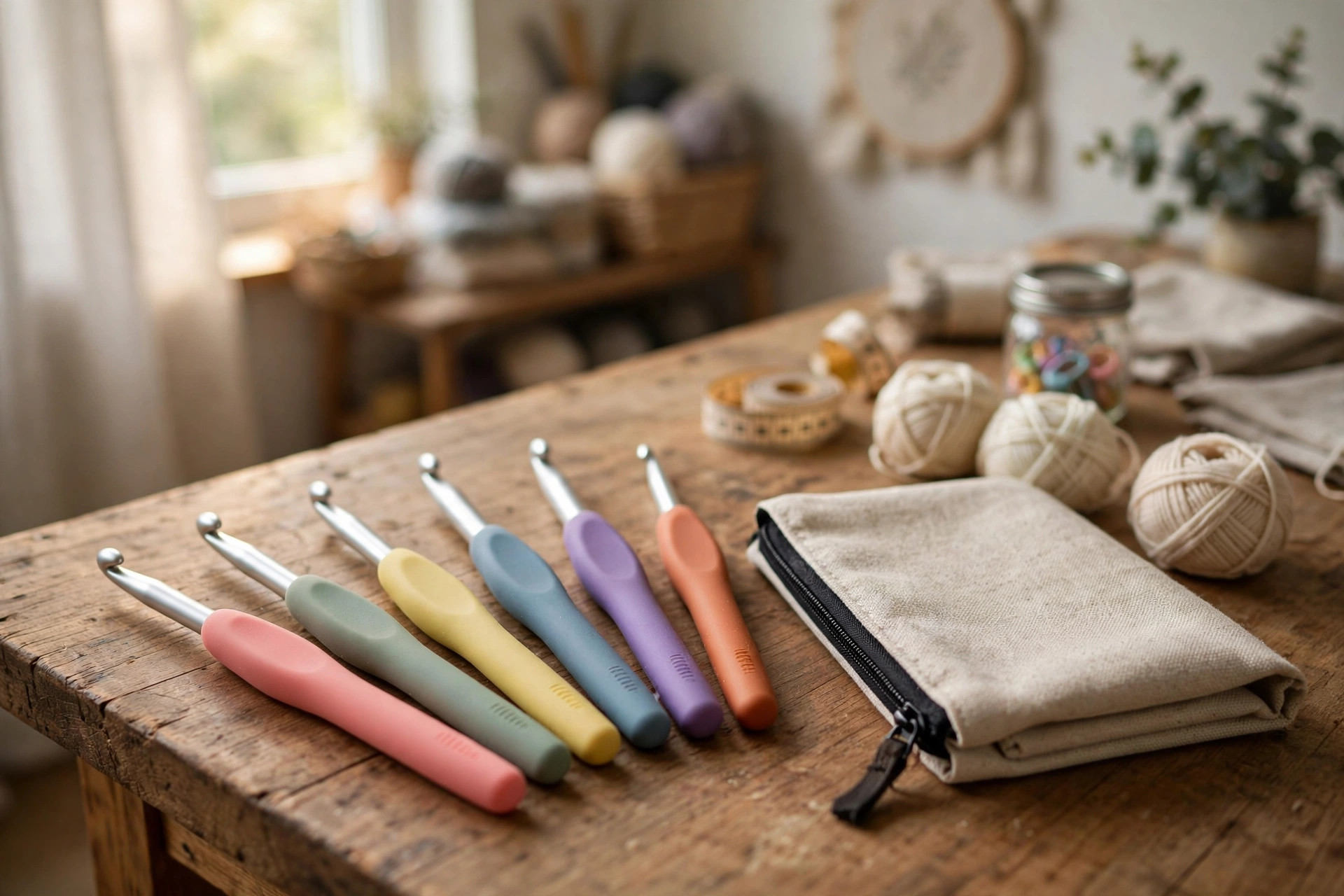
An ergonomic crochet hook set solves this problem. Each hook has a thick, soft handle. The handle fills the palm. It spreads the pressure across more of the hand. The fingers can relax. Work stays comfortable for much longer. For a beginner, comfort is more than luxury. It decides whether the craft becomes a habit or a dusty box in the closet.
Studies of hand tools in many crafts show the same lesson. Tools shaped for the hand reduce strain. The same rule applies here. A beginner who can practice for an hour each day will learn far faster than one who quits after fifteen minutes of pain. That is why the choice of hooks matters more than the choice of yarn at the start.
What to Look for When You Choose a Set: Best Crochet Hook Set Ergonomic for Beginners
A beginner set should include the hooks you will actually use. It should skip the fancy extras you do not need yet. The points below show what matters most.
Handle Shape and Grip
The handle is the heart of an ergonomic set. Look for handles that are thick, rounded, and slightly soft to the touch. Common materials for the grip are rubber, silicone, or smooth plastic with a soft coating. The handle should be wide enough that your fingers do not close all the way around it. If your fingertip touches your palm when you grip the hook, the handle is too thin.
Some handles are straight like a pencil. Others are wider in the middle. Neither shape is wrong. The best choice is the one that feels calm in your hand. If you can, hold a hook before you buy. Many craft shops let you test the display models. If you shop online, read reviews that mention hand comfort. Shoppers with joint pain often leave the most honest notes about grip comfort.
A few sets come with shaped clay or wooden handles. These look pretty. They can also be too bulky for small hands. Beginners are usually better off with a simple, soft rubber grip.
Hook Sizes Included
Crochet hooks are measured in letters or millimeters. A good beginner set should cover the middle range. Look for hooks from about 3.5 mm to 6.5 mm, or US sizes E through K. These sizes match the medium-weight yarns that beginners learn on.
Each hook should have its size printed or stamped on the handle. Beginners lose track of sizes fast. A printed mark saves you from guessing. Some cheap sets skip the markings. Avoid those. You will thank yourself later.
Material of the Hook Tip
The working end of the hook is usually metal, plastic, or bamboo. Aluminum is the most common. It is smooth, light, and lets yarn slide easily. Plastic hooks are light and warm in the hand, but yarn can drag on them. Bamboo hooks are smooth and quiet, but they can be fragile in the smallest sizes.
For a beginner, aluminum hooks with soft handles are the safest pick. They are cheap to make, so the sets cost less. They slide well with standard acrylic yarn. They last for years.
How the Set Is Stored
A case matters more than it seems. Loose hooks roll off tables and vanish into couch cushions. A zippered pouch or a roll-up case keeps every size in order. Look for a case with labeled slots. When each hook has a home, you will always grab the right size. Many beginner sets from craft retailers like Michaels include a simple pouch in the box.
Types of Ergonomic Crochet Hook Sets
Not all ergonomic sets are the same. The three main types are described below.
Rubber grip sets. These are the most popular. Each hook is an aluminum shaft sunk into a thick rubber or silicone handle. They are light, cheap, and very comfortable. Most beginner guides recommend starting here.
Molded handle sets. These hooks have a handle shaped from clay-like or plastic material around the shaft. The grip is often wider and shaped to fit the fingers. They cost a bit more. They suit people with arthritis or weak grip strength. Craft supply reviewers at places like JOANN often point beginners toward these for longer sessions.
Light-up sets. These hooks have a small light in the tip. They help when you work with dark yarn or in low light. The light adds weight and a battery to change. They are fun, but they are not needed for a first set. Learn the basic stitches first. Add specialty tools later.
Some sets also include extras such as stitch markers, a tape measure, yarn needles, and scissors. These extras are handy. They should not decide the purchase. A set with nine well-made hooks and no extras beats a set with five poor hooks and twenty trinkets.
Cost and Price: What You Should Pay
A decent ergonomic crochet hook set for beginners costs between ten and thirty dollars in the United States. Sets at the low end usually include nine to twelve hooks with basic rubber grips. They work fine for learning. Sets at the high end use better grips and sturdier cases. The difference in comfort is real but small.
You do not need to spend fifty dollars or more as a beginner. Expensive sets add polish, not skill. What matters is that the grips are soft, the sizes are marked, and the hooks are smooth. Price guides for home craft tools, like those published by The Spruce, often note that mid-range sets give the best value for new crafters.
Watch out for sets that cost under five dollars. At that price, the grips may be thin or uneven. The hook tips may have rough edges that snag yarn. A snagging hook will ruin your tension and your mood. Spend a little more and start right.
Buy from a store with a fair return policy. If the grips hurt your hands, you should be able to return the set. Large home and craft retailers such as The Home Depot and Dick Blick carry craft tools with clear return terms. Keep the receipt until you have worked with the hooks for a week.
Care and Upkeep of Your Hooks
Good hooks last for decades if you treat them well. The rules are simple.
Store the hooks in their case after each session. Do not toss them loose into a bag. Aluminum shafts bend if they take a hard knock. A bent hook will not pull yarn through loops cleanly.
Wipe the grips with a damp cloth when they feel sticky. Hand oils build up over time. Do not soak rubber or silicone handles in hot water. Heat can loosen the glue that holds the shaft. Dry the hooks fully before you put them away.
Check the hook tips now and then. Run a finger along the throat of each hook. If you feel a rough spot, the hook may snag yarn. A little fine steel wool can smooth a metal hook. If the damage is deep, replace the hook. Single replacement hooks are cheap, and guidance on small tool repair from home project experts reminds crafters that a worn tool is worth replacing, not fighting.
Keep your hooks away from small children and pets. They are not toys. The tips are blunt but the shafts can poke. A closed case on a high shelf is the safest spot.
Safety Notes for New Crafters
Crochet is a safe hobby. A few habits make it safer still.
Sit with good posture. Hunching over your work for an hour will hurt your neck and back. Sit upright. Rest your arms. Take a short break every thirty minutes. Stand, stretch your fingers, and roll your shoulders. These small breaks prevent the soreness that drives beginners away.
Work in good light. Straining to see dark yarn causes eye fatigue and tight shoulders. A simple desk lamp aimed at your hands is enough. Home lighting tips from This Old House stress that task lighting reduces strain for any close hand work, and crochet is no exception.
Keep scissors and yarn needles capped or cased. These small tools are sharp. Store them with the hooks so they do not hide in chair cushions.
If you have arthritis, carpal tunnel, or another hand condition, talk to your doctor before long craft sessions. Ergonomic hooks help, but they do not replace medical advice. Many crafters with joint pain also find that Family Handyman’s workshop comfort guides offer useful ideas for setting up a pain-free work space.
Frequently Asked Questions
How many hooks does a beginner really need? Nine to twelve hooks cover everything a beginner will make. The key sizes are 4 mm, 5 mm, 5.5 mm, and 6 mm. These match the medium-weight yarn used in most first projects. A set that spans US E to K will serve you for your first year.
Are ergonomic hooks worth it for a total beginner? Yes. They cost only a little more than plain hooks. The comfort difference is large. A beginner who is comfortable will practice more. Practice is what builds skill. Think of it as buying patience in tool form.
Which is better for beginners, inline or tapered hooks? Inline hooks have a head that lines up with the shaft. Tapered hooks have a rounded head. Most American beginners learn on tapered hooks, such as the classic Boye style. Inline hooks, like the Bates style, can split yarn more easily in new hands. Start with tapered. Try inline later if you are curious.
Can children use ergonomic crochet hooks? Yes, with adult supervision. The soft grips are easier for small hands to hold. Choose larger hooks, around 6 mm or bigger, and thick yarn. The stitches are easier to see and the work goes faster, which keeps a child interested.
What yarn should I pair with my first hook set? Use a smooth, light-colored, medium-weight acrylic yarn. Light colors let you see each stitch. Smooth yarn slides on the hook without splitting. Save the dark, fuzzy, or fancy yarns for later. A simple soft yarn for crochet blankets is a fine first purchase and will also serve future projects.
Do I need anything else besides hooks and yarn? A small pair of scissors, a tape measure, and a yarn needle for weaving in ends will cover your first projects. Stitch markers help you count. Many beginners also enjoy a simple sewing kit for beginners for finishing work, and a cross stitch kit makes a nice second craft to try once crochet feels easy.
A Final Word
The best crochet hook set ergonomic for beginners is the one that feels good in your hand, covers the common sizes, and does not cost too much. Comfort comes first. Markings come second. Extras come last. Buy a mid-range rubber grip set from a store you trust. Pair it with smooth, light yarn. Practice a little each day.
Crochet rewards patience. The first chain stitch looks lumpy. The tenth looks better. The hundredth looks neat. Good tools make those first hundred stitches far less painful. Start with hooks that treat your hands kindly, and the craft will treat you kindly in return.
References
Blick Art Materials. (n.d.). Art and craft supplies. https://www.dickblick.com Bob Vila. (n.d.). Home improvement advice. https://www.bobvila.com Family Handyman. (n.d.). DIY home repair and maintenance. https://www.familyhandyman.com JOANN. (n.d.). Fabric and craft supplies. https://www.joann.com Michaels. (n.d.). Arts and crafts supplies. https://www.michaels.com The Home Depot. (n.d.). Home improvement products. https://www.homedepot.com The Spruce. (n.d.). Home and garden advice. https://www.thespruce.com This Old House. (n.d.). Home renovation guidance. https://www.thisoldhouse.com
Was this guide helpful?

About David Wilson
The My Garden US editorial team writes practical, in-depth home and garden guides for American homeowners — tested advice, no fluff.
You May Also Like
How to Choose the Best Heat Gun for Embossing and Crafts
October 4, 2026 1 views
Felt Craft Kit for Kids Sewing Projects Home: A Parent’s Guide
August 29, 2026 0 views
The Best Yarn for Baby Blankets: Soft, Washable Choices That Last
April 25, 2026 0 views