
A Craft You Can Start at the Kitchen Table
A pottery wheel for home beginners clay art is a simple machine that turns wet clay while your hands shape it into bowls, cups, and vases. Many people think of pottery as work for a large studio with tall kilns and dusty shelves. That picture is true for some potters, but it is not the whole story. A small electric wheel fits in a spare room or a garage corner, and it opens the door to a craft that has been with us for thousands of years.
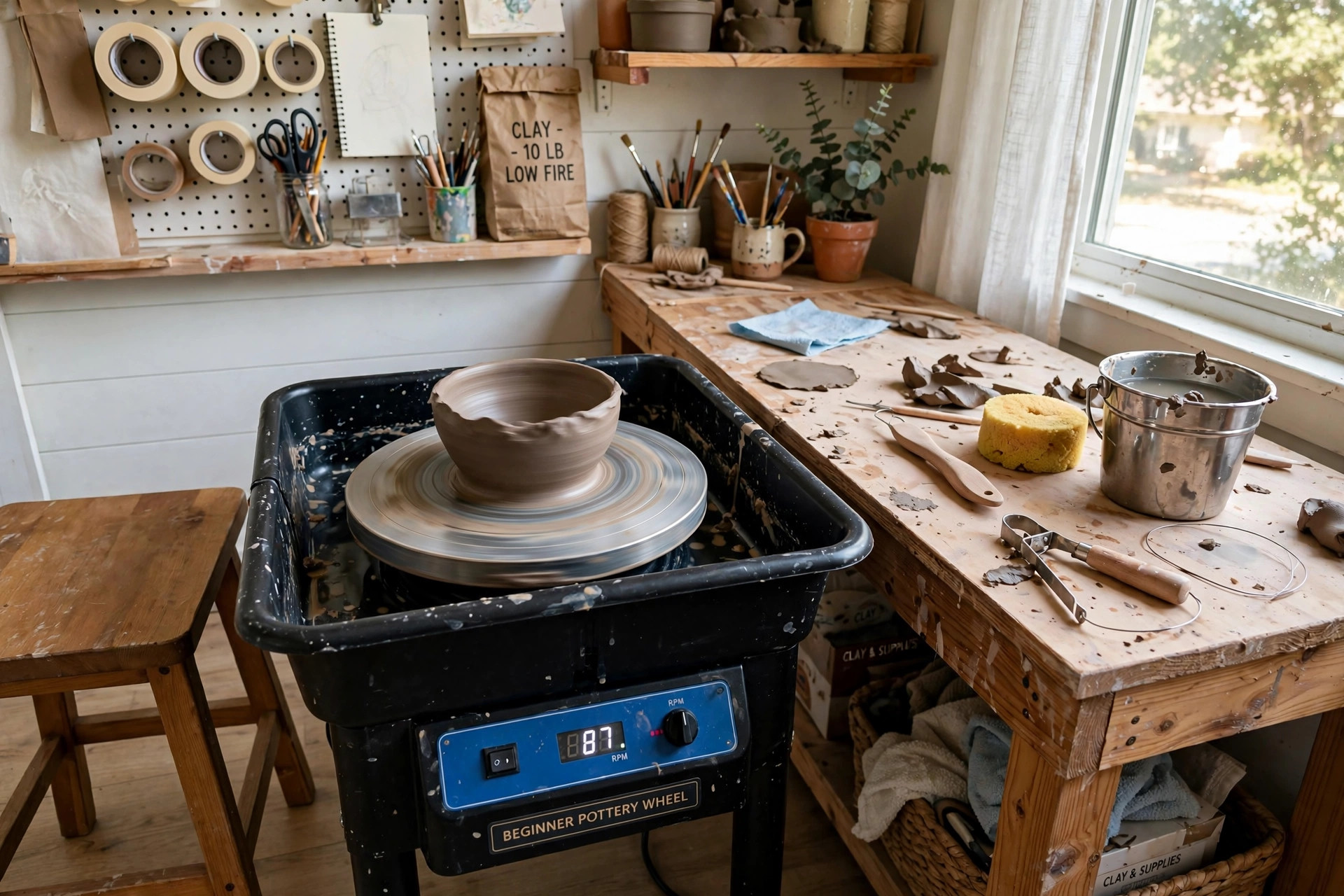
The wheel has a flat round head that spins. You place a ball of clay in the middle, press it with wet hands, and guide it into a shape. Most new potters spend their first sessions learning to center the clay, which is the single skill that makes everything else possible. It is honest work. Your hands feel every change in the clay, and you learn by touch.
A home wheel lets you practice on your own time. Clay art rewards short, steady sessions: thirty minutes a day at your own wheel will teach you more than one long class each month. You also save the cost of studio fees and open studio hours, which add up fast over a year.
This guide walks you through the whole matter in plain terms: why a wheel matters, what to look for when you buy one, the types you will meet, what they cost, how to care for them, and how to stay safe. It is written for a beginner who owns nothing yet and wants to start well.
Why It Matters: Pottery Wheel for Home Beginners Clay Art
Hand-built work tends toward square and free shapes. The wheel gives you round forms: bowls, mugs, plates, jars. These are the pieces you will use every day in your own home, and that fact keeps many beginners going through the hard first weeks.
There is also a health note worth making. Pottery work uses the hands, the wrists, and the shoulders in a gentle way. It asks for focus but not for force. Many people find that an hour at the wheel clears the mind the way a walk does. The craft is slow by nature. You cannot hurry clay. That pace is part of its worth in a loud, fast world.
A home setup also lets you share the craft with family. Older children can learn to center small lumps of clay, and a grandparent can shape a small dish. Like other home crafts that have moved into the living room, such as the resin art kit for beginners jewelry making, pottery turns idle hours into something real you can hold.
What to Look For and How to Choose
Buying your first wheel can feel heavy because the choices look alike. Keep these points in mind, and the field narrows fast.
Wheel Head Size
The wheel head is the flat disk where the clay sits. For a beginner, a head of ten inches or more is a sound choice. It gives you room to center lumps of clay up to three or four pounds. Smaller heads work for tiny pieces, but they fight you when you try a real bowl. You do not need the largest head made. A mid-size head suits most home work.
Motor and Speed
Most beginner wheels are electric and run on standard home power. Look for a motor of one quarter to one third horsepower. That is enough to center several pounds of clay without straining. A foot pedal controls the speed, which leaves both hands free for the clay. Some wheels use a hand lever instead. Pedals feel more natural to most beginners.
Speed control should be smooth from very slow to fast. You will center clay at medium speed, shape at slow speed, and smooth rims at high speed. Jerky controls make smooth work hard.
Splash Pan
The splash pan is the tray that catches water and clay spray around the wheel head. A two-piece pan lifts off in parts, which makes cleaning much easier than a one-piece pan that must slide over the head. This small detail matters every day you throw. Ask for a wheel with a removable pan before you buy.
Table or Leg Model
Some wheels stand on legs. Others are tabletop models that sit on a sturdy bench and cost less. A full-size stand model feels more steady under load. If your room is small, a tabletop wheel on a solid bench works well, and a good craft table with storage for sewing room can double as your wedging bench.
Noise and Weight
Electric wheels hum, and cheaper models hum louder. If you will work in an apartment, read reviews about noise before you choose. A wheel of forty to sixty pounds stays put while you work but can still move by car when needed.
What Comes in the Box
A beginner needs more than the wheel alone. Most starter bundles add a wire tool for cutting clay, wooden ribs for shaping, a sponge, a needle tool, and a trimming tool. These tools are cheap one by one, but a bundle saves you a first trip to the craft store. You will also need clay, which most makers sell by the box.
Trusted supply sites can show you the range of bundles and prices before you commit. Browse the tool departments at Michaels and Joann, and check the craft sections of Home Depot and Lowe’s. For deeper guidance on tools, Dick Blick carries the full line of studio gear.
Types and Options
Three broad types of wheels meet the home beginner.
Electric wheels are the common choice. They plug into a wall outlet, run quiet enough for a spare room, and need no water lines or special wiring. They suit nearly every home beginner.
Kick wheels turn by foot power through a heavy flywheel. They are quiet, they never break down in an electrical sense, and they build leg strength. But they are heavy, they cost more, and they demand a steady foot rhythm that takes time to learn. A few beginners love them. Most start electric.
Tabletop mini wheels are small electric wheels for tiny work: doll dishes, small ornaments, and practice pieces. They cost little and store in a closet. They are fine as a second wheel or a gift for a child, but they are not a path to real bowls and mugs. Do not buy one as your only wheel unless your space is truly tiny.
Clay comes in types too. Stoneware is the workhorse clay for beginners. It is strong, forgiving, and fires well in most kilns. Earthenware is softer but weaker when done. Porcelain is smooth, white, and the hardest clay for a beginner because it slumps fast. Start with stoneware.
Do you need a kiln? Firing turns soft clay into hard pottery. But many beginners skip buying one at first. Community studios, art centers, and some craft shops fire your pieces for a small fee per shelf. Ask around before you spend thousands on your own kiln; home firing is a later step.
Cost and Price
A fair question: what will this cost? Here are honest ranges in dollars, as of the mid-2020s.
– Entry electric wheel: 200 to 500 dollars. These wheels center a few pounds of clay and last several years with care. – Mid-range wheel: 600 to 1,200 dollars. Smoother speed, stronger motor, better splash pan. The best value for a serious beginner. – Studio-grade wheel: 1,200 dollars and up. Built for daily heavy use. More than most home beginners need at first. – Starter tool kit: 20 to 50 dollars if not bundled with the wheel. – Clay: about 25 to 40 dollars for a 25-pound box of stoneware. – Firing fees: 5 to 25 dollars per shelf at a local studio, depending on the town.
Total for a real start: about 300 to 700 dollars for wheel, tools, and clay, plus firing fees as you go — about the same as other serious home crafts.
Second-hand wheels can cut the cost in half. Potters sell good wheels when they move or upgrade. Check local listings and studio bulletin boards. Test a used wheel before you pay: run it at low speed, feel for wobble in the head, and listen for grinding in the motor.
Care and Upkeep
A pottery wheel asks for little, but it asks on time. Follow these habits and it will serve you for years.
After each session, wipe the wheel head and the splash pan with a damp sponge. Let clay dry and it turns to dust, and clay dust in the air is bad for the lungs. Wet-wipe everything and mop the floor instead of sweeping.
Once a month, check the belt if your wheel has one. Some wheels use a belt drive, and a loose belt slips at low speed. A small adjustment or a new belt costs little. Oil any points the manual names. Keep the motor vents clear of clay.
Store clay right. Keep clay bags sealed and in a cool place, and buy only what you will use in a few months.
Mind the drain. Never wash clay down the sink. Clay settles in pipes and hardens. Settle your wash water in a bucket, pour off the clear water, and throw the sludge in the trash. This is the one rule every beginner must learn on day one.
General home maintenance know-how helps here too. The repair guides at Family Handyman and This Old House teach the same habits of clean-and-check that keep a wheel running. For room setup ideas, Bob Vila covers home workspaces well.
Safety
Pottery is a safe craft, but it has real risks. Take them in hand.
Silica dust. Dry clay holds fine silica, which can harm the lungs if breathed in over years. The fix is simple: never let clay dry out and sweep, and always wet-wipe surfaces. If you sand dry pieces, wear a dust mask rated for fine particles. A box of modeling clay for kids crafts home is safer for young children than real pottery clay, which needs firing and dust care.
Back and wrist strain. You will lean over the wheel and press with your hands. Sit so your elbows rest near your body and your back stays fairly straight. Take a break every half hour. Wedging clay is the hardest physical task; learn the ram’s-head or spiral method from a teacher rather than forcing it.
Electrical care. Keep water away from the motor and the pedal. Wipe spills fast. Do not run the wheel with a damaged cord. These points sound small, but water and power share the same small room in pottery, so respect them.
Kiln safety, when you get there. Kilns run very hot. They need a clear space around them, a floor that can take heat, and good air flow. If you fire at home later, read the kiln manual with care and keep a fire extinguisher near.
Frequently Asked Questions
How long does it take to learn the pottery wheel? Plan on ten to twenty hours at the wheel before centering feels natural. Most beginners make a decent small bowl by the third week of steady practice.
Can I use a pottery wheel in an apartment? Yes, with care. Electric wheels are quiet enough for most apartments. Use a splash pan, mop up after each session, and find a studio or shop that fires for a fee.
What is the best clay for a beginner? Stoneware clay of medium texture. It centers well, stands up under your hands, and fires strong. Ask your local supplier for a “beginner stoneware” or a cone 6 stoneware body. Avoid porcelain until your hands know the work.
Do I need a teacher, or can I learn alone? Many potters learn alone with books and videos, and it can be done. But one or two lessons at the start save weeks of bad habits. A teacher will correct your hand position and centering in a single hour.
How much space does a wheel take? A stand wheel needs about four square feet of floor, plus room for a stool, a water bucket, and a small tool table. A corner of a garage, a spare room, or a covered porch all work. Ventilation matters more than size: fresh air keeps dust down and makes long sessions pleasant.
Can children use a real pottery wheel? Older children, around ten and up, can learn on a real wheel with close adult help. The pedal, the spinning head, and the wet clay are all safe under watch. Younger children do better with air-dry or polymer clays that need no wheel and no kiln.
A Final Word
A pottery wheel for home beginners clay art is not a toy and not a shortcut. It is a real tool for a real craft, and it asks for patience. Your first pieces will wobble. Your bowls will be thick and your rims will be uneven. That is the honest price of learning, and every potter alive has paid it.
But the craft pays back. One day a bowl comes off the wheel that holds its shape. You trim its foot, fire it, glaze it, and eat soup from it. Start with a sound wheel, keep your space clean, practice a little each day, and let the clay teach you.
References
Blick Art Materials. (n.d.). Art and craft supplies. https://www.dickblick.com Bob Vila. (n.d.). Home improvement advice. https://www.bobvila.com Family Handyman. (n.d.). DIY home repair and maintenance. https://www.familyhandyman.com JOANN. (n.d.). Fabric and craft supplies. https://www.joann.com Lowe’s. (n.d.). Home improvement products. https://www.lowes.com Michaels. (n.d.). Arts and crafts supplies. https://www.michaels.com The Home Depot. (n.d.). Home improvement products. https://www.homedepot.com This Old House. (n.d.). Home renovation guidance. https://www.thisoldhouse.com
Was this guide helpful?

About James Carter
The My Garden US editorial team writes practical, in-depth home and garden guides for American homeowners — tested advice, no fluff.
You May Also Like
The Best Craft Table Foldable for Small Apartments: A Practical Guide
February 19, 2026 0 views
Best Chalk Paint for Furniture DIY Projects
March 29, 2026 0 views
Wooden Bead Kit for Garland and Crafts DIY: A Plain Guide
February 16, 2026 0 views