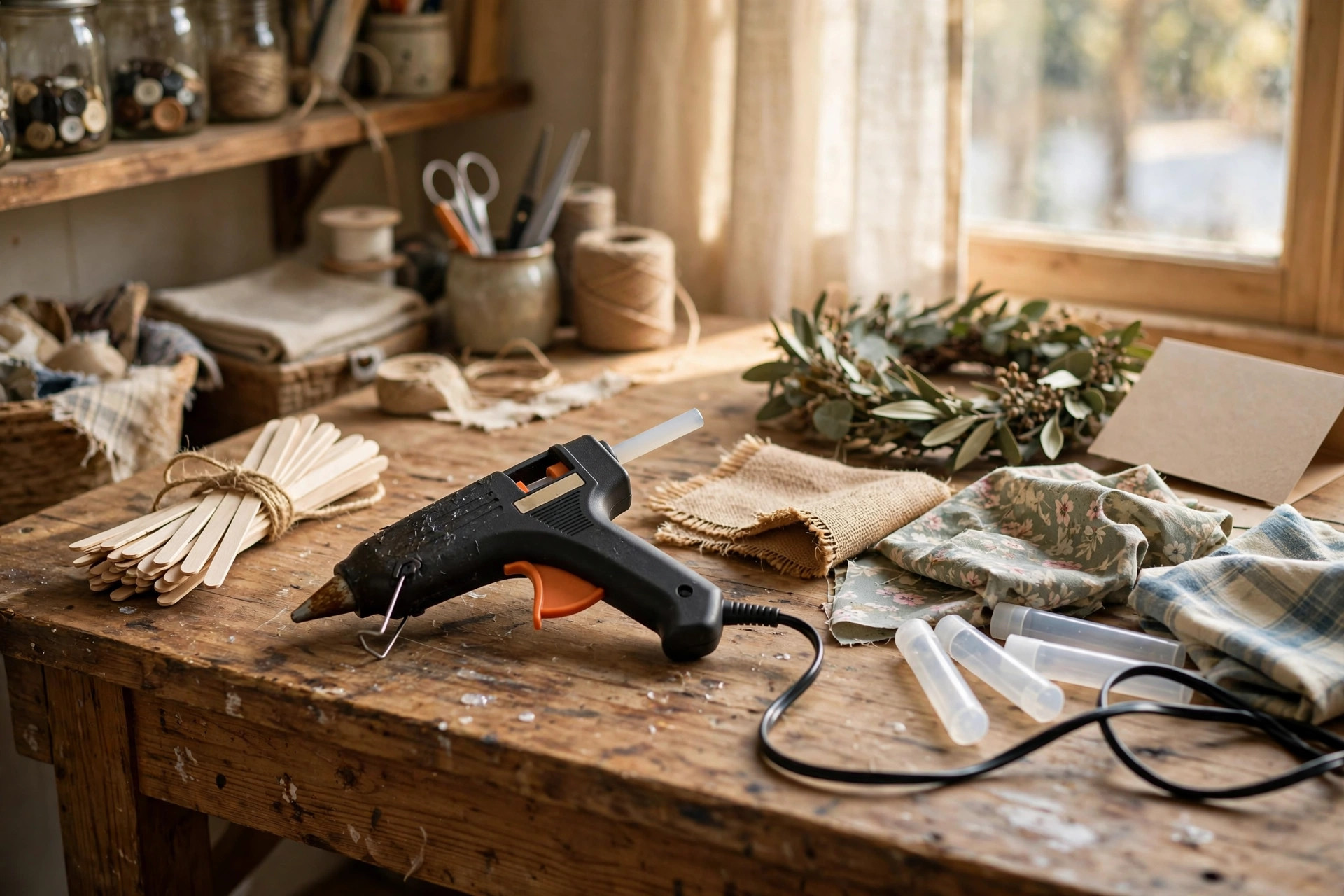

A hot glue gun is one of the most useful tools in a home craft room. It joins wood to fabric, paper to foam, and ribbon to glass. It dries fast and holds firm. The best hot glue gun for craft projects home makers choose is not always the most costly one. It is the one that fits the work at hand and is safe to use.
This guide explains what to look for in a craft glue gun buying guide. It covers sizes, heat settings, nozzle shapes, and glue stick types. It also gives plain advice on cost, care, and safety. By the end, a reader will know how to pick a good gun for hot glue gun for home crafts of every kind.
Why a Good Hot Glue Gun Matters at Home
Many craft projects fail at the joint. A wreath falls apart on the door. A school project comes loose in the backpack. In most cases, the glue was wrong for the task, not the crafter.
Hot glue bonds fast. Within a minute, most joints hold. This speed lets a maker move from one part to the next without long waits. A parent can finish a school project in one evening. A gift can be wrapped and sealed on the same day.
Hot glue also works on many surfaces. Wood, fabric, paper, cardboard, plastic, and foam all take hot glue well. Few other household adhesives cover so many materials with one tool. That is why a single glue gun can serve a whole family of crafters.
The bond is strong but not forever. Hot glue can often be peeled or softened with heat. This makes it kind to mistakes. A crooked piece can be pulled off and set again. This forgiving nature suits home crafters who are still learning.
What to Look for When You Choose: Best Hot Glue Gun for Craft Projects Home
Choosing the best glue gun for home use starts with a few basic traits.
Size and Glue Stick Diameter
Glue guns come in two main sizes. Mini guns take thin sticks, about a quarter of an inch wide. Full-size guns take sticks nearly half an inch wide. Mini guns are light and easy to steer. They suit paper crafts and small repairs. Full-size guns push more glue with each trigger pull. They suit wood crafts, wreaths, and heavy decorations. If the budget allows only one, paper and light crafts point to a mini gun, while wood and wreath projects point to a full-size gun.
High Heat, Low Heat, or Dual Heat
High-heat guns melt glue at about 380 degrees Fahrenheit and give a very strong bond on wood and plastic. Low-heat guns melt glue at about 250 degrees and suit delicate materials like lace and foam. Dual-heat guns switch between both settings. They cost a little more, but they are the best value for a home with mixed projects.
Nozzle Shape and Trigger
A long, thin nozzle reaches into tight corners. A wide nozzle lays down more glue for broad joints. Some guns come with changeable nozzles, which is a welcome extra. A smooth trigger with a light pull is easier on the hand during long sessions. Cheap guns often have stiff triggers that tire the fingers.
Corded or Cordless
Most home glue guns plug into a wall outlet. Corded guns give steady heat and never run out of power mid-project. Cordless guns charge on a stand, then unplug for a few minutes of free work. This freedom helps with large wreaths and projects that move around the house. For most home crafters, a corded gun is enough.
Stand and Safety Features
A folding wire stand keeps the hot nozzle off the table. Look also for an insulated nozzle cover, an on and off switch, and a light that shows when the gun is on. The light is a simple feature, but it reminds the crafter that the tool is hot and plugged in.
Types of Hot Glue Guns for Home Crafters
Home stores and craft sites sell several kinds of glue guns. Basic mini glue guns are small and light, and they suit paper and light fabric work. Full-size craft glue guns take thick sticks and bond wood and cardboard with ease. Guides at craft retailers show a wide range of these models.
Dual-heat adjustable guns switch between high and low heat. They suit homes where one person does paper crafts and another builds wood signs. Battery and cordless guns charge on a base and work free of a cord for a time. Precision guns with fine tips suit jewelry and card making; a reader who enjoys small detailed work may also like our jewelry making kits for beginners.
Matching the Glue Gun to the Project
Paper and card crafts do best with a low-heat mini gun. Thin paper burns under high heat. Fabric projects like costumes and no-sew hems work well with a full-size gun on high heat. The thicker bead of glue grips the fibers.
Wood crafts need high heat and full-size sticks. Picture frames, wood craft blanks, and painted signs all take a hot, thick bead. These projects pair well with wood craft blanks for painting and signs.
Wreaths and door decor need a full-size gun with plenty of sticks on hand. A wreath may use twenty sticks or more. See also our guide to wreath making kits for the front door. Floral arrangements need a low or dual-heat gun, since silk flowers and foam melt under too much heat.
Glue Sticks: The Half of the Job People Forget
The gun gets the attention, but the glue stick does the bonding. All-purpose sticks suit most home crafts. High-heat sticks form stronger bonds on wood and plastic. Low-heat sticks protect foam, lace, and thin plastic from warping. Colored and glitter sticks add decoration as they bond. Craft sites like JOANN stock many colors. Fabric sticks grip cloth better than plain sticks, and outdoor sticks resist moisture for porch decor.
Always check that the stick diameter matches the gun. Keep sticks in a sealed bag away from dust and sun. Old, dusty sticks can jam the feed.
Cost and Price: What to Expect
A basic mini gun costs only a few dollars. A good dual-heat full-size gun costs between fifteen and forty dollars. Premium cordless models can pass sixty dollars. For most homes, the sweet spot sits in the middle. A fifteen to thirty dollar dual-heat gun gives years of service. Very cheap guns often have poor stands, stiff triggers, and uneven heat.
Glue sticks add to the cost. Buying sticks in larger packs cuts the cost per stick. Homes that craft often should keep a good stock, since a wreath or a large sign can empty a small pack fast. Price checks at stores like The Home Depot help set a fair budget.
Care and Upkeep
Unplug the gun when the work is done. Let it cool on its stand before putting it away. Never wrap the cord tight around the hot gun; heat damages cord insulation over time. After each session, wipe the nozzle with a folded paper towel while it is still warm. Do not use fingers.
Store sticks in a dry place. Damp sticks can sputter as they melt. Check the cord now and then for cracks or fraying. A damaged cord is a fire risk. If the gun stops feeding, check for a stuck stick. Unplug the gun, let it cool, and clear the feed tube with a wooden skewer, never with a metal tool while the gun is plugged in.
Safety at the Home Craft Table
High-heat guns melt glue near 380 degrees Fahrenheit, and that heat burns skin fast. Keep children away from hot guns unless an adult is guiding their hands. Some families use low-heat guns for older children, which is a safer choice. Safety guidance from the U.S. Consumer Product Safety Commission is worth reading before buying craft tools for kids.
Work on a heat-safe surface such as a silicone mat. For a burn, cool the skin under cool running water for several minutes. Do not peel dried glue off burned skin. Unplug the gun when it is not in use, even during a short break. Keep glue sticks and the gun out of reach of toddlers, since the sticks look like crayons to a small child.
Work in a room with fresh air. Hot glue gives off a mild smell as it melts. Suppliers such as AdTech and Gorilla Glue publish simple safety sheets for their sticks that answer most questions.
How to Use a Hot Glue Gun Well
1. Plug in the gun and set it on its stand. Wait five minutes for full heat. 2. Load a stick into the back and push it in until it seats. 3. Test on scrap first to check the flow and the heat. 4. Apply glue to one surface, not both. A thin, even bead works better than a big blob. 5. Press the parts together within seconds and hold for twenty to thirty seconds. 6. Trim strings with scissors after the glue cools. 7. Unplug when done and let the gun cool on its stand before storage.
Practice on scrap teaches more than any guide. The feel of the trigger and the timing of the press become natural fast.
Common Mistakes and How to Avoid Them
Using the wrong heat is the first mistake. High heat on foam melts the foam; low heat on wood gives a weak joint. Match the heat to the material. Using too much glue is the second. A thick blob does not hold better than a thin bead; it only makes a mess. Joining dirty surfaces is the third. A quick wipe with a dry cloth before gluing improves the hold.
Moving the joint too soon is the fourth. Hot glue needs twenty to thirty seconds to set, so hold still and count. Leaving the gun plugged in is the fifth. Make unplugging the last step of every session. Reviews from sources like Consumer Reports and project ideas at This Old House can help a buyer compare models before spending money.
Where to Shop and What to Ask
Big craft stores carry the widest range of craft models and sticks. Home improvement stores carry sturdy full-size guns and bulk stick packs. Art supply shops like Blick carry precision and specialty models. Repair and project tips from Family Handyman and Bob Vila show what a good gun can do beyond simple crafts.
When shopping, check the stick size it takes, the heat setting, the stand and on-off light, and what reviews say about the trigger feel. Buying a second pack of sticks at the same time is wise, since most new guns include only a few sticks.
Frequently Asked Questions
What is the best hot glue gun for craft projects home beginners should buy?
A dual-heat full-size gun from a known craft brand is the best first buy. It handles paper, fabric, wood, and wreaths. The dual heat setting protects delicate materials and still bonds heavy ones. Keep a pack of all-purpose sticks with it.
Can a hot glue gun replace wood glue?
No, not for joints that carry weight. Hot glue holds light repairs and craft joints well. For chairs, shelves, and furniture, use real wood glue and clamps.
How long does hot glue take to dry?
Most hot glue sets in twenty to thirty seconds and reaches full strength in a few minutes. Hold the joint still until it firms.
Is hot glue safe for kids crafts?
With care, yes. Low-heat guns are safer for older children working with an adult. Young children should not handle a hot gun. Let kids plan and place pieces while an adult does the gluing.
Why does my glue gun drip?
Most guns drip a little as they heat and cool. Wipe the nozzle clean, unplug between tasks, and rest the gun on its stand or a drip pad.
Can I use a hot glue gun outdoors?
Yes, for light outdoor decor, with outdoor-rated sticks. Heat and cold still affect the bond over time. For items that must last through rain and sun, check that both the sticks and the surfaces suit outdoor use.
A Short Final Word
The best hot glue gun for craft projects home crafters can buy is the one that matches their real projects. A dual-heat full-size gun with a good stand, a smooth trigger, and a bag of the right sticks will serve most homes for years. Keep safety first, unplug when done, and practice on scrap. The joints will be clean, the wreaths will hold, and the craft table will stay a happy place.
References
AdTech. (n.d.). Adhesives and glue guns. https://www.adtech.com Blick Art Materials. (n.d.). Art and craft supplies. https://www.dickblick.com Bob Vila. (n.d.). Home improvement advice. https://www.bobvila.com Consumer Reports. (n.d.). Product reviews and ratings. https://www.consumerreports.org Family Handyman. (n.d.). DIY home repair and maintenance. https://www.familyhandyman.com Gorilla Glue. (n.d.). Adhesives. https://www.gorillaglue.com JOANN. (n.d.). Fabric and craft supplies. https://www.joann.com Michaels. (n.d.). Arts and crafts supplies. https://www.michaels.com The Home Depot. (n.d.). Home improvement products. https://www.homedepot.com This Old House. (n.d.). Home renovation guidance. https://www.thisoldhouse.com U.S. Consumer Product Safety Commission. (n.d.). Product safety information. https://www.cpsc.gov
Was this guide helpful?

About Lisa Anderson
The My Garden US editorial team writes practical, in-depth home and garden guides for American homeowners — tested advice, no fluff.
You May Also Like
Air Dry Clay Kit for Pottery at Home: The Simple Way to Make Real Pottery Without a Kiln
March 6, 2026 0 views
How to Choose a Paint Palette for Acrylics Mixing at Home
July 27, 2026 0 views
The Best Craft Paper Trimmer for Precise Cuts
May 31, 2026 0 views