
A child outgrows a crib faster than most parents expect. One day the rails feel safe. The next day the same child is climbing over them. The best toddler bed with storage for toys solves two problems at once. It gives the child a low bed that feels grown up. It also hides the toys that used to live all over the floor.
Many families face the same small crisis. The crib is too small. The toys are everywhere. The bedroom is small too. A bed that stores toys inside it answers all three worries. This guide explains why the idea works, what types exist, what they cost, and how to choose one that will last through the toddler years.
Why It Matters
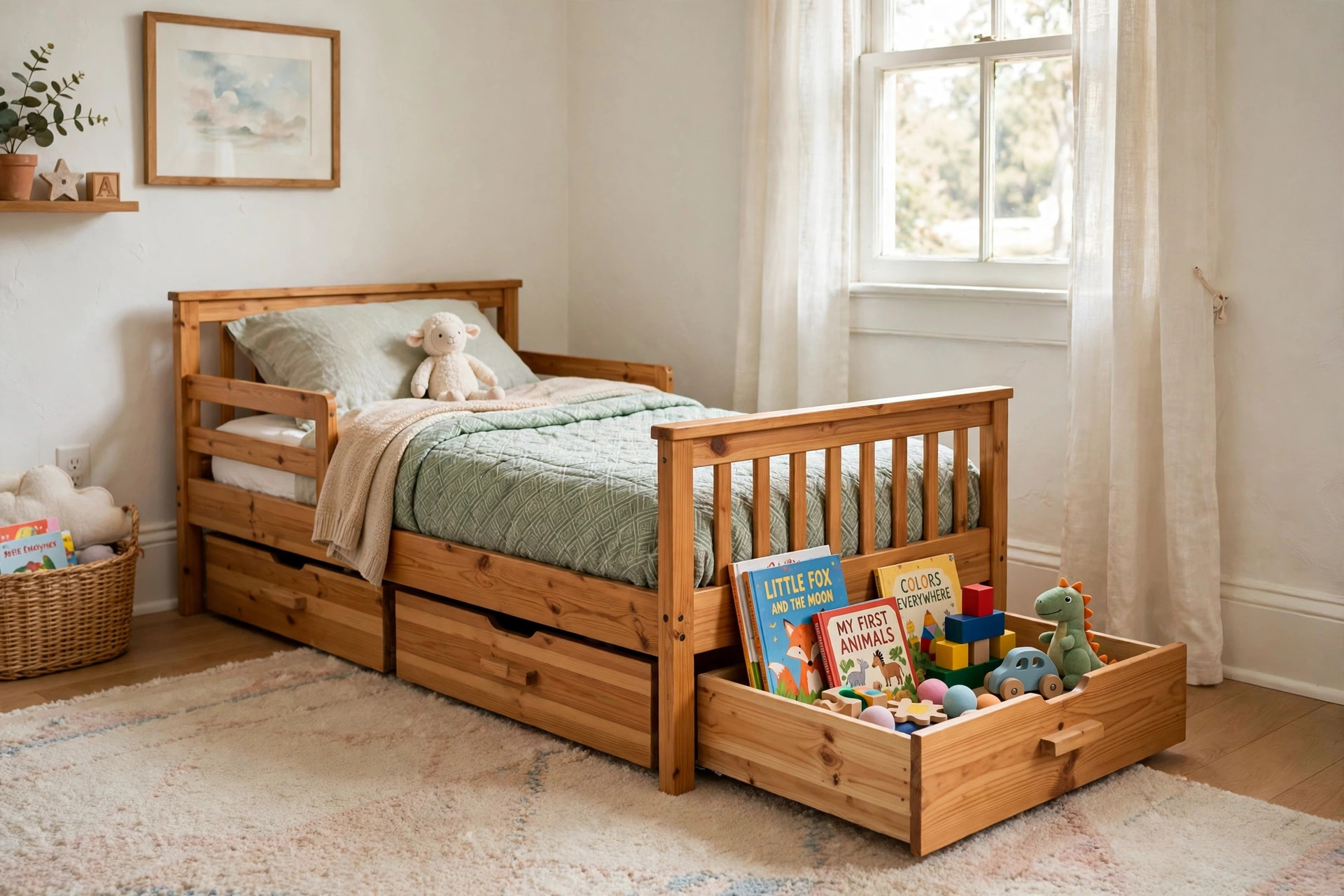
A toddler room is small. The child owns a large number of toys. A plain bed takes up the same floor space as a bed with storage, yet the plain bed gives back nothing. A storage bed returns that space to the family. Drawers under the mattress hold blocks, dolls, and books. A headboard shelf holds the bedtime favorites.
Order in the room changes the morning. The child can find the favorite truck without crying. The parent can clean the room in five minutes. The child also learns a habit. Toys have a home. At night the toys go back into the drawers. This small routine teaches the child to care for belongings.
A low bed matters for safety. Toddlers fall. A mattress close to the floor turns a fall into a small bump. Most toddler beds sit much lower than a twin bed. Many include short guard rails. The rails stop the child from rolling out during sleep. Storage built into the frame does not change this. The bed stays low. The rails stay in place.
The bed also helps the family save money. A separate toy box or toddler table with storage bins underneath costs money and takes floor space. One piece of furniture that sleeps the child and stores the toys costs less than two pieces. The room feels larger because there is less furniture in it.
What to Look for: Best Toddler Bed with Storage for Toys
Not every bed with drawers suits a toddler. A few points separate a good buy from a poor one.
Bed Height and Rail Design
The mattress platform should sit low. The top of the mattress should be no higher than the child can climb down from with ease. A good test is simple. Let the child sit on the edge. The feet should touch the floor, or come close. Guard rails should run along part of each side. The rails should be high enough to stop a roll, and low enough for the child to climb over in the morning.
Storage That a Small Child Can Use
Drawers should open with a light pull. Heavy drawers trap small fingers and frustrate a two year old. Smooth rolling drawers with safety stops work best. The stops keep the drawer from falling out when pulled hard. Open cubbies near the headboard suit books and soft toys. A child can see the toy and reach it without help.
Size of the Mattress
Most toddler beds use a standard crib mattress. This is a comfort to families that already own one. The mattress from the crib moves straight into the new bed. Some storage beds use a twin mattress. A twin mattress gives more room to grow, but it needs a larger frame and more floor space. Check the label before buying. An odd size forces the family to buy a special mattress.
Solid Build and Finish
The frame must hold a child who jumps. Corners should be rounded or capped. Screws should sit flush with the wood. The finish should be non toxic. Water based finishes are common and safe. Pressed wood with a strong frame can serve well, but solid wood lasts longer. Rock the frame in the store display or read the weight limit in the listing. A good toddler bed carries at least 50 pounds, and many carry more.
Conversion and Growth
Some beds change shape. A convertible bed starts as a toddler bed and later takes a twin mattress. A few models keep the storage drawers through the change. Growth features cost more at first. They save the price of a second bed later. Families that plan to keep the furniture for five years often prefer a convertible frame.
Types and Options
The market holds several styles. Each suits a different room and a different child.
Drawer Beds
The classic form hides two or three large drawers under the mattress platform. The drawers roll out on wheels or glides. They hold the largest toys: play sets, building bricks, and dress up clothes. Drawer beds suit rooms with floor space in front of the bed, since the drawers need room to open.
Captain’s Beds
A captain’s bed is taller and holds deeper storage. Some models add a second row of drawers or a small door cabinet at the foot. The storage space is generous. The bed sits higher than a drawer bed, so it suits children near three or four rather than new toddlers. Check the rail height with care on a taller frame.
Headboard and Footboard Storage
Some beds store toys in the headboard. Shelves and small doors in the headboard hold books and night toys. A footboard with cubbies holds soft toys that the child wants near. This style works when the room is too narrow for side drawers. The child reaches the storage while sitting on the bed.
Loft and Bunk Style Storage
A few toddler beds lift the mattress to waist height and leave the space below open. The lower space holds toy bins, a small desk, or a reading corner. The ladder must have wide steps and a handrail. This style suits older toddlers and small rooms, since the floor under the bed becomes usable play space. Many safety guides warn against raised beds for very young children, so check age guidance on the label.
Themed Beds
Car beds, house beds, and beds shaped like animals please the child. Many themed beds now include storage drawers or side shelves. The theme adds cost. The storage often shrinks to fit the shape. A themed bed suits a child who needs a reason to stay in bed. Compare the storage volume with a plain drawer bed before choosing.
Cost and Price
Prices vary widely. Simple pine drawer beds start near one hundred dollars at large retailers. Solid wood models from specialty children’s stores often run between two hundred and four hundred dollars. Convertible frames with full storage can pass five hundred dollars. Themed beds with licensed designs sit at the high end.
Watch for hidden costs. A new mattress is needed if the bed does not take the old crib mattress. Shipping a heavy frame adds a fee. Assembly takes an hour or two. Some stores sell the drawers as separate pieces, which raises the real price. Add the parts together before judging a deal.
A used bed can be a good value. Check it with care. Look for loose rails, cracked slats, and missing hardware. Old paint may contain lead, so check the age of the piece. A bed made before modern safety rules deserves caution. Many families pass beds down with no trouble, but each joint should be tested before the child sleeps in it.
Care and Upkeep
Wood frames need little care. Wipe them with a damp cloth. Dry the surface after. Check screws and bolts twice a year. Toddlers shake beds loose over time. A quick pass with a wrench keeps the frame tight.
Drawers need attention too. Empty each drawer every few months. Dust the inside. Check the wheels or glides. A drop of dry lubricant on a sticky track restores the glide. Throw out broken toys at the same time. The drawer stays roomy and the child learns that broken toys leave the house.
Spills happen. Milk and juice find every seam. Wipe spills at once so the liquid does not reach the joints. A mattress protector guards the mattress and the drawers below from night accidents. Wash the protector often.
Teach the child to close drawers with two hands. Slamming wears the stops. A drawer that bangs shut may pinch fingers. Many parents place soft pads inside the drawer fronts to quiet the close and protect small hands.
Safety
Safety comes first with any child furniture. A few rules protect the sleeper.
Keep the room safe around the bed. The child will climb down at night. Clear the floor of hard toys with sharp edges. Place a soft rug beside the bed. Anchor tall dressers to the wall, since a climbing child may pull them over. The CPSC publishes nursery safety guidance that covers beds and room layout.
Check guard rails after assembly. Gaps between the rail and the mattress should be small. A large gap can trap a limb. The rail should not wiggle. If the rail moves, tighten the bolts or return the bed.
Mind the drawer handles. Knobs that stick out can catch clothing. Recessed pulls or short round knobs are safer. Avoid handles with sharp edges. Check that drawer fronts have no splinters after months of use.
Keep the bed away from windows. Cords from blinds are a known hazard. Short cords or cordless blinds are the safe choice near a child’s bed. The bed should also sit clear of wall shelves that a standing child could pull down.
Ventilation matters for enclosed storage. Deep drawers that seal tight can grow musty in damp climates. Leave a small gap or drill vent holes if the drawers smell stale. Cedar blocks or a box of baking soda inside a drawer absorbs odor.
Frequently Asked Questions
At what age should a child move to a toddler bed?
Most children move between eighteen months and three years. The true sign is climbing. When the child can climb out of the crib, the crib is no longer safe. Some children ask for a big bed. Follow the child’s lead, but move before a climbing fall happens.
Will the drawers wake a light sleeper?
Good drawers close softly. Cheap tracks rattle. If the child shares a room, test the drawers in the store or read reviews about noise. Soft close hardware costs more but keeps the room quiet.
Can one storage bed replace a toy box?
For most families, yes. Two large drawers hold as much as a medium toy box. A third drawer or headboard shelf covers the rest. Families with very large collections may still want a shelf for display toys. Pair the bed with toddler bedding dinosaur theme for boys or another favorite theme and the room stays both tidy and fun.
Is a themed bed worth the extra cost?
A themed bed delights the child, and delight helps at bedtime. The cost is real. Themes also age out fast. A child who loves cars at three may scorn them at five. A plain bed with good storage lasts longer and accepts new nursery crib mobile for visual stimulation hand me downs and new bedding as tastes change.
How do I keep the drawers organized?
Use small bins inside the drawers. One bin for blocks, one for cars, one for dolls. Label the bins with pictures for a child who cannot read yet. Empty one bin at a time for play. This simple system keeps the storage useful instead of a single deep pit.
What if my child is afraid of the new bed?
Move slowly. Set up the bed while the crib still stands. Let the child nap in the new bed for a week. Keep the old blanket and the same bedtime routine. Let the child choose which toys live in the drawers. Ownership of the storage space turns fear into pride.
A Short Final Word
The best toddler bed with storage for toys is not the priciest one. It is the low, steady frame with drawers a small child can open and close. It fits the old crib mattress or a fair priced twin. Its rails stay tight and its finish stays safe. It teaches the child where toys sleep. Choose the frame that fits the room, the budget, and the child. The tidy floor that follows is the reward.
For more background, see IKEA, Wayfair, and Pottery Barn Kids. For more background, see American Academy of Pediatrics, The Spruce, and What to Expect. See also Target for further detail.
References
American Academy of Pediatrics. (n.d.). HealthyChildren.org. https://www.healthychildren.org IKEA. (n.d.). Home furnishings. https://www.ikea.com Pottery Barn Kids. (n.d.). Kids furniture and decor. https://www.potterybarnkids.com Target. (n.d.). Retail store. https://www.target.com The Spruce. (n.d.). Home and garden advice. https://www.thespruce.com U.S. Consumer Product Safety Commission. (n.d.). Product safety information. https://www.cpsc.gov Wayfair. (n.d.). Furniture and home goods. https://www.wayfair.com What to Expect. (n.d.). Pregnancy and parenting guidance. https://www.whattoexpect.com
Was this guide helpful?

About Emily Rodriguez
The My Garden US editorial team writes practical, in-depth home and garden guides for American homeowners — tested advice, no fluff.
You May Also Like

Best Convertible Toddler Bed with Safety Rail for Growing Children
July 6, 2026 0 views
A Kids Bedroom Lamp for Reading in Bed: A Parent’s Guide
February 17, 2026 0 views
The Best Rocking Chair for Nursery Small Spaces: A Parent’s Guide
June 17, 2026 0 views