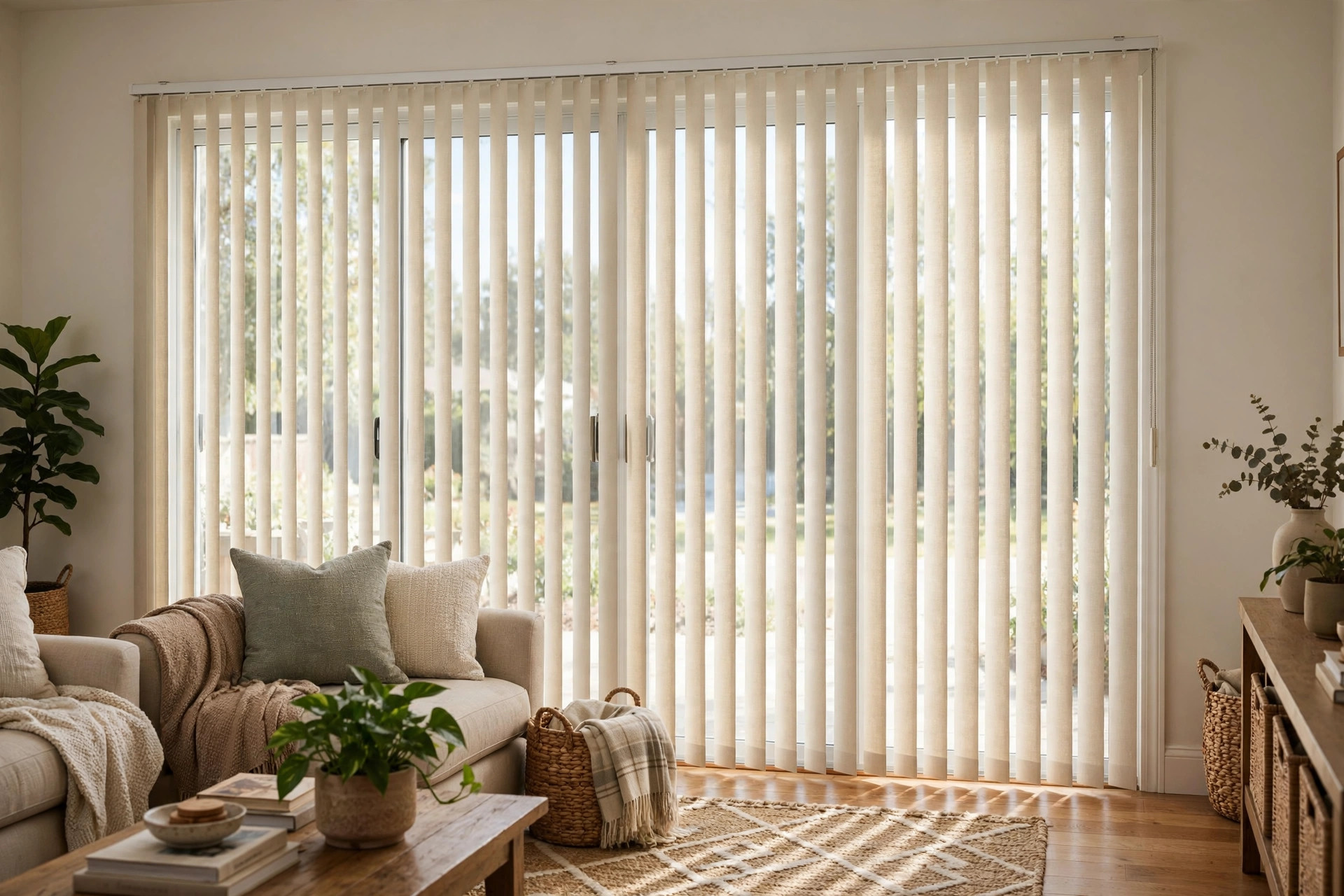
A sliding door is a fine way to join a room to a patio or deck. It brings in light and air. It also brings in heat in summer and cold in winter. Glass is a poor insulator. A large pane of glass on a sliding door can raise your energy bill more than any window in the house. That is why so many shoppers search for thermal vertical blinds for sliding doors for sale. These blinds are made to do two jobs at once. They cover the tall glass panel. They also slow the flow of heat through it.
Vertical blinds hang from a track above the door. The vanes run up and down. You can turn them to bend light. You can slide them aside to walk through. The thermal version adds an insulating layer: a foam or reflective backing, or a thick fabric that traps air. For many families, this is the most practical cover for a sliding door. Curtains can work too, but long drapes catch on the handle. Roller shades block the door when lowered. Vertical blinds move with the door and stay out of the way.
Why Thermal Vertical Blinds Matter
Sliding doors are wide. A standard sliding door is six or seven feet across and almost seven feet tall. That is a large sheet of glass. Even a double-pane unit lets much more heat through than a wall of the same size. In summer, sun strikes the glass and warms the room fast. Your air conditioner runs longer. In winter, heat leaves through the cold glass. Your heater runs longer. The U.S. Department of Energy notes that windows and glass doors account for a large share of home energy loss, and window coverings are one of the simplest ways to cut that loss. A plain blind only blocks light. A thermal blind blocks some of the heat too.
The gain is steady and quiet. You do not see it on the day you install the blinds. You see it on the utility bill over months. Rooms near sliding doors feel more even in temperature. There are fewer cold drafts in January and fewer hot spots in July. Privacy improves as well. Thermal vanes are usually opaque or near-opaque. At night, neighbors cannot see in.
There is also the matter of comfort. Many people place a sofa or a reading chair near the sliding door. The glass makes that seat cold in winter. Thermal vertical blinds make the seat usable again. They soften glare on television screens too. All of this comes from one product that costs far less than new glass.
What to Look For When You Buy: Thermal Vertical Blinds for Sliding Doors for Sale
Not every set sold as thermal performs the same. Read the details before you buy.
Backing and core. True thermal vanes have a real insulating layer. Look for words like foam-backed, thermal-lined, or heat-reflective coating. A vane that is merely thick is not the same as a vane built to insulate. The product page should name the layer. If it does not, ask the seller.
Opacity and lining color. Light colors reflect summer sun. Dark colors absorb it. For hot climates, choose white or cream vanes, or a vane with a white reflective back. For cold climates, a darker room-side color is fine as long as the core is insulating.
Vane width. Most vertical blinds use vanes about three and a half inches wide. Wider vanes cover the track better and overlap more. More overlap means fewer thin gaps where heat slips through.
Track quality. The headrail carries all the weight. A metal track lasts longer than a plastic one. Check that the carriers, the small clips that hold each vane, slide freely. A rough track will jam, and buyers often replace the whole blind when a cheap track fails.
Stack direction. Decide which way the vanes stack when open. A one-way stack pushes all vanes to one side. A split stack divides them left and right. Match the stack to the door that slides. You want the open blind clear of the walking path.
Control type. A wand control turns and moves the vanes with a single rod. A cord control does the same with a loop of cord. Cordless wand systems are safer for homes with small children and pets, matching long-standing child safety guidance on window cords.
Mount type. An inside mount sits within the door frame. It looks neat but leaves small light gaps at the edges. An outside mount covers the frame and a few inches beyond. For thermal performance, the outside mount is better. It seals the edges where warm or cold air creeps around the blind.
Measuring Tips
Measure the width of the frame in three places: top, middle, and bottom. Write down the smallest number. Measure the height in three places too. For an inside mount, use the smallest width and height so the track fits. For an outside mount, add three to four inches to the width and two to three inches to the height on top. This overlap blocks the edges. Sliding doors are rarely perfectly square in older homes. Three measurements catch the difference. Guides from Blinds.com walk through this step with drawings, which helps first-time buyers.
Types and Options
Thermal vertical blinds for sliding doors come in several forms. The right form depends on your budget and your taste.
Foam-backed vinyl vanes. These are the least costly. A thin foam layer bonds to a vinyl face. They resist moisture and wipe clean. They suit kitchens and pool-side doors. They do not insulate as well as fabric, but they beat plain vinyl.
Fabric thermal vanes. These have a woven face with an insulating lining behind it. They look softer and more like drapery. They come in many colors and patterns. They cost more than vinyl but give a warmer look. Many buyers choose fabric for living rooms and master bedrooms.
Reflective-backed vanes. A foil or metallic layer faces the glass. It bounces radiant heat back outside in summer. These are strong performers in hot, sunny states. From the room side, they look like ordinary vanes.
Sliding panel track blinds. A close cousin of the vertical blind. Wide fabric panels slide on a track instead of narrow vanes. Some panels carry a thermal lining. They give a modern, flat look. A related guide on custom sliding panel track blinds for midwest homes covers this style in more detail. Panel tracks suit wide doors and open floor plans.
Motorized options. Some headrails accept a small motor. You open and close the blinds with a remote or a phone app. Motors add cost but remove cords, which helps with safety.
If you want full drapery looks, insulated curtains remain an option. A guide to custom thermal insulated curtains for small apartments compares that path. Curtains need a rod strong enough for heavy thermal fabric, and they swing when the door opens. Vertical blinds stay on their track.
For the whole home, it helps to plan window coverings room by room. An overview of thermal energy efficient window treatments for sale shows how the same ideas apply to ordinary windows.
Cost and Price
Prices for thermal vertical blinds for sliding doors for sale vary by size, material, and brand. A standard door needs a track about 72 to 96 inches wide and vanes about 84 inches long. Expect these ranges in the United States.
Budget vinyl foam-backed sets run from about 40 to 90 dollars for a full door kit. Mid-range fabric thermal sets run from about 90 to 180 dollars. Premium lined sets with a metal headrail and wand control run from about 180 to 350 dollars. Custom-made sets, cut to an odd door size or a special fabric, can reach 400 dollars or more.
Installation adds cost if you hire help. A professional installer often charges 75 to 150 dollars per blind for a standard job. Many homeowners install vertical blinds themselves. The job needs a drill, a level, and about an hour. Retailers such as The Home Depot and Lowe’s sell kits with brackets and printed guides, and both offer installation services in many areas.
Check the return policy. A set cut to your measurements is often final sale. A stock-size set is easier to return.
One honest note on savings: thermal blinds lower the load on your heater and air conditioner, but they do not pay for themselves in a month. They are one part of a sound home. Sealing air leaks, adding attic insulation, and tuning the HVAC system matter more in total. Still, for the price, few single upgrades beat covering a big cold glass door.
Care and Upkeep
Thermal vertical blinds need little care, but a small routine keeps them working for years.
Dust the vanes once a month. A microfiber cloth or a vacuum with a brush head works. Work from top to bottom so dust falls away from clean areas. For vinyl vanes, wipe with a damp cloth and mild soap. Rinse and dry. For fabric vanes, spot-clean stains with a mild cleaner and test it first in a hidden spot. Do not soak fabric vanes. Water can loosen the bonded thermal lining.
Clean the track twice a year. Dust and pet hair collect in the headrail and slow the carriers. Vacuum the track, then run a dry cloth along it. Do not oil the track. Oil attracts dust and makes the problem worse.
Check the carriers each year. A cracked carrier lets its vane hang crooked. Spare carriers are cheap and snap in without tools. Replace them before they break fully.
Keep vanes clear of the door handle. When the door slides, the handle can catch a vane and tear it. Adjust the stack so open vanes rest clear of the handle side. If a vane cracks, buy a single replacement vane in the same color. Most brands sell spares, which beats replacing the whole set.
Safety
Window covering safety deserves care, above all in homes with children and pets.
Cords are the main risk. A looped cord can wrap around a small child’s neck. Choose wand control or a motorized headrail to remove the cord entirely. If you already own a corded blind, keep the cord short and out of reach. Use the cleat or tension device that came with it. The CPSC offers free guidance on making window coverings safer, and its recalls page lists products to avoid.
Mount the headrail firmly. A falling headrail can injure a person and shatter a vane. Screw brackets into the frame or into wall studs, not into drywall alone. Use anchors rated for the weight. A full thermal set is heavier than a plain blind because of the lining.
Mind the glass too. Blinds do not change the glass. Sliding door glass should be tempered safety glass, which breaks into small dull pieces. Most modern doors meet this rule. Keep furniture from pressing hard against the glass, and teach children not to run into the door.
Pets pose a smaller but real issue. Dogs push through vanes to look outside, which bends carriers. A bottom weight or chain on the vanes reduces swinging, and keeping the blind partly open near the door edge gives pets a clear view.
Frequently Asked Questions
Do thermal vertical blinds really save energy? Yes, within limits. They slow heat flow through the glass by adding an insulating layer and by trapping a still pocket of air. Expect more comfort and a small drop in heating and cooling use, not a transformed bill. They work best as part of wider steps like sealing drafts.
Can I install them myself? Most adults can. You need a drill, a tape measure, a level, and a screwdriver. The brackets mount above the door frame or inside it. Follow the maker’s guide step by step. An hour is enough for a standard door.
Will they work on a very wide sliding door? Yes. Headrails come in widths past eight feet, and two tracks can join for wider spans. For very wide openings, sliding panel track blinds are often a better fit, since their wide panels cover more area with fewer gaps.
How do I clean fabric thermal vanes? Dust them often with a microfiber cloth or a vacuum brush. Spot-clean marks with mild soap and water, and test the cleaner on a hidden edge first. Never soak the vane. Soaking can separate the thermal lining from the fabric face.
Are thermal vertical blinds safe for kids? They can be, with the right control. Choose a wand or motorized system with no looped cords. Mount the headrail high and firm. Keep cords on older blinds tied up and out of reach. These steps match long-standing child safety guidance for all window coverings.
Where can I see styles before I buy? Many buyers start with room photos to fix the look they want. HGTV and The Spruce both run large photo libraries of living rooms with sliding doors. Retailers like IKEA and Wayfair show wide selections with buyer reviews.
A Short Final Word
A sliding door gives light and access, and it takes heat in return. Thermal vertical blinds for sliding doors for sale answer that trade. They cost little next to new glass. They hang on a simple track, turn with a wand, and slide aside when you walk through. Measured well, mounted firm, and kept clean, they serve for many years. Choose the backing that fits your climate, the control that fits your household, and the mount that seals the edges. The room will feel steadier in every season.
References
Blinds.com. (n.d.). Window blinds, shades, and shutters. https://www.blinds.com HGTV. (n.d.). Home and garden ideas. https://www.hgtv.com IKEA. (n.d.). Home furnishings. https://www.ikea.com Lowe’s. (n.d.). Home improvement products. https://www.lowes.com The Home Depot. (n.d.). Home improvement products. https://www.homedepot.com The Spruce. (n.d.). Home and garden advice. https://www.thespruce.com U.S. Consumer Product Safety Commission. (n.d.). Product safety information. https://www.cpsc.gov Wayfair. (n.d.). Furniture and home goods. https://www.wayfair.com
Was this guide helpful?

About Lisa Anderson
The My Garden US editorial team writes practical, in-depth home and garden guides for American homeowners — tested advice, no fluff.