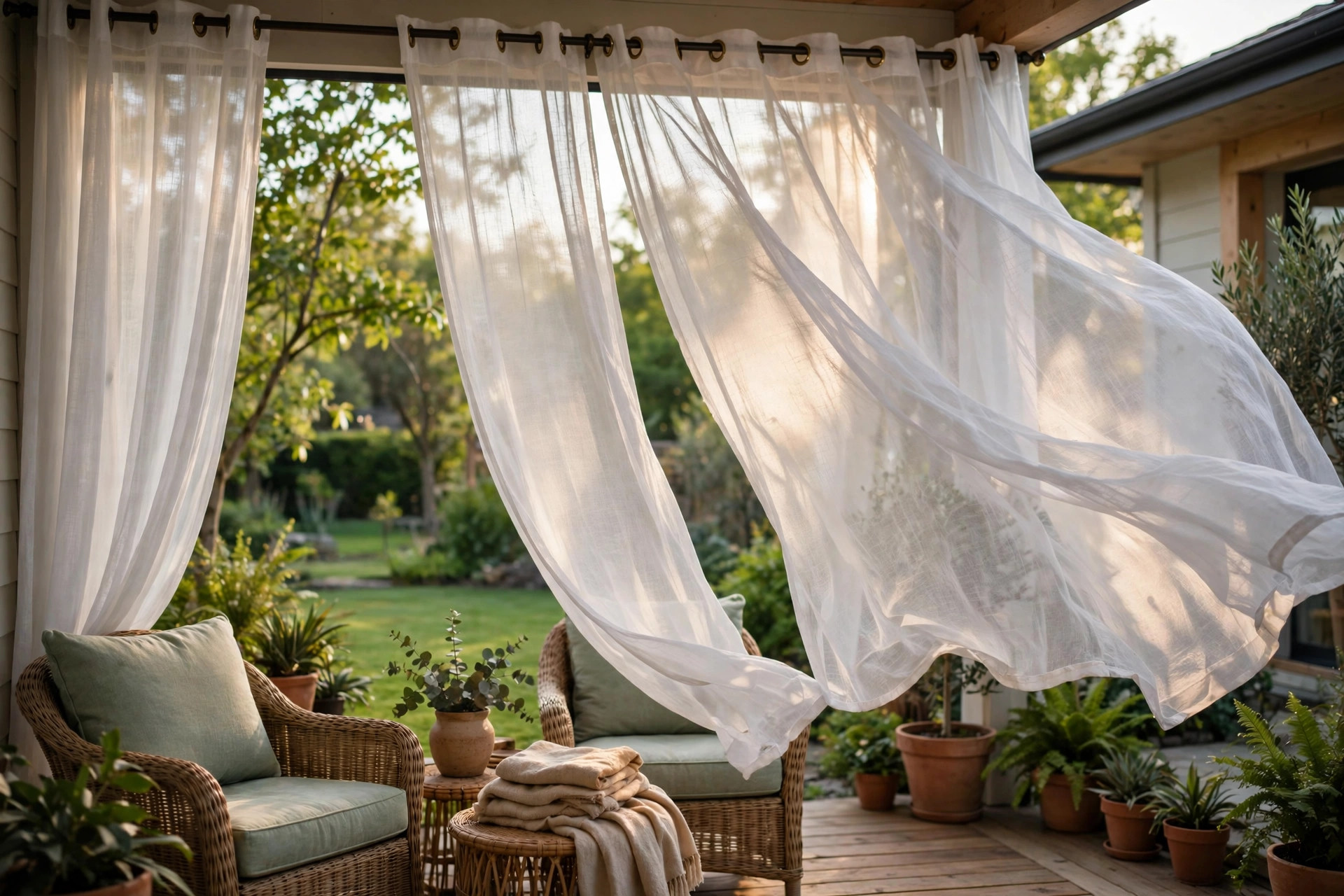

A covered patio or an open porch can feel like an extra room of the house. But sun, wind, and prying eyes often spoil the mood. The best outdoor patio curtains for sale today solve all three problems at once. They block glare, soften the breeze, and give a family its privacy back. This guide explains what to buy, what to pay, and how to keep the curtains looking good for years.
Why Outdoor Patio Curtains Matter
A patio is where a family grills, rests, and talks on warm evenings. Harsh sun makes the space too hot to use. Strong wind knocks over chairs and papers. Neighbors can see every move. Simple fabric panels change all of this. They cut the heat of the afternoon sun. They turn a harsh wind into a soft draft. They give the patio the feel of a quiet room.
Outdoor curtains also protect other things on the patio. Furniture lasts longer when the sun does not beat on it all day. A grill or an outdoor rug keeps its color. Even houseplants do better with shade from the worst of the midday light. The cost is low compared with building a permanent screen wall or a glass enclosure.
Style is another reason. Plain rods with flowing panels make a patio look finished. The effect is close to what an indoor room gets from good drapes. Home design shows have made this look common, and many readers get ideas from sites like HGTV before they shop.
What to Look For When You Choose: Best Outdoor Patio Curtains for Sale
Not every curtain that looks nice in a store will work outside. Outdoor fabric faces rain, sun, mildew, and cold. The points below tell a buyer what to check before paying.
Fabric Type
The fabric is the most important choice. Olefin, acrylic, and polyester blends lead the field. Olefin holds color well and dries fast. Acrylic, the same family used in boat covers, stands up to sun for many seasons. Polyester is cheap and light, but low-grade polyester fades faster. Cotton should be avoided for full-time outdoor use because it soaks up water and rots.
Many shoppers start their search with sheer linen curtains price comparisons in the USA to see how fabric grades affect cost. The lesson carries over to outdoor panels: the fabric sets both price and life span.
Weave and Weight
Sheer panels give a light, airy look. They filter sun but do not block it. Medium-weave panels give real shade and privacy. Heavy blackout panels block nearly all light and work well on patios that face west. Thicker fabric also hangs straighter in the wind, which looks better and wears less at the hems.
Water Resistance
Good outdoor curtains shed rain instead of soaking it up. Look for words like “water resistant” or “weatherproof” on the tag. Treated fabric dries within an hour or two after a shower. Untreated fabric stays damp, grows mildew, and starts to smell. A quick test in the store is hard, so the tag and the listed materials are the best guide. Reviews on large home sites can also help; The Home Depot carries many outdoor curtain lines with buyer notes on rain performance.
Fade Resistance
The sun is the worst enemy of outdoor fabric. Ultraviolet light breaks down dyes and weakens fibers. Quality makers rate their fabric for UV resistance, often with a number of hours or a grade. Solution-dyed acrylic is the gold standard because the color runs through the fiber, not just on the surface. Buyers who want panels that stay bright for five years or more should look for this term. Advice columns at The Spruce explain UV ratings in plain terms.
Size and Fit
Measure before shopping. Measure the width of each opening, then add at least 20 percent for fullness so the panels look gathered rather than stretched flat. Measure the drop from the rod to the floor or to the deck rail. Most outdoor panels come in lengths of 84, 96, or 108 inches. Panels that drag on a wet deck will stain, so many owners hang them an inch or two above the floor.
Hardware
The rod matters as much as the cloth. Indoor rods rust outside in one season. Choose rust-proof metal, stainless steel, or powder-coated aluminum. Grommet tops slide easily and stand up to wind. Tab tops look softer but can bind on the rod. For wide spans, a cable system with turnbuckles holds the load without sagging. Lowe’s stocks outdoor-rated rods and cables in most stores.
Grommets and Hems
Rust-proof grommets, usually brass or stainless steel, are a must. Plastic grommets crack in the sun. Look at the hems. Double-stitched hems hold up in wind. Weighted hems, with small weights sewn inside, keep panels from flying up on gusty days. These small details separate a two-season curtain from a five-season curtain.
Types and Options
Outdoor patio curtains come in a few clear types. Each suits a different need.
Sheer outdoor panels. These are the lightest choice. They soften light, give a dreamy look, and offer mild privacy during the day. They do little against heat or wind. They suit covered patios that need style more than shade.
Semi-sheer panels. A middle path. They cut glare and give real daytime privacy while still letting air move through. Many buyers choose this type for porches that face the street.
Privacy panels. Medium to heavy weaves that block the view from outside. Good for patios close to neighbors or near a busy sidewalk. They also cut a fair amount of heat.
Blackout outdoor panels. The heaviest type. They block nearly all sun and give full privacy. They work best on west-facing patios that bake in the afternoon. They can make a patio feel dark, so some owners pair them with lighter panels.
Cabana stripes and solids. Stripes give a classic resort look. Solids are calmer and match more furniture. Dark colors absorb heat and may make a patio warmer. Light colors reflect heat but show dirt sooner.
Waterproof privacy screens. These are not cloth curtains in the old sense. They are coated panels made for full exposure to rain. They suit uncovered decks in wet climates.
Shoppers who like tailored looks may also read a noise reducing pinch pleat drapes buying guide for ideas on pleat styles, though pinch pleats are mostly an indoor choice.
Cost and Price
Prices vary widely with fabric and brand. Simple polyester sheer panels often sell for 15 to 30 dollars per panel. Mid-range olefin or treated polyester panels run 30 to 60 dollars per panel. Premium solution-dyed acrylic panels cost 60 to 120 dollars per panel or more.
A typical patio needs four to eight panels. That puts a full set between 120 and 800 dollars, before rods and hardware. Rods add 30 to 150 dollars depending on length and material. Cables and turnbuckles for wide spans add another 20 to 60 dollars.
Sales follow the season. Prices drop in late summer and fall when stores clear patio goods. Buying off-season can cut the cost by a third or more. Online marketplaces often beat store prices, and Walmart and Wayfair both carry wide outdoor curtain lines with frequent discounts. Big-box stores like IKEA offer budget panels that work well under a covered roof.
Watch out for false bargains. A very cheap panel made of thin untreated polyester may last one summer. A mid-priced panel with UV treatment may last five. The cost per year favors the better panel. Buyers comparing window treatments across rooms sometimes check premium valances for windows for sale to get a feel for how trim and hardware pricing works indoors versus out.
Care and Upkeep
Outdoor curtains last longer with simple care. Shake them out once a week to drop dust and leaves. Hose them down once a month in the warm season. For spots, wash with mild soap and cool water, then rinse well. Never use bleach on colored outdoor fabric; it strips the UV treatment and the dye.
Mildew is the common enemy. It grows where panels stay damp and air cannot move. After rain, spread the panels so they dry fast. If mildew spots appear, scrub with a mix of water and white vinegar, rinse, and dry in the sun. Sunlight itself kills most mildew.
At the end of the season, take the panels down in cold climates. Wash them, dry them fully, and store them in a dry place. Leaving them up through ice and snow shortens their life by years. In warm climates where patios stay open all year, give the panels a deep clean twice a year instead.
Check the hardware each spring. Tighten loose brackets. Oil the grommets if they stick. Replace any rusted screws before they stain the fabric. Ten minutes of care each spring prevents most problems.
Safety
Curtains near grills and fire pits need care. Keep fabric at least three feet from open flame. Some outdoor fabrics carry a fire-retardant treatment; the tag will say so. Even treated fabric can melt or catch in direct flame, so distance is the real safety rule.
Wind is the other hazard. In storm season, tie panels back or take them down before high winds. A loose panel can tear free and strike a person or a car. Weighted hems help in normal wind but not in a storm.
Cord safety matters too. Tie-backs with long cords should sit out of the reach of small children. The U.S. Consumer Product Safety Commission warns about cord hazards around window coverings, and the same care applies outdoors.
For general how-to advice on hanging and securing outdoor fabric, Bob Vila offers step-by-step guides written for home owners.
Frequently Asked Questions
How long do outdoor patio curtains last? Cheap untreated panels last one to two seasons. Mid-range treated polyester or olefin lasts three to five years. Premium solution-dyed acrylic can last five to eight years with basic care. Sun exposure is the main factor; a shaded patio doubles fabric life.
Can I leave them up in winter? In mild climates, yes, if the fabric is rated for cold. In areas with snow and ice, take them down. Ice in the folds tears fibers, and freeze-thaw cycles weaken stitching. Store clean, dry panels indoors.
Do outdoor curtains really block heat? Yes, to a useful degree. A medium-weave panel can cut felt heat by several degrees on a sunny patio by blocking direct sun. Blackout panels cut more. They do not cool the air like a fan or a mister, but they stop the sun from baking furniture and skin.
What is the best color for outdoor curtains? Light neutrals like white, sand, and light gray reflect heat and suit most homes. They show dirt sooner, so they need more washing. Dark colors hide dirt but absorb heat. Medium tones are a fair middle ground.
Can I wash outdoor curtains in a machine? Most can be machine washed on gentle with cold water and mild soap. Check the tag first. Air dry only; dryer heat damages water-resistant coatings. Re-treat with a fabric guard spray after washing if the tag suggests it.
Are grommet tops or tab tops better outside? Grommets win for outdoor use. Metal grommets slide smoothly, resist wind damage, and do not rot. Tab tops can bind, stretch, and rot at the fold. If looks matter more than life span, tab tops are fine under a covered roof.
A Short Final Word
The best outdoor patio curtains for sale are not the priciest ones. They are the ones with the right fabric for the climate, the right size for the space, and rust-proof hardware to hold them up. Measure first, buy UV-rated fabric, and care for the panels each season. A few hundred dollars and one afternoon of work can turn a harsh, exposed patio into the most used room of the house. For more design ideas before you shop, browse outdoor living features at Blinds.com.
References
Blinds.com. (n.d.). Window blinds, shades, and shutters. https://www.blinds.com Bob Vila. (n.d.). Home improvement advice. https://www.bobvila.com HGTV. (n.d.). Home and garden ideas. https://www.hgtv.com IKEA. (n.d.). Home furnishings. https://www.ikea.com Lowe’s. (n.d.). Home improvement products. https://www.lowes.com The Home Depot. (n.d.). Home improvement products. https://www.homedepot.com The Spruce. (n.d.). Home and garden advice. https://www.thespruce.com U.S. Consumer Product Safety Commission. (n.d.). Product safety information. https://www.cpsc.gov Walmart. (n.d.). Everyday low prices. https://www.walmart.com Wayfair. (n.d.). Furniture and home goods. https://www.wayfair.com
Was this guide helpful?

About Michael Thompson
The My Garden US editorial team writes practical, in-depth home and garden guides for American homeowners — tested advice, no fluff.
You May Also Like
Custom Thermal Insulated Curtains for Small Apartments
September 20, 2026 0 views
White Linen Curtain Panels Reviews and Buying Guide
March 22, 2026 0 views
How to Choose Thermal Window Film Privacy Tint with Free Shipping
April 7, 2026 0 views