
Introduction
The search for the best garage door replacement near me usually starts with a small problem. The door sticks. A panel bends. The opener groans and strains on cold mornings. Then one day the door will not open at all. At that point most homeowners want two things: a door that works, and a local company they can trust to install it.
A garage door is the largest moving part of a home. It opens and closes hundreds of times each year. It protects cars, tools, and storage. It also shapes the look of the whole street face of the house. A tired or broken door brings down the value and the appearance of the home at the same time.
This guide walks through the full process. It covers why replacement beats repair in many cases, what to look for in a local installer, the main door types and materials, typical costs, simple care steps, safety facts, and answers to common questions. The goal is simple: help any homeowner make a calm, well-informed choice.
Why a New Garage Door Matters: Best Garage Door Replacement near Me
A garage door that works well gives peace of mind every day. A door that does not work well causes stress and risk. Consider the most common reasons homeowners replace their doors.
First, safety. An old door with worn springs or frayed cables can drop without warning. A garage door can weigh two hundred pounds or more. A sudden drop can damage a car or injure a person. Modern doors come with better springs, enclosed tracks, and safety sensors that stop the door if something blocks its path.
Second, energy use. Many garages connect to the house or sit below living space. An uninsulated steel door lets heat escape in winter and lets heat enter in summer. An insulated door acts like a thick blanket. It keeps the garage closer to room temperature and lowers heating and cooling bills. This Old House publishes many home renovation guides that explain how insulation around the whole shell of a house, including the garage, reduces energy waste.
Third, security. A sagging old door may not close tight. Gaps at the edges invite tools for break-in. New doors fit snug in the frame and accept modern locks and openers with rolling code technology. The code changes with every use, which makes theft far harder.
Fourth, appearance. The garage door often takes up a third of the front face of the house. Real estate agents often say a new garage door returns a large share of its cost at resale. Even a modest door in a clean style makes the whole house look better kept. When homeowners plan a full exterior refresh, they often pair a new door with fresh siding or trim; makers of exterior products such as James Hardie show how matching exterior materials raise curb appeal as a set.
What to Look for in a Local Installer
Finding the best garage door replacement near me means finding the right company, not just the right door. A good installer matters more than a good brand. Poor installation causes noise, leaks, and early failure no matter how fine the door is.
Start with local presence
Look for a company with a real address in your area, not only a phone number. A local shop can reach you fast when a spring breaks on a Sunday. It also depends on its reputation in the same town, so it has a strong reason to do good work. Online review sites give a quick picture, but ask neighbors too. Word of mouth still works well for home trades.
Check license and insurance
A garage door job involves heavy parts, high-tension springs, and electrical wiring for the opener. A licensed and insured company protects you if a worker is hurt or the house is damaged. Ask for proof before the work starts. A serious company will show it without complaint.
Ask about the crew
Ask whether the company uses its own trained employees or day labor. Own crews tend to be better trained and easier to hold to account. Ask how long the installers have done this work. Two or three years of steady garage door work is a good minimum.
Get the estimate in writing
A clear written estimate should list the door model, size, material, insulation value, color, hardware finish, opener model if included, and the full labor charge. It should state the warranty on parts and on labor. Labor warranties of one to two years are common. Bob Vila offers home improvement and repair advice that often reminds readers to compare written estimates line by line instead of comparing only the bottom price.
Types of Garage Doors to Choose From
Most homes in America use sectional roll-up doors. The door bends in horizontal panels and slides up into the garage on tracks. Within that style there are several materials and designs.
Steel doors
Steel is the most common choice. It is strong, fairly low in cost, and takes paint well. Single-layer steel is the cheapest. Double-layer steel adds insulation and a quieter ride. Triple-layer steel has insulation sandwiched between two steel skins and runs the smoothest. Most new steel doors now carry a baked-on finish that resists rust and fading.
Wood and wood-look doors
Real wood doors look warm and rich, especially on older or craftsman-style homes. They need regular paint or stain to keep out moisture. Wood-look steel and composite doors now copy the grain of real wood without the upkeep. They cost more than plain steel but less than real wood, and they last longer with less care.
Aluminum and glass doors
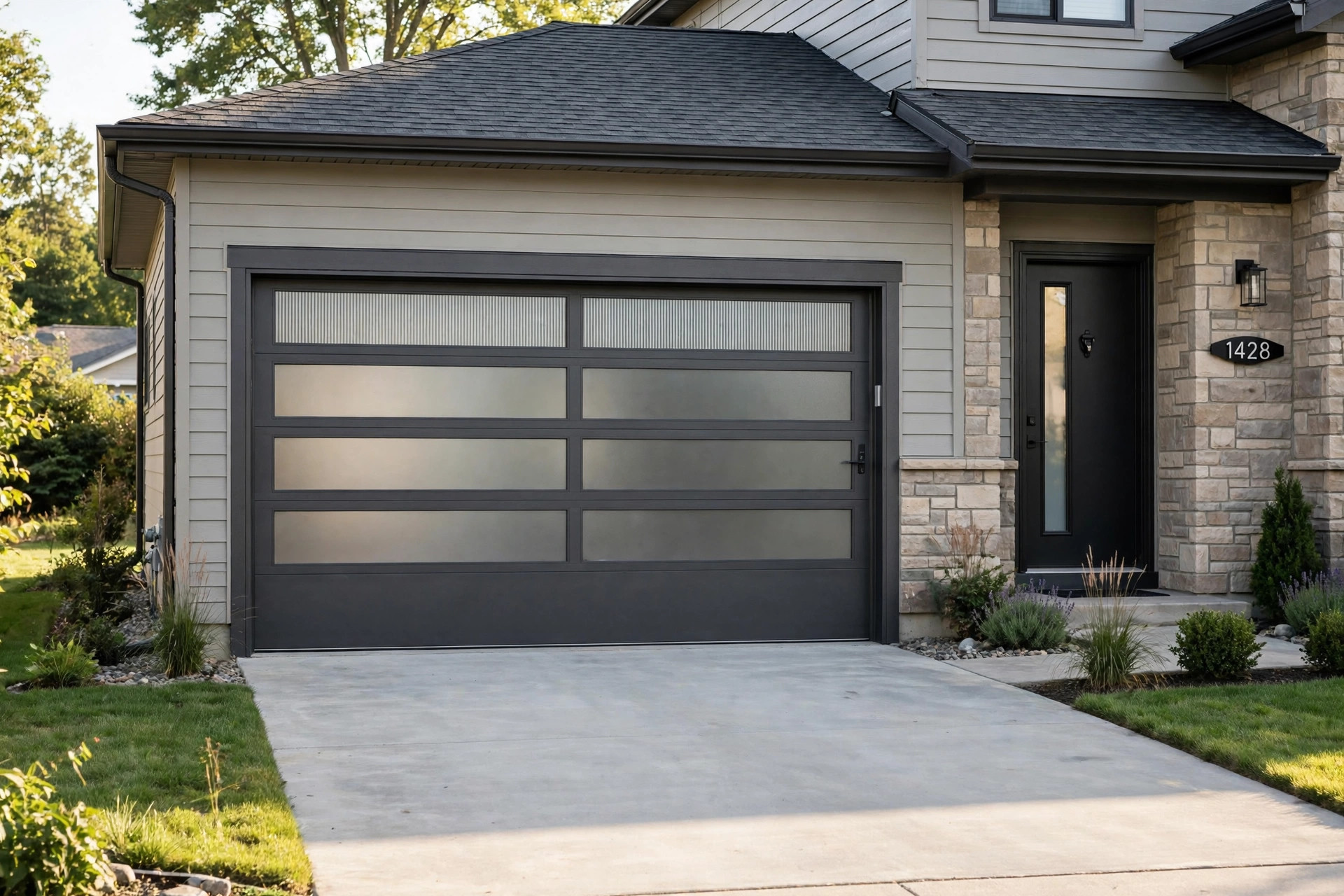
Aluminum frames with glass panels give a modern look. They are light and resist rust, which suits damp climates. The glass can be clear, frosted, or tinted. Privacy glass keeps the inside of the garage hidden while still letting in daylight.
Insulation options
Insulation is rated with an R-value. Higher numbers mean better insulation. A non-insulated door has an R-value near zero. A well-insulated door may reach R-12 to R-18. Choose a higher R-value if the garage is attached to the house, if you heat or cool the garage, or if you live where winters run cold. The Home Depot lists many door models side by side so shoppers can compare insulation ratings, window styles, and prices in one place.
Cost and Price of Garage Door Replacement
Prices vary by region, door size, material, and insulation. A basic single-car uninsulated steel door, installed, often runs in the lower four figures in many parts of the country. A double-car insulated door with windows and decorative hardware costs more. High-end wood or custom doors can run several times the price of a basic steel model.
Labor usually makes up a large part of the bill. The crew must remove the old door, set the new tracks level, hang the panels, tension the springs, wire the opener, and test every safety feature. A normal replacement takes three to six hours. Complex jobs, such as a wider opening or structural repairs to the frame, take longer and cost more.
Ask whether the price includes removal of the old door. Most companies haul it away, but some charge extra. Ask about the opener too. A new opener is not always needed, but an old opener may not match a heavier new door. A new opener adds to the price but brings safety sensors, battery backup, and smartphone control on many models. Lowe’s shows door and opener package options that help shoppers see the full installed cost at a glance.
Watch for add-on charges: disposal fees, permits in some towns, extra work on rotted trim, and electrical work for the opener. A written estimate that names these items prevents surprise charges on the day of the job.
Care and Upkeep After Installation
A new garage door needs little care, but a small routine keeps it smooth and quiet for years.
Lubricate the moving parts twice a year. Use a silicone or lithium grease made for garage doors. Apply it to the hinges, rollers, and springs. Do not use heavy household oil, which collects dust and gums up the tracks. Wipe the tracks clean with a damp cloth instead of oiling them.
Tighten the hardware once a year. Vibration loosens bolts and screws over time. Work down the track brackets and hinge bolts with a socket wrench and snug each one. Do not touch the spring hardware or the red-painted bolts. Those parts hold high tension and belong to a trained technician.
Wash the door with mild soap and water each spring. Rinse with a hose and dry with a soft cloth. This removes road salt and dirt that wear down the finish. Check the weather seal at the bottom of the door. If it is cracked or torn, replace it. A tight seal keeps out rain, leaves, and cold drafts.
Test the safety features each month. Place a roll of paper towels in the door path and close the door with the remote. The door should stop and reverse when it touches the roll. Then break the sensor beam with your foot while the door closes. It should reverse again. If either test fails, call for service. Family Handyman publishes step-by-step maintenance guides for many home systems, including simple garage door checks that owners can do safely.
Safety Around Garage Doors
Garage doors injure thousands of people each year in the United States. Most injuries are preventable with a few habits.
Teach children never to play with the remote or the wall button. Mount the wall button at least five feet above the floor so small children cannot reach it. Never let anyone ride the door or hang from its panels. Keep fingers away from the sections while the door moves.
Never walk under a door that is moving, and never try to beat it. If the door starts to close, step back and let it finish. Keep the remote where it cannot be found by strangers. Many cars are broken into for garage remotes, so lock the car and take the remote inside at night if you can.
Springs are the most dangerous part of the system. Torsion springs above the door store enough force to cause serious injury. Only a trained technician should adjust, repair, or replace springs and cables. This is not a do-it-yourself job. The Spruce covers garage door safety in its home improvement guides and repeats the same warning: leave spring work to the professionals.
Frequently Asked Questions
How do I know I need a replacement instead of a repair?
Small problems such as a broken spring, a noisy roller, or a bad sensor are usually worth repairing. Replacement makes more sense when the panels are bent or rotted, the door is more than fifteen to twenty years old, the opener cannot be made safe, or repair bills keep coming. If one repair costs more than a third of a new door, replacement is often the better value.
How long does installation take?
Most standard replacements take half a day. The crew arrives in the morning and finishes by the afternoon. Custom doors or frame repairs can take a full day or need a second visit. Ask the installer for a time plan in the written estimate.
Should I replace the opener too?
If the opener is more than ten years old, replacing it with the door is smart. New openers have safety sensors, quieter motors, and battery backup. An old opener may also lack the power for a heavier insulated door. Many companies offer a package price for the door and opener together.
What size door do I need?
Most installers measure the opening and order the door to fit. Common single-car openings are eight or nine feet wide and seven or eight feet tall. Double-car openings are usually sixteen feet wide. Never guess the size from the old door alone. The opening and the track space inside the garage must both be measured.
How long will a new garage door last?
A quality steel door lasts twenty years or more with basic care. Wood doors last fifteen to twenty years if painted or stained on schedule. Openers last ten to fifteen years. Springs usually need replacement every seven to ten years, depending on how often the door cycles each day.
Can I buy the door myself and hire only labor?
Some companies will install a door you bought elsewhere, but many will not. They cannot warranty a product they did not supply. Big-box stores such as Lowe’s and The Home Depot sell doors and also arrange local installation, which keeps the product and the labor warranty under one roof.
Related Home Projects
A garage door replacement often starts a wider exterior refresh. Many homeowners who update the door go on to update the driveway surface; if that is on your list, read our guide on the best concrete driveway resurfacing near me. Entry doors wear at the same pace as garage doors, so a professional grade exterior door replacement for homeowners is worth comparing while the crew is on site. And if the garage entry door is thin or drafty, a best storm door installation near me search can finish the job. Makers of roofing and siding such as CertainTeed also note that matching the door style to the rest of the exterior gives the most balanced look.
A Short Final Word
A garage door works hard every day and asks for little in return. When it wears out, a careful replacement restores safety, comfort, and the look of the home. Start with a trusted local installer, choose a door that fits the house and the climate, and keep up the small twice-yearly care routine. Done right, the best garage door replacement near me is not a chore. It is one of the simplest upgrades a homeowner can make.
References
Bob Vila. (n.d.). Home improvement advice. https://www.bobvila.com CertainTeed. (n.d.). Building materials and exterior products. https://www.certainteed.com Family Handyman. (n.d.). DIY home repair and maintenance. https://www.familyhandyman.com James Hardie. (n.d.). Fiber cement siding and exterior products. https://www.jameshardie.com Lowe’s. (n.d.). Home improvement products. https://www.lowes.com The Home Depot. (n.d.). Home improvement products. https://www.homedepot.com The Spruce. (n.d.). Home and garden advice. https://www.thespruce.com This Old House. (n.d.). Home renovation guidance. https://www.thisoldhouse.com
Was this guide helpful?

About David Wilson
The My Garden US editorial team writes practical, in-depth home and garden guides for American homeowners — tested advice, no fluff.
You May Also Like
Best Outdoor Security Cameras for California Apartments
February 23, 2026 0 views
Top Rated Outdoor Security Cameras for Sale: A Plain Guide for Homeowners
October 4, 2026 0 views
Top Rated Vinyl Siding Installation Reviews: How to Read Them and Choose Well
March 7, 2026 0 views