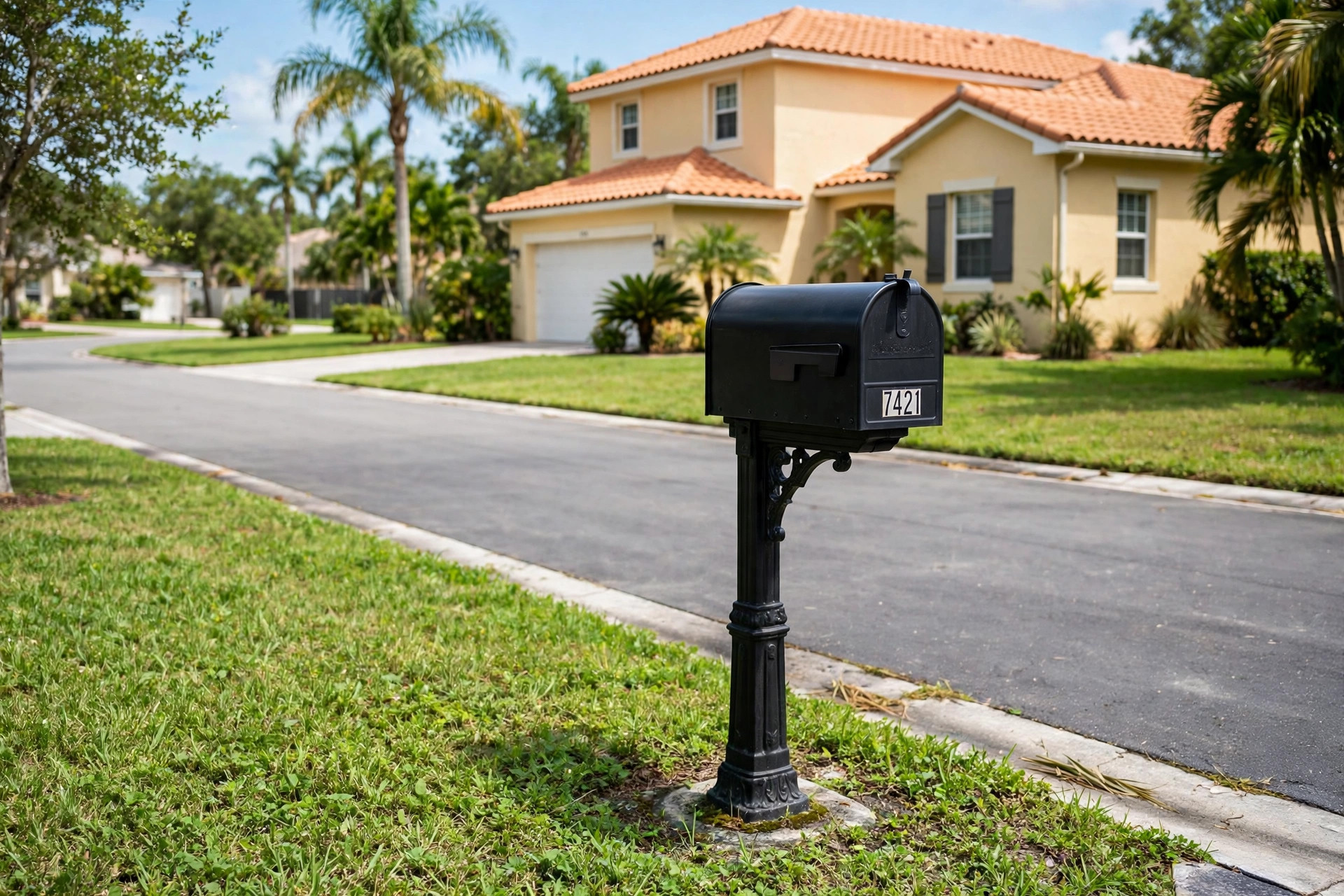

If you want to buy mailbox posts online in Florida, you have more choices than ever before. Online stores now sell wood, vinyl, aluminum, and steel posts in every style. A homeowner can compare prices, read reviews, and have a post shipped to the front door. It sounds simple. But Florida has heat, rain, storms, and termites that can ruin a weak post in a few years. This guide will help you pick the right post, pay a fair price, and install it the right way.
Why a Good Mailbox Post Matters in Florida
Your mailbox post is the first thing visitors see. It shapes how your home looks from the street. A leaning or broken post sends a bad message. A clean and straight post lifts the whole curb appeal of your house.
Florida weather makes the job harder. The sun is strong nearly every day. Summer rain comes down hard. Hurricanes and tropical storms bring heavy wind. Salt air near the coast eats metal. Termites attack wood posts from the inside. If you buy a post without planning for these threats, you may replace it again in two or three years.
A strong post also keeps your mailbox in place. Wind can push a loose post over. Heavy packages can tilt a weak arm. A post set in concrete and made of the right material will stand through storm season and look good for years.
What to Look For When You Buy Mailbox Posts Online: Buy Mailbox Posts Online in Florida
When you shop online, you cannot touch the product. You must read the details. Here is what to check before you click buy.
Material
The material decides how long the post lasts. Wood is the classic choice. Cedar and redwood resist rot. Pressure-treated pine is cheaper but can still warp. Vinyl needs almost no care and will not rot. Aluminum resists rust and is light to handle. Steel is the strongest but needs a rust-proof coat in coastal areas.
Size and Style
Posts come in single, double, and newspaper styles. Measure your mailbox first. A standard box fits most posts. A large box or a second newspaper box needs a wider arm. Check the height. The United States Postal Service wants the bottom of your mailbox 41 to 45 inches above the ground. Your post must match this rule.
Wind Rating
Florida sellers often list wind ratings. A post rated for 130 miles per hour stands a better chance in a hurricane. Read the product page. If it gives no wind rating, read the reviews from Florida buyers.
Ground Set Depth
Look for posts made to be buried 24 inches or deeper. Shallow posts lean in soft Florida sand. Many online kits include a steel ground sleeve or a concrete anchor. These add strength.
USPS Rules
The post office has rules about mailbox placement. The mailbox must face the road. The front of the box must sit 6 to 8 inches back from the curb or road edge. Check with your local postmaster if you are not sure. Online stores that sell posts often print these rules in the product guides on their sites.
Types of Mailbox Posts You Can Order Online
Wood Posts
Wood posts look natural and match many Florida homes. Cedar posts cost more but last 10 to 15 years with care. Pressure-treated pine is the cheapest wood option. A wood post needs a coat of sealer or paint every year or two. In Florida, termites love damp wood. Set the post in concrete and keep the bottom from sitting in water.
Vinyl Posts
Vinyl posts are popular in Florida subdivisions. They do not rot, rust, or feed termites. They need only soap and water to clean. Most come in white, but some lines offer tan or gray. The downside is heat. Cheap vinyl can soften and bend in strong sun. Buy thick-walled vinyl from a known home improvement retailer to avoid this problem.
Aluminum Posts
Aluminum posts are light and will not rust. Many have a baked-on powder coat in black, bronze, or white. They suit modern homes. Aluminum is not as strong as steel, so pick a post with a thick arm and a wide base plate.
Steel Posts
Steel posts are the toughest choice. They hold large boxes and newspaper tubes with ease. In coastal Florida, pick galvanized or stainless steel. Salt air will rust plain steel fast. A steel post is heavy, so shipping costs more.
Stone and Brick Posts
Some homeowners build a brick or stone mailbox column. These look grand and stand up to storms. Online stores sell kits with a concrete block core and a stone face. You still need a mason or a skilled weekend builder. Check your homeowner association rules first. Many Florida HOAs limit column size and style.
Florida Rules and Storm Concerns
Florida counties follow state road rules for mailboxes near the street. On state roads, posts must break away if a car hits them. This is a safety rule. The post should snap off rather than stop the car. Wood posts 4 by 4 inches and smaller meet this rule. Thick steel or concrete posts may need a special breakaway design. Check with your county before you set a heavy post near a busy road.
Hurricane season runs from June through November. A mailbox post cannot stop a hurricane, but good setup helps. Set the post deep in concrete. Use stainless steel bolts and screws. Keep the mailbox lid tight so wind cannot tear it open. After a storm, check that the post is still straight. A tilted post will lean more with each rain.
Termites are a real threat to wood posts in Florida. Use pressure-treated lumber rated for ground contact. Keep mulch and soil from piling against the wood. Many builders who share tips on exterior project guides suggest a metal post base or a concrete sleeve to keep wood off the soil.
Cost and Price: What to Expect
Prices vary by material and style. Here are fair price ranges when you buy mailbox posts online in Florida in recent years.
– Simple pressure-treated wood post: 25 to 60 dollars. – Cedar post kit with arm: 70 to 150 dollars. – Vinyl post kit: 60 to 180 dollars. – Aluminum post kit: 90 to 250 dollars. – Steel post kit: 120 to 350 dollars. – Decorative cast aluminum: 200 to 500 dollars. – Brick or stone column kit: 300 to 900 dollars before labor.
Shipping adds cost. A wood or vinyl post is light and ships cheap. A steel post or stone kit is heavy and may cost 50 to 100 dollars to ship. Some online stores offer free shipping over a set amount. Others sell through a large home center with free pickup at a nearby store. Compare the total price with shipping before you decide.
Watch for sales in spring and early summer. Many stores run home exterior sales from March through May. A post you buy in April may cost 20 percent less than the same post in August.
How to Install Your New Mailbox Post
You can set most posts in an afternoon. You need a shovel or post hole digger, a level, gravel, quick-set concrete, and water.
1. Call 811 before you dig. This free service marks buried utility lines. It is the law in Florida. 2. Dig a hole 10 to 12 inches wide and 24 to 30 inches deep. 3. Pour 4 inches of gravel in the bottom. This helps water drain away from the post. 4. Set the post in the hole. Use a level to make it straight. 5. Pour dry quick-set concrete around the post. Add water as the bag directs. 6. Hold the post straight for a few minutes while the concrete starts to set. 7. Let it cure for 24 hours before you hang the mailbox. 8. Mount the box so its bottom sits 41 to 45 inches above the ground.
If the ground is sandy, dig deeper. Sand shifts in heavy rain. Some Florida builders dig 30 inches deep and use more concrete. A post that wobbles in month one will not survive storm season.
Care and Upkeep in the Florida Climate
A mailbox post needs little care, but Florida heat and rain ask for some work.
Wood posts need sealer or paint every one to two years. Look for peeling paint each spring. Sand and repaint before bare wood shows. Check the base for soft spots. Soft wood means rot or termites.
Vinyl posts need only washing. Mix soap and water and scrub twice a year. In shady spots, mildew can grow on vinyl. A mix of water and a little bleach removes it.
Aluminum posts need a check of the powder coat. If you see chips, touch them up with matching paint. Bare aluminum near the coast can pit from salt.
Steel posts need a rust check each year. Look at the base where it meets the concrete. Rust starts there first. Sand small spots and paint with rust-proof paint.
Brick and stone columns need a check of the mortar joints. Cracked mortar lets water in. A tube of mortar caulk fixes small cracks.
Keep plants trimmed back from the post. Bushes trap moisture against the wood or metal. Give the post a foot of open air on all sides.
Safety Tips
Safety starts before you dig. Call 811 at least two business days before your shovel hits the ground. Cut lines cost money and can hurt you.
Lift with care. Steel posts and stone kits are heavy. Get help or use a dolly.
Wear gloves and eye protection when you cut wood or mix concrete. Quick-set concrete dust burns eyes and skin. Wash your hands after you work with treated lumber.
Place the post where it will not block your view of the street when you back out of the drive. Keep it 6 to 8 inches back from the curb as the post office asks.
If you live in a gated community, check HOA rules before you order. Some HOAs require one standard post for every home. Ordering a custom post and then learning it breaks the rules wastes time and money. Homeowners who browse exterior product lines often find matching styles that fit HOA standards.
Pairing Your Post With the Rest of the Exterior
A mailbox post looks best when it matches the home. If your home has dark bronze fixtures, pick a post in the same finish. Many buyers pair a new post with outdoor wall lanterns for a matched front entry. A fresh coat of trim paint or new exterior trim replacement around the door can make the whole front look new. Some owners upgrade the front door with a storm door installation at the same time for extra curb appeal.
Materials used on the post can echo other parts of the home. Builders who study fiber cement siding products for the walls often pick vinyl or aluminum posts in a matching shade. Readers of home and garden advice sites get ideas for colors that suit Florida light.
Frequently Asked Questions
Can I buy mailbox posts online and ship them to any Florida address?
Yes. Most online stores ship to every Florida zip code. Heavy items like steel posts may cost more to ship to the Keys or the Panhandle. Check the shipping policy before you order. Some stores let you pick up at a local store for free.
What is the best mailbox post material for Florida hurricanes?
Steel set deep in concrete is the strongest choice. Well-made vinyl and aluminum posts with high wind ratings also do well. Wood posts can survive storms if they are set deep and the wood is in good shape. No post is storm proof. Deep setting and strong hardware matter as much as the material.
How tall should my mailbox post be?
The post office wants the bottom of the mailbox 41 to 45 inches above the road surface. Most posts are sized for this. Check the product details. If the post is too short, your mail carrier may skip your box.
Do I need a permit to replace a mailbox post in Florida?
Most Florida cities do not need a permit for a simple post swap. A large brick column may need a permit in some counties. Call your city or county building office to be sure. HOA approval is separate and often needed.
How long does a mailbox post last in Florida?
A cedar post lasts 10 to 15 years with care. Pressure-treated pine lasts 7 to 12 years. Vinyl lasts 20 years or more. Aluminum lasts 20 years or more. Steel lasts 20 to 30 years if you stop rust. Salt air and termites shorten wood post life near the coast.
Can termites eat my new wood mailbox post?
Yes. Subterranean termites are common in Florida. Use ground-contact rated treated lumber. Set the post in concrete so little wood touches soil. Keep mulch away from the base. If termites worry you, pick vinyl, aluminum, or steel instead.
A Short Final Word
To buy mailbox posts online in Florida is easy when you know what to check. Pick a material that fights heat, rain, storms, and termites. Read the wind rating and the reviews. Set the post deep in concrete and follow post office rules. A little care each year will keep it straight and strong. Your mailbox post is a small part of your home, but it greets you every day. Make it one worth looking at.
References
Bob Vila. (n.d.). Home improvement advice. https://www.bobvila.com CertainTeed. (n.d.). Building materials and exterior products. https://www.certainteed.com Family Handyman. (n.d.). DIY home repair and maintenance. https://www.familyhandyman.com James Hardie. (n.d.). Fiber cement siding and exterior products. https://www.jameshardie.com Lowe’s. (n.d.). Home improvement products. https://www.lowes.com The Home Depot. (n.d.). Home improvement products. https://www.homedepot.com The Spruce. (n.d.). Home and garden advice. https://www.thespruce.com This Old House. (n.d.). Home renovation guidance. https://www.thisoldhouse.com
Was this guide helpful?

About James Carter
The My Garden US editorial team writes practical, in-depth home and garden guides for American homeowners — tested advice, no fluff.
You May Also Like

Buy Vinyl Replacement Windows Online in the USA: A Simple Guide
August 13, 2026 0 views
Energy Efficient Fiberglass Entry Doors Buying Guide
September 30, 2026 0 views
Asphalt Shingle Roofing Price Comparison USA: What Homeowners Pay and Why
August 24, 2026 0 views