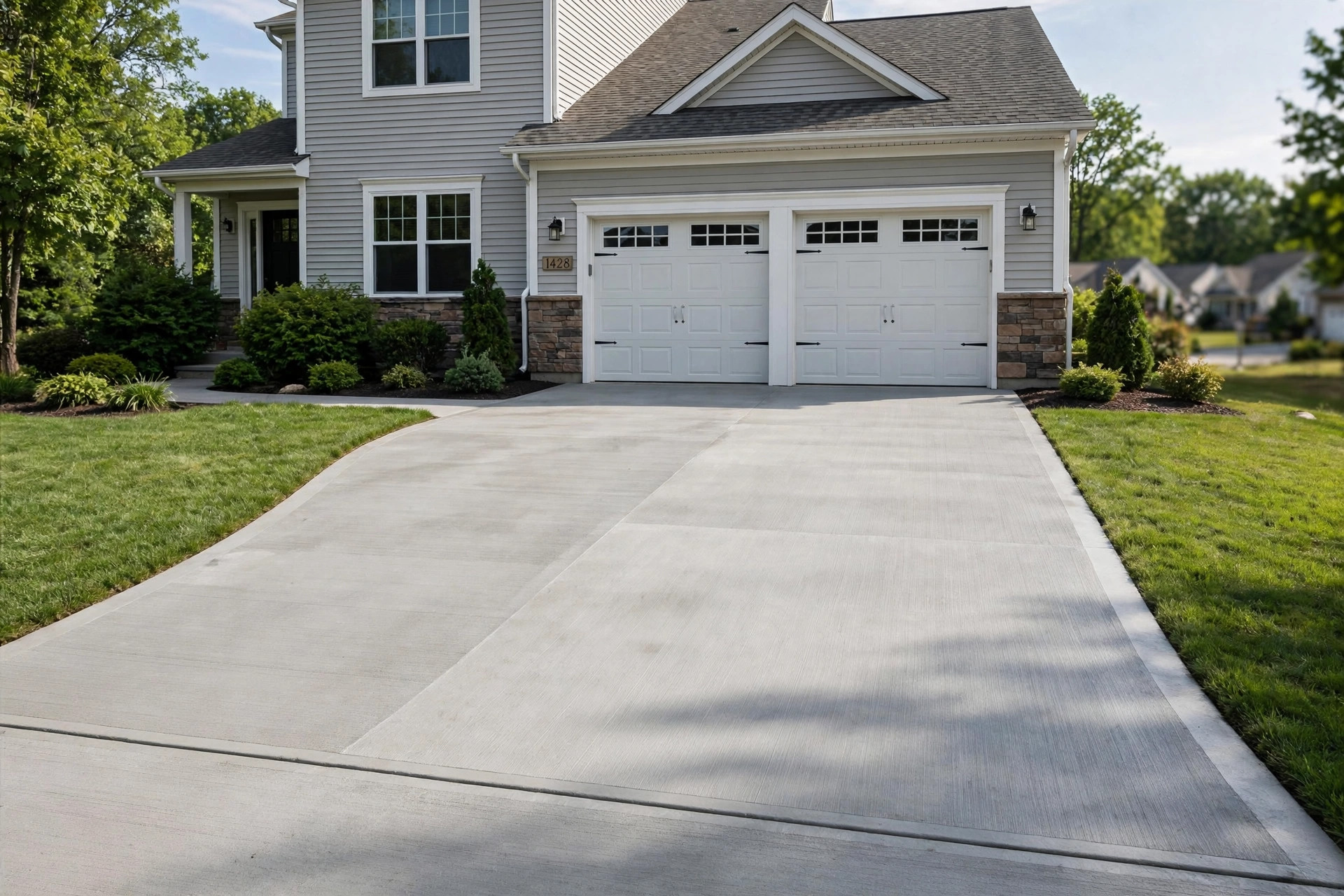

Every homeowner reaches a point where the driveway stops looking the way it once did. Cracks spread. The surface flakes. Stains settle in and will not wash out. When that day comes, the search for the best concrete driveway resurfacing near me begins. Full replacement is costly and takes days of heavy work. Resurfacing offers a middle path. It covers the old concrete with a fresh, strong layer that looks new and lasts for years. This guide explains what resurfacing means, how to pick a good contractor, what it costs, and how to care for the finished work. It is written in plain terms so any homeowner can follow it.
Why Resurfacing Matters
A driveway does more than hold cars. It frames the front of the house. Real estate agents often say that the first thing buyers notice is the exterior. A cracked and stained driveway can pull down the whole look of a property. Resurfacing restores that look at a fraction of the cost of a new pour.
There are practical reasons as well. Small cracks let water in. In cold states, that water freezes and expands. The freeze-thaw cycle turns a hairline crack into a wide gap. A fresh resurfacing layer seals the surface and keeps water out. It also evens out rough spots where people trip. A smooth surface is safer for children, older adults, and anyone walking up to the door at night.
Resurfacing is also kind to the environment. Tearing out an old driveway means heavy trucks, landfill loads of broken concrete, and a brand-new pour. Resurfacing uses far less material and energy. The old slab stays where it is and becomes the base for the new surface. For more on green choices around the home, the U.S. Environmental Protection Agency offers guidance on waste reduction in construction and renovation.
Signs Your Driveway Needs Resurfacing: Best Concrete Driveway Resurfacing near Me
Not every worn driveway is a good candidate for resurfacing. The key question is whether the base slab is still sound. Here are the signs that resurfacing is the right fix.
Surface-Level Signs
Look for spalling, which is the flaking or peeling of the top layer. You may see small pits where the surface has chipped away. Hairline cracks, the thin kind you can barely fit a coin into, are another sign. Oil stains, rust marks, and tire marks that will not come out with washing also point toward resurfacing. Rough patches where the concrete has worn thin are common after many years of sun and rain. All of these problems live on the surface, and a new layer covers them well.
Before any resurfacing job, a good contractor will clean the driveway hard. Power washing lifts grime, moss, and old sealant. If you want to learn more about that step, see our guide on top rated house power washing services near me. A clean slab bonds far better to the new layer.
Structural Warning Signs
Some problems go deeper than the surface. Wide cracks, wider than a quarter inch, may mean the slab is shifting. If one section of the driveway sits higher than the next, the ground underneath may have moved. Large sunken areas or crumbling edges are also structural. In these cases, resurfacing alone will not hold. The new layer will crack along the same lines. A contractor may need to repair or replace those sections first. If the whole slab is failing, full replacement may be the honest answer, even if it costs more.
What to Look For in a Resurfacing Contractor
Finding the best concrete driveway resurfacing near me means finding the right contractor, not just the lowest price. Start with a short list of local companies. Ask friends, neighbors, and local hardware store staff for names. Then check each name with care.
First, confirm the contractor is licensed and insured in your state. Ask for proof. A good company will show it without fuss. Second, ask how long they have done resurfacing work. A crew that pours concrete is not the same as a crew that does overlays. The skill sets overlap but differ. You want someone who does resurfacing often.
Third, ask for references from recent jobs, ideally within the last year. Drive by if you can. Look at how the edges meet the garage floor and the street. Good work has clean, straight lines. Fourth, ask what product they use. Name-brand concrete resurfacers from major suppliers tend to perform best. Contractors who buy materials from large retailers like Home Depot or Lowe’s can usually name the product on the spot.
Get at least three written estimates. Each should list the square footage, the product to be used, the surface preparation steps, and the warranty. Watch out for bids that are far lower than the others. That usually means thin preparation or cheap materials. Also check ratings on Consumer Reports and local review sites. Detailed guides on hiring and home repair basics can also be found at This Old House, Bob Vila, and Family Handyman.
Types of Resurfacing Options
There is more than one way to resurface a driveway. Each has its own look, cost, and life span.
Plain Concrete Overlay
This is the most common choice. The contractor cleans the slab, repairs small cracks, and spreads a thin layer of polymer-modified concrete over the top. The layer is usually a quarter to half an inch thick. It can be finished smooth, broom-textured for grip, or troweled. A plain overlay looks like fresh concrete because it is fresh concrete. It lasts ten to fifteen years with care.
Stamped or Patterned Overlay
If you want a driveway that looks like stone, brick, or slate, a stamped overlay is the answer. The contractor stamps a pattern into the fresh overlay while it is still soft. Color is added with stains or integral pigment. The result can be striking. It costs more than a plain overlay, but it can mimic high-end pavers at a lower price. For a real paver walkway option, see our paver walkway installation cost guide usa for comparison.
Spray Texture and Cool Decking
A spray texture, sometimes called cool decking, adds a knockdown finish that stays cooler under bare feet. It is popular in warm states like Florida, Texas, and Arizona. The texture also gives good traction when wet. It is thinner than a stamped overlay and costs less.
Sealers as a Finish
Every resurfacing job should end with a sealer. Sealers come in clear and tinted forms. They block water, salt, oil, and UV damage. A penetrating sealer soaks into the concrete. A film-forming sealer sits on top and can add a sheen. Your contractor should explain which type fits your climate.
Design ideas and curb appeal tips for the whole exterior are easy to find at The Spruce and the building product maker CertainTeed. For siding and trim projects that often pair well with a driveway upgrade, James Hardie is a useful reference.
Cost and Price
Cost is the first question most homeowners ask. Resurfacing a concrete driveway in the United States usually runs between three and ten dollars per square foot. A standard two-car driveway of about four hundred square feet therefore costs roughly twelve hundred to four thousand dollars. Plain overlays sit at the low end. Stamped and patterned work sits at the high end.
Several factors move the price up or down. Surface preparation is the biggest one. A driveway that needs heavy cleaning, crack repair, and leveling will cost more to prepare. Local labor rates matter too. Work costs more in large cities than in small towns. The product brand and the sealer choice add or subtract a few hundred dollars. Decorative color and stamping patterns add the most.
Get itemized quotes so you can compare. A quote should separate preparation, materials, labor, and the sealer. Ask whether the price includes cleanup and haul-away of debris. Also ask about payment terms. Never pay the full amount up front. A common schedule is one third to start, one third at the midpoint, and the rest when the work is done and you are satisfied.
How to Find the Best Service Near You
Typing best concrete driveway resurfacing near me into a search engine is a fine start, but it is only a start. Here is a simple method to find a strong local contractor.
1. Search and make a list of five to seven companies within twenty miles. 2. Check reviews on two or three sites. Look for patterns, not one-off complaints. 3. Visit each company website. Look for photos of real local jobs, not stock photos. 4. Call your top three. Ask how many resurfacing jobs they did last year. 5. Ask each to visit and measure the driveway in person. Phone-only quotes are a red flag. 6. Compare the written estimates side by side. 7. Check the license number with your state board before you sign.
While you are improving the exterior, other projects often come up at the same time. If the entry door needs work, our piece on best storm door installation near me may help. Many homeowners bundle exterior jobs to save on labor and scheduling.
Care and Upkeep
A resurfaced driveway is tough, but it is not carefree. Simple habits will add years to its life.
Clean it twice a year. A garden hose and a stiff broom handle most dirt. For tougher grime, use a pressure washer on a low setting and keep the nozzle moving. Stay back at least twelve inches to avoid etching the surface.
Reseal every two to four years, depending on your climate and the sealer type. In areas with road salt or heavy sun, reseal closer to every two years. The test is simple. Splash water on the driveway. If it beads up, the sealer is working. If it soaks in dark, it is time to reseal.
Avoid harsh deicing chemicals in winter. Plain sand gives traction without harming the surface. If you must melt ice, use a calcium-based product rather than rock salt, and use it sparingly. Do not let snow sit in piles on one spot for weeks. The freeze-thaw cycle under a snow pile stresses the surface.
Keep heavy loads off the edges. The center of a driveway carries weight best. Do not park oil-leaking vehicles on a fresh surface without a drip tray. Clean spills fast. Oil and grease can stain through sealer if left for days.
Safety
Resurfacing work is safe when done right, but there are points to watch. The products used are cement-based and can irritate skin and eyes. A good crew wears gloves, boots, and eye protection. You should keep children and pets away from the work area until the surface has cured.
The curing period matters. A new overlay usually needs one to three days before cars can drive on it. Foot traffic is often fine after twenty-four hours. Ask your contractor for exact times based on the product and the weather. Hot sun speeds curing. Cold and damp air slows it.
Make sure the finished surface has enough grip. A perfectly smooth finish can be slippery when wet. A light broom texture or a non-slip additive in the sealer solves this. This is especially important on sloped driveways. If anyone in the home uses a wheelchair or walker, mention it to the contractor. They can adjust the texture for extra grip.
General product safety guidance for home projects is published by the U.S. Consumer Product Safety Commission. While you are at it, give the whole exterior a once-over: check railings, steps, and walkways for the same trip hazards you just fixed in the driveway.
FAQ
How long does concrete driveway resurfacing last? A well-done overlay lasts ten to fifteen years. Good preparation, a quality product, and regular sealing push it toward the high end. Poor preparation can cut the life in half.
How long does the job take? Most residential driveways take one to three days of work, plus curing time. Preparation day comes first. The overlay goes on next. The sealer follows. Plan on keeping cars off the driveway for two to four days total.
Can I resurface my own driveway? Small patch kits exist for minor repairs, and a skilled homeowner can handle them. A full driveway overlay is harder. It needs the right mix, the right weather, and fast, even application. Most homeowners get better results with a professional crew.
Will the new surface match my old concrete color? Not exactly. The new layer will look like fresh concrete, which is lighter than old, weathered concrete. This is normal. If a uniform color matters, ask about tinted sealers or a stamped finish that covers the whole surface.
What time of year is best for resurfacing? Late spring through early fall is best in most of the country. The air should be dry and above fifty degrees for several days. Avoid work in rain, frost, or extreme heat. Your contractor will know the local window.
Is resurfacing cheaper than replacement? Yes, in most cases. Resurfacing usually costs about half as much as tearing out and replacing a driveway. It also takes less time and makes less mess. Replacement is only the better choice when the old slab is structurally failing.
A Short Final Word
A tired driveway does not have to mean a torn-up yard and a big bill. Resurfacing gives most concrete driveways a clean, strong new surface at a fair price. The work starts with an honest look at your slab. If the base is sound, the next step is finding a skilled local contractor. Ask for licenses, references, written estimates, and a clear warranty. Then keep up with simple care: clean it, seal it, and treat it gently in winter. Do that, and your search for the best concrete driveway resurfacing near me will end with a driveway that looks new and stays that way for years.
References
Bob Vila. (n.d.). Home improvement advice. https://www.bobvila.com CertainTeed. (n.d.). Building materials and exterior products. https://www.certainteed.com Consumer Reports. (n.d.). Product reviews and ratings. https://www.consumerreports.org Family Handyman. (n.d.). DIY home repair and maintenance. https://www.familyhandyman.com James Hardie. (n.d.). Fiber cement siding and exterior products. https://www.jameshardie.com Lowe’s. (n.d.). Home improvement products. https://www.lowes.com The Home Depot. (n.d.). Home improvement products. https://www.homedepot.com The Spruce. (n.d.). Home and garden advice. https://www.thespruce.com This Old House. (n.d.). Home renovation guidance. https://www.thisoldhouse.com U.S. Environmental Protection Agency. (n.d.). Protecting human health and the environment. https://www.epa.gov
Was this guide helpful?

About David Wilson
The My Garden US editorial team writes practical, in-depth home and garden guides for American homeowners — tested advice, no fluff.
You May Also Like
Professional Grade Exterior Door Replacement for Homeowners
January 13, 2026 0 views
Affordable Siding Color Visualizer Tools for Humid Climates: A Simple Guide
March 17, 2026 0 views
Weather Resistant Exterior Lighting Fixtures for Sale: A Buyer’s Guide
June 26, 2026 0 views