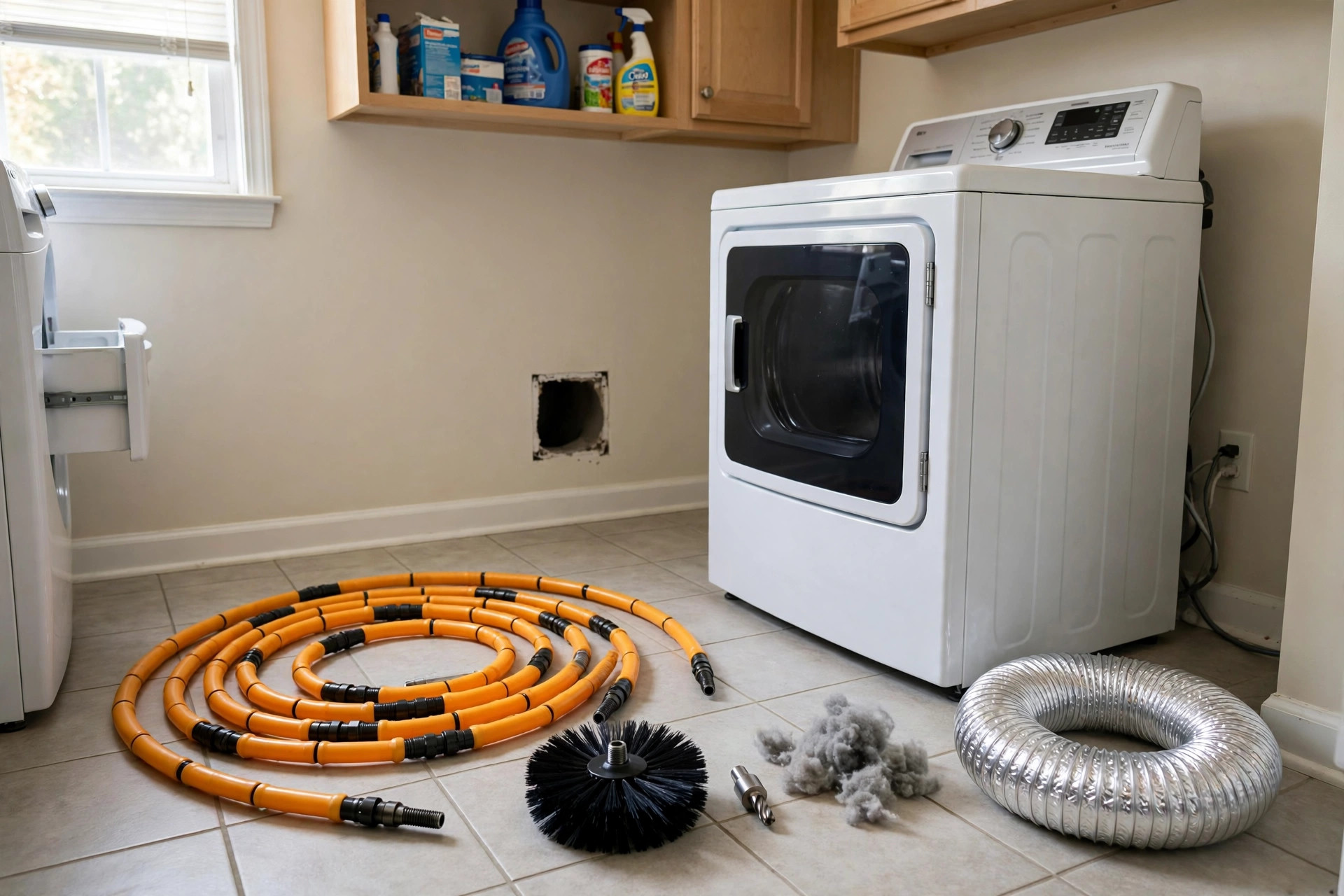

A dryer vent cleaning kit is a simple set of tools. It lets a home owner clean the lint out of a dryer vent duct without hiring a service. A dryer vent cleaning kits price comparison usa guide helps a shopper see what these kits cost, what each one includes, and which kit gives fair value for the money. Prices in the United States run from about ten dollars to about forty dollars. Most good kits sell for between fifteen and thirty dollars.
This article walks through the whole subject in plain terms. It explains why vent cleaning matters, what to look for in a kit, the main types of kits on the market, what fair prices look like, how to keep the tools in good shape, how to stay safe while using them, and answers to the questions shoppers ask most.
Why Cleaning a Dryer Vent Matters
Every time a dryer runs, it pushes out warm, damp air through the vent duct. Lint fibers ride along with that air. Some lint lands in the lint trap, but a good share of it sticks to the walls of the duct. Over the months, the layer grows thicker. The duct gets narrow. Air flow slows down.
A clogged vent hurts in three ways. First, the dryer takes longer to dry clothes, so it uses more power. Second, damp air trapped in the duct can cause mustiness and moisture trouble inside the laundry room. Third, and most serious, built up lint can catch fire. Dryer lint burns fast. Fire safety agencies in the United States have long listed clogged dryer vents as a common cause of home fires. Home owners can read general home fire safety facts from agencies such as the U.S. Consumer Product Safety Commission and the Environmental Protection Agency.
A cleaning kit pays for itself the first time it is used. A service visit from a vent cleaning company often costs well over one hundred dollars. A kit costs a fraction of that and can be used again each year.
What to Look for in a Dryer Vent Cleaning Kit: Dryer Vent Cleaning Kits Price Comparison Usa
Not all kits are equal. A low price means little if the parts break on the first use. The points below show what separates a useful kit from a waste of money.
Rod Length and Reach
The flexible rods are the heart of the kit. Most kits include rods that join end to end. A full set of rods usually reaches ten to twelve feet. Some kits reach twenty feet or more. A longer reach matters for vents that run through a wall or up to a roof. Before buying, measure the vent run from the back of the dryer to the outside cap. Pick a kit whose rods can cover the full length.
Brush Size and Shape
Kits ship with one or two round brushes. The standard vent duct in an American home is four inches across. The brush should match that size. A brush that is too small will miss lint. A brush that is too big will get stuck. Some kits include a smaller brush for the lint trap area and a vacuum hose attachment for fine dust.
Rod Strength and Connectors
Cheap rods bend and snap. Rods made of firm plastic or nylon last longer. Look for rods that screw together with firm connectors rather than slip fit joints. Screw connectors hold tight when the rods spin. Kits meant for use with a power drill should say so on the package. Drill driven kits spin the brush fast and clean deep, but they need strong rods.
Lint Trap and Vacuum Attachments
A few kits add a long, thin attachment that cleans under and behind the lint trap. Others add an adapter that fits a home vacuum hose. These extras add value. A deep clean of the trap area removes the fine lint that the vent brush cannot reach.
Types of Dryer Vent Cleaning Kits
Stores sell three main types of kits. The price differences come mostly from what is included and how well the parts are made.
Basic Brush and Rod Kits
The basic kit is the most common type. It has a set of flexible rods, one round brush, and sometimes a drill adapter. Prices usually fall between ten and twenty dollars. These kits suit short, straight vent runs. They work well for first floor laundry rooms where the vent exits straight through the wall behind the dryer. Home improvement stores like The Home Depot and Lowe’s carry many such kits, and product roundups on sites like The Spruce and Bob Vila often compare them.
Drill Driven Kits
Drill driven kits add a shank that fits into a standard power drill chuck. The spinning brush scrubs the duct walls far better than a hand pushed brush. Prices run from about fifteen to thirty dollars. For long vents or vents with bends, a drill driven kit is worth the extra money. How to guides at Family Handyman and This Old House often show this method in action.
Pro Style and Vacuum Kits
Pro style kits include longer rods, sturdier brushes, a vacuum hose adapter, and a lint trap cleaning tool. Prices range from about twenty five to forty dollars. Some kits in this group reach twenty feet or more. They are the right pick for two story homes where the vent runs up through the walls to the roof. Independent test reports, such as those at Consumer Reports, help shoppers weigh build quality against price.
Dryer Vent Cleaning Kits Price Comparison USA: What Fair Prices Look Like
The chart below gives a plain view of the market as most shoppers find it.
– Under fifteen dollars. Basic kits with short rods and one brush. Fine for short straight vents. Quality can vary. – Fifteen to twenty five dollars. The sweet spot. Most kits here include a drill adapter, a four inch brush, and enough rods to reach ten to twelve feet. – Twenty five to forty dollars. Longer rods, stronger build, vacuum adapters, and extra brush sizes. Best for long or hard to reach vents.
A few rules keep a shopper from overpaying. First, a kit that only adds packaging and a fancy name is not worth double the price. Second, read the rod count and total length, not the headline claims. A kit that lists eight rods of one foot each reaches eight feet, no more. Third, check whether a drill adapter is included. Buying one separately adds five to eight dollars. Fourth, sets that include a lint trap tool or vacuum adapter often give the best value at the middle price point.
Sales and store brands can lower prices by a few dollars, but the spread is narrow. A careful dryer vent cleaning kits price comparison usa search should focus on total rod length, brush quality, and included extras rather than small price gaps of two or three dollars. Household cleaning guides at Good Housekeeping sometimes note that mid priced kits perform as well as the costly ones for most homes.
How to Use a Kit Step by Step
A careful job takes about thirty minutes. The steps are simple.
First, unplug the dryer or switch off the gas supply. Pull the dryer away from the wall. Loosen the clamp and slide the vent hose off the back of the dryer.
Second, connect the rods and the brush. Push the brush into the duct opening by hand for the first few feet. Keep the brush moving in and out with short strokes.
Third, attach the drill adapter if the kit includes one. Run the drill at a slow speed. Feed the rods in a little at a time. Never force the rods. If they hit a sharp bend, work them back and forth gently.
Fourth, go outside and clean from the outside cap as well. Remove the cap cover if needed. Pull out the lint by hand, then brush the duct from that side.
Fifth, clean the lint trap slot with the narrow attachment. Vacuum up the loose lint on the floor and behind the dryer. Reconnect the hose, tighten the clamp, push the dryer back, and restore power.
Care and Upkeep of the Kit
A kit that is stored well lasts for many cleanings. Rinse the brushes with warm water and let them air dry before putting them away. Wipe the rods clean of dust and lint. Store the rods straight, not coiled tight, so they do not take a permanent bend. Keep the small connectors in the kit bag so none are lost. Check the brush bristles each year. If the bristles are flat or broken, replace the brush head. Most makers sell replacement brushes at a low cost.
Home owners who also clean other parts of the house may want to compare prices on related tools. A steam mop for tile floors price comparison can help with hard floor care, a baseboard cleaning tools price comparison covers trim and edges, and a cordless electric scrubbers price comparison shows what powered scrubbing tools cost.
Safety Notes
Dryer vent cleaning is safe work, but a few rules matter. Always cut power or gas to the dryer before starting. Never run a gas dryer with the vent hose off. Wear a dust mask and eye cover, because disturbed lint fills the air. Work the rods by hand before turning on the drill, so the brush does not catch on a seam and kink a rod. Do not push rods into a plastic foil duct with heavy force, because thin foil ducts tear easily. If the duct is crushed, disconnected, or full of water, stop and call a service company.
Clean the vent once a year in a normal home. Homes with large families or pets that shed may need cleaning twice a year. A dryer that takes more than one cycle to dry a normal load, a laundry room that smells musty, or a vent cap outside that shows no air flow are all signs that cleaning is overdue.
Frequently Asked Questions
How much should I pay for a dryer vent cleaning kit?
Most home owners pay between fifteen and thirty dollars for a kit that handles the job well. Kits under fifteen dollars can work for short vents. Kits over thirty dollars suit very long vent runs. There is little reason for most homes to pay more than forty dollars.
Can I use the kit with a regular power drill?
Yes, if the kit includes a drill adapter and the rods are rated for drill use. Use a slow speed and feed the rods in gently. Stop if the rods bind. Not every cheap kit is safe for drill use, so read the package notes.
How long should the rods be?
Measure the vent from the dryer to the outside cap and add two feet. Most kits reach ten to twelve feet, which fits a standard single story run. Two story homes with roof vents often need twenty feet of rods or more.
Do these kits work on rigid metal ducts and flexible ducts?
They work on both. Rigid metal ducts clean up well and take brushing without harm. Flexible foil ducts need a gentler touch, since strong spinning can tear the foil. For fragile ducts, turn the brush by hand rather than with a drill.
How often should I clean my dryer vent?
Once a year is right for most homes. Clean twice a year if the dryer runs daily, if there are pets in the home, or if the vent run is long with several bends. Mark the date on a calendar so it is not forgotten.
Is it cheaper to buy a kit or hire a service?
A kit is far cheaper. One service visit often costs more than three times the price of a good kit. The kit pays for itself on the first use and serves for years. Hire a service only if the vent is damaged, disconnected, or unreachable.
A Short Final Word
A dryer vent cleaning kit is a small purchase that guards a home in a real way. It lowers fire risk, cuts drying time, and saves power. The market in the United States offers fair choices at every price from about ten to about forty dollars. The best buy for most homes is a mid priced drill driven kit with at least ten feet of rods and a four inch brush. Compare the total rod length, the brush quality, and the included extras before looking at the price tag. Do the job once a year, store the tools with care, and the dryer will run safer and cheaper for years to come.
References
Bob Vila. (n.d.). Home improvement advice. https://www.bobvila.com Consumer Reports. (n.d.). Product reviews and ratings. https://www.consumerreports.org Family Handyman. (n.d.). DIY home repair and maintenance. https://www.familyhandyman.com Good Housekeeping. (n.d.). Product reviews and home advice. https://www.goodhousekeeping.com Lowe’s. (n.d.). Home improvement products. https://www.lowes.com The Home Depot. (n.d.). Home improvement products. https://www.homedepot.com The Spruce. (n.d.). Home and garden advice. https://www.thespruce.com This Old House. (n.d.). Home renovation guidance. https://www.thisoldhouse.com U.S. Consumer Product Safety Commission. (n.d.). Product safety information. https://www.cpsc.gov U.S. Environmental Protection Agency. (n.d.). Protecting human health and the environment. https://www.epa.gov
Was this guide helpful?

About David Wilson
The My Garden US editorial team writes practical, in-depth home and garden guides for American homeowners — tested advice, no fluff.
You May Also Like
Buy Wet Dry Shop Vacuums Online in Arizona: A Plain Guide
February 16, 2026 0 views
Buy Window Cleaning Robots Online in Arizona: A Plain Guide
September 21, 2026 0 views
Best Same Day Appliance Repair Services Near Me
January 22, 2026 0 views