
Spills happen in every home. Coffee tips over. A child drops a cup of juice. The dog tracks in mud from the yard. In each case, a good cleaning kit can save the carpet. That is why many shoppers look for reliable carpet stain remover kits with free shipping. They want a product that works, at a fair price, delivered to the door without extra fees. This guide explains what these kits include, how to pick a good one, what they cost, and how to use them so your carpet stays clean for years.
Why a Good Kit Matters
A carpet is one of the largest surfaces in a home. It collects dirt, spills, and stains every day. If a stain sets, it can become permanent. A reliable kit lets you act fast. Most kits come with a spray, a brush or cloth, and simple directions. Some also include a small scrub pad or a stain guard. With the right kit on hand, you can treat a spill in minutes, before it soaks deep into the fibers.
Speed is the main reason. A fresh stain is much easier to lift than an old one. When you have the kit under the sink, you do not waste time searching for a cleaner. You grab it and go. Homes with kids and pets benefit most. Play areas, hallways, and family rooms see heavy use. Keeping a kit nearby in those rooms is a smart habit. Many home care guides from The Spruce remind readers that prompt treatment is the single best step in stain removal.
A good kit also protects your money. Wall to wall carpet is costly to replace. Professional cleaning helps, but it costs money each time. A store bought kit handles small jobs between deep cleans. That stretches the life of the carpet and keeps it looking fresh. Readers who want deeper cleaning between kit sessions may also compare upholstery cleaning machines reviews and buying guide for larger jobs.
What to Look For When You Choose: Reliable Carpet Stain Remover Kits with Free Shipping
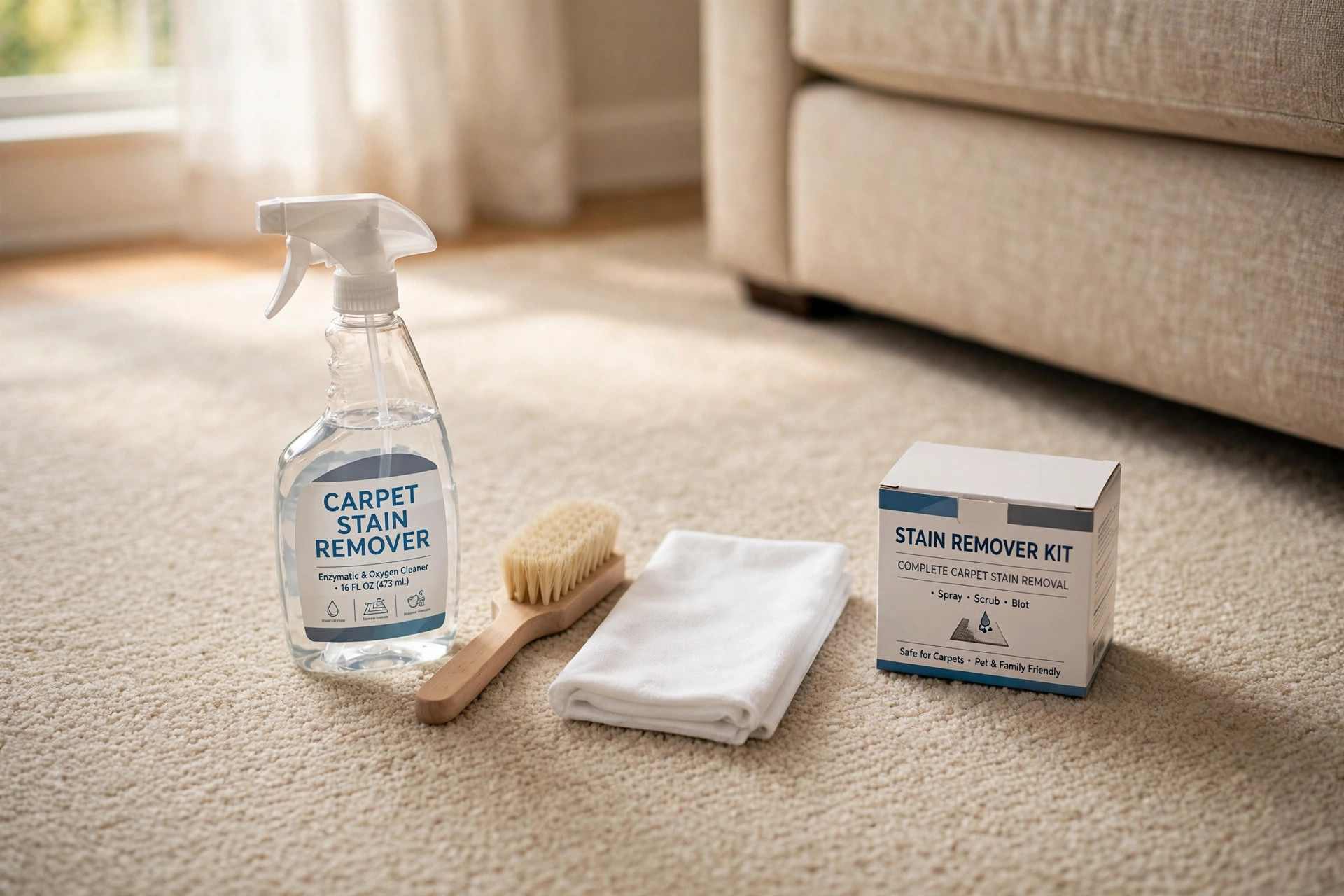
Not all kits are equal. A reliable one should meet a few clear tests. First, look at what the kit contains. At minimum, it should have a stain removal spray or foam, plus a tool for working the cleaner into the fibers. A small brush with soft bristles is best. Hard bristles can fray delicate carpet. Some kits add a white cloth or a scraper. Those extras help lift dried spots.
Second, check what stains the product claims to handle. A wide range is better. Coffee, tea, wine, juice, grease, mud, and pet stains are common in American homes. A kit that treats most of them is more useful than one built for a single problem. Read the label for the stain list. Pet owners should confirm the kit works on urine and odor, since those need enzymes to break down. For extra help with smells, a companion product like a budget friendly pet odor eliminator spray for sale can be useful after the stain is lifted.
Third, check safety and fabric fit. The spray should be safe for your carpet type. Wool, nylon, polyester, and blends each react in their own way. The label usually lists the fibers it suits. If your carpet type is not listed, test on a hidden patch first. Also look for clear warnings about bleach. A kit that uses bleach may lighten colored carpet. Many cleaning safety resources from the EPA suggest reading product labels fully before use.
Fourth, weigh value. Compare the price per ounce across brands. A large bottle at a fair price often beats a small fancy box. Free shipping adds real value, since cleaning sprays are heavy to mail. Sellers who offer free shipping save you money without cutting quality. Just make sure the seller is a real store with clear return terms.
Finally, read the directions before you buy if you can. Good kits give plain steps: blot, spray, wait, blot again, rinse. Confusing directions often mean a weak product. Simple steps are a sign of a tested kit.
Types of Carpet Stain Remover Kits
Most kits on the market fall into a few groups. Knowing the groups helps you pick the right one for your home.
Spray and brush kits. These are the most common. A trigger spray bottle holds the cleaner. A small hand brush or pad does the scrubbing. They are simple, cheap, and good for fresh spills. They suit homes that need quick spot work once in a while.
Enzyme based kits. These use natural enzymes to break down organic stains. They are the best choice for pet messes, milk, blood, and food. Enzymes work slowly, so the kit may tell you to wait ten or twenty minutes. The wait is worth it. Enzyme cleaners often lift stains that regular sprays leave behind.
Oxygen power kits. These use oxygen based cleaning agents. They are strong on old, set in stains like coffee and tea. They often come as powders or foams. You mix the powder with warm water, apply it, and let it sit. They are a good pick for dining rooms and kitchens where food stains are common.
Portable spot cleaner kits. These cost more but work harder. They include a small machine that sprays water and cleaner, then sucks the dirty water back up. They clean deeper than a hand brush. They are best for homes with pets, toddlers, or light colored carpet. The buying experts at Consumer Reports often test compact carpet cleaners and report how each handles set in stains.
Travel and touch up kits. These are small packs for cars, offices, or rental homes. They hold wipes or a small spray. They are handy to keep in a hall closet. They are not meant for big jobs, but they catch small spills fast.
When you shop, you may also see multi surface kits that claim to clean carpet, upholstery, and hard floors. Those can be handy, but check the carpet results first. A kit that does one job well beats a kit that does three jobs poorly.
Cost and Price
Reliable carpet stain remover kits cover a wide price range. Basic spray and brush kits usually sell for about eight to fifteen dollars. Enzyme kits run about twelve to twenty dollars. Oxygen based kits fall in the same band. Portable spot cleaner kits cost more, often sixty to one hundred fifty dollars for a compact model.
Free shipping changes the math. A kit priced at twelve dollars with free shipping is a better deal than the same kit at nine dollars plus five dollars in freight. Many online sellers offer free shipping above a certain order total. Some offer it on every cleaning product. When you compare prices, always add the shipping line. The home improvement writers at Bob Vila often advise shoppers to check the full cart price before they call a deal a bargain.
Sales also matter. Big holidays bring discounts on cleaning goods. Major stores such as Home Depot and Lowe’s often run these sales, both online and in store. Stocking up during a sale saves money over the year. Buying two kits at once can also push an order over the free shipping line. That said, cleaners do expire. Check the shelf life on the label. Buying more than you can use in a year or two wastes money. Most sprays keep for one to three years if stored in a cool, dry place.
If you are comparing brands side by side, a top rated carpet stain remover kits buying guide can help you weigh features, prices, and shipping terms before you decide.
Care and Upkeep
A kit only helps if you keep it ready. Store it where you can reach it fast. Under the kitchen sink or in a laundry room shelf works well. Keep it away from heat. Garages that bake in summer can break down the chemicals. Check the bottles once a year. Replace anything past its date.
The carpet needs care too. Vacuum often. Weekly vacuuming pulls up dry soil before it grinds into the fibers. In busy homes, vacuum high traffic lanes twice a week. Blot spills right away. Never rub. Rubbing pushes the stain deeper and can spread it wider. Use a clean white cloth so dye does not transfer to the carpet. The step by step methods shared by Family Handyman follow this same blot first rule.
Rinse after cleaning. Leftover cleaner attracts dirt. After the stain is gone, dab the spot with plain water and blot dry. Place a stack of paper towels on the spot and set a book on top. The towels will pull out the last moisture. Let the spot dry fully before you walk on it.
Deep clean the carpet every twelve to eighteen months. A kit handles spots, but it cannot replace a full cleaning. You can rent a machine or hire a service. Between deep cleans, keep the kit stocked. A kit with an empty spray bottle is no kit at all.
Safety
Cleaners are chemicals, and they deserve respect. Read the full label before each use. Keep the kit away from children and pets. Store it on a high shelf or in a locked cabinet if small children live in the home. Never mix products. Mixing a bleach cleaner with an ammonia cleaner can create harmful fumes.
Ventilate the room while you work. Open a window or run a fan. Wear gloves if your skin is sensitive. Keep food and dishes away from the cleaning area. If the spray gets in your eyes, rinse with water at once and follow the label advice. The consumer safety guidance at the CPSC stresses keeping household chemical products in their original containers with labels intact.
Test first on every new carpet or rug. Pick a spot behind a door or under furniture. Apply a small amount, wait the full time the label suggests, then blot and dry. If the color holds and the texture stays smooth, the kit is safe for that carpet. This test takes five minutes. It can save a whole room of carpet.
People with allergies or asthma should check for strong scents. Some sprays have heavy perfume. Unscented or low scent formulas are widely sold. Look for that wording on the label. A quick note: keep pets off the treated spot until it is fully dry. Their paws pick up residue, and they may lick it.
Frequently Asked Questions
Do carpet stain remover kits work on old stains? They can help, but old stains are harder. The stain has had time to bond with the fibers. Oxygen based kits and enzyme kits give the best shot at old spots. Apply the cleaner, give it the full wait time on the label, and repeat the treatment if the first pass leaves a shadow. For very old stains, you may need a portable spot machine or a professional service. Free resources like the stain guides at Good Housekeeping walk through repeat treatment steps.
Can I use a carpet kit on upholstery or rugs? Sometimes. Many carpet sprays are safe for synthetic upholstery. But check the label first. Natural fabrics like silk, wool blends, or leather need special products. Test a hidden spot on any chair or sofa before a full treatment. If the label only lists carpet, keep it to carpet.
How long should I wait before blotting after I spray? Follow the label. Most kits ask for five to fifteen minutes. Enzyme kits may ask for longer. The wait lets the cleaner break down the stain. Rushing cuts the results. Set a timer so you do not forget.
Will a stain remover kit bleach my carpet? A good kit should not. But some products contain whitening agents. Colored carpet is at most risk. Always run the hidden spot test. If you see any lightening in the test patch, stop and pick a different kit. The product testing notes at This Old House remind readers that color fastness varies by carpet dye.
Is free shipping really a saving, or just built into the price? It can be either. Some sellers raise the price to cover freight. Others truly ship free as part of a deal. Compare the final total across sellers. Include tax where it applies. A twelve dollar kit with true free shipping usually beats a nine dollar kit with six dollars in freight.
How do I keep the kit working between uses? Cap the bottles tight. Wipe the spray nozzle so it does not clog. Store the kit upright in a cool spot. Replace the brush when the bristles bend. Check dates once a year and replace old bottles. A kit in good shape is ready the moment a spill hits the floor.
A Short Final Word
A clean carpet starts with fast action. When you keep reliable carpet stain remover kits with free shipping in the house, you are ready for the next spill. Pick a kit that fits your stains, your carpet type, and your budget. Test it once, learn the steps, and store it where you can grab it. Your carpet will look better, last longer, and cost less to keep. That is a small habit with a large reward.
References
Bob Vila. (n.d.). Home improvement advice. https://www.bobvila.com Consumer Reports. (n.d.). Product reviews and ratings. https://www.consumerreports.org Family Handyman. (n.d.). DIY home repair and maintenance. https://www.familyhandyman.com Good Housekeeping. (n.d.). Product reviews and home advice. https://www.goodhousekeeping.com Lowe’s. (n.d.). Home improvement products. https://www.lowes.com The Home Depot. (n.d.). Home improvement products. https://www.homedepot.com The Spruce. (n.d.). Home and garden advice. https://www.thespruce.com This Old House. (n.d.). Home renovation guidance. https://www.thisoldhouse.com U.S. Consumer Product Safety Commission. (n.d.). Product safety information. https://www.cpsc.gov U.S. Environmental Protection Agency. (n.d.). Protecting human health and the environment. https://www.epa.gov
Was this guide helpful?

About Robert Taylor
The My Garden US editorial team writes practical, in-depth home and garden guides for American homeowners — tested advice, no fluff.
You May Also Like
Antibacterial Disinfectant Sprays Price Comparison USA: A Practical Buying Guide
June 27, 2026 0 views
Cordless Carpet Deep Cleaning Machines for Sale: A Homeowner’s Guide
April 12, 2026 0 views
Buy Microfiber Cleaning Cloth Sets Online in Colorado
September 23, 2026 0 views