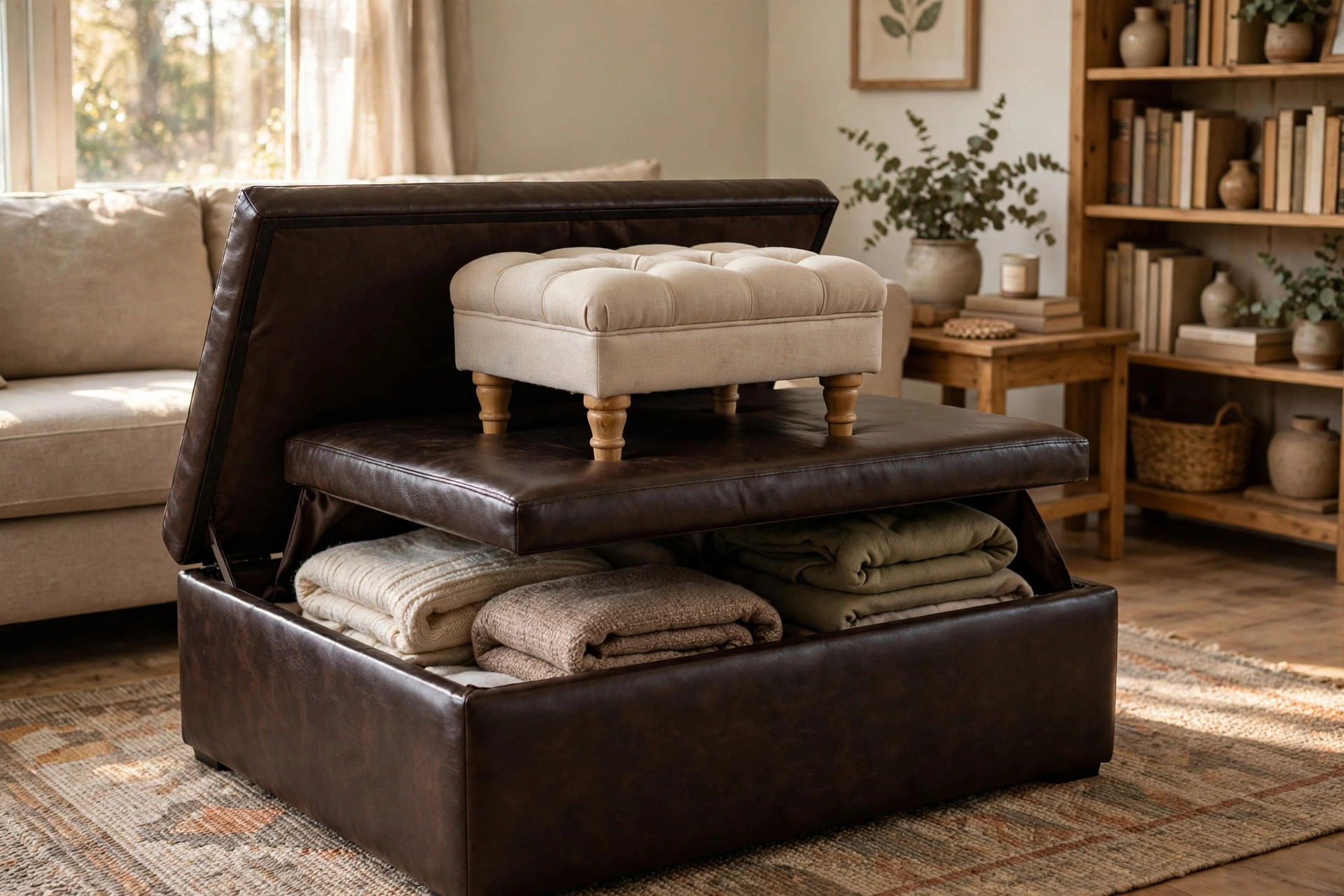
A stackable ottoman storage bench is one of the handiest pieces of furniture a small home can own. It holds blankets, toys, books, or winter clothes inside its lid. It gives you a place to sit, to rest your feet, or to set a tray for tea. And when you buy a set that stacks, you can pile one on top of another and free up the floor in seconds. This stackable ottoman storage benches buying guide walks you through every choice you will face: size, frame, cover, lid type, weight limit, and price. Read it before you shop, and you will buy once and buy right.
Why Storage Ottomans Earn Their Keep
Most homes have clutter that needs a quick hiding place. A living room with a basket in the corner looks fine, but a storage ottoman does the same job and adds a seat. A guest room gains a spot for extra pillows. A child’s bedroom turns the foot of the bed into a toy chest. Because these benches stack, they also solve a problem that ordinary chests cannot. When guests come over, stack both ottomans in the corner. When you need them apart, split the set and place one by the sofa and one by the window.
Homeowners have used ottomans for rest and foot support for over a century, but the storage version is a modern gift. The hollow center wastes no space. The lid lifts or flips with a soft motion. The top pad often doubles as a tray table. Retailers such as Wayfair carry dozens of models, which shows how popular the idea has become. Guides from The Spruce note that small-space living has made multi-use furniture the standard choice for apartments and condos.
What to Look for Before You Buy: Stackable Ottoman Storage Benches Buying Guide
A good bench must do three things well: hold weight, hold goods, and hold up over time. Check these points in every model you consider.
Size and Stacking Design
Measure first. Most single benches run 28 to 48 inches wide. A pair that stacks should use the same footprint so the top piece sits flat and steady. If the top bench is even one inch narrower on each side, it can rock. Look for stacking guides, recessed lids, or interlocking rims that lock the pieces together.
Height matters too. A bench that is 15 to 18 inches tall works as a footrest. One that is 20 inches tall works as an extra seat. When stacked, the pair may reach 36 inches. Make sure the stacked set fits where you plan to park it, such as under a console table or beside a bookcase.
Weight Capacity
The frame rating tells you how much a bench can hold on top. Budget models often rate 200 to 250 pounds. Mid-range models reach 300 to 350 pounds. Heavy-duty sets rated for 400 pounds or more suit homes where the bench serves as a real seat. Consumer Reports reminds shoppers that rated limits assume even weight across the lid, so a heavy person sitting on one edge can still strain a weak frame.
Materials and Frame Strength
Frames come in wood, engineered wood, and metal. Solid pine or rubberwood frames last the longest and handle daily use. Plywood with a hardwood veneer sits in the middle: strong, lighter, and less costly. Particleboard or MDF frames cost the least but chip at the corners and sag under heavy lids.
Metal frames, usually steel tube, suit modern rooms and carry high loads. The trade-off is a harder edge if a child bumps into one. Test reports from Bob Vila often favor solid wood and steel frames over cheap composite cores.
Upholstery and Coverings
Covers decide the look and the care. Common choices include linen-look polyester, velvet, faux leather, and real leather. Polyester blends resist stains and clean with a damp cloth, so they suit family rooms. Velvet looks rich but shows wear where hands press. Faux leather wipes clean in seconds and suits entryways, though sharp pet claws can nick it.
Check the seam work. Double-stitched seams hold longer than single rows. Tufted tops look classic but catch crumbs in the buttons. A smooth, plain lid is the easiest to clean and the best base for a tray.
Lid Styles and Hinges
Three lid styles dominate the market. A standard flip lid opens like a chest. A flip-top reversible lid shows a cushioned side on one face and a flat tray side on the other. A sliding or split lid divides the bench into two openings, which helps when two people store goods at once.
Hinges matter more than most buyers expect. Soft-close or safety hinges stop the lid from slamming on small fingers. Piano hinges run the full width and spread stress evenly. Small barrel hinges look neat but may loosen with time. How-to articles at Family Handyman show that adding a slow-close hinge is a simple upgrade if a model you like lacks one.
Feet, Legs, and Floor Safety
Some benches sit flat on the floor. Others stand on legs of wood, metal, or plastic. Legs raise the bench and make vacuuming easy, but they raise the center of gravity and must be sturdy. Check that legs screw into metal plates rather than bare wood. Rubber or felt pads protect hardwood floors from scratches. Big-box stores like Home Depot and Lowe’s sell felt pad kits for a few dollars, and Amazon and Target stock wide ranges of the benches themselves.
Types of Stackable Ottoman Storage Benches
Shops sort these benches into a few clear groups. Knowing the group helps you narrow the field fast.
Nesting ottoman sets. Two or three benches in descending sizes fit inside one another or stack in a tower. These suit tiny apartments where every inch counts.
Cube ottomans. Square, often 17 inches on each side, cubes stack into neat columns of two or three. They double as side tables and store small goods like remotes and chargers.
Storage bench with back. Some models add a low backrest. They cannot stack, so skip them if stacking is your goal. We mention them only so you do not buy one by mistake.
Flip-top tray ottomans. The lid flips to a hard surface for serving. Two of these stacked give you both a coffee table and a spare seat.
Vanity and bedroom benches. Long, low benches for the foot of the bed or a dressing table. Many come in pairs meant to stack in a closet when guests arrive.
Pairing this search with related guides helps. If you also store shoes, our guide on stackable shoe storage boxes reviews and buying guide covers see-through plastic boxes that work well beside an ottoman. For closets and kitchens, see best pantry shelving units for humid climates.
Cost and Price Ranges
Prices vary by size, material, and brand. Expect these ranges for a single bench in the United States.
– Budget ($30 to $80): Particleboard or MDF frame, polyester cover, basic hinges. Fine for light use in a guest room. – Mid-range ($80 to $180): Plywood or solid wood frame, better upholstery, soft-close hinges, 300-pound rating. The sweet spot for most families. – Premium ($180 to $400 or more): Solid hardwood, real leather or top-grade fabric, dovetailed joinery, designer details. Built to last a decade or more.
Sets of two stackable benches often cost 1.6 to 1.8 times the single price, so a pair saves money against two singles. Watch for shipping fees on heavy models. Stores such as The Container Store and mass retailers often run seasonal sales on storage furniture in January and August.
Care and Upkeep
A little care keeps a storage bench looking new for years.
– Vacuum the fabric top each week with a soft brush head. – Wipe faux leather with a damp cloth and mild soap. Dry it at once. – Blot spills on fabric right away. Rubbing drives stains deeper. – Tighten leg bolts and hinge screws twice a year. Vibration loosens them. – Keep the bench out of direct sun. Sunlight fades fabric and dries out leather. – Do not drag the bench across the floor. Lift it, even when it feels light. – Leave the lid open for an hour after storing damp blankets so air can move.
If the cover wears out before the frame does, slipcovers and reupholstery are cheap options. A Home Depot staple gun and an hour of work can give a tired bench a fresh face.
Safety Notes for Homes With Kids and Pets
Storage furniture brings two main risks: heavy lids and tipping.
– Choose soft-close hinges so the lid cannot slam on fingers. – Make sure the lid stays open on its own at a safe angle. A lid that drifts shut is a pinch hazard. – Stack no higher than the maker allows. Two high is the common limit. – Place the heaviest stored goods in the bottom bench so the tower stays steady. – Keep the bench away from windows where a child might climb it. – If a pet sleeps inside an open bench, teach children to check before closing the lid. – Wall-anchoring straps, sold for dressers, can secure a tall stack in homes with toddlers.
Comparing other storage furniture helps here. Bedroom pieces differ in risk, and our article on nightstands with storage drawers price comparison usa shows how drawers and tip-over rules work for tall bedroom furniture.
Frequently Asked Questions
How much weight can a stackable ottoman storage bench hold?
Most models hold 200 to 350 pounds on the lid. Heavy-duty steel-frame models reach 400 pounds or more. Check the maker’s rating, and sit in the center of the lid rather than on its edge.
Can I really stack them without damage?
Yes, if the set is sold as stackable. The lids are built to take the load, and stacking guides keep the tower steady. Do not stack benches that were not made for it; their lids can dent or crack.
What is the best fabric for a house with pets?
Tightly woven polyester or microfiber resists claws and hair better than velvet or linen. Faux leather wipes clean but can scratch. Keep a lint roller nearby, and trim pet nails often.
How do I clean inside the storage box?
Empty it, vacuum the inside, and wipe the walls with a damp cloth and mild soap. Let it air dry with the lid open. A small cedar block or baking soda sachet keeps it smelling fresh.
Are storage ottomans good as coffee tables?
A sturdy, flat-lidded bench works well as a coffee table for light items such as books and remotes. Flip-top models with a hard tray side are best. Avoid placing hot dishes directly on fabric; use a trivet or tray.
Should I buy one large bench or two smaller stackable ones?
Two smaller stackable benches give more options. Use them apart for seating, stack them to save space, or move one to another room. One large bench holds more in a single box and often costs less per cubic inch of storage.
A Final Word
The right bench fits your room, your goods, and your budget. Measure your space, pick a frame stronger than you think you need, choose a cover that matches your daily life, and insist on safe hinges. A well-made stackable ottoman storage bench will serve you for years as a seat, a table, and a quiet place for clutter. Use this stackable ottoman storage benches buying guide as a checklist when you shop, and you will bring home a piece you use every single day.
References
Amazon. (n.d.). Online shopping. https://www.amazon.com Bob Vila. (n.d.). Home improvement advice. https://www.bobvila.com Consumer Reports. (n.d.). Product reviews and ratings. https://www.consumerreports.org Family Handyman. (n.d.). DIY home repair and maintenance. https://www.familyhandyman.com Lowe’s. (n.d.). Home improvement products. https://www.lowes.com Target. (n.d.). Retail store. https://www.target.com The Container Store. (n.d.). Storage and organization products. https://www.containerstore.com The Home Depot. (n.d.). Home improvement products. https://www.homedepot.com The Spruce. (n.d.). Home and garden advice. https://www.thespruce.com Wayfair. (n.d.). Furniture and home goods. https://www.wayfair.com
Was this guide helpful?

About James Carter
The My Garden US editorial team writes practical, in-depth home and garden guides for American homeowners — tested advice, no fluff.