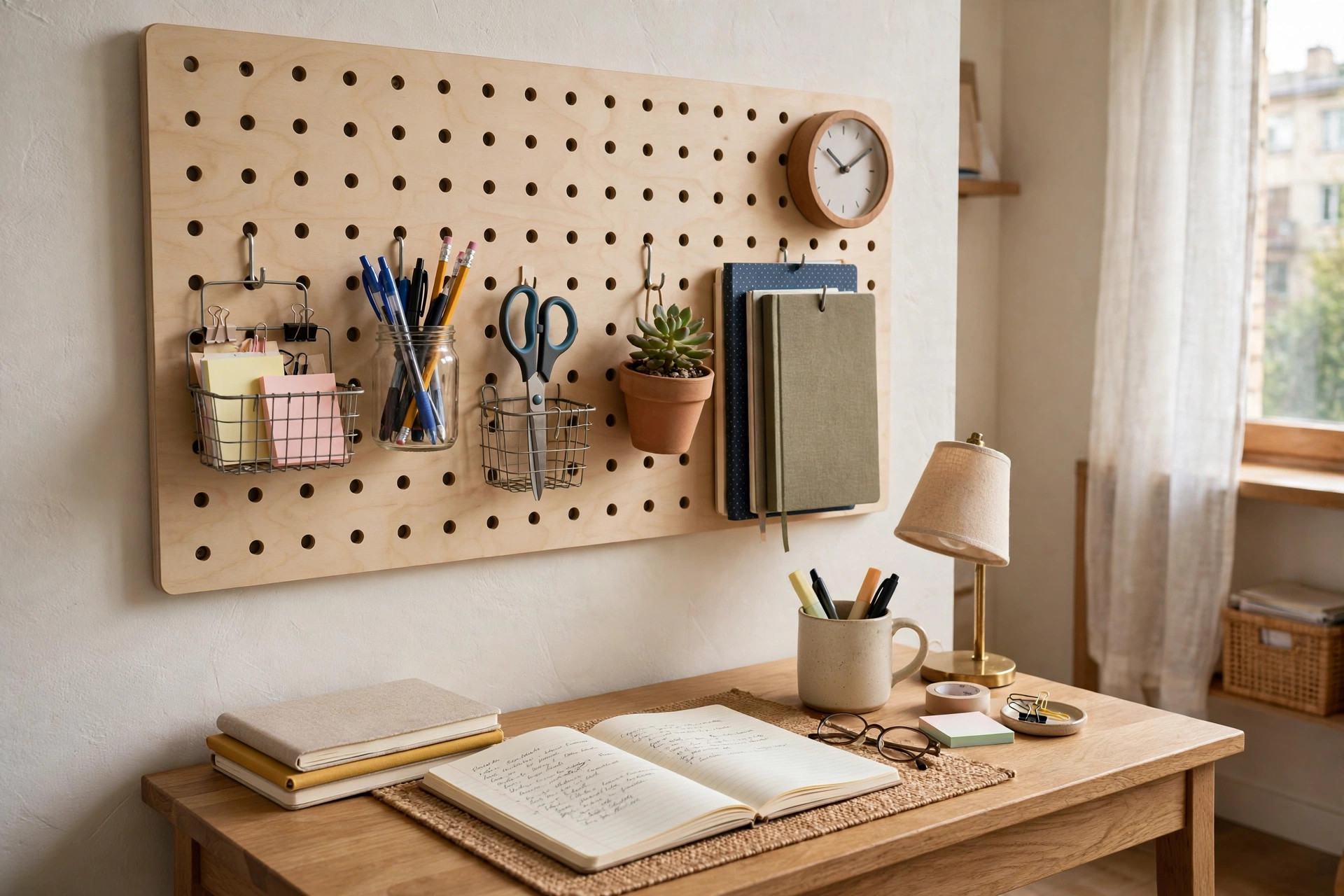
Small apartments ask a lot of every square foot. A closet must serve two people. A kitchen drawer must hold three tools in the space of one. When floor space is short, the walls must do more of the work. The best pegboard wall organizers for small apartments turn a bare wall into a full storage zone. They hold keys, mail, tools, craft goods, and kitchen items in plain sight. They cost little. They mount in an afternoon. And they move with you when the lease ends.
This guide looks at what makes a pegboard wall organizer right for a small home. It covers the types on the market, what to look for when you shop, what they cost, how to care for them, and the safety points that matter most in a rented flat. By the end you will know which style fits your rooms and your budget.
Why It Matters
A small apartment does not forgive clutter. A pile of papers on the counter grows fast. A drawer full of loose batteries and scissors wastes time. Wall storage solves both problems at once. It lifts small items off counters and desks. It puts them where your eye and hand can reach them. A pegboard does this better than most shelves because it can change. You move the hooks. You add a basket. You take down a cup. The board stays. The layout grows with your needs.
Pegboards suit renters. Many models hang from a single rail or a few screws. Some use adhesive hooks and need no holes at all. When you move out, the board comes down in minutes. The wall needs only a dab of filler. Landlords tend to approve of that. A full shelving unit takes more time, more holes, and more of the room. A pegboard gives most of the benefit with a fraction of the fuss.
There is also the matter of sight. In a small room, open storage can look neat or messy. A pegboard with a calm color and tidy hooks looks neat. It frames the wall like a picture. It can carry plants, photos, and lamps as well as tools. Many apartment dwellers treat their boards as part of the decor, not just as storage.
If you want to compare costs across models, a pegboard wall organizers price comparison guide can help you see what each style sells for in the United States.
What to Look For When You Shop: Best Pegboard Wall Organizers for Small Apartments
Size and Shape
Start with the wall, not the board. Measure the free space above your desk, workbench, or entry table. A board that is too wide crowds the room. A board that is too short wastes the chance to store. For most small apartments, a panel of two by four feet serves a desk well. An entry nook does fine with a panel of one by two feet. Square panels look clean above a dresser. Long narrow strips fit behind doors and in hallways.
Hole Spacing and Hook Fit
Pegboards use a grid of holes. The common spacing is one inch. Hooks made for one-inch spacing are easy to find and cheap. Some boards use a wider or metric grid. They look modern, but their hooks cost more and are harder to replace. For a first board, stick to the standard one-inch grid. You will find more hooks, cups, and shelves that fit it. Big hardware stores such as The Home Depot and Lowe’s stock a full range of one-inch accessories.
Material
Boards come in three main materials. Hardboard is the classic brown sheet. It is light and cheap, and it takes paint well. It does not like damp rooms. It can bow if you load it heavy. Metal pegboard is steel with baked paint. It holds more weight and shrugs off kitchen steam. It costs more. It may need magnets in place of some hooks. Plywood and pine boards are the craft-store kind. They look warm and natural. They hold screws well. They need a seal coat in damp rooms.
For a rental flat, metal or sealed plywood tends to last longest. Hardboard suits dry rooms and light loads. Apartment living guides at Apartment Therapy often show small-home setups that favor these lighter options.
Mounting Method
How the board hangs matters as much as the board. French cleats give a strong hold and a level line. They take two strips of wood and four screws. Spacer blocks behind a hardboard panel keep hooks from hitting the wall. Adhesive strips work for light loads and no holes. They suit mail, keys, and small cups. Toggle bolts grip drywall when no stud sits behind your spot. Pick the method that fits your wall and your lease. Ask your landlord before you drill into tile, brick, or plaster.
Weight Capacity
Add up what the board will hold. Scissors, tape, and jars weigh little. A full set of hand tools weighs more. Most hardboard panels hold fifteen to twenty pounds across the face. Metal panels hold more, often thirty to fifty pounds. Do not guess. Check the maker label. Spread heavy items across the board, not in one corner. Independent test groups such as Consumer Reports publish load and durability notes on storage goods.
Types of Pegboard Wall Organizers
Classic Hardboard Panels
The brown sheet with round holes is the old workhorse. You can buy it in large sheets and cut it to fit. Paint it to match the wall and it almost disappears. Add hooks and it springs to life. It is the cheapest path to a full wall of storage. It works best in bedrooms, home offices, and craft corners where loads stay light.
Metal Pegboards
Steel panels come in colors from white to matte black. They resist dents and wipe clean. Many have square holes that grip hooks tight. Some makers add a lip at the top for a shelf. Metal boards suit kitchens, laundry nooks, and entry walls. They cost more than hardboard but they outlast it. You can shop many styles at IKEA and Wayfair, which carry both metal and wood designs.
Wooden and Framed Boards
Pine, oak, and plywood boards bring warmth. Frames in walnut or white make the panel look like furniture. These boards suit living rooms and hallways where looks count. They hold a fair load. They take wood stain and paint with ease. Craft guides at The Spruce show how a framed board can anchor a small reading corner.
Pegboard Kits and Systems
Some makers sell full kits. A kit has the panel, a set of hooks, cups, shelves, and mounting gear in one box. Kits cost more than a bare panel, but they save shopping trips. They suit first-time buyers. Check that the kit holes match standard accessories. A kit with a strange grid locks you into one brand.
Desk and Tabletop Pegboards
Small pegboard screens stand on a desk. They need no wall at all. They suit renters who may not drill. They hold pens, notes, and small tools within arm reach. They come in metal and plastic. They work well in a studio flat where the desk is the office, the dining table, and the craft bench in one.
For readers who need more rolling floor storage to pair with wall storage, a look at top rated rolling storage carts for small apartments can round out the plan.
Cost and Price
Pegboard storage is kind to the budget. A plain hardboard panel runs about ten to twenty dollars. Metal panels run thirty to eighty dollars, based on size and finish. Wooden framed boards run twenty to sixty dollars. Kits with hooks and shelves run forty to one hundred dollars. Tabletop screens run fifteen to forty dollars.
Hooks and accessories add up. A bag of twenty metal hooks costs five to ten dollars. Small baskets and cups cost three to eight dollars each. A full setup for a desk wall often totals fifty to one hundred dollars with accessories. That is far less than a shelving unit of the same reach.
Watch for sales. Big chains cut prices on storage in January and August. Online shops run spring deals. Used boards appear on local boards and resale sites. A used metal panel cleans up well with soap and water. Price guides from home repair sources such as This Old House note that simple wall storage holds its value, so used prices stay fair.
If wall storage is not enough on its own, some renters add corner closet organizers to use the dead space where walls meet.
How to Set Up Your Pegboard
A good setup starts with a plan. Lay the board on the floor. Place your hooks and items on it. Move things until the layout feels right. Keep daily items at hand height. Put rare items high or low. Group like with like: mail with keys, tools with tape, spice jars with measuring cups.
Mark the wall with a pencil. Use a level. A board that tilts will nag you every day. Drill pilot holes for screws. Add spacers behind hardboard so hooks clear the wall. Hang the board and step back. In the entry, a small board holds keys, mail, and sunglasses. In the kitchen, a metal board holds spice jars and utensils. In the home office, it holds notebooks, pens, and headphones. Live with the layout for a week, then tweak.
Care and Upkeep
Pegboards need little care. Dust the board each month with a dry cloth. Wipe metal boards with a damp cloth and dry them at once. Check hooks now and then. Hooks that slip may need a tighter fit or a locking type. Tighten mounting screws once a year. Walls settle and screws can loosen.
In damp rooms, watch for rust on metal and swell on hardboard. Seal wood boards with paint or clear coat. Move paper goods off the board if steam builds up. A small fan helps a laundry nook stay dry.
Repainting refreshes an old board. Sand it light, prime it, and add two thin coats. Let each coat dry fully. A fresh color can make a five-year-old board look new. Keep spare hooks in a small box. When you buy more, buy the same spacing so every hook fits every board in your home.
Safety
Safety starts with the mount. A loaded board is heavy. Anchor it into studs when you can. Use wall anchors rated above your planned load. Do not hang a board over a crib or a child bed. Keep sharp tools high and out of small hands. Lock scissors and craft knives in a latched cup.
Watch the weight on adhesive mounts. Strips hold a set limit, and heat or steam can cut that limit. Test a light load first. Check the strips each season. If an edge lifts, replace the strip at once.
Renters should read the lease. Some leases bar holes in tile and brick. Some cap the number of wall fasteners. When in doubt, ask in writing and keep the answer. Filler and touch-up paint fix most small holes at move-out. Take a photo of the bare wall before you drill. It settles disputes later.
Keep cords clear. Do not mount a board over an outlet you use each day. Leave space so plugs slide in and out. Keep a board away from stove heat and open flame. Paper goods on a board near a burner are a fire risk.
Frequently Asked Questions
Will a pegboard hold up in a rented apartment?
Yes. Light boards hang on adhesive strips or a few small screws. Metal boards hang on a rail with four fasteners. All of these come down fast at move-out. Small holes fill with spackle in minutes. Many landlords accept this kind of mount.
How much weight can a pegboard hold?
It varies by material and mount. A hardboard panel on spacers often holds fifteen to twenty pounds. A steel panel on studs can hold thirty to fifty pounds. Check the maker rating. Spread heavy items across the face. When the mount is weak, the board rating does not matter. Anchor well.
Can I use a pegboard in the kitchen or bathroom?
Yes, with care. Pick metal or sealed wood. Keep the board clear of direct water and stove heat. Wipe it dry after steamy use. Paper labels and wood items last longer on a board set a few feet from the shower or sink.
Do I need special hooks?
Most boards use the one-inch hole grid, and hooks for that grid are common and cheap. Some modern boards use square holes or a metric grid. Those need brand hooks. Before you buy accessories, measure your holes. Standard hooks cost less and give you more choice.
How do I keep a pegboard from looking messy?
Limit the colors. Pick hooks in one finish. Group items by use. Leave some empty space. A board that is full edge to edge looks busy. A board with room to breathe looks calm. Rotate seasonal items off the board into a box.
Is a pegboard better than shelves for a small apartment?
It depends on the load. Pegboards win for small loose items: tools, mail, craft goods, spices. They flex as your needs change. Shelves win for books, boxes, and heavy stacks. Many small homes use both. A short shelf under a pegboard gives you the best of each.
A Final Word
The best pegboard wall organizers for small apartments share a few traits. They fit the wall you have. They use the common one-inch grid. They mount with care and hold a safe load. They look like they belong in the room. And they change with you, month to month, lease to lease.
Start small. Pick one wall, one board, and the items you reach for each day. Live with it. Move a hook or two. Add a basket when the need shows up. In time the board will feel less like storage and more like part of the home. That is the true test of any organizer in a small flat: it earns its place on the wall.
References
Apartment Therapy. (n.d.). Home design ideas and inspiration. https://www.apartmenttherapy.com Consumer Reports. (n.d.). Product reviews and ratings. https://www.consumerreports.org IKEA. (n.d.). Home furnishings. https://www.ikea.com Lowe’s. (n.d.). Home improvement products. https://www.lowes.com The Home Depot. (n.d.). Home improvement products. https://www.homedepot.com The Spruce. (n.d.). Home and garden advice. https://www.thespruce.com This Old House. (n.d.). Home renovation guidance. https://www.thisoldhouse.com Wayfair. (n.d.). Furniture and home goods. https://www.wayfair.com
Was this guide helpful?

About Michael Thompson
The My Garden US editorial team writes practical, in-depth home and garden guides for American homeowners — tested advice, no fluff.