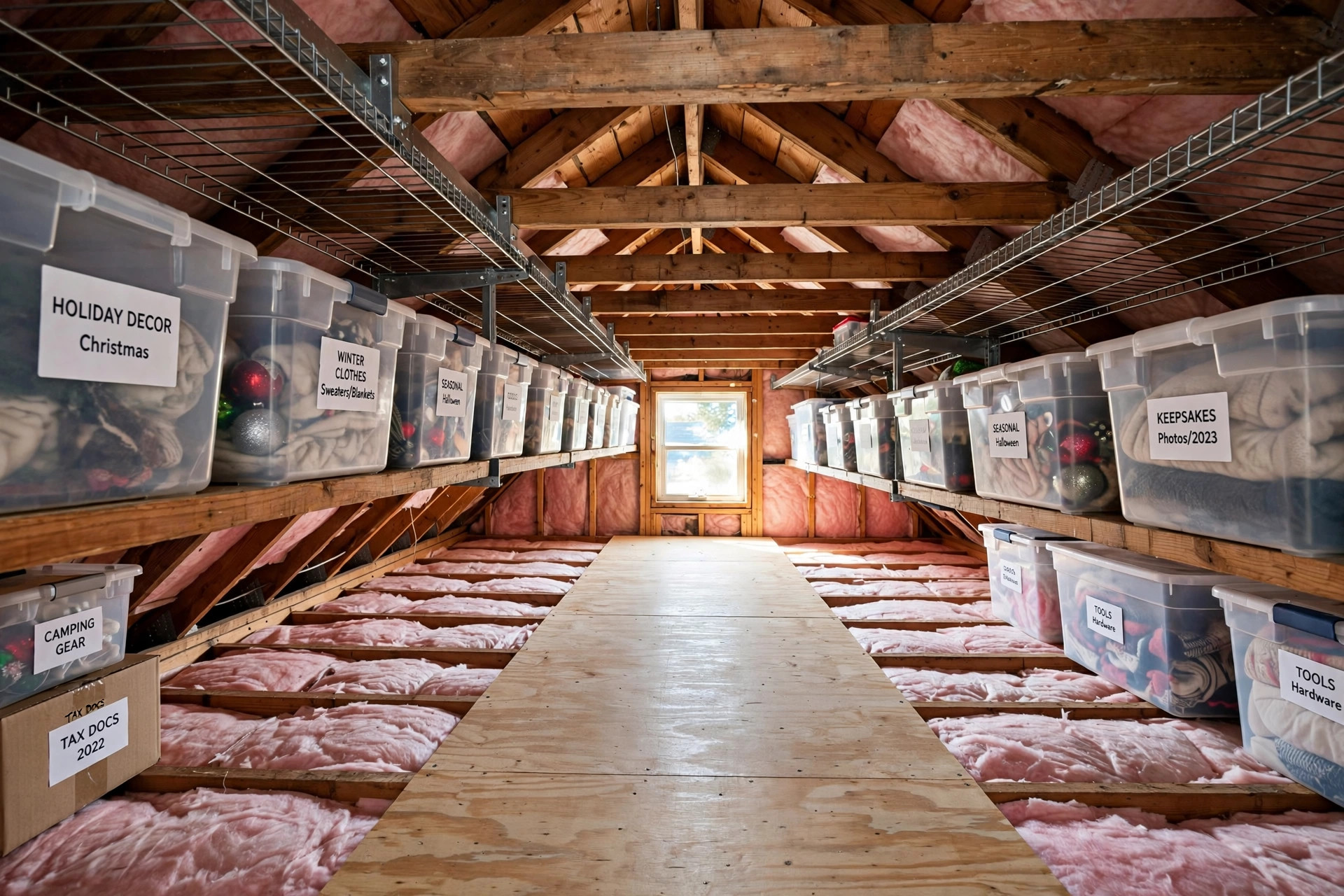

Many homes in the United States have an attic that sits empty. It holds dust and old insulation. Nothing else. That is wasted space. Most families need more room for their things. Closets fill up fast. Garages fill up faster. The attic can help. The good news is that space saving attic storage solutions for sale today make it simple to use that high space. You do not need a big remodel. You do not need a crew of workers. With the right racks, bins, and boards, you can turn a dusty attic into a safe place for holiday boxes, old files, and sports gear.
Why Attic Storage Matters
Storage space is one of the most common complaints among home owners. A survey of American families would show the same wish again and again: more room, less clutter. The attic answers that wish without adding a single square foot to the house.
An attic already belongs to you. You paid for it when you bought the home. When you leave it empty, you lose that value. When you use it well, you gain space that would cost thousands of dollars to add any other way.
There is also a simple daily benefit. Clutter in living rooms and hallways creates stress. Boxes in the garage block the car. Items on closet floors get damaged. Moving rarely used things up to the attic clears the rooms you live in every day. Seasonal items fit the attic best. Christmas lights, winter coats, camping gear, and old tax papers can all wait upstairs until you need them.
Before you buy anything, though, the attic must be ready. Not every attic is fit for storage. The next section explains how to check.
What to Look for Before You Buy: Space Saving Attic Storage Solutions for Sale
A good storage plan starts with a look at the attic itself. Go up on a mild day and bring a flashlight. Check five things.
Access. Can you get up there safely? A pull-down ladder is the minimum. A full stairway is better. If you must carry heavy boxes up a steep ladder, rethink the plan. Some buyers add a larger attic door or a better ladder first. That is a wise move.
Floor. Many attics have open joists with no floor. You cannot set boxes on bare joists. They will tip or fall through the ceiling below. You need attic flooring panels or plywood sheets that spread the weight across the joists. This is the first item most buyers should put on their list.
Height. Measure the peak height. If you can stand upright in the middle, shelving units and stackable bins work well. If the roof is low, overhead racks that hang from rafters fit better. Buy for the space you have, not the space you wish you had.
Weight limits. Joists are built to hold the ceiling below, not a warehouse of boxes. A common rule is 10 pounds per square foot for light storage in most trusses. Heavy items like books need extra care. Spread weight wide. Keep the heaviest boxes near the center, above load-bearing walls when you can.
Temperature and moisture. Attics get hot in summer and cold in winter. They can also trap damp air. Do not store photographs, wood furniture, leather, or electronics in a hot attic unless it is well vented. Use sealed plastic bins, not cardboard, to fight dust and damp. Check for roof leaks before you put anything of value up there.
Once these five checks pass, you can shop with confidence.
Types of Attic Storage Solutions
The market offers many space saving attic storage solutions for sale. Most fall into five groups. Each solves a different problem.
Overhead Attic Storage Racks
These steel racks bolt to the ceiling joists and hang above the floor. They lift boxes off the ground and use air space that would otherwise sit empty. A typical rack holds 250 to 600 pounds. They are ideal for long, flat items like plastic bins and holiday totes. Installation needs two people and basic tools. This is the most popular choice for buyers who want real capacity without losing floor room.
Attic Flooring and Decking Panels
Flooring panels sit on top of the joists and create a solid platform. Many are made of plywood or composite board and snap together. A full floor lets you walk safely and stack bins anywhere. Some panels are raised on small legs so insulation below keeps working. If your attic has no floor at all, start here before you buy racks or shelves.
Attic Shelving Units
Free-standing metal or wood shelves stand on the attic floor. They work best where the roof is tall enough to stand in. Shelves keep bins at waist height so you do not bend and lift from the floor. Look for units with adjustable levels. That way tall bins and short boxes can share one shelf.
Attic Storage Bins and Totes
The right bin matters as much as the right rack. Clear plastic bins let you see what is inside without opening the lid. Latching lids keep out dust and pests. Stackable bins use vertical space well. Label each bin on two sides with a marker or printed tag. A bin system turns a messy pile into an organized wall of storage.
Specialty Items
A few extra products solve common attic problems. Attic stair covers add insulation around the hatch door. Walkway boards give you a safe path from the ladder to the racks. Pulley lift systems help raise heavy bins through the hatch without carrying them up a ladder. Cord and hose reels keep extension cords neat. These small buys make the attic far easier to use.
Cost and Price
Prices vary by product and by store, but most buyers can plan with simple ranges.
Overhead steel racks usually cost 60 to 200 dollars each, based on size and weight rating. Attic flooring panels run about 8 to 20 dollars per panel, and a small attic may need 20 to 40 panels. Shelving units cost 40 to 150 dollars each. Good plastic storage bins sell for 6 to 20 dollars apiece, with larger latching totes at the high end. Specialty items like stair covers and pulley lifts range from 25 to 120 dollars.
A basic setup for a small attic often totals 200 to 400 dollars. That buys flooring for a walkway, one overhead rack, and a set of bins. A full setup with several racks, a large floor area, and full shelving can reach 800 to 1,500 dollars. That is still far less than renting a storage unit for one year.
Watch for sales. Home improvement stores run storage sales in January and again in late summer. Online stores often cut prices around holidays. Buying bins in multi-packs saves money over single bins. If you are filling a large attic, compare the total cost per cubic foot of storage across products before you decide.
Installation and Setup
Most space saving attic storage solutions for sale are made for home owners to install. Read the manual first. Lay out all parts and tools before you climb up.
Start with the floor. Lay flooring panels from the hatch outward so you always have a safe place to stand. Screw panels to joists where the maker suggests. Leave small gaps at the edges so the roof can still breathe.
Install overhead racks next. Find the joists with a stud finder and mark them. Bolt the rack frame to the joists, not to the drywall or to a single board. Have a helper hold the frame while you drive the bolts. Test the rack with a light load before you fill it. A rack that shifts or creaks needs its bolts tightened or moved to stronger wood.
Place shelving units against the tallest wall, usually the center wall under the peak. Keep them away from roof vents and chimneys. Set bins on shelves with the heaviest on the bottom. Leave a walkway at least two feet wide from the hatch to every storage zone. You will thank yourself the first time you carry a large box up.
Label as you go. Write the contents on each bin in big letters. Make a simple map on paper that shows where each group of items sits. Tape the map inside the hatch door. This small step saves hours of searching later.
If any job feels beyond your skill, hire a handyman for that part. A rack bolted wrong can fall. A floor laid wrong can crack a ceiling. One hour of paid help is cheaper than one repair.
Care and Upkeep
Attic storage needs little care, but it is not zero care. Check the attic twice a year, in spring and in fall. Look for roof leaks, wet spots on insulation, and signs of mice or insects. Open a few bins and make sure lids still seal. Tighten rack bolts once a year. They can loosen as wood shrinks and swells with the seasons.
Rotate items by season. When you take down holiday lights, put summer gear up in the same trip. This keeps the attic current and stops boxes from sitting untouched for years. If you have not opened a bin in three years, consider giving the contents away. Storage should serve your life, not bury it.
Dust the bins and sweep the floor once a year. Keep the attic vent screens clear so air keeps moving. Good air flow fights mold and keeps stored items fresh.
Safety
Safety comes first in any attic. Attics have real hazards, and simple rules prevent most accidents.
Never step on drywall or insulation between joists. Step only on joists or flooring. One wrong step can send a foot through the ceiling below.
Wear a dust mask, gloves, and eye protection when you work up there. Old insulation and dust irritate lungs and skin. A headlamp leaves both hands free on the ladder.
Do not overload racks or shelves. Respect the weight rating on the box. If a rack is rated for 300 pounds, do not guess at 400. Spread heavy loads across several racks.
Keep a clear path to the hatch at all times. In an emergency you must get out fast. Never block the ladder with boxes.
Watch the heat. Attics can reach 150 degrees in summer. Work in the morning or evening. Drink water. Take breaks. Do not store candles, aerosols, or anything that can melt or burst in high heat.
Keep a fire extinguisher on the main floor near the attic hatch. Never run extension cords across the attic floor where they can fray. If you add a light, use a battery or properly wired fixture, not a bare bulb on a cord.
Families with children should lock the attic hatch. An attic is not a playroom. The U.S. Consumer Product Safety Commission offers general home safety guidance that applies to storage areas as well.
FAQ
How much weight can my attic hold? Most truss attics are rated for about 10 pounds per square foot of light storage. Older homes with solid joists may hold more. Check your home plans or ask a contractor. When in doubt, store light and spread the load wide.
Are overhead racks hard to install? Most home owners finish one rack in one to two hours with a drill, a socket set, and a helper. The key step is finding the joists and bolting into solid wood. If your joists are hard to reach or look weak, hire a handyman.
What should I never store in an attic? Avoid photographs, film, fine art, leather goods, musical instruments, and electronics in attics that swing hot and cold. Candles, paint, and chemicals do not belong there either. Use a climate-controlled room or a storage unit for those items.
Plastic bins or cardboard boxes? Plastic bins win in attics. They resist dust, damp, and pests. Cardboard breaks down in heat and damp air and invites insects. Spend a little more on latching plastic totes and they will last for years.
Can I store things in an attic with no floor? You can, but only on overhead racks bolted to the joists. Do not set boxes on bare joists or insulation. Add flooring panels first if you want to use the floor at all. It is the safest upgrade you can make.
Where is the best place to buy these products? Home improvement stores carry the full range in one trip, and their staff can answer install questions. Online stores often have lower prices and wider choice, plus reviews from other buyers. For planning ideas, browse storage guides at The Container Store and IKEA, compare prices at The Home Depot, Lowe’s, Wayfair, and Amazon, and read how-to articles at The Spruce, Apartment Therapy, and Family Handyman.
A Short Final Word
An attic is free space you already own. With the right space saving attic storage solutions for sale, you can claim it in a single weekend. Start with safe flooring. Add racks that fit your roof height. Choose bins that seal tight and label them well. Keep weight low and walkways clear. Do that, and your attic will serve your home quietly for years.
For more organization ideas around the house, see our guides on dresser drawer dividers, rolling storage carts, and stackable bathroom vanity organizers.
References
Amazon. (n.d.). Online shopping. https://www.amazon.com Apartment Therapy. (n.d.). Home design ideas and inspiration. https://www.apartmenttherapy.com Family Handyman. (n.d.). DIY home repair and maintenance. https://www.familyhandyman.com IKEA. (n.d.). Home furnishings. https://www.ikea.com Lowe’s. (n.d.). Home improvement products. https://www.lowes.com The Container Store. (n.d.). Storage and organization products. https://www.containerstore.com The Home Depot. (n.d.). Home improvement products. https://www.homedepot.com The Spruce. (n.d.). Home and garden advice. https://www.thespruce.com U.S. Consumer Product Safety Commission. (n.d.). Product safety information. https://www.cpsc.gov Wayfair. (n.d.). Furniture and home goods. https://www.wayfair.com
Was this guide helpful?

About Jennifer Lee
The My Garden US editorial team writes practical, in-depth home and garden guides for American homeowners — tested advice, no fluff.
You May Also Like

Affordable Patio Cushion Storage Bags with Free Shipping
July 21, 2026 0 views
Lockable Pegboard Wall Organizers for Sale
May 28, 2026 0 views
Affordable Makeup and Cosmetics Organizers for Sale
April 4, 2026 0 views