This budget friendly patio cushion storage bags buying guide will help you protect your outdoor cushions without spending too much money. Patio cushions fade fast in the sun. They soak up rain. They grow mildew in damp air. A good storage bag keeps them dry and clean when you are not using them. The best news is that you do not need an expensive bag to get this protection. Many low cost bags work just as well as the high priced ones.
Outdoor furniture is a big purchase for most families. The cushions alone can cost more than the frames. When you leave them out all year, you lose money. Replacing them each spring is a heavy cost. A set of bags that costs less than one new cushion can add years to their life. This guide shows you how to pick the right bag at a fair price.
Why It Matters
Rain is the main enemy of outdoor cushions. Foam cores act like sponges. Once water gets deep inside, it takes days to dry. In that time, mildew grows. Mildew leaves dark spots. It also leaves a sour smell that is hard to remove. A waterproof bag stops this cycle before it starts.
Sun damage matters too. The fabric on most cushions fades after a few seasons in direct light. Colors turn pale. Seams grow weak. A storage bag gives the fabric a rest during winter or during long dry spells. Many shoppers compare bag costs with our patio cushion storage bags price comparison usa page before they buy.
Dust, pollen, and tree sap also wear cushions down. In many states, spring brings thick yellow pollen that settles on everything. Bird droppings stain fabric fast. A simple bag keeps all of this off the surface. Clean cushions look better and last longer.
Storage bags also free up space. Stacked cushions in a garage eat floor room. Bags with handles let you carry a full set in one trip. You can hang them on wall hooks or stack them on a high shelf. A tidy garage is a safer garage.
Finally, bags save time. When a storm rolls in, you can grab cushions in seconds. You will not need to wipe them down later. In homes with fast weather changes, this matters a great deal. Homeowners in damp regions may also want to read our best patio cushion storage bags for humid climates article for extra tips.
What to Look for Before You Buy: Budget Friendly Patio Cushion Storage Bags Buying Guide
The Fabric
The fabric decides how well the bag works. Look for polyester rated at 420 denier or higher. This number tells you the thickness of the threads. Thicker threads resist tears. Many budget bags use 420D polyester with a polyurethane coating. This coating blocks water. It is the same coating used in cheap rain jackets.
Avoid thin nylon bags with no coating. They rip at the seams. They also let water through. A bag that looks waterproof but is not will trap water inside. That is worse than no bag at all. Read the product label for words like waterproof, water resistant, or water repellent. Waterproof is best. Water resistant is fine for light use. If you need heavier protection, consider reading about outdoor deck storage boxes price comparison usa for a hard shell option.
The Size
Measure your cushions before you buy. Lay them flat and measure the length, width, and thickness. Add two inches to each number. The bag must be larger than the cushion stack. A tight bag stresses the zipper. A loose bag still protects well.
Most bags fit four to six standard chair cushions. Bench cushions are longer. Check the listed bag size against your bench length. Many buyers make the mistake of buying a bag that is too small. Returns waste time and shipping money. A tape measure costs little and saves a lot.
The Closure
Zippers are the most common closure. Look for a full length zipper that opens the bag wide. You can slide cushions in flat. This avoids bending them. Bent cushions lose their shape.
Some bags use drawstrings or buckles instead. Drawstrings are cheap but they leave a gap. Dust and bugs get in through the gap. Buckles hold tighter but take longer to close. For most people, a good zipper is the best choice. Test the zipper feel in the store if you can. It should glide without catching.
Air Flow
This point surprises many buyers. A fully sealed bag sounds good. In practice, a little air flow helps. Trapped damp air causes mildew. Many good bags have small mesh vents near the top. The vents let damp air out while keeping rain out.
If your cushions are dry when you bag them, vents matter less. But most people bag cushions after use, and they carry some dampness. In that case, vents are worth their weight in gold. They cost nothing extra. Many budget bags now include them.
Types and Options
Zippered Storage Bags
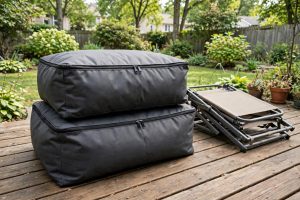
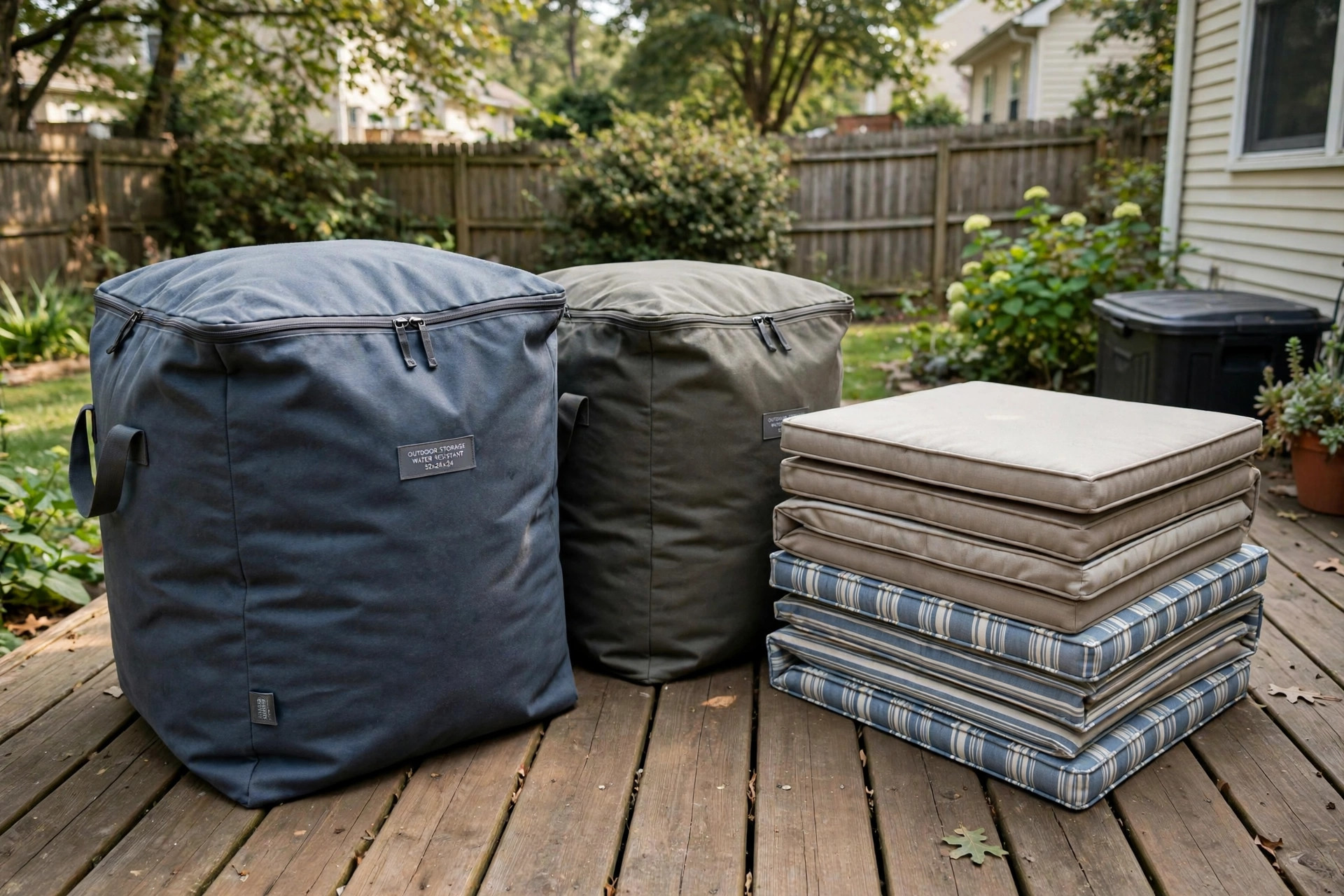
These are the most popular type. They look like big duffel bags. They cost between ten and thirty dollars in most stores. You can find them at major home stores, and large chains carry a wide range of outdoor storage goods at Home Depot. They come in black, green, or tan. Dark colors hide dirt well.
Zippered bags stack neatly. Most have handles on the sides and top. The best ones have padded handles. Padded handles do not dig into your hands when the bag is heavy. For a full set of sofa cushions, expect some weight.
Vacuum Storage Bags
Vacuum bags cost less than zippered bags. You put the cushion in, close the seal, and press the air out. The bag shrinks to about half its size. This saves a great deal of space.
The catch is that vacuum bags crush the foam. Thin foam bounces back. Thick foam may stay flat. For seat pads and thin pillows, vacuum bags work well. For thick chair cushions, skip them. Also note that you need a dry cushion. Vacuum sealing a damp cushion locks in the moisture. Reviewers at Consumer Reports often note how storage conditions affect fabric life.
Wheeled Storage Bags
Some bags have small wheels on one end. You tip the bag and roll it like a suitcase. This helps older shoppers and anyone with back pain. Wheeled bags cost a little more. Expect to pay five to ten dollars above a plain bag.
The wheels add weight. They also add parts that can break. If you only move cushions a few feet, skip the wheels. If you drag them across a large yard, wheels earn their keep.
Deck Boxes as an Alternative
A hard deck box holds cushions and doubles as a bench. It costs far more than a bag. But it lasts many years. For shoppers on a tight budget, a bag is the smarter first step. You can buy the box later. Practical storage ideas from This Old House show how many homeowners mix bags and boxes in one setup.
Cost and Price
Budget friendly bags range from eight to thirty five dollars. The cheapest bags use thin fabric and weak zippers. They may last one season. Mid range bags at fifteen to twenty five dollars often last three to five years. That is the sweet spot for most buyers.
Watch for sales at the end of summer. Stores clear outdoor goods in late August and September. Discounts of thirty to fifty percent are common. Big box retailers list their current prices online at Target and IKEA, which helps you spot a real deal.
Shipping costs matter for online orders. A fifteen dollar bag with eight dollar shipping is a twenty three dollar bag. Look for free shipping thresholds. Many sites offer it over thirty five dollars. Pair two bags in one order to cross the line.
Do not pay extra for brand names alone. A no name bag with thick fabric and a strong zipper beats a brand name bag with thin fabric. Check reviews instead of logos. Read the one star reviews first. They show real failures. If many buyers report torn seams, move on. Style sites like Apartment Therapy publish reader tested picks that can help you compare.
One more tip: buy in sets. Many sellers offer two or three bags at a lower per bag price. You will need more than one bag for a full patio set. A three pack often costs less than three singles.
Care and Upkeep
The bags need care too. Wash the inside once a season. A damp cloth with mild soap removes dust and pollen. Let the bag dry fully before you put cushions back in. A wet bag breeds mildew on its own walls.
Check the zippers each spring. Work them open and closed a few times. Rub a small amount of petroleum jelly or zipper wax on the teeth. This keeps them moving smooth. A stuck zipper is the most common reason people throw bags away.
Store the empty bags flat during summer. Fold them and put them in a closet. Do not leave them balled up on the garage floor. Mice like soft folds for nests. A bag stored clean and flat lasts far longer.
If a seam splits, repair it fast. A needle and heavy thread can close a small tear. Iron on patches work on larger holes. Small fixes add years of life. Replacement is only needed when the fabric itself turns thin and brittle.
Keep cushions dry before bagging. Shake off rain. Wipe down with a dry towel. In a pinch, leave them in the sun for an hour. This single habit prevents most mildew problems. Maintenance guides at Family Handyman stress the same point across many outdoor fabrics.
Safety
Safety matters more than most buyers think. Heavy bags stacked high can fall. Keep stacks below shoulder height. Place the heaviest bags on the bottom.
Do not store bags against a furnace or water heater. Fabric melts near high heat. Keep them at least three feet from hot equipment.
Some cheap bags use strong chemical coatings. They can smell sharp when new. Air them out in the open for a day before first use. If the smell does not fade, return the bag. You will breathe near these cushions.
Check for fire labels if you store bags near a grill or fire pit. Fabric bags burn fast. Keep them away from open flames. A bag full of dry foam is fuel for a fire.
Frequently Asked Questions
How many bags do I need for a full patio set?
Count your cushions first. Most bags hold four to six chair cushions. A set with four chairs and one bench needs two to three bags. Measure each cushion stack and match it to bag size. Buy one extra bag if you are unsure.
Can I leave the bags outside all winter?
Yes, if the bags are waterproof and the cushions are dry. Place the bags on a raised surface, not on bare ground. Water pools on ground level. A pallet or deck keeps them drier. In very cold areas, bring them into a garage if you can.
Will the bags stop mildew on their own?
No bag stops mildew by itself. Mildew grows on damp cushions no matter what bag you use. The bag only keeps new water out. Always bag dry cushions. If you smell mustiness, take the cushions out and dry them in the sun.
Are cheap bags really as good as expensive ones?
Often yes. The price gap comes from branding, extra pockets, and style colors. The core job needs thick fabric, a strong zipper, and dry cushions inside. Many fifteen dollar bags do this well. Read reviews and check the fabric rating instead of the price tag. Market watchers at Bob Vila have tested both ends of the price range.
What size bag fits a standard bench cushion?
Standard bench cushions run about forty eight to sixty inches long. Look for bags marked extra large or bench size. Check the listed interior length against your cushion. Add two inches for easy loading. If your bench is very long, two smaller bags may work better than one giant bag.
Where is the best place to buy these bags?
Home stores, warehouse clubs, and online sellers all carry them. Compare prices across sites before you buy. Price tracking tips from The Spruce can help you time your purchase for the best sales. Online marketplaces like Amazon show many buyer reviews in one place. Home decor retailers such as Wayfair also stock outdoor storage lines.
A Short Final Word
A budget friendly patio cushion storage bags buying guide comes down to three points. Measure your cushions. Check the fabric and zipper. Keep everything dry. Do these three things and even a low cost bag will serve you well for years. You will save money twice. Once on the bag itself, and once on the cushions you will not need to replace.
References
Amazon. (n.d.). Online shopping. https://www.amazon.com Apartment Therapy. (n.d.). Home design ideas and inspiration. https://www.apartmenttherapy.com Bob Vila. (n.d.). Home improvement advice. https://www.bobvila.com Consumer Reports. (n.d.). Product reviews and ratings. https://www.consumerreports.org Family Handyman. (n.d.). DIY home repair and maintenance. https://www.familyhandyman.com IKEA. (n.d.). Home furnishings. https://www.ikea.com Target. (n.d.). Retail store. https://www.target.com The Home Depot. (n.d.). Home improvement products. https://www.homedepot.com The Spruce. (n.d.). Home and garden advice. https://www.thespruce.com This Old House. (n.d.). Home renovation guidance. https://www.thisoldhouse.com Wayfair. (n.d.). Furniture and home goods. https://www.wayfair.com
Was this guide helpful?

About Sarah Mitchell
The My Garden US editorial team writes practical, in-depth home and garden guides for American homeowners — tested advice, no fluff.