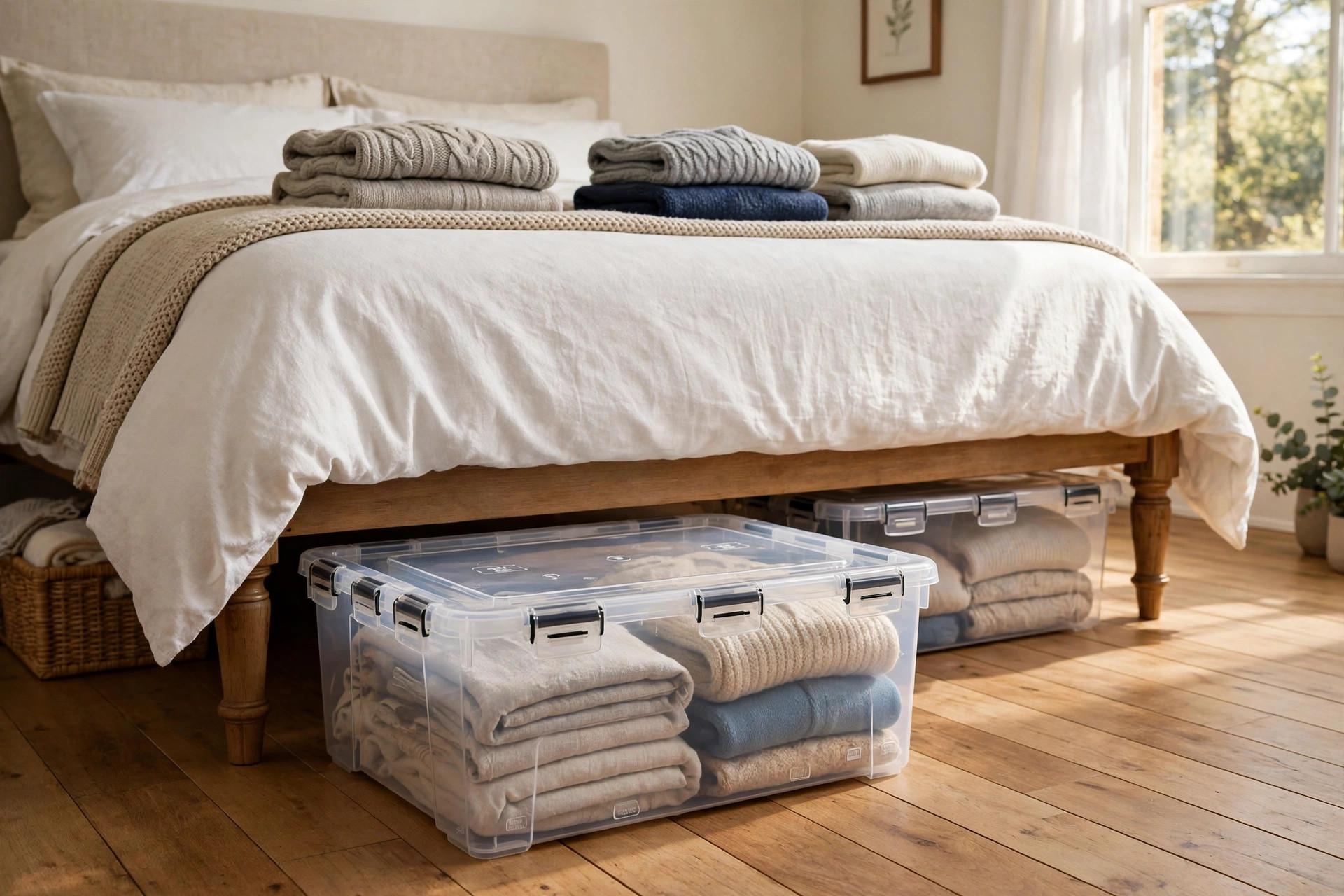
The space under a bed is one of the most useful spots in an American home. A waterproof under bed storage containers buying guide helps you use that space well. These low containers keep dust, spills, and damp air away from the things you store. They fit under most beds and pull out with ease when you need them. This guide covers sizes, materials, types, prices, care, and safety in plain terms. It also answers the questions shoppers ask most often.
Why the Space Under Your Bed Matters
Beds take up a lot of floor space. The area beneath the frame often sits empty. With the right containers, that empty space turns into real storage. Furniture makers like IKEA publish bedroom storage ideas that show how under bed space fits into a full room plan.
What Fits Under a Bed
Most bed frames leave six to eight inches of clearance. A few frames give you ten or twelve inches. Measure before you buy anything. Common items stored there include spare sheets, winter blankets, out-of-season clothes, shoes, photo boxes, and books. Low-profile containers slide in and out without scraping the floor.
Who Benefits Most
Renters and students in small apartments gain the most from this trick. Small bedrooms with tiny closets feel bigger when clutter moves under the bed. Sites like Apartment Therapy offer small-space organizing ideas that pair well with under bed bins. Families in homes with damp basements or humid air also benefit, since waterproof models add a layer of defense. Guest rooms can hold extra bedding under the bed so hosts never have to search a closet.
What to Look For When You Buy: Waterproof under Bed Storage Containers Buying Guide
A good purchase starts with a short checklist. Walk through these points before you spend money.
Size and Height
Measure the clearance under your bed frame from the floor to the bottom of the frame. Leave about half an inch of room so the container does not rub. Most under bed containers run five to seven inches tall. Big-box stores such as Lowe’s stock bins in many of these sizes for easy side-by-side comparison. Lengths range from twenty-eight to forty inches. Widths run from sixteen to twenty-four inches. Write the numbers down and carry them with you or keep them on your phone.
Material and Waterproof Seal
True waterproof models use thick plastic with a tight-sealing lid. Look for lids that snap or latch on all sides. A rubber or foam gasket around the lid rim is a strong sign of real water defense. Some products say “water resistant” on the box. That is not the same thing. Water resistant means the product handles light splashes. Waterproof means it blocks standing water and heavy spills. Read the fine print on the label.
Lid Design
Lids matter more than most shoppers expect. A lid that bows upward gives you a bit more room inside. Flat lids stack better if you ever use the containers elsewhere. Lids with lock latches hold shut if you tip the box during a move. See how The Container Store describes latch boxes and storage standards for help on what a solid latch should feel like. Avoid lids that pop off when you lift the box by the sides.
Handles and Wheels
Handles on the short ends make the box easy to pull from under the bed. Wide handles are kinder to your hands. Small built-in wheels help on carpet. They are less important on hard floors, where a box slides well on its own. Wheels add height, so check your clearance again if you choose a model with them.
Types of Waterproof Under Bed Containers
Four main types fill the market. Each has a place.
Rigid Plastic Bins
These are the classic choice. They have hard sides, a snap or latch lid, and a flat bottom. They stack well and protect what is inside from heavy items placed on top. They come in clear and opaque styles. Clear bins let you see the contents at a glance. Opaque bins keep things out of sight and block sunlight. Homeowners who want simple, tough storage often start here, and stores like The Home Depot carry a wide range of these bins for shoppers to compare in person.
Soft Zippered Bags
Soft bags use waterproof fabric such as coated nylon. They zip shut and often have a clear top panel so you can see inside. They weigh less than plastic bins and fold flat when empty. They hold less weight and can sag under a stack. They work well for soft goods like blankets, sweaters, and spare pillows.
Vacuum Storage Bags
Vacuum bags shrink bulky items flat by drawing the air out with a vacuum cleaner. They cut volume in half or more. They are not true hard containers, but many are waterproof and slide under low beds with ease. They need re-sealing now and then because air can leak back in over weeks. Keep a spare pump or vacuum hose handy. For small apartments where every inch counts, pairing vacuum bags with bins is a smart plan, and reading about under bed storage for small apartments can give you more ideas for tight rooms.
Rolling Drawer Bins
Rolling bins sit on a small wheel base or have wheels built into the frame. They pull out like a drawer. They suit people who reach under the bed every day, such as someone storing daily clothes or work gear. The wheels add one to two inches of height, so they fit only under taller frames. The Family Handyman site offers simple how-to guidance for DIY under-bed drawers and storage ideas for homeowners who like to build.
Cost and Price
Prices stay friendly for most budgets. Knowing the range helps you spot a fair deal.
What Most Shoppers Pay
A single rigid waterproof under bed container in the United States usually costs between ten and forty dollars. Basic latch-lid bins from large stores sit at the low end. Heavy-duty gasket models sit at the high end. Soft zippered bags often run five to twenty dollars each. Vacuum bags sell in packs of four to eight for about fifteen to thirty dollars. Rolling drawer bins run twenty to fifty dollars, with wheels and steel frames adding to the cost.
Where the Price Comes From
Three things drive price up. First, thicker plastic and better seals cost more to make. Second, latches and rubber gaskets add parts. Third, brand name adds a markup. A higher price does not always mean a better product. Read reviews and check the box for details like plastic thickness and lid design. Shoppers who like to compare can also read product guides at Good Housekeeping, where editors test and review storage products for real homes.
Care and Upkeep
Waterproof containers need little care, but a small routine keeps them working well.
Cleaning
Wash new bins with warm water and mild dish soap before first use. This removes dust from the factory and the store. Dry the bin fully before you load it. A damp bin traps moisture inside, which defeats the purpose. Wipe lids and seals with a damp cloth once or twice a year. Do not use bleach or harsh cleaners, which can weaken plastic over time.
Keeping Them Dry
Keep the bins off cold concrete floors in basements. Cold floors make warm air condense on the plastic. A folded towel or a thin mat under the bin breaks the chill. In humid climates, place a small moisture absorber packet inside each bin. Check the packets once a year and replace them when they feel full. If you store wool or cotton for long months, add a cedar block or lavender sachet to keep moths away.
Organizing the Contents
Label every bin on the short end so you can read the label when you pull it out. A simple piece of tape and a marker work fine. Keep like items together. One bin can hold all the spare sheets. Another can hold winter scarves, hats, and gloves. A small list taped inside the lid reminds you what is in each box. This saves time when you need one item fast. Group seasonal items by the month you will need them next.
When to Replace
Plastic lasts for many years but not forever. Replace a bin if the lid warps, the latches crack, or the gasket flattens and no longer seals. Sunlight speeds up wear, so keep stored bins out of direct sun. Most owners get five to ten years from a good bin.
Safety
Storage sounds simple, but a few safety rules protect your home and your goods.
Weight Limits
Do not overload the bins. A full bin of books can weigh forty pounds or more. That much weight strains the bottom panel and can crack it when you drag the bin out. Keep heavy items like books in smaller bins. Use larger bins for light, bulky things like bedding and coats. Stack no more than two full bins high.
Mold and Mildew
Waterproof does not mean moisture-proof on the inside. Wet or damp items sealed in a bin will grow mold. Always store items bone dry. In damp rooms, wipe the outside of the bin now and then so mold cannot grow on the surface. The Spruce has helpful cleaning guides for home storage spaces that walk through mold prevention step by step.
Children and Pets
Bins with latch lids can trap small fingers. Teach children to open and close bins with care. Large bins can tip if a child climbs on the lid. Keep bins with heavy contents on the bottom if you stack them. Store pet food and treats in sealed bins too, since a waterproof seal keeps pet smells in and pests out.
Frequently Asked Questions
Are waterproof under bed containers really waterproof?
Most quality models are. They use thick plastic and lids with rubber gaskets that block water from splashes, spills, and damp air. No home product is built to survive a flood. For normal home use, a gasket-sealed bin keeps stored items dry.
What size fits under a standard bed?
Measure your own frame first. Most standard beds give six to eight inches of clearance. Containers five to seven inches tall fit those frames. Platform beds can give less room, while some tall frames give twelve inches or more. Always measure before buying.
Can I store clothes in them long term?
Yes, if the clothes are clean and fully dry. Wash and dry items before packing. Add a moisture absorber in humid rooms. Air the items out once a year if you can. Wool and cashmere do best with a moth deterrent inside.
Do they work on carpet?
Yes. Bins with smooth flat bottoms slide across carpet fine. Models with wheels work even better on carpet. Pick wide handles so you can pull the bin out without straining. Low pile carpet gives the least resistance.
How do I stop dust from getting in?
Choose a bin with a snug lid and rubber gasket. Vacuum under the bed twice a year. Wipe the lid rim before you seal it shut. A tight seal keeps dust out for months at a time.
Are they safe for photos and documents?
They can be. Use acid-free sleeves for important papers and photos first. Then place them in the waterproof bin. Keep bins out of hot attics and damp basements, since heat and moisture still pass through plastic slowly over years. For long-term keepsakes, you might also look at attic storage solutions made for stable temperatures.
A Final Word
The right under bed storage turns wasted space into a working part of your home. Measure your frame, choose a true waterproof seal, and buy the type that fits how you live. Start with two or three bins and add more once you know what works. A little planning now saves you from damp blankets and dusty clothes later. If you are outfitting a whole bedroom, you can compare under bed styles with luxury under bed storage containers for sale or pair them with rolling storage carts for small apartments to finish the room.
References
Apartment Therapy. (n.d.). Home design ideas and inspiration. https://www.apartmenttherapy.com Family Handyman. (n.d.). DIY home repair and maintenance. https://www.familyhandyman.com Good Housekeeping. (n.d.). Product reviews and home advice. https://www.goodhousekeeping.com IKEA. (n.d.). Home furnishings. https://www.ikea.com Lowe’s. (n.d.). Home improvement products. https://www.lowes.com The Container Store. (n.d.). Storage and organization products. https://www.containerstore.com The Home Depot. (n.d.). Home improvement products. https://www.homedepot.com The Spruce. (n.d.). Home and garden advice. https://www.thespruce.com
Was this guide helpful?

About Emily Rodriguez
The My Garden US editorial team writes practical, in-depth home and garden guides for American homeowners — tested advice, no fluff.