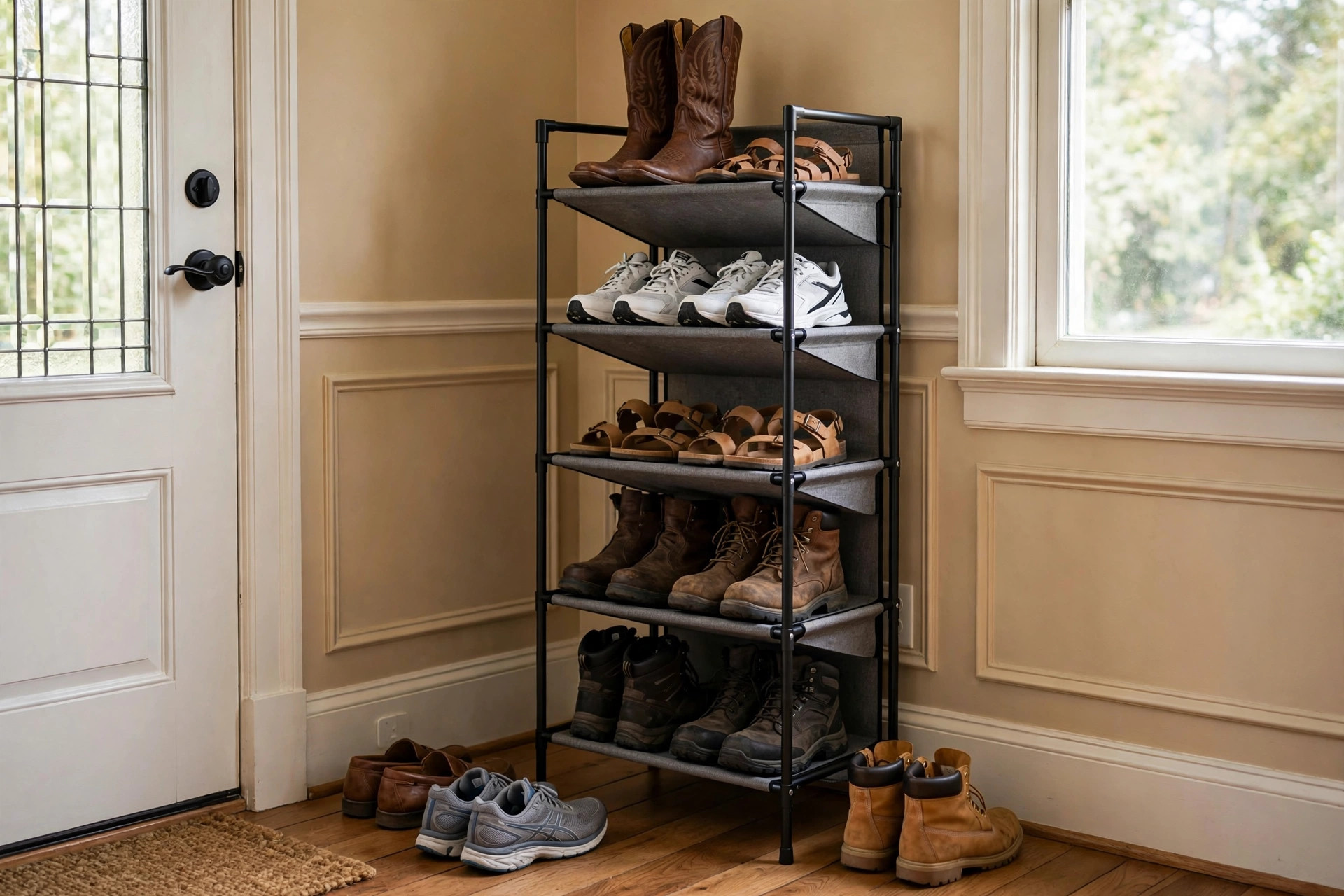

Shoes gather by the door in almost every house. In many stackable shoe storage racks for texas homes solve the problem of piles of boots, sneakers, and sandals. These racks stack in layers. Each layer holds one or two pairs of shoes. When you need more room, you add another tier on top. When you need less, you take one off.
Texas homes have their own needs. Muddy boots from the ranch. Cowboy boots that are tall and stiff. Sneakers for the kids. Sandals for hot summer days. A good rack keeps all of these in order. It also keeps dirt off the floor. This guide explains how to choose the right rack for your home, what styles are on the market, what they cost, and how to keep them in good shape.
Why Shoe Storage Matters in a Texas Home
Texas homes deal with dust, heat, and sudden storms. Shoes come in from the garage or the yard full of dust and red dirt. If they sit in a pile, the dirt spreads. A rack lifts shoes off the floor. Dust stays under the rack. You can sweep under it in seconds.
Stackable racks also save space. Many Texas homes have large families. A family of five may own fifty pairs of shoes or more. A single shelf cannot hold them all. A stackable rack grows with your collection. You can start with two tiers and grow to five.
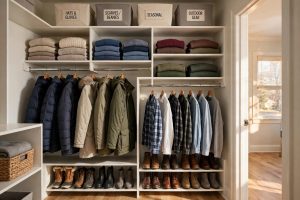
Heat is another reason to store shoes well. Texas summers are long and hot. Boots and leather shoes can dry out and crack in high heat. A rack placed in a cool spot, away from direct sun, keeps leather in better shape. This is why closet storage racks work so well in the bedroom closet, where the air is cool.
How to Choose the Right Rack: Stackable Shoe Storage Racks for Texas Homes
Choosing a rack is not hard, but a few details matter. Measure first. Then think about the shoes you own.
Measure Your Space
Get a tape measure. Check the width, depth, and height of the spot where the rack will go. Most stackable racks are about 30 to 36 inches wide. Each tier adds about 8 to 12 inches of height. If you have a small entryway, look for a narrow rack. If you have a large closet, you can use a wider one.
Also check the door swing. In a mudroom, make sure the rack does not block the door. In a closet, make sure the closet door can still close.
Think About Your Shoes
Tall boots need tall tiers. Many racks let you adjust the height of each tier. This is useful for cowboy boots, which can be 12 to 17 inches tall. A rack with fixed shelves will not fit tall boots. An adjustable rack will.
Sandals and sneakers are short. You can fit more pairs per tier when the shoes are low. Count your pairs. A family with many pairs should look for a rack with ten tiers or more.
Check the Weight Limit
Shoes are heavier than they look. Work boots can weigh three pounds per pair. A rack with five tiers may hold 30 pounds or more. Check the weight rating before you buy. Metal racks usually hold more than plastic racks. Look for a rating of at least 50 pounds for a five-tier rack.
Types of Stackable Shoe Storage Racks
There are four main styles. Each has its strengths.
Metal Frame Racks
Metal frame racks use steel or aluminum poles with fabric or mesh shelves. They are light and easy to move. Most stack in seconds without tools. The downside is that fabric shelves can sag under heavy boots. Look for thick fabric and strong poles.
Plastic Modular Racks
Plastic modular racks come as small cube units. Each cube holds one or two pairs. You snap the cubes together to build any shape you like. They are strong and easy to clean. A damp cloth wipes dust right off. The cost per cube is low, but a large wall of cubes can add up.
Wooden Racks
Wooden racks look the best in a living room or entryway. Solid wood or bamboo racks have a warm look. They cost more than metal or plastic. Wood also needs care in Texas heat. Dry air can crack cheap wood. A good coat of finish protects it.
Over-the-Door and Wall-Mounted Units
Some racks hang on the back of a door or mount on a wall. These save floor space. They work well in small apartments. They hold fewer pairs than a floor rack, but they keep shoes fully out of the way.
For a deeper look at boxed options, see our guide to luxury stackable shoe storage boxes for sale, which covers enclosed styles for dusty rooms.
Cost and Price Guide
Prices vary by material and size. Here are rough ranges in American dollars.
– Small two-tier metal racks: 15 to 30 dollars. – Medium five-tier metal racks: 30 to 60 dollars. – Plastic modular cube sets of six: 25 to 50 dollars. – Wooden racks: 60 to 150 dollars. – Large wooden or bamboo units: 150 to 300 dollars.
Most families find a rack under 80 dollars meets their needs. Sales are common in the spring and fall. Stores like Home Depot and Lowe’s carry many styles at fair prices. Online stores like IKEA and Wayfair offer wide ranges with home delivery.
Price is not the whole story. A cheap rack that breaks in a year costs more than a good rack that lasts ten years. Read customer reviews before you buy. The Consumer Reports buying guides can help you judge quality.
If free shipping matters to you, compare our article on best stackable shoe storage boxes with free shipping for options that ship to Texas at no extra cost.
Setting Up Your Rack
Assembly is simple for most racks. Metal frame racks use push-fit poles. You line up the poles, push them into the corners, and pull the fabric shelves tight. Most take ten minutes.
Plastic cubes snap together with pegs or clips. Work on a flat floor. Build the bottom row first, then add the next row on top. Do not build past the height the maker suggests. A tall stack can tip.
Place the rack on a hard, level floor if you can. If it must go on carpet, push the legs down firmly so it does not rock. Put the heaviest shoes on the bottom tier. This keeps the center of gravity low and the rack steady.
For full buying advice across materials and styles, our stackable shoe storage boxes reviews and buying guide walks through what shoppers like and dislike.
Care and Upkeep
A shoe rack needs little care, but a little care keeps it useful for years.
Wipe the shelves once a month. Dust builds up fast in Texas. Use a damp cloth for plastic and metal. For wood, use a dry cloth first, then a wood-safe cleaner. Do not soak wood with water.
Check the connectors every few months. Push-fit poles can loosen with use. Push them back in. Tighten any screws. If a fabric shelf sags, take the heavy shoes off it and restack.
In the summer, keep the rack out of direct sun if it has fabric shelves. Strong sun fades fabric and dries out plastic. A closet or a shaded mudroom wall is best.
Placement Ideas for Texas Homes
Where you put the rack matters as much as which one you buy.
Entryway
The entryway is the most common spot. A low three-tier rack by the front door catches shoes before dirt spreads into the house. Add a small rug under the rack to catch water from rain.
Mudroom
Texas farm and ranch homes often have mudrooms. A tall rack along one wall holds work boots and rain boots. Leave the bottom tier empty for wet shoes. Wet shoes dry faster with air under them.
Bedroom Closet
The closet keeps shoes cool and dark. This is the best spot for leather shoes and cowboy boots. A narrow rack fits beside hanging clothes. For ideas on closet layout, The Container Store offers helpful closet planning guides.
Garage
The garage works for dirty work boots. A rack keeps boots off the concrete floor, where moisture can cause mold. Make sure the rack is not in the path of a car door.
Children’s Rooms
Kids’ shoes are small and easy to lose. A low two-tier rack in a child’s room teaches them to put shoes away. Place the rack where the child can reach it. Light shoes like sneakers and sandals are safe on higher tiers here, and nothing heavy should sit on top.
What to Do With Off-Season Shoes
Many Texas homes have shoes they wear only in part of the year. Heavy rain boots may sit unused for months. Light sandals may wait out the short cold spell. Store off-season pairs on the top tier, out of daily reach. This keeps the lower tiers free for the shoes you wear each day. When the season turns, rotate the pairs. Wipe each pair with a damp cloth before it goes up top, so dust does not settle on the rack.
Safety Tips
Shoe racks are safe, but a few rules keep everyone safe.
– Never stack higher than the maker allows. A tall stack can tip onto a child. – Anchor tall racks to the wall in homes with small children or pets. – Keep heavy boots on the lowest tier. – Do not use a rack as a step stool. It is not built for body weight. – Check for sharp edges on cheap metal racks. File down any rough spots.
The Family Handyman site has practical tips on home safety and storage projects that pair well with a new rack.
Common Mistakes to Avoid
Many shoppers make the same errors. Avoid these.
First, buying too small. Count your shoes and add room for ten percent more. Shoes have a way of multiplying.
Second, ignoring boot height. Measure your tallest boots before you buy a fixed-shelf rack. Tall cowboy boots need tall space.
Third, skipping the weight rating. A rack rated for 20 pounds will bend under 40 pounds of boots.
Fourth, putting the rack in full sun. Heat and sun age plastic and fabric fast. A shaded spot lasts longer.
Design sites like Apartment Therapy and The Spruce show smart ways to fit storage into small spaces without these mistakes.
FAQ
How many pairs can a five-tier rack hold?
A standard five-tier rack holds 15 to 25 pairs, depending on shoe size. Men’s work boots take more room than women’s flats. If you own mostly large shoes, plan on the low end.
Do stackable racks work for cowboy boots?
Yes, if the tiers are tall enough. Cowboy boots need 12 to 17 inches of clear height per tier. Look for adjustable racks, or set two tiers together to make one tall space.
Are plastic or metal racks better?
Metal frames are lighter and easier to move. Plastic cubes are stronger and easier to clean. For heavy work boots, plastic or wood wins. For light daily use, metal is fine.
How do I keep dust off stored shoes?
Use covered racks or add fabric covers over open tiers. Wipe the shelves monthly. A rack in a closet gathers far less dust than one in a garage.
Can I add more tiers later?
With most metal frame racks, yes. Many makers sell extra tiers that fit the same poles. With plastic cubes, you can always snap on more cubes. Keep the maker and model the same for the best fit.
Where is the best place for a rack in a Texas home?
A shaded mudroom or a bedroom closet is best. Avoid full sun and damp garage floors. The spot should be cool, dry, and easy to reach each day.
A Short Final Word
Stackable shoe storage racks for Texas homes are a simple fix for a common mess. They cost little. They take up little room. They grow as your shoe collection grows. Measure your space. Count your shoes. Choose a sturdy rack with a good weight rating. Place it in a cool, shaded spot. With these steps, your entryway stays clean and your shoes last longer.
References
Apartment Therapy. (n.d.). Home design ideas and inspiration. https://www.apartmenttherapy.com Consumer Reports. (n.d.). Product reviews and ratings. https://www.consumerreports.org Family Handyman. (n.d.). DIY home repair and maintenance. https://www.familyhandyman.com IKEA. (n.d.). Home furnishings. https://www.ikea.com Lowe’s. (n.d.). Home improvement products. https://www.lowes.com The Container Store. (n.d.). Storage and organization products. https://www.containerstore.com The Home Depot. (n.d.). Home improvement products. https://www.homedepot.com The Spruce. (n.d.). Home and garden advice. https://www.thespruce.com Wayfair. (n.d.). Furniture and home goods. https://www.wayfair.com
Was this guide helpful?

About Sarah Mitchell
The My Garden US editorial team writes practical, in-depth home and garden guides for American homeowners — tested advice, no fluff.
You May Also Like
Where to Buy Dresser Drawer Dividers in Texas: A Practical Guide
September 13, 2026 0 views
Waterproof Jewelry Storage Boxes with Locks Buying Guide
January 30, 2026 0 views
Best Makeup and Cosmetics Organizers for Florida Homes
April 14, 2026 0 views