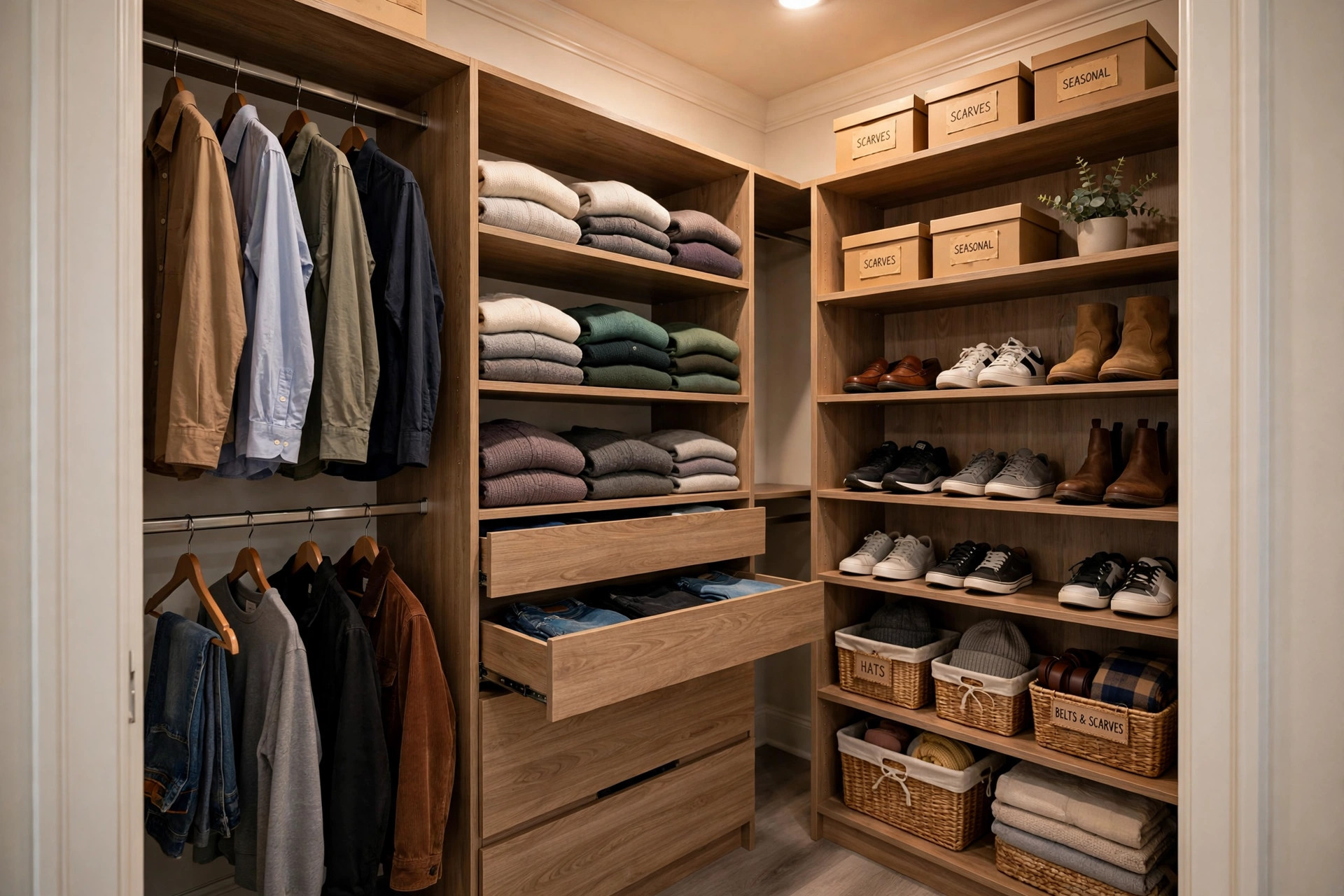

A clear closet organizer systems price comparison usa guide helps buyers avoid overpaying for storage they do not need. Prices swing widely in the United States. A basic wire kit can cost under one hundred dollars. A full custom walk-in system can pass five thousand dollars. This article breaks down the real price ranges, the types of systems on the market, and the details that push a quote up or down.
Why a Closet Organizer Matters
Most closets in American homes were built with one rod and one shelf. That setup wastes a lot of space. Clothes pile on the floor. Shoes scatter. Belts and ties hide in drawers that never close. An organizer system changes this with a simple idea: give every item a place.
Studies on home life have long shown that clutter raises stress. A tidy closet will not fix every problem, but it does make mornings calmer. When shirts hang in clear rows and shoes sit on tilted shelves, getting dressed takes minutes instead of a hunt through piles.
Organizers also protect clothing. Good hang space keeps suits and dresses from wrinkling. Drawers keep small items like socks and scarves from sliding behind furniture. Over years, this care saves real money, because clothes last longer and need fewer replacements.
There is a resale angle too. Real estate agents often point to closets as a selling feature. A walk-in closet with a clean built-in system photographs well and leaves buyers with a strong impression.
How to Compare Closet Organizer Systems: Closet Organizer Systems Price Comparison Usa
Shopping for a closet system is easier with a plan. Prices alone do not tell the whole story. Two systems at the same price can differ greatly in strength, looks, and lifespan. The steps below keep the comparison honest.
Measure the Space First
Take a tape measure and record the width, height, and depth of the closet. Note the door type, because sliding doors and bifold doors change how much access you have. Write down where light switches, outlets, and vents sit, since tall units must not block them.
Measure twice. Small errors here cause big problems later. A tower that is one inch too wide will not slide between walls. Many makers offer free planning tools online. Stores like The Home Depot and Lowe’s also sell paper planning kits that help buyers map a layout before they spend.
Know What You Store
Count hanging clothes and folded clothes. Long dresses and coats need tall sections. Shirts and pants fit double-hang rods. Shoes, handbags, hats, and ties each need their own kind of space. A system that looks fine in a catalog may fail if it ignores what you actually own.
Walk through a normal week of outfits. This sounds simple, but it stops the most common mistake: buying a system built for someone else’s wardrobe. Families with children may need lower rods that small hands can reach.
Check the Weight Ratings
Wire shelves flex under heavy books or stacks of jeans. Laminate panels hold more but can sag across long spans without support. Solid wood and steel systems carry the most weight. Product pages list weight limits per shelf. Compare these numbers when the price looks too good to be true, because thin parts are often the reason for a low price.
Types of Closet Organizer Systems
Four main types cover nearly the whole market. Each has a clear price band and a clear use case.
Wire Systems
Wire organizers use coated metal grids for shelves, rods, and baskets. They are the cheapest option and the easiest to install. A reach-in kit with shelves and one hanging rod often costs between 60 and 150 dollars. Larger kits with drawers and shoe racks run 150 to 400 dollars.
The open grid lets air move, which helps damp closets. But wire leaves lines on folded clothes, and small items can slip through the gaps. Liners fix this, yet they add cost and cleaning work. Wire works best for linen closets, kids’ rooms, and rentals.
Laminate Wood Systems
Laminate systems use pressed wood panels with a printed finish that looks like real wood grain. They sell as kits or as made-to-measure designs. Prices run from 200 dollars for a small reach-in kit to 2,000 dollars or more for a large walk-in layout.
These systems look far more finished than wire. They offer drawers, jewelry trays, and pull-out hampers. The weak point is moisture. Laminate swells if it stays wet, so it suits bedrooms better than damp basement closets. Assembly takes longer than wire, often a full weekend for a big walk-in. Guides from Family Handyman walk through the common steps.
Solid Wood Systems
Solid wood and high-grade plywood systems sit at the top of the kit market. They cost 1,500 to 4,000 dollars for a full walk-in. The drawers glide smoothly, the finish resists scratches, and the structure holds heavy loads for decades.
Buyers who plan to stay in a home for many years often pick this tier. The look matches bedroom furniture, and the pieces can be refinished rather than replaced. Weight is the trade-off. Solid wood units are heavy and usually need two people for installation.
Custom Built-In Systems
Custom shops design a system for one exact closet, then build and install it. Prices start near 1,000 dollars for a small reach-in and rise past 5,000 dollars for a large walk-in with glass doors, lighting, and an island. Luxury projects can pass 10,000 dollars.
The gain is a perfect fit and a furniture-grade finish. Corners get used. Sloped ceilings get matched. A pro handles measuring and installation, so the risk of error drops to near zero. Design ideas from Apartment Therapy and The Spruce show what custom layouts can achieve in small and large closets.
Closet Organizer Systems Price Comparison USA: Real Cost Ranges
Here is a plain summary of what American buyers pay in 2026, based on common retail listings and contractor quotes.
| System type | Typical price range | Best for | |—|—|—| | Wire kit, reach-in | 60 to 200 dollars | Rentals, kids, linen closets | | Wire kit, walk-in | 200 to 500 dollars | Budget walk-ins | | Laminate kit, reach-in | 200 to 600 dollars | Bedrooms on a budget | | Laminate kit, walk-in | 600 to 2,000 dollars | Most family homes | | Solid wood kit, walk-in | 1,500 to 4,000 dollars | Long-term owners | | Custom built-in | 1,000 to 10,000 dollars plus | Odd spaces, luxury homes |
Installation adds to these numbers. A handy homeowner can install wire and laminate kits for the cost of basic tools. Hiring a handyman for a full day runs 200 to 600 dollars in most metro areas. Custom installers often fold labor into the quote.
Accessories move the total too. A set of matching drawers can add 80 to 200 dollars per drawer. Pull-out belt and tie racks cost 25 to 60 dollars each. LED lighting strips, now common in walk-ins, add 50 to 300 dollars depending on length and whether a pro wires them.
Where to Shop and What Moves the Price
Big-box stores, furniture chains, and specialty shops all sell closet systems, and their prices overlap less than shoppers expect. IKEA built its name on modular PAX wardrobes and closet frames that buyers can extend over time. Wayfair lists hundreds of kits with frequent sales, which makes it a strong place to watch for price drops. The Container Store focuses on premium modular systems with in-store design help.
Several factors push one quote above another:
– Closet size. A six-foot reach-in needs half the parts of a twelve-foot walk-in. – Material. Solid wood and thick plywood cost more than particleboard and wire. – Drawers versus shelves. Drawers with metal glides cost far more than fixed shelves. – Doors and fronts. Glass or mirrored doors add hundreds of dollars. – Lighting. Built-in lights raise both parts and labor costs. – Installation. DIY saves labor but costs time and carries the risk of mistakes. – Brand. Name brands charge more for finish quality and warranty support.
Reviews help sort the claims. Consumer Reports tests home products for durability, and reader reviews on retailer sites reveal how a system holds up after a year of daily use. Read the one-star and two-star reviews first. They show the weak points faster than any ad copy.
Shipping matters as well. Large kits ship in heavy boxes, and some retailers charge 50 to 150 dollars for freight. Factor this in before comparing two prices.
Timing can save money too. Home stores run closet sales in January and again in late summer, when back-to-school shoppers organize dorm rooms and bedrooms.
Installation: DIY or Hire a Pro
Wire and simple laminate kits suit do-it-yourself installation. The boxes include paper templates, and the tools are basic: a level, a stud finder, a drill, and a saw for trimming rods. Most reach-in kits take two to four hours. Large walk-ins can take a full day.
The hardest part is finding wall studs. Heavy loaded shelves must anchor into studs, not just drywall. Toggle bolts can carry moderate weight in drywall, but they are no match for a solid anchor point. If the walls are plaster or concrete, a pro may be worth the fee.
Hire a pro for custom systems, solid wood units, and any layout with built-in lighting that ties into house wiring. Get two or three written quotes. Ask each bidder to list parts and labor separately so the numbers can be compared line by line.
Care and Upkeep
Closet systems need little care, but a small routine keeps them looking new.
Dust shelves and rods every few months. Vacuum drawers and baskets once or twice a year, since lint builds up in corners. Wipe laminate with a damp cloth and dry it right away; standing water is the main enemy of pressed-wood panels. Solid wood benefits from an occasional polish with a product made for furniture.
Check fasteners once a year. Screws loosen as seasons change and wood expands and contracts. Tighten any wobbling brackets before the load grows. For wire systems, touch up chips in the coating so bare metal does not rust.
Rotate the load now and then. Heavy stacks of sweaters left in one spot for years can bow a shelf. Moving items around spreads the stress and lets you spot wear early.
Safety
Closet organizers are furniture, and tall furniture can tip. Anchor any tower or bookcase-style unit to the wall with the straps or brackets in the box. This matters most in homes with small children, who may climb shelves to reach a top cubby.
Do not overload shelves past their rated weight. A shelf rated for 25 pounds will not fail at 26, but a steady overload bends brackets over months until something gives. Spread heavy items low, where a fall hurts less and the structure is strongest.
Keep the floor clear in front of the closet. Pull-out drawers and hampers need room to open. A rug that slides underfoot when a drawer swings out is a trip hazard; use a non-slip pad or skip the rug.
If the system includes lighting, keep cords away from stored items and check that bulbs do not touch fabric. LED strips run cool, but older puck lights can get hot.
Frequently Asked Questions
How much does a closet organizer system cost in the USA?
Most American buyers spend between 200 and 2,000 dollars. Basic wire kits start under 100 dollars. Laminate walk-in kits run 600 to 2,000 dollars. Solid wood systems cost 1,500 to 4,000 dollars, and custom built-ins range from 1,000 dollars to well over 10,000 dollars. Installation and accessories add to every tier.
Are wire or wood closet systems better?
Wood-look laminate and solid wood systems look nicer, hold folded clothes flat, and support drawers. Wire systems cost less, allow air flow, and install faster. Pick wire for rentals and tight budgets. Pick wood-based systems for a master bedroom that should look finished.
Can I install a closet organizer myself?
Yes, for most kits. Wire and laminate kits come with templates and need only basic tools. Plan on a few hours for a reach-in and a full day for a walk-in. Hire a pro for custom built-ins, heavy solid wood units, and any lighting tied into house wiring.
Do closet organizers add home value?
A clean, built-in closet system can help a home sell faster and may add modest value, especially in a master suite. Appraisers rarely assign a dollar figure to it, but buyers notice. Think of it as a selling feature rather than a guaranteed return.
How long do closet organizer systems last?
Wire systems last 5 to 10 years with normal use. Laminate systems last 10 to 15 years if kept dry. Solid wood and custom built-ins can last 20 years or more. Hinges, drawer glides, and brackets wear first; many makers sell replacement parts.
What is the cheapest way to organize a closet?
Start with a basic wire kit or a few standalone pieces: a second hanging rod, a shoe rack, and some shelf dividers. This can cost under 150 dollars and doubles usable space. For rooms with no built-in closet at all, top rated freestanding wardrobe closets for usa homes offer a low-cost stand-alone option.
Beyond the Closet
A home storage plan rarely stops at the bedroom. Entryways gain from mudroom storage benches price comparison usa guides when coats and shoes pile up by the door. Washrooms benefit from a heavy duty laundry room shelving buying guide to keep detergents and baskets off the floor.
A Final Word
A closet organizer systems price comparison usa search returns hundreds of options, but the choice comes down to three questions: how big is the space, what must it hold, and how long will you live with it. Answer those, measure twice, and compare real quotes that include shipping and installation. Whether the final pick is a 120-dollar wire kit or a 4,000-dollar custom build, the result is the same each morning: everything in its place, and the day starts on time.
References
Apartment Therapy. (n.d.). Home design ideas and inspiration. https://www.apartmenttherapy.com Consumer Reports. (n.d.). Product reviews and ratings. https://www.consumerreports.org Family Handyman. (n.d.). DIY home repair and maintenance. https://www.familyhandyman.com IKEA. (n.d.). Home furnishings. https://www.ikea.com Lowe’s. (n.d.). Home improvement products. https://www.lowes.com The Container Store. (n.d.). Storage and organization products. https://www.containerstore.com The Home Depot. (n.d.). Home improvement products. https://www.homedepot.com The Spruce. (n.d.). Home and garden advice. https://www.thespruce.com Wayfair. (n.d.). Furniture and home goods. https://www.wayfair.com
Was this guide helpful?

About David Wilson
The My Garden US editorial team writes practical, in-depth home and garden guides for American homeowners — tested advice, no fluff.
You May Also Like

Kitchen Cabinet Organizers Reviews and Buying Guide
July 2, 2026 0 views
Stackable Shoe Storage Racks for Texas Homes: A Practical Guide
July 15, 2026 0 views
Lockable Kids Closet Organizers with Free Shipping
April 11, 2026 0 views