
When you search for heavy duty freestanding wardrobe closets for sale, you are usually trying to solve one plain problem. You need more space for your clothes, and you cannot build a closet into the wall. Perhaps you rent your home. Perhaps the bedroom closet is full. Perhaps you just moved and the boxes of clothes sit in a corner. A strong freestanding wardrobe gives you a closet anywhere you want it, with no tools and no damage to the walls.
Why a Heavy Duty Freestanding Wardrobe Matters
Most ordinary clothing racks are weak. They bend in the middle. They tip over when you load them with winter coats. A heavy duty freestanding wardrobe closet is built for real daily use. It has a solid frame, thick tubes or panels, and a design that spreads the weight down to the floor. That makes a difference you can feel the first week you use it.
A good wardrobe also protects your clothes. Thin racks let shirts slide off onto the floor. Dust settles on everything. A wardrobe with closed doors or a zippered cover keeps your garments clean and out of sight. Your room looks tidy even when you have a lot of clothes.
Freestanding models matter because they move with you. You can stand one in the bedroom, shift it to the garage for off-season storage, or take it with you when you move. You never drill a hole in the wall. Renters in particular gain from this freedom. Apartment Therapy has long covered small-space storage ideas for renters, and freestanding wardrobes show up again and again in their guides at Apartment Therapy.
What to Look for Before You Buy: Heavy Duty Freestanding Wardrobe Closets for Sale
Do not judge a wardrobe by its picture alone. The product photo shows the shape, not the strength. These are the points that matter most.
Weight Capacity
Check how much weight the unit can hold. A heavy duty model should support at least 200 pounds. Better ones hold 300 to 400 pounds or more. Think about what hangs in your closet: a dozen wool coats and several pairs of boots add up fast. If the maker does not state a weight limit, treat that as a warning sign. Reputable sellers such as IKEA and The Container Store publish load ratings for their storage furniture.
Frame and Materials
The frame does most of the work. Steel tube frames are the strongest common choice. Look for thick-walled tubes, ideally with reinforced corners or crossbars. Solid wood frames are also strong and look better in a bedroom, but they weigh more and cost more. Pressed board panels are the weakest option; they swell and sag when the room gets damp. Shelves should be thick and supported at more than two points.
Feet and Floor Contact
A freestanding closet stands on its own feet. Wide, flat feet spread the load and keep the unit from rocking. Adjustable feet help on uneven floors. If the unit has thin legs, it may wobble once you hang heavy coats on one side. Some models include anti-tip straps that tie the back to the wall. Even if you are not allowed to drill, a strap under a heavy baseboard can add safety.
Doors and Covers
You have three common choices. Open wardrobes are simple and cheap, but dust gathers. Zippered fabric covers keep dust out and cost little, though the zippers wear over time. Solid doors look best and last longest, but they add weight and price. Choose based on your room. A bedroom benefits from doors. A garage or laundry room does fine with a fabric cover.
Size and Layout
Measure your space before you shop. Write down the width, depth, and height you can allow. Then compare those numbers with the product dimensions. Also think about the layout inside: long hanging space for dresses and coats, a double hanging section for shirts, shelves for folded items, and perhaps a bottom space for shoes. If you also need pantry help, see our guide to pantry food storage containers reviews and buying guide for matching shelf ideas.
Types of Heavy Duty Freestanding Wardrobe Closets
Steel Tube Garment Racks with Covers
These are the lightest of the heavy duty class. A steel tube frame carries the clothes, and a fabric cover zips around it. They work well for extra seasonal storage. The good ones use tubes at least one inch in diameter. Avoid thin wire frames that twist when loaded. Reviews on Wayfair often note how well the cover zippers hold up after a year.
Wooden Armoires
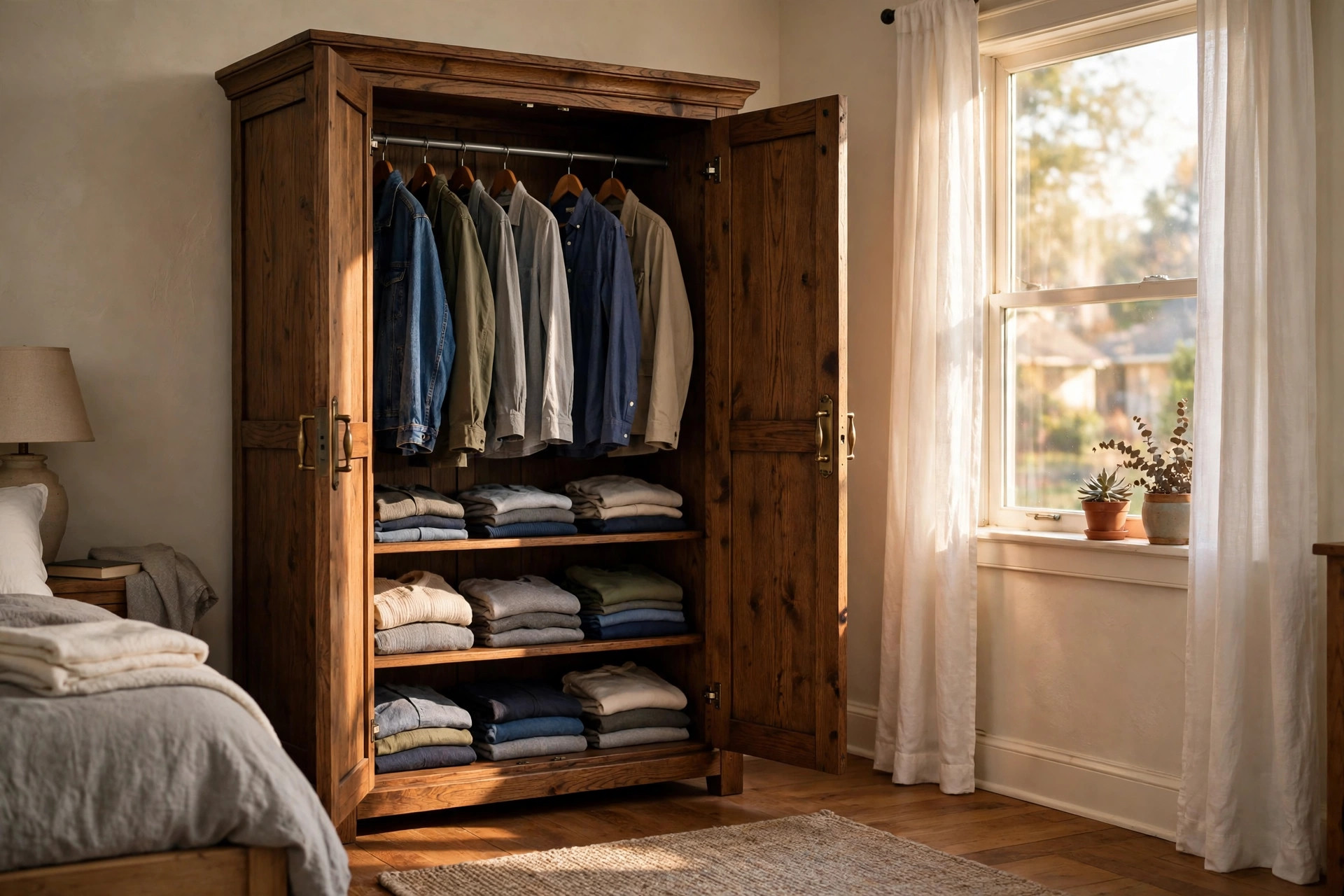
A wooden armoire is the classic freestanding closet. Solid pine or engineered wood, real doors, and built-in shelves make it look like furniture rather than storage. A heavy duty armoire uses thick panels and sturdy hinges. These units are heavy themselves, so they stay put. The Home Depot and Lowes both carry wooden armoire lines that you can inspect in store before you buy.
Modular Closet Systems
Modular systems use upright poles or panels with adjustable shelves and hanging rods. They are freestanding but can grow as your needs change. Start with one section, then add another next year. These systems often cost more at the start but save money over time. Family Handyman has project guides on assembling and anchoring modular closet systems safely.
Industrial and Commercial Units
Some buyers choose commercial garment racks from restaurant or warehouse suppliers. These are built to hold hundreds of pounds every day. They are not pretty, but they are nearly unbreakable. If you run a home business with heavy uniforms or costumes, this class may suit you better than bedroom furniture.
Cost and Price: What to Expect
Prices for heavy duty freestanding wardrobe closets for sale vary widely by material and build.
– Basic steel tube models with fabric covers: about $40 to $90. – Mid-range wooden or steel wardrobes with doors: about $100 to $250. – Large solid wood armoires: about $250 to $600 or more. – Modular closet systems: about $200 to $500 per section.
The cheapest option is not always the best value. A $50 unit that sags in six months costs more per year than a $180 unit that lasts ten years. Read customer reviews about long-term use, not just assembly. Consumer Reports testing methods for furniture strength give a useful model: they check joints, loads, and repeated use, which are exactly the points that fail first.
Shipping can add real cost. Large wardrobes often ship in two or three heavy boxes. Check whether delivery is free and whether the price includes threshold or room-of-choice delivery. Some retailers charge extra to carry the boxes upstairs.
Setting Up Your Wardrobe the Right Way
Assembly is where many buyers make mistakes. Take your time and follow these steps.
First, clear the floor and lay out all parts. Count every screw and panel against the parts list before you start. Missing parts are easier to report early.
Second, assemble on a soft surface like a rug or blanket so you do not scratch panels or doors.
Third, tighten bolts in stages. Get every bolt started loosely, then tighten them all once the frame is square. This keeps the unit from twisting.
Fourth, place the heaviest items low. Shoes and folded blankets belong on bottom shelves. Coats hang at the top. This lowers the center of gravity and keeps the unit stable.
Fifth, load the unit evenly. Do not hang all your heavy coats on one end. Spread them across the rod. An unbalanced wardrobe leans and strains its joints.
Sixth, check the unit after one month of use. Wood screws loosen slightly as panels settle. A quick re-tightening keeps everything firm.
Care and Upkeep
A heavy duty wardrobe needs little care, but a few habits extend its life.
Keep it dry. Pressed board and low-grade wood swell in damp rooms. If the wardrobe sits in a garage or basement, use a dehumidifier or moisture-absorbing packs inside. Steel frames can rust at scratched spots; touch up chips with paint.
Clean fabric covers with a damp cloth. Do not machine wash them unless the label allows it. Vacuum the inside shelves twice a year to remove dust and lint.
Check zippers and doors yearly. A drop of zipper lubricant keeps covers sliding. Tighten door hinges when you notice sagging.
Do not overload beyond the rated weight. The weight limit is a ceiling, not a target. Staying below it by a margin keeps the frame sound for years. Good Housekeeping has published care guidance for bedroom storage furniture that follows these same principles at Good Housekeeping.
Safety Notes
A loaded wardrobe can weigh several hundred pounds. Safety matters, especially in homes with children.
Anchor tall units if you can. Many wardrobes stand more than six feet high. If a child climbs on the doors or pulls on the top, a tall unit can tip. Anti-tip kits cost little and take minutes to install. If your lease forbids wall anchors, keep the wardrobe in a low-traffic corner and place the heaviest items on the bottom shelf.
Keep the floor around the unit clear. A wardrobe door that swings open into a walkway invites bumps and spills.
Do not store heavy items on top. Boxes stacked above the unit raise the center of gravity and can fall on someone.
Watch for pinch points with folding or sliding doors, and keep small children from swinging on them.
If you use the wardrobe in a garage, keep flammable liquids away from fabric covers.
Frequently Asked Questions
Can a freestanding wardrobe really hold all my clothes?
Yes, if you buy a true heavy duty model. A wardrobe rated for 300 pounds holds roughly what a standard bedroom closet holds: dozens of shirts, several suits, and a set of coats. Count your garments first. About twenty hangers of average clothing weigh around 40 pounds. Heavy winter coats weigh more. Match your total to the rating with room to spare.
Do I need tools to assemble one?
Most models need only basic hand tools: a screwdriver and the included hex key. Some wooden armoires need a drill for pilot holes. Set aside one to two hours. Ask a second person to help hold panels while you fasten them. Solo assembly of a large wardrobe is slow and risks cracked panels.
Will a freestanding wardrobe damage my floor?
On hard floors, place felt pads under the feet to prevent scratches. On carpet, a large wardrobe may leave dents; rotating its position once a year helps. Very heavy armoires on soft wood floors may need a plywood board underneath to spread the load. Check the weight of the empty unit plus your clothes before deciding.
Fabric cover or solid doors: which is better?
Solid doors last longer, look better, and keep dust out more completely. Fabric covers cost less, weigh less, and fold away for moving. Choose solid doors for a bedroom you use every day. Choose a fabric cover for temporary or overflow storage. The Spruce compares wardrobe styles and their trade-offs in detail at The Spruce.
How do I organize inside a freestanding wardrobe?
Use the same zones as a built-in closet. Long hang space on one side for dresses and coats. Double hang on the other side for shirts and trousers. Shelves up top for hats and bags. Bottom space for shoes. Add small bins for socks and accessories. If doors or walls also need help, our guide on best over the door organizers for california apartments has ideas that work in any home.
What if I move? Can I take it apart?
Steel tube models come apart in minutes and pack flat. Wooden armoires take longer but are designed for reassembly; keep the instructions and spare screws in a labeled bag taped inside the unit. Modular systems are the easiest to move because they break into small sections. If you have kids, their toy bins move the same way; see luxury toy storage bins for american homes for sturdy options.
A Final Word
Heavy duty freestanding wardrobe closets for sale solve a real storage problem without construction work. Choose a unit with a stated weight rating, a strong frame, and a layout that fits your clothes. Assemble it with care, load it evenly, and keep the heaviest items low. Do those things, and your wardrobe will serve you well for many years, in this home and the next.
References
Apartment Therapy. (n.d.). Home design ideas and inspiration. https://www.apartmenttherapy.com Consumer Reports. (n.d.). Product reviews and ratings. https://www.consumerreports.org Family Handyman. (n.d.). DIY home repair and maintenance. https://www.familyhandyman.com Good Housekeeping. (n.d.). Product reviews and home advice. https://www.goodhousekeeping.com IKEA. (n.d.). Home furnishings. https://www.ikea.com Lowe’s. (n.d.). Home improvement products. https://www.lowes.com The Container Store. (n.d.). Storage and organization products. https://www.containerstore.com The Home Depot. (n.d.). Home improvement products. https://www.homedepot.com The Spruce. (n.d.). Home and garden advice. https://www.thespruce.com Wayfair. (n.d.). Furniture and home goods. https://www.wayfair.com
Was this guide helpful?

About James Carter
The My Garden US editorial team writes practical, in-depth home and garden guides for American homeowners — tested advice, no fluff.
You May Also Like
Where to Buy Ottoman Storage Benches in Colorado: A Homeowner’s Guide
June 29, 2026 0 views
Garage Storage Cabinets Price Comparison USA: A Plain Guide
May 18, 2026 0 views
Wicker Storage Baskets: Reviews and Buying Guide
January 28, 2026 0 views