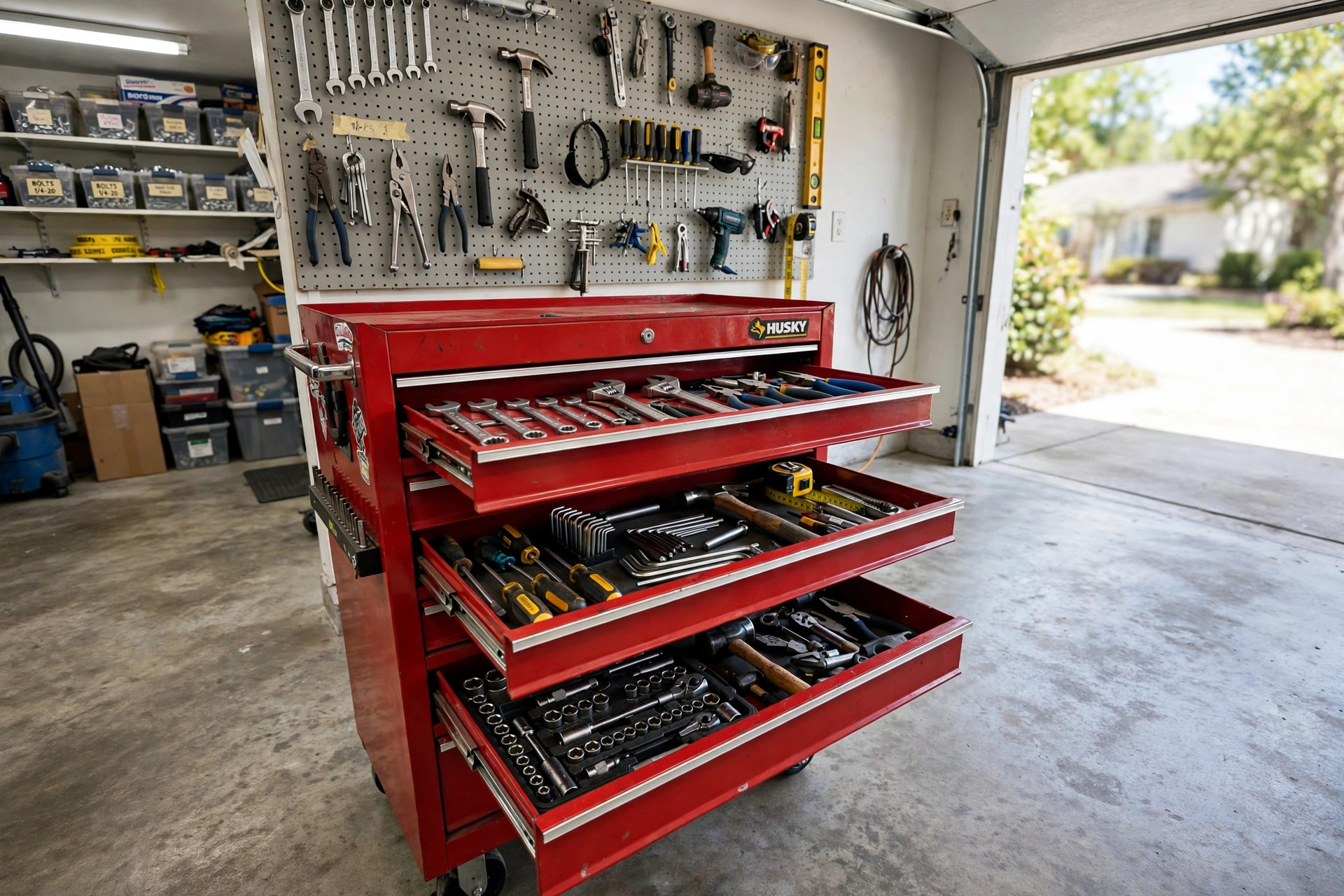

A workshop without order wastes time. Every homeowner who works with tools knows the feeling of hunting for a lost wrench. The best workshop tool chests for American homes solve this problem in a simple way. They give each tool a home. They protect tools from dust and damp air. They make every repair job faster and safer. This guide explains what to look for, how much to spend, and how to keep a chest in good shape for years.
Why a Good Tool Chest Matters
Tools cost money. A socket set, a drill, a saw, and hand tools can add up to hundreds of dollars. Left in a pile on a bench, tools get dull, rusty, and lost. A strong chest keeps them clean and ready. It also keeps the shop neat, which matters when the garage doubles as a parking space.
There is also the matter of safety. Loose tools on the floor cause falls. Sharp tools in open boxes cut hands. A closed chest with drawers keeps blades and bits out of reach of children. A locking metal tool chest adds one more layer of care when young visitors come around.
Time is the third reason. A worker who knows where each tool sits can finish a job in less time. Drawers that open smooth and labels on each drawer turn a search into a glance. Many owners say the best workshop tool chests for American homes pay for themselves in saved time alone.
How to Choose: What to Look For: Best Workshop Tool Chests for American Homes
Size and Drawer Count
Start with the tools you own. Lay them out on a bench and sort them by kind. Wrenches, sockets, screwdrivers, pliers, and power tools each need their own space. A small chest with four drawers suits a basic repair kit. A serious hobby shop often needs ten drawers or more.
Width is the key number. Common widths are 26, 36, 42, 52, and 72 inches. Measure the wall or corner where the chest will stand. Leave room to open the drawers fully and to walk past. A heavy duty tool storage chest with drawers should fit the shop, not crowd it.
Depth matters too. Most home chests are 18 to 24 inches deep. Deeper drawers hold power tools and bulky gear. Shallow top drawers suit sockets and small parts. Plan the drawer layout before you buy, so each tool has a place.
Steel Thickness and Weight Rating
Tool chests are made of steel. The thickness is given as a gauge number. A lower gauge means thicker steel. Chests in 18 to 20 gauge steel are common for home shops and hold up well. Very cheap chests use thin steel that bends under load.
Check the weight rating. It tells how much total load the chest can carry. A rolling tool cabinet for garage workshops often rates between 1,000 and 2,500 pounds. Add up the weight of your tools, then add room to grow. A chest that sags or leans is a poor buy at any price.
Drawer Slides and Handles
Drawer slides decide how a chest feels in daily use. Ball bearing slides roll smooth and hold heavy loads. Friction slides are cheaper but stick and wear out faster. Look for slides rated at 50 pounds per drawer or more.
Handles should be strong and easy to grip. Tubular bar handles are common and last long. Drawer liners are a small extra that pays off. They stop tools from sliding and cut down on noise. Some chests ship with liners, and replacement liners are easy to find at large home improvement stores such as The Home Depot.
Locks and Security
Most chests come with a lock. A single key that locks all drawers at once is the standard. This keeps tools safe and keeps children out. For a shop that many people share, a code lock or a padlock hasp gives extra control.
Check that the lock works well before the return period ends. A stiff lock is a daily annoyance. You can read owner reports and compare lock designs in buying guides on retail sites like Wayfair before you choose.
Wheels and Mobility
Rolling chests sit on casters. Good casters are at least four inches wide and lock in place. Two of the four should swivel for easy steering. Lock the wheels before heavy work so the chest does not drift.
If the chest will move over rough floors, larger wheels help. Lowe’s sells heavy casters and replacement wheels that fit many brands. A chest that rolls where you need it and stays put when you work is worth the extra cost.
Types of Workshop Tool Chests
Top Chests and Roller Cabinets
The classic setup pairs a top chest with a roller cabinet below. The top chest holds small tools and parts. The roller cabinet holds larger tools and power gear. Together they form a tall workstation. Many of the best workshop tool chests for American homes are sold in this two-piece style.
Side Lockers and Side Cabinets
A side locker is a tall narrow cabinet that bolts to the side of a roller cabinet. It stores long tools such as levels, saws, and pry bars. Side cabinets add shallow drawers for fasteners. These add-ons grow with your tool collection.
Portable Tool Chests
Portable chests are small and light. They carry a basic set to the job site or the car. They are not a replacement for a full chest, but they are handy for repairs away from the shop. Keep one loaded with the tools you use most.
Workbench Chests
Some chests have a wood or steel top that works as a bench. This saves floor space in a small garage. You can mount a vise on the top and still reach the drawers below. Family Handyman shows shop layouts where a workbench chest anchors the whole room. A wood top resists dents and is easy to replace when it wears out. A steel top stands up to hot parts and heavy pounding.
Choosing Between Rolling and Stationary
A rolling chest moves to the car, the bench, or the yard. A stationary chest stays in one spot and costs less for the same size. Think about your work pattern. If you fix cars in the driveway, wheels pay off. If your bench never moves, save the money and buy a deeper cabinet instead. Many owners keep one large stationary chest and one small roller for daily jobs.
Cost and Price Guide
Prices run wide. A small portable chest costs 50 to 100 dollars. A mid-size roller cabinet with eight to ten drawers runs 200 to 500 dollars. Large 52 inch chests with top boxes run 600 to 1,200 dollars. Pro grade chests of 72 inches can pass 2,000 dollars.
Steel gauge, slide quality, and brand name drive the price. A thicker chest with ball bearing slides costs more and lasts longer. Watch for sales around holidays, when stores cut prices on garage gear. Consumer Reports tests storage products and rates value for the money, which helps you judge whether a high price is fair.
Shipping is a real cost. A full-size chest can weigh 300 pounds or more. Free shipping deals save a lot. Some buyers pick up in store to avoid freight fees. Plan the total cost, not just the sticker price.
Set a budget range before you shop. A good rule is to spend about one tenth of what your tools are worth on the chest that holds them. If your tool collection is worth 3,000 dollars, a 300 dollar chest is a sound buy. Buyers with small collections do well with budget chests. Buyers with pro tools should buy pro grade storage. The chest protects the tools, so match its quality to theirs.
Care and Upkeep
A tool chest needs little care, but regular care pays off. Wipe the outside with a damp cloth to clear dust. Clean the drawer slides once a year and add a light oil. This keeps drawers gliding for decades.
Fight rust before it starts. Garages get damp in winter and spring. A small packet of silica gel in each drawer draws out moisture. Keep the chest off a wet floor with the casters locked. In humid states, a garage dehumidifier protects both the chest and the tools inside. The Spruce covers garage storage basics, including moisture control tips that work well here.
Tighten bolts twice a year. Casters, handles, and side lockers loosen with use. Check the lock and oil the keyway if the key turns hard. Replace worn drawer liners so tools do not scratch the paint.
Organization is part of upkeep. Put each tool back in its drawer after use. Storage planning ideas from The Container Store apply in the shop as well as the closet. For small parts and fasteners on the wall, a wall pegboard system pairs well with any chest. The same tidy habits that help the shop also help indoors, as our guide to the best kitchen cabinet organizers for American homes shows.
Safety Tips
A loaded chest is heavy. It can tip if the top drawers are open and the bottom is empty. Load heavy tools in the lowest drawers. Close drawers when not in use. Lock the casters before leaning on the chest.
Keep the chest clear of heat. Do not park it next to a furnace or a water heater. Keep paints and solvents in a separate metal cabinet, not in the tool drawers. This Old House shows workshop builds with safe spacing around heat sources.
Teach children that the chest is not a toy. Lock it when young guests visit. Bob Vila’s guides cover tool storage and shop safety rules in plain terms. A few simple rules keep the whole family safe.
Frequently Asked Questions
What size tool chest should I buy for a home garage?
Buy the largest chest that fits your space and budget. A 42 to 52 inch wide chest suits most home shops. Measure twice before you order, and leave room to open every drawer fully.
Are cheap tool chests worth it?
A cheap chest suits light use and a small tool set. For daily shop work, spend more on thicker steel and ball bearing slides. A mid-price chest often lasts twice as long as a bargain one.
How do I stop my tools from rusting in the chest?
Keep the garage dry, add silica gel packets to the drawers, and oil metal tools lightly before storage. Wipe tools dry after use in rain or snow. Apartment Therapy offers garage organization tours with more rust-fighting ideas.
Can I add drawers to my tool chest later?
Most brands sell matching side cabinets and top chests that bolt on. Check that the brand still makes your model line before you buy add-ons. Modular storage ideas at IKEA can also fill gaps around the chest.
What is the best way to organize tool chest drawers?
Sort by job type. Give sockets one drawer, wrenches another, and power tools the deep bottom drawers. Label each drawer. Foam inserts cut to fit keep each tool in place. For manuals and receipts, filing systems for the home office use the same sort-and-label method.
A Final Word
The best workshop tool chests for American homes are not always the most costly ones. The best chest is the one that fits your tools, your space, and your work habits. Measure your shop, list your tools, and choose strong steel, smooth slides, and a good lock. Keep it clean, keep it dry, and put every tool back where it belongs. Do this, and your chest will serve you well for many years.
References
Apartment Therapy. (n.d.). Home design ideas and inspiration. https://www.apartmenttherapy.com Bob Vila. (n.d.). Home improvement advice. https://www.bobvila.com Consumer Reports. (n.d.). Product reviews and ratings. https://www.consumerreports.org Family Handyman. (n.d.). DIY home repair and maintenance. https://www.familyhandyman.com IKEA. (n.d.). Home furnishings. https://www.ikea.com Lowe’s. (n.d.). Home improvement products. https://www.lowes.com The Container Store. (n.d.). Storage and organization products. https://www.containerstore.com The Home Depot. (n.d.). Home improvement products. https://www.homedepot.com The Spruce. (n.d.). Home and garden advice. https://www.thespruce.com This Old House. (n.d.). Home renovation guidance. https://www.thisoldhouse.com Wayfair. (n.d.). Furniture and home goods. https://www.wayfair.com
Was this guide helpful?

About Sarah Mitchell
The My Garden US editorial team writes practical, in-depth home and garden guides for American homeowners — tested advice, no fluff.
You May Also Like
Stackable Pegboard Wall Organizers for Sale: A Complete Buying Guide
August 6, 2026 0 views
Best Linen Closet Organizers for Texas Homes
January 7, 2026 0 views
Nightstands With Storage Drawers Reviews and Buying Guide
March 1, 2026 0 views